

Yogi ji, with a phone on his back, is telling whether he is Bangladeshi or Indian…: Owaisi’s Sharp Dig and the Politics Behind It.
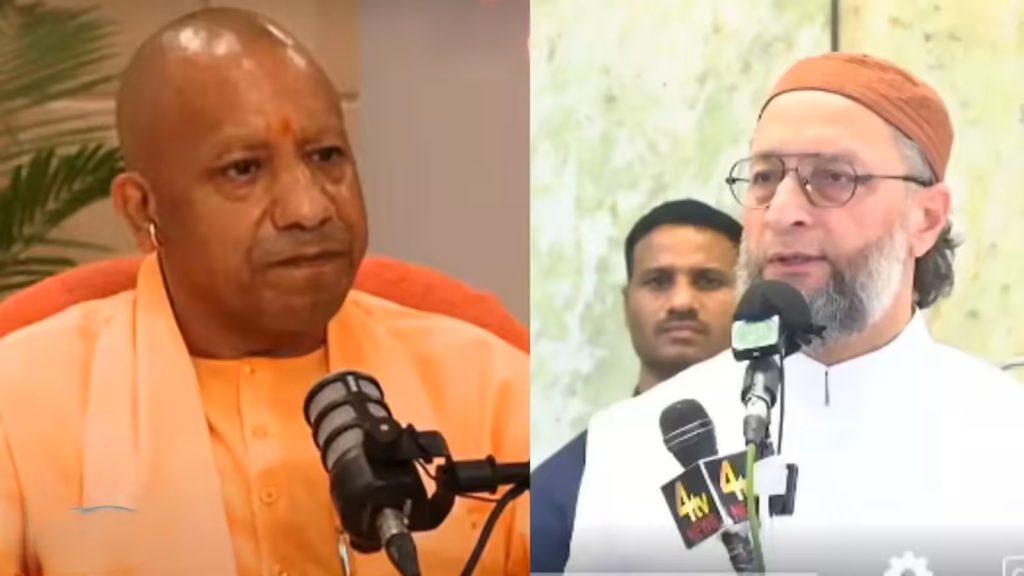
Indian politics thrives on sharp statements, symbolism, and verbal sparring, and AIMIM chief Asaduddin Owaisi is known for delivering biting political jibes that quickly become headlines. His recent remark — “Yogi ji, with a phone on his back, is telling whether he is Bangladeshi or Indian” — was aimed directly at Uttar Pradesh Chief Minister Yogi ji, igniting yet another fierce political debate across the country. The comment did not emerge in isolation; rather, it reflects deeper tensions surrounding identity politics, governance, law and order, and the use of symbolism in Indian public life.
At the heart of Owaisi’s criticism lies a question that has repeatedly surfaced in Indian political discourse: who gets to decide identity, and on what basis? By invoking Yogi ji in such a striking metaphor, Owaisi attempted to highlight what he perceives as selective targeting and politicization of nationality, religion, and citizenship.
The Context of Owaisi’s Statement
Asaduddin Owaisi’s politics has long revolved around constitutional rights, minority protection, and criticism of majoritarian narratives. His dig at Yogi ji came during a discussion on alleged encounters, police actions, and debates around identifying “illegal immigrants” or “anti-nationals.” The imagery of a phone strapped to the back was symbolic — suggesting surveillance, instant judgment, and trial by authority rather than due legal process.
According to Owaisi, Yogi ji represents a style of governance where power is projected through optics: bulldozers, police encounters, and strong rhetoric. Supporters of the Uttar Pradesh government often praise this approach as decisive and fearless. Critics, however, argue that such symbolism risks oversimplifying complex social and legal issues.
Identity Politics and the Question of Nationality
The remark about determining whether someone is “Bangladeshi or Indian” taps into a long-standing and sensitive debate. Across India, questions of citizenship, migration, and documentation have periodically taken center stage. Owaisi’s comment suggested that Yogi ji and governments like his reduce these complex issues to instant labels.
In democratic systems, nationality is not decided by perception or suspicion but by law, documents, and judicial processes. Owaisi’s jibe was meant to underline what he sees as a dangerous trend: branding individuals without due process. By directly naming Yogi ji, he personalized the criticism, ensuring it would dominate news cycles and political conversations.
Supporters vs Critics: Two Narratives
Supporters of Yogi ji argue that Uttar Pradesh, once notorious for crime and lawlessness, has seen improved order under his leadership. They credit his tough stance against criminals and his clear messaging on security. For them, Owaisi’s comment is an attempt to undermine a popular leader who enjoys massive public support.
On the other hand, critics align with Owaisi’s view that the state’s approach risks violating civil liberties. They argue that Yogi ji’s model of governance relies heavily on spectacle and fear, rather than institutional reform. The phone-on-the-back metaphor resonated with those who believe surveillance and profiling are becoming normalized.
The Role of Rhetoric in Modern Politics
Modern Indian politics is as much about narrative-building as it is about policy. Leaders like Yogi ji command attention through strong visuals and soundbites, while leaders like Owaisi counter them with equally sharp rhetoric. The clash is not merely personal; it represents two contrasting political philosophies.
Owaisi’s statement was carefully worded to provoke debate. By using Yogi ji as the focal point, he ensured that the conversation would revolve around power, authority, and accountability. Such rhetoric, while controversial, forces voters to confront uncomfortable questions about governance and rights.
Media Amplification and Public Reaction
Once Owaisi made the remark, media channels and social platforms amplified it instantly. Supporters of Yogi ji flooded social media with counterattacks, calling the statement disrespectful and misleading. Owaisi’s supporters, meanwhile, hailed it as a fearless exposure of authoritarian tendencies.
Television debates dissected every word. Was Owaisi exaggerating? Was Yogi ji being unfairly targeted? Or did the remark reflect a genuine concern shared by many citizens? In today’s media ecosystem, such statements often matter less for their factual grounding and more for their ability to shape perception.

Governance, Accountability, and Democracy
Beyond the political theatrics, the underlying issue remains serious. How should a state balance security with civil liberties? Can strong leadership coexist with due process? Owaisi’s critique of Yogi ji brings these questions back into focus.
Democracy thrives on dissent, and sharp criticism is part of that process. Whether one agrees with Owaisi or supports Yogi, the exchange highlights the importance of dialogue and accountability. Leaders wield enormous power, and with that power comes responsibility.
The Broader Political Impact
Statements like these influence not just current debates but future political alignments. For Owaisi, targeting Yogi reinforces his image as a vocal opponent of majoritarian politics. For Yogi ji, the controversy offers an opportunity to project strength and rally supporters who see him as uncompromising.

As elections approach in various states, such exchanges will likely intensify. The clash between Owaisi and Yogi ji is emblematic of a larger ideological battle playing out across India — between constitutionalism and strongman politics, between inclusivity and assertive nationalism.
Conclusion
Owaisi’s remark — “Yogi ji, with a phone on his back, is telling whether he is Bangladeshi or Indian” — is more than a personal dig. It is a reflection of India’s evolving political language, where symbolism often speaks louder than policy papers. By invoking Yogi ji, Owaisi challenged a governance style that prioritizes image and decisiveness, questioning its implications for democracy and rights.
Whether one views the statement as courageous or provocative, it undeniably succeeded in sparking debate. And in a democracy, debate — however uncomfortable — remains essential.
Read more latest news

