
Raj Thackeray Returns to Shiv Sena Bhavan After Two Decades: A Historic Political Moment Ahead of BMC Elections
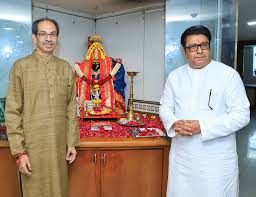
Mumbai’s political landscape witnessed a historic and emotionally charged moment when Maharashtra Navnirman Sena (MNS) chief Raj Thackeray visited Shiv Sena Bhavan after a gap of nearly 20 years. The visit was not just symbolic but politically significant, as Raj Thackeray, along with Shiv Sena (UBT) chief Uddhav Thackeray and senior leader Sanjay Raut, released the joint manifesto of the MNS and Shiv Sena (UBT) for the upcoming Brihanmumbai Municipal Corporation (BMC) elections. The visuals of the Thackeray cousins standing together at Shiv Sena-Bhavan sent a powerful message across Maharashtra’s political circles.
For decades, Shiv Sena Bhavan has stood as more than just a building. It has been the ideological, emotional, and strategic nerve center of the Shiv Sena. Raj Thackeray’s return to this iconic space reopened old memories, revived political speculation, and reshaped the narrative of Marathi politics in Mumbai.
The Emotional Weight of Shiv Sena Bhavan
Founded by Balasaheb Thackeray, Shiv Sena Bhavan has always symbolized Marathi pride, regional identity, and aggressive street-level politics. Raj Thackeray, once considered Balasaheb’s political heir, had distanced himself from the Sena after internal differences, eventually forming the MNS. His absence from Shiv Sena Bhavan for two decades reflected not just political separation but a deep personal and ideological rift.
Therefore, Raj Thackeray stepping into Shiv Sena Bhavan again was laden with emotion. Supporters described it as a moment of “ghar wapsi,” while critics called it a strategic move driven by electoral compulsions. Regardless of interpretation, the significance of the moment was undeniable.
The Thackeray Cousins Reunite
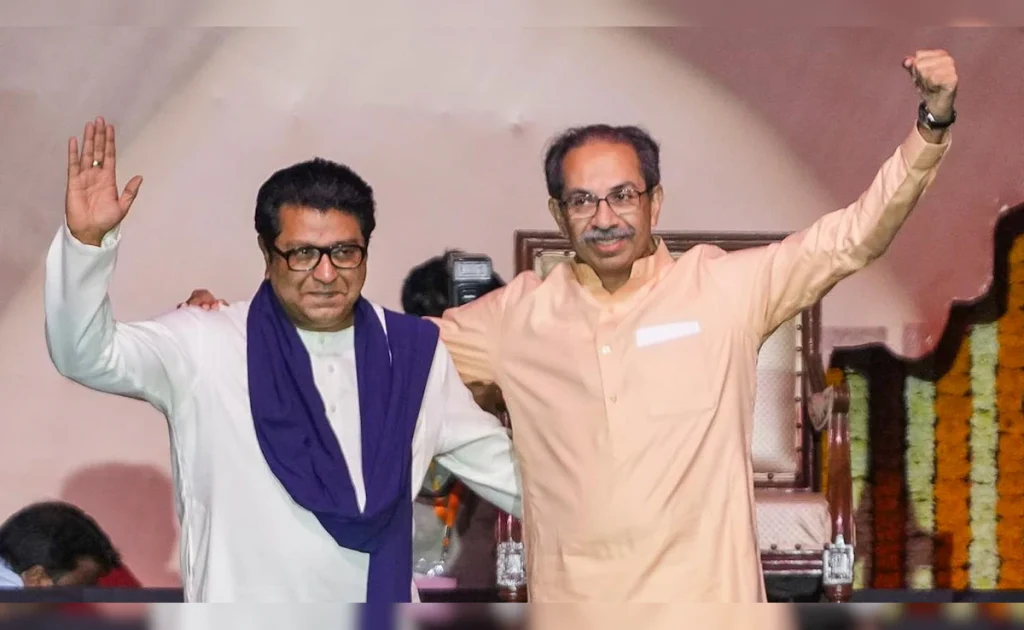
The image of Raj Thackeray and Uddhav Thackeray together at Shiv Sena Bhavan instantly became the defining visual of the day. Once divided by political ambition and ideological differences, the cousins now appeared united by a common cause: reclaiming Mumbai’s civic body.
Uddhav Thackeray, who has repositioned Shiv Sena (UBT) as a party rooted in constitutional values and inclusive politics, welcomed Raj Thackeray at Shiv Sena Bhavan with warmth. Sanjay Raut, known for his sharp political messaging, framed the reunion as a “historic correction” in Maharashtra politics.
Release of the Joint Manifesto
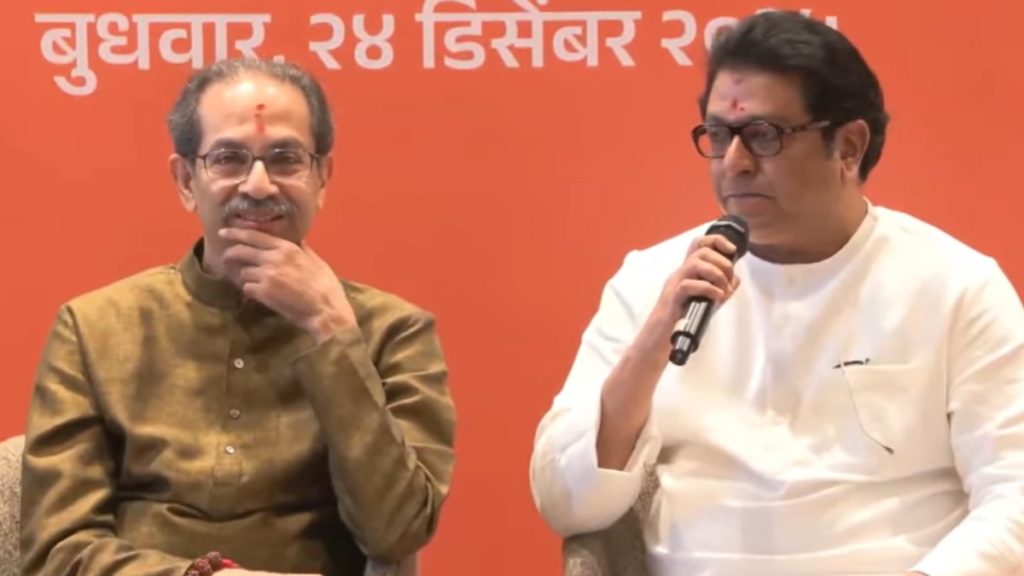
The joint manifesto released at Shiv Sena Bhavan focused heavily on civic governance, Marathi identity, urban infrastructure, housing, public transport, healthcare, and corruption-free administration in the BMC. The document emphasized that Mumbai belongs to its people and that local governance must reflect local aspirations.
By releasing the manifesto at Shiv Sena Bhavan, both parties sent a clear signal: this alliance is rooted in legacy, ideology, and a shared vision for Mumbai. The manifesto promised transparency, accountability, and a renewed focus on the common Mumbaikar.
Political Calculations Behind the Move
Beyond emotion, Raj Thackeray’s visit to Shiv Sena Bhavan was also a carefully calculated political step. The BMC election is often referred to as the “semi-final” of Maharashtra politics due to the corporation’s massive budget and influence. Both Shiv Sena (UBT) and MNS understand that a divided Marathi vote would only benefit their political rivals.
By coming together at Shiv Sena Bhavan, the parties attempted to consolidate the Marathi manoos vote, which has been fragmented over the years. Political analysts believe that this unity could significantly alter electoral equations in Mumbai.

Sanjay Raut’s Strategic Messaging
Sanjay Raut used the platform of Shiv Sena Bhavan to deliver sharp political messaging. He described the joint manifesto as a “Mumbai-first document” and said that forces trying to weaken Marathi identity would face a united front.
Raut also highlighted the symbolic importance of Shiv Sena Bhavan, calling it the birthplace of many historic political movements in Maharashtra. His remarks made it clear that the alliance aims to revive the original spirit of the Sena while adapting to contemporary challenges.
Reactions from Supporters and Critics
Supporters of both parties celebrated Raj Thackeray’s return to Shiv Sena Bhavan as a long-overdue reconciliation. Many Sena loyalists recalled Balasaheb Thackeray’s dream of a united Marathi leadership and saw the moment as its partial fulfillment.
Critics, however, questioned the timing. They argued that the visit to Shiv Sena Bhavan was driven purely by electoral necessity rather than ideological convergence. Some also raised doubts about how long the alliance would last beyond the BMC elections.
The Legacy of Shiv Sena Bhavan in Maharashtra Politics
Few political spaces in India carry the legacy that Shiv Sena Bhavan does. From fiery speeches to strategic decisions, the building has witnessed defining moments in Maharashtra’s political history. Raj Thackeray’s return added another chapter to that legacy.
For younger voters, the event served as a reminder of the deep-rooted history behind contemporary politics. For veteran observers, it was a moment that blurred the line between past rivalries and future possibilities.
Implications for the BMC Elections
The joint appearance at Shiv Sena Bhavan has already reshaped the narrative of the upcoming BMC polls. The alliance presents itself as the true custodian of Mumbai’s interests, contrasting itself against what it calls “outsider-driven politics.”
If the partnership manages to translate symbolism into ground-level coordination, Shiv Sena Bhavan may once again become the epicenter of Mumbai’s civic power. The success or failure of this alliance will likely influence Maharashtra politics well beyond municipal limits.
A Turning Point in Marathi Politics?
Raj Thackeray’s step into Shiv Sena Bhavan after 20 years may well be remembered as a turning point. Whether it marks genuine reconciliation or a temporary truce remains to be seen. However, the fact that such a moment occurred at Shiv Sena Bhavan gives it historical weight.
The reunion underscores a larger truth of Indian politics: ideologies may evolve, alliances may shift, but symbols and legacies continue to shape public imagination.
Read more latest news

