
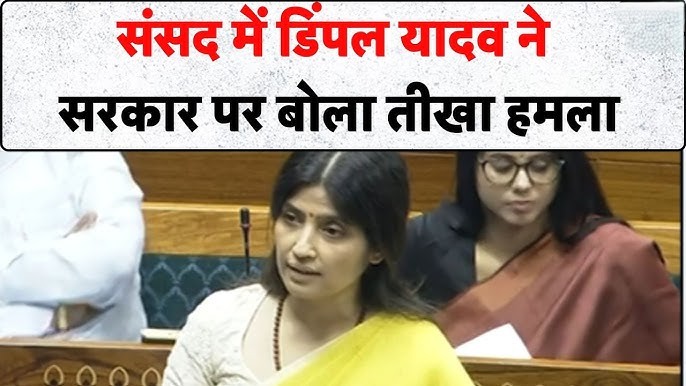
MP Dimple Yadav Questioned Government’s Intentions on Women’s Reservation Bill: A Deep Dive into the Political Storm
As MP Dimple Yadav questioned the delay in conducting the national census and linked it to the implementation of women’s reservation, her remarks have triggered widespread discussions about constitutional values, governance priorities, and political strategy.
The debate around the Women’s Reservation Bill has once again ignited intense political discourse across India. At the center of this debate stands Dimple Yadav, who has raised serious concerns about the intentions of the central government.
This issue is not merely about legislation; it reflects deeper tensions within India’s democratic framework. When MP Dimple Yadav questioned the government, she touched upon a nerve that resonates with many political observers, activists, and citizens alike. Her allegations that the delay is politically motivated and could potentially weaken the Constitution have raised critical questions that deserve careful examination.
The Context of the Women Reservation Bill
The Women’s Reservation Bill aims to reserve one-third of seats in the Lok Sabha and state legislative assemblies for women. The bill has been discussed for decades, symbolizing both progress and delay in India’s journey toward gender equality in politics.
When MP Dimple Yadav questioned the government’s approach, she highlighted a key procedural issue—the linking of the bill’s implementation to the completion of a nationwide census and delimitation exercise. This condition has become a focal point of controversy.
Supporters of the bill argue that it is a historic step toward empowering women politically. However, critics like Samajwadi Party leaders believe that the conditions attached to its implementation may delay its actual impact.
Why the Census Delay Matters
A national census is not just a population count; it forms the basis for policy decisions, resource allocation, and electoral delimitation. India’s census, which was due in 2021, has been delayed.
When MP Dimple Yadav questioned this delay, she implied that it is not merely administrative but possibly strategic. According to her, postponing the census could push back the implementation of women’s reservation, thereby diluting its immediate impact.
This raises an important question: Is the delay purely logistical, or is it politically motivated?
Many experts point out that the pandemic disrupted several government functions, including the census. However, critics argue that sufficient time has passed to resume the process. In this context, MP Dimple Yadav questioned whether the delay is being used as a tool to control the timing of political reforms.

Allegations of Weakening the Constitution
One of the most serious claims made when MP Dimple Yadav questioned the government is that such actions could weaken the Constitution.
India’s Constitution is built on principles of equality, representation, and democratic fairness. Any delay in implementing a law aimed at increasing women’s representation could be seen as undermining these principles.
MP Dimple Yadav questioned whether linking the bill to census data creates unnecessary barriers. She argued that if the intent is genuine, the government should find ways to implement the bill without prolonged delays.
This argument resonates with constitutional experts who believe that procedural requirements should not overshadow the spirit of reform.
Political Motivations Reality or Rhetoric?
When MP Dimple Yadav questioned the government’s intentions, she suggested that the move might be driven by political gain rather than genuine concern for women’s empowerment.
This accusation is not new in Indian politics. Opposition parties often question the timing and framing of major legislative initiatives. However, the Women’s Reservation Bill carries unique significance because of its long history and broad public support.
MP Dimple Yadav questioned whether the ruling government is using the bill as a symbolic gesture rather than a transformative policy. According to her, delaying implementation allows the government to claim credit without delivering immediate results.
On the other hand, the government maintains that the process must be thorough and constitutionally sound. Officials argue that delimitation based on updated census data is essential for fair representation.
The Role of Opposition Voices
In a लोकतांत्रिक system, opposition voices play a crucial role in holding the government accountable. When MP Dimple Yadav questioned the central government, she was exercising this democratic responsibility.
Her statements reflect a broader concern among opposition parties that major reforms are often accompanied by conditions that delay their impact.
MP Dimple Yadav questioned whether the government is prioritizing optics over substance. This perspective is shared by several leaders who believe that meaningful reform requires urgency and clarity.
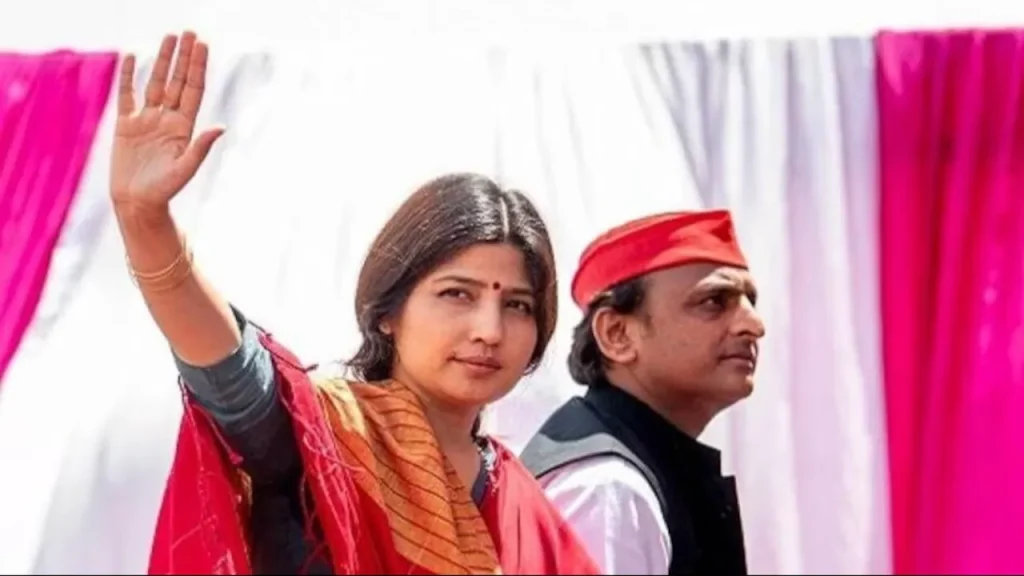
Women’s Representation: The Bigger Picture
India has made significant progress in various fields, but women’s representation in politics remains relatively low. The Women’s Reservation Bill is seen as a potential game-changer.
When MP Dimple Yadav questioned the delay, she brought attention to the urgent need for reform. Women constitute nearly half of the population, yet their presence in legislative bodies is disproportionately low.
Experts argue that increasing women’s representation can lead to more inclusive policymaking. Issues such as healthcare, education, and social welfare often receive greater attention when women are actively involved in governance.
MP Dimple Yadav questioned whether delaying the bill undermines these potential benefits.
Historical Delays and Political Promises
The Women’s Reservation Bill has a long and complicated history. First introduced in the 1990s, it has faced multiple hurdles, including political disagreements and procedural challenges.
When MP Dimple Yadav questioned the current government, she also indirectly pointed to this history of delays. Successive governments have promised to implement the bill, but progress has been slow.
This raises a critical issue: Is the current delay part of a larger pattern?
MP Dimple Yadav questioned whether India can afford to wait any longer for such a crucial reform.
Public Reaction and Media Discourse
The statements made when MP Dimple Yadav questioned the government have sparked widespread debate in media and public forums.
Supporters of her view argue that the concerns are valid and deserve serious attention. Critics, however, believe that such statements are politically motivated and aimed at gaining traction.
Social media platforms have amplified this debate, with citizens expressing diverse opinions. Some see the delay as justified, while others view it as a missed opportunity.
MP Dimple Yadav questioned not just the government but also the broader political system, prompting citizens to reflect on the state of democratic governance.
Constitutional and Legal Perspectives
From a legal standpoint, linking the Women’s Reservation Bill to the census and delimitation process is not unprecedented. However, the timeline and execution remain contentious.
When MP Dimple Yadav questioned this linkage, she raised an important legal question: Can a reform be considered genuine if its implementation is indefinitely delayed?
Legal experts suggest that while procedural requirements are important, they should not become obstacles to progress.
MP Dimple Yadav questioned whether alternative approaches could be explored to expedite implementation.
The Way Forward
The debate triggered when MP Dimple Yadav questioned the government highlights the need for clarity, transparency, and accountability.
To move forward, the government could consider:
- Providing a clear timeline for the census
- Explaining the necessity of linking the bill to delimitation
- Exploring interim measures to increase women’s representation

MP Dimple Yadav questioned whether the government is willing to take these steps or continue with the current approach.
Conclusion
The controversy surrounding the Women’s Reservation Bill is a reflection of deeper issues within India’s political and constitutional framework. When MP Dimple Yadav questioned the central government, she brought attention to concerns that go beyond a single piece of legislation.
Her repeated stance—MP Dimple Yadav questioned the delay, MP Dimple Yadav questioned the intent, MP Dimple Yadav questioned the constitutional implications—has ensured that the issue remains at the forefront of public discourse.
Whether one agrees with her or not, the questions raised are important. They compel policymakers, legal experts, and citizens to think critically about governance, representation, and democratic values.
As India moves forward, the challenge lies in balancing procedural requirements with the urgency of reform. The Women’s Reservation Bill has the potential to transform Indian politics, but its success depends on timely and transparent implementation.
In the end, the debate sparked when MP Dimple Yadav questioned the government serves as a reminder that democracy thrives on dialogue, dissent, and accountability.
Read More latest news

