

Their Anger Is Completely Justified…” — Jitan Ram Manjhi’s Discontent Over Bihar Seat-Sharing Reflects Deep Cracks in NDA Unity Despite His Confident Claim of Victory
Introduction: The Calm Before the Political Storm
In the charged atmosphere of Bihar’s pre-election politics, Union Minister Jitan Ram Manjhi’s statement — “Their anger is completely justified…” — has not only made headlines but also exposed the growing discontent within the National Democratic Alliance (NDA). As political alliances gear up for the upcoming Bihar Assembly elections, internal friction within the NDA has surfaced once again. Jitan Ram Manjhi , the founder of the Hindustani Awam Morcha (HAM) and a veteran of Bihar politics, appeared unhappy with the NDA’s seat-sharing formula, yet he confidently asserted that the NDA will win the elections.
This dual stance — one of dissatisfaction and another of optimism — perfectly captures the paradox of coalition politics in Bihar. Jitan Ram Manjhi ’s comments have sparked debates across political circles, raising questions about whether NDA unity is genuine or merely superficial.
The Context: Bihar’s Seat-Sharing Equation
Bihar’s political landscape has always been a complex web of caste equations, alliances, and power struggles. For the upcoming Assembly elections, seat-sharing negotiations among NDA partners — BJP, JD(U), HAM, and smaller allies — have been particularly contentious.
While the BJP and JD(U) dominate the alliance numerically and politically, smaller allies like HAM often feel marginalized. According to reports, HAM leaders were expecting at least 10 to 12 seats, but the NDA formula allegedly offered them fewer constituencies, triggering resentment within the party.
Jitan Ram Manjhi ’s statement, “Unka gussa bilkul sahi hai” (Their anger is completely justified), was in response to questions about his party members’ frustration over the limited number of seats allotted to them. His tone was both sympathetic towards his cadre and critical of the alliance leadership, revealing deeper undercurrents of dissatisfaction.
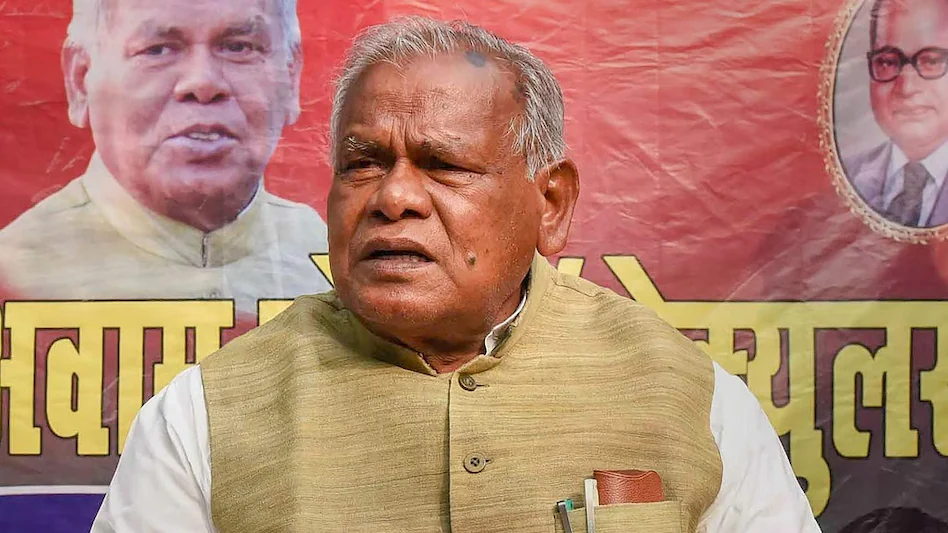
Who Is Jitan Ram Manjhi? A Brief Political Snapshot
Before analyzing his statement, it’s essential to understand who Jitan Ram Manjhi is and why his words carry weight in Bihar politics.
Jitan Ram Manjhi, a seasoned Dalit leader, has been a political survivor in the truest sense. Once considered a loyalist of Nitish Kumar, he served as the Chief Minister of Bihar in 2014 when Nitish resigned following the JD(U)’s poor performance in the Lok Sabha elections. However, Jitan Ram Manjhi’s tenure as CM was short-lived due to a power struggle with Nitish, which led him to form the Hindustani Awam Morcha (HAM) in 2015.
Since then, Jitan Ram Manjhi has played a strategic role, often switching alliances between the Grand Alliance (Mahagathbandhan) and the NDA, depending on political circumstances. His Dalit base and earthy political wisdom make him an influential voice, especially among marginalized communities.
The Seat-Sharing Friction: NDA’s Internal Tensions Surface
The seat-sharing negotiations within NDA have reportedly been tense and prolonged. Sources suggest that while the BJP and JD(U) reached an understanding over major constituencies, HAM and smaller allies were left feeling sidelined.
Jitan Ram Manjhi statement was a subtle but sharp signal to NDA’s leadership, especially to those within the BJP and JD(U), that coalition partners cannot be ignored.
He remarked,
“My workers and local leaders have worked hard on the ground. If they feel neglected, their anger is justified. But despite that, we will contest unitedly and the NDA will win.”
This statement encapsulates two contrasting sentiments:
- Acknowledgment of injustice within the alliance, and
- Commitment to overall unity and victory.
Political observers see this as Jitan Ram Manjhi’s attempt to balance internal dissent while maintaining his relevance within the NDA fold.
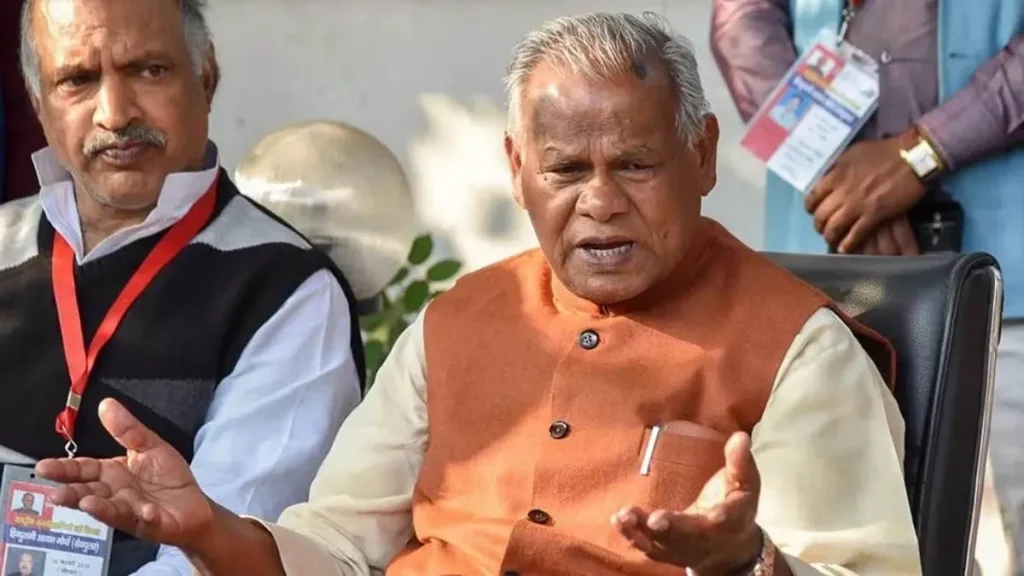
Why Jitan Ram Manjhi Discontent Matters
At first glance, it might appear that Jitan Ram Manjhi’s dissatisfaction is a minor issue. But in Bihar’s coalition politics, small parties hold disproportionate influence, particularly in constituencies where caste arithmetic plays a decisive role.
HAM’s vote base among Dalits and Mahadalits, though limited, can tilt outcomes in closely contested seats. By publicly voicing his displeasure, Jitan Ram Manjhi has reminded the BJP and JD(U) that ignoring smaller allies could prove costly.
Moreover, his statement carries symbolic importance. It reflects a pattern of recurring tension within the NDA every election season — a pattern that often resurfaces despite repeated assurances of unity.
NDA’s Balancing Act: Keeping Allies Intact
The BJP-JD(U) relationship itself has seen multiple ups and downs over the years. Their alliance was severed in 2013, revived in 2017, broken again in 2022, and later reformed ahead of the 2024 Lok Sabha polls.
Now, as they prepare for the Bihar Assembly elections, both parties understand that internal cohesion is essential. The BJP, which seeks to expand its footprint in Bihar, knows it must handle allies like HAM with care to avoid a repeat of 2015, when NDA disunity contributed to its loss.
BJP leaders have reportedly reached out to Jitan Ram Manjhi to assuage his concerns, assuring him of respect and participation in decision-making. Nitish Kumar, known for his pragmatism, is also believed to be playing a mediating role to prevent the situation from escalating.
The Dual Tone of Manjhi’s Statement
Manjhi’s declaration that “NDA will win” despite his dissatisfaction is politically strategic. It allows him to:
- Express solidarity with his party workers, who feel neglected;
- Convey frustration to NDA leadership without appearing rebellious;
- And still project loyalty to the coalition, maintaining his ministerial position and influence.
This nuanced positioning has been typical of Manjhi’s politics — never burning bridges completely, yet ensuring that his voice is heard.
Opposition’s Reaction: Mahagathbandhan Senses Opportunity
The opposition Mahagathbandhan, led by RJD’s Tejashwi Yadav, wasted no time in exploiting Manjhi’s remarks. RJD leaders claimed that his statement proved cracks within the NDA and signaled a lack of coordination and trust among allies.
Tejashwi Yadav, known for his sharp political instincts, commented during a rally:
“When allies themselves say their anger is justified, it shows how BJP treats smaller parties — like disposable tools.”
The RJD and Congress are likely to use Manjhi’s comments as ammunition during the campaign, portraying the NDA as an alliance held together by compulsion, not conviction.
The Public Sentiment: Mixed but Watchful
Among voters, especially in rural Bihar, Manjhi’s words have created mixed reactions. Some Dalit voters view his statement as a genuine outcry for dignity and fair representation, while others see it as routine political posturing.
Political analysts note that Bihar’s electorate is highly aware and caste-conscious. Symbolic statements like this can influence public mood, especially when coming from a leader who is seen as a voice of the marginalized.
If mishandled, this episode could lead to demoralization among HAM cadres, potentially affecting voter turnout in specific constituencies.
BJP and JD(U)’s Response: Damage Control Mode
The BJP leadership in Bihar quickly moved into damage control mode. Senior leaders including Samrat Choudhary and Nityanand Rai reportedly reached out to Manjhi, assuring him that his concerns would be discussed.
The JD(U), too, downplayed the controversy, claiming that “minor disagreements are natural in any coalition.” Nitish Kumar’s team even suggested that seat adjustments could still be made if needed.
Both parties recognize that keeping Manjhi within the fold is crucial, not just for electoral arithmetic but for symbolic reasons — to demonstrate NDA’s inclusivity and cohesion.
Manjhi’s Role in NDA’s Larger Strategy
Despite being a smaller ally, Manjhi plays a strategic role in NDA’s campaign narrative. His presence allows the coalition to project itself as socially inclusive, particularly in the Dalit-Mahadalit belt of central and southern Bihar.
His ground-level networks and experience in social engineering add weight to the NDA’s electoral outreach. Therefore, even if the number of seats allotted to HAM is small, his influence on the ground is significant.
Political Analysts’ Take: Reading Between the Lines
Political analysts have described Manjhi’s remarks as a “pressure tactic” aimed at negotiating better terms within the alliance. However, they also acknowledge that his comments reflect a deeper issue — the imbalance of power within the NDA, where smaller allies often feel overlooked.
According to political commentator Dr. Sanjay Kumar,
“Manjhi’s anger is not merely about seats. It is about recognition, respect, and political space. This is a recurring theme in Bihar’s coalition politics, where the dominant partners dictate terms.”
Analysts also warn that repeated public displays of dissent could affect voter confidence, especially among undecided voters who value stability.
Looking Back: A Pattern of Dissent
This isn’t the first time Jitan Ram Manjhi has expressed dissatisfaction. In previous elections too, he has voiced frustration over seat allocation, lack of communication, and unequal treatment within alliances.
However, each time, he has managed to reconcile differences and return to the NDA fold — sometimes after temporary separations. This cyclical pattern has led many to label him a “pragmatic negotiator” rather than a rebel.
Will Manjhi’s Statement Affect NDA’s Prospects?
In the short term, probably not drastically. But in the long term, such statements highlight vulnerability within the NDA structure.
If not managed properly, internal dissatisfaction could lead to weak coordination during campaigns, defections, or lukewarm support in constituencies where margins are thin.
Manjhi’s confidence that “NDA will win” provides some reassurance, but his tone of grievance cannot be ignored.
Conclusion: Between Frustration and Faith
Jitan Ram Manjhi’s remark — “Their anger is completely justified…” — is more than just a reflection of intra-party discontent; it symbolizes the tug-of-war between ambition and alliance loyalty that defines Bihar’s coalition politics.
While he has expressed unhappiness over seat-sharing arrangements, his commitment to NDA’s victory narrative shows political maturity. By keeping the doors of dialogue open, Manjhi has ensured that he remains relevant, respected, and indispensable.
As Bihar heads toward elections, the NDA’s ability to manage its internal contradictions will determine not just its seat tally but also its image as a stable, inclusive alliance.
In the end, Manjhi’s statement serves as a reminder that in Bihar’s politics — no anger is entirely unjustified, and no alliance is ever permanent.
Read more latest News

