

Taliban Claims Victory Over Pakistan, Afghans Immersed in Victory Celebrations
Taliban claims victory on the night of intense border exchanges between Afghanistan and Pakistan, the Afghan Taliban made a bold proclamation: they had secured a decisive victory over Pakistani forces. Within hours, jubilant scenes erupted across Kabul and other Afghan cities — people poured into the streets, waving flags, sounding horns, chanting slogans, and sharing in the euphoria of what many described as a moment of triumph.
This dramatic combination of military confrontation and popular spectacle has drawn regional attention and prompted widespread commentary. But beyond the celebratory images lies a deeper and more complex narrative — of border tension, ideological posturing, internal legitimacy, and the fragile politics of a state still struggling for global recognition.
In this blog, I explore how the Taliban (Taliban claims victory) came to claim such a victory, how ordinary Afghans responded, and what this all means for the region going forward.
Setting the Stage: Rising Tensions on the Pakistan–Afghanistan Border
The Background of Friction
Relations between Pakistan and Afghanistan have long been fragile, shaped by contested borders, insurgent movements, ethnic linkages, and mutual suspicion. After the Taliban (Taliban claims victory) retook power in Kabul in August 2021, Islamabad hoped for a stable neighbor albeit with some leverage over Kabul. Yet many in Pakistan remain wary of the Taliban’s ties with the Tehrik-i-Taliban Pakistan (TTP), accused of launching cross-border attacks into Pakistan from Afghan territory.
In recent weeks, exchanges of fire, claims and counterclaims, and military posturing have escalated dramatically. Afghan authorities accused Pakistan of launching airstrikes in Kabul and in eastern border zones. In turn, Pakistan responded with its own artillery and retaliatory raids, claiming to have inflicted heavy losses on Afghan forces.
The clash reached a peak on October 12, when both sides reported multiple fatalities and claimed capture of enemy posts. Afghanistan said it had killed 58 Pakistani soldiers and captured 25 border posts. Pakistan contested these numbers, asserting its own losses were far lower and claiming to have killed over 200 Taliban fighters (Taliban claims victory).
In the immediate aftermath, Pakistan closed major border crossings such as Torkham and Chaman, hindering trade and travel. The region braced itself for ripple effects amid diplomatic maneuvering by external actors like Saudi Arabia, Qatar, Russia, and others calling for restraint.
Amid this cauldron, the (Taliban claims victory) made their claim of outright victory — a dramatic declaration that would be matched by emotional public celebrations.
The Victory Claim: What the Taliban Asserted
When the dust of battle momentarily settled, the Taliban’s (Taliban claims victory) official spokesperson announced that Afghan forces had emerged victorious. Their claim encompassed multiple elements:
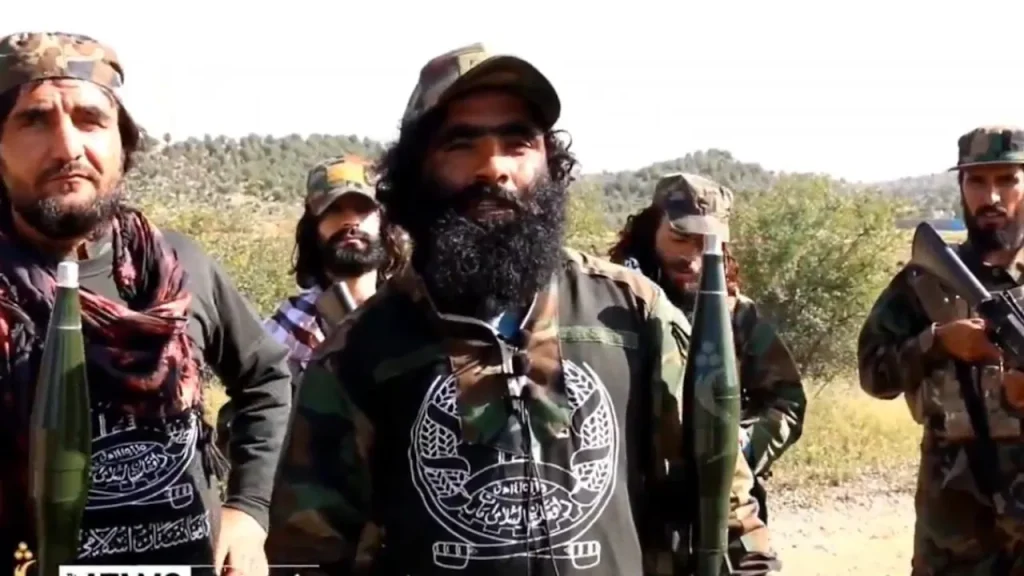
- Enemy Casualties and Losses: The Taliban (Taliban claims victory) contended that they had inflicted heavy casualties on Pakistani troops (the figure of 58 was cited) and destroyed posts, tanks, and weaponry.
- Territorial Gains: Reports claimed that Taliban forces captured 25 Pakistani military posts, recovering control in contested zones.
- Moral and Symbolic Supremacy: Beyond military metrics, the Taliban (Taliban claims victory) framed the clash as a victory of sovereignty — a statement that Pakistan can no longer interfere in Afghan domains with impunity.
- Control and Stability Narrative: The narrative advanced by the Taliban (Taliban claims victory) suggested that the border is now secure under their watch, and that Afghan forces demonstrated both capability and resolve.
The timing of the claim — concurrent with ground fighting — suggests that it was as much a symbolic act as a military one. By claiming victory early, the Taliban (Taliban claims victory) sought to seize the narrative, rally domestic support, and project strength externally.
Public Jubilation: Celebrations Across Afghan Cities
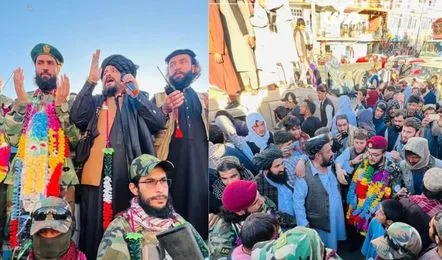
From Kabul to provincial centers, the news sparked spontaneous gatherings. The celebrations followed familiar motifs: flag-waving, chanting, car processions, fireworks, and loudspeaker declarations of triumph. Videos circulating online showed streets lit up, young men draped in Taliban (Taliban claims victory) flags, and convoys honking as they paraded through neighborhoods.
Some highlights and patterns of the celebrations:
- Mass Street Mobilization: In Kabul, thousands reportedly joined processions. The sense was akin to a holiday or festival — collective rejoicing over what many believed was a moment of national vindication.
- Religious Overtones: Some celebrants invoked religious slogans, framing the clash as a contest not just of armies but of faith and sovereignty.
- Local Variation: Celebrations were more muted or cautious in provinces closer to conflict zones, where fear of retaliation or instability likely tempered exuberance.
- Symbolic Acts: In certain videos, Afghan fighters or militia groups displayed captured Pakistani weaponry, as trophies of war, to the cheering crowds.
- Media Amplification: State-controlled media, social media channels, and religious networks worked rapidly to disseminate celebratory imagery, cementing the narrative of victory.
Social media was flooded with slogans: “Remember Pakistan, We Are the Graveyard of Empires!” — a phrase echoing historical defiance. Posts and reels praised fighters, celebrated martyrs, and underlined the narrative of sovereign strength.
Yet the celebrations also mask underlying fissures and contradictions — and perhaps overstate the actual military outcome.
Interpreting the Victory: Symbolism, Propaganda, and Reality
Propaganda Value
In modern warfare, narrative matters as much as bullets. The Taliban (Taliban claims victory) claim serves multiple political and propaganda purposes:
- Internal Legitimacy: The Taliban government in Kabul has long faced questions of legitimacy and capacity. A border victory — real or symbolic — gives it a potent success story to showcase to the population.
- Deterrence Messaging: To Pakistan and regional actors, the claim signals that further incursions or provocations might now carry higher costs.
- Consolidation of National Identity: The state-led narrative frames the conflict as defense of Afghan sovereignty, appealing to nationalist sentiments across ethnic lines.
- External Diplomacy and Recognition: By projecting strength, the Taliban (Taliban claims victory) hope to negotiate from a position of advantage in regional dialogues, possibly softening foreign pressure or legitimization hurdles.
Yet, behind the theatrical flourish lie critical judgments: how much of the victory claim corresponds to verified facts? Are the casualties and captured posts independent confirmed?
Unverified Claims and Conflicting Narratives
On both sides, casualty figures and territorial assertions are contested:
- Pakistan disputes Taliban numbers, insisting they killed over 200 Taliban (Taliban claims victory) fighters in counterattacks.
- Afghan claims of capturing 25 posts have not been independently confirmed by third-party monitors or journalists on the ground.
- Lack of media transparency: Much of the reporting is refreshed via state or partisan outlets, making independent verification difficult.
The gap between claimed victory and verifiable control is a familiar territory in conflict zones. The Taliban (Taliban claims victory) likely know this — but in high-stakes border battles, the benefit of the doubt often tilts toward the victor in propaganda.
Risks of Overreach
While claiming victory boosts morale, it also raises expectations. If Afghanistan’s security forces fail to maintain control, repel future incursions, or manage escalation, the celebration might ring hollow. Pakistan could retaliate with higher force or enlist international diplomatic pressure, creating a dangerous spiral.
Moreover, the messaging must align with governance — if the Taliban’s (Taliban claims victory) victory narrative contrasts with chaos in conflict zones or border instability, credibility could erode.
The Human and Political Underbelly: Voices Beyond the Celebrations
Civilians Caught in the Crossfire
Behind the revelry, ordinary Afghan citizens carry the scars of conflict:
- In border provinces, families faced disruptions, displacements, or fear during the firefights.
- Civilians were killed and injured — the Taliban (Taliban claims victory) itself reported more than 12 deaths in recent Pakistani attacks.
- Trade, movement, and basic services were disrupted when border crossings were shut, affecting livelihoods.
Celebration is easiest when one is distanced from the theatre of war. Many in conflict-affected districts may have viewed celebrations with caution or sorrow rather than zeal.
Dissent, Gendered Exclusion, and Repression
One dimension often overlooked in mass jubilations is whose voice is missing. Under the Taliban (Taliban claims victory) regime, women have systematically been excluded from public life — and often from public celebrations as well. On previous occasions, women were barred from attending official events.
Moreover, some Afghans, especially in minority ethnic communities or urban intellectual circles, may view such celebratory displays skeptically: whether they reflect autocratic propaganda rather than genuine pluralistic national sentiment.
Regional Reactions and Stakes
- Pakistan’s strategic posture: The Pakistani military and government are unlikely to concede defeat publicly. Islamabad may respond via covert strikes, diplomatic countermeasures, or narrative contests.
- International actors: Saudi Arabia, Qatar, Russia, China, and regional neighbors are already calling for de-escalation, worried about instability spreading.
- Afghanistan’s quest for recognition: The mudslinging over border conflict complicates the Taliban’s (Taliban claims victory) ongoing efforts to win formal diplomatic legitimacy, gain aid, and normalize relations with the global community.
Historical Echoes: Border Warfare, Sovereignty, and Patriotism
The clash and the subsequent claims are part of a longer arc in Afghan–Pakistani relations:
- The Durand Line, demarcating the border, has always been contested — especially by Pashtun groups on both sides.
- Pakistan’s alleged interference in Afghan politics and support for various factions during the Soviet invasion and civil wars haunts collective memory.
- The narrative of being the “graveyard of empires” reflects a context in which Afghanistan has seen multiple foreign powers attempt control and be driven back.
By invoking these historical frames during celebrations, the Taliban (Taliban claims victory) taps into deep reservoirs of collective identity — not just military success.
What It Means Going Forward
Stability or Escalation?
Border clashes can either settle into tense parity or spiral into full-scale conflict. Whether Pakistan responds with restraint — and whether the Taliban (Taliban claims victory) can maintain control — will determine the trajectory.
The Test of Governance
In the coming weeks and months, Afghan authorities will be judged not just by military posturing, but by their ability to deliver stability, protect civilians, manage border zones, and prevent further escalation.
Perception vs. Reality
The alliance between proclaimed victory and actual facts will be scrutinized. Independent reporting, satellite imagery, and diplomatic channels may confirm or contest the Taliban’s claims. How they manage that gap will affect their legitimacy in the region and with foreign powers.
Seeds of Nationalist Momentum
At home, the victory narrative, if sustained, could galvanize support for Taliban (Taliban claims victory) rule — especially in areas less affected by their restrictions. The emotional boost might help them counter anti-Taliban sentiment and build a more coherent national narrative.
Regional Realignments
Countries like Russia, China, Iran, and Gulf powers will watch closely. If the Taliban (Taliban claims victory) successfully holds its ground, it could shift calculations about engaging or recognizing Kabul. Conversely, if the conflict intensifies, it may push Pakistan to seek alliances or international mediation efforts.
Concluding Reflections
The image of jubilant crowds in Kabul waving Taliban flags, shouting slogans, and honoring fighters is powerful and emotionally potent. But beneath that veneer of triumph lies a delicate balance of power: between narrative and fact, between symbolic victory and lasting control, and between external aggression and internal legitimacy.
The Taliban’s claim of victory over Pakistan is as much about broadcasting strength as it is about battlefield outcomes. For many Afghans, the celebrations may offer a moment of pride and catharsis. But as the dust settles, what matters most is whether that claimed victory endures in practice — whether border security holds, normal life resumes, and governance delivers.
In the coming days, analysts around the world will scrutinize satellite imagery, casualty reports, diplomatic maneuvers, and local testimonies to separate myth from reality. If the victory holds, the Taliban may have scored a rare diplomatic and military win. If not, the celebrations could become an ironic footnote in a broader contest over legitimacy, power, and survival in the region.
Read more latest News

