
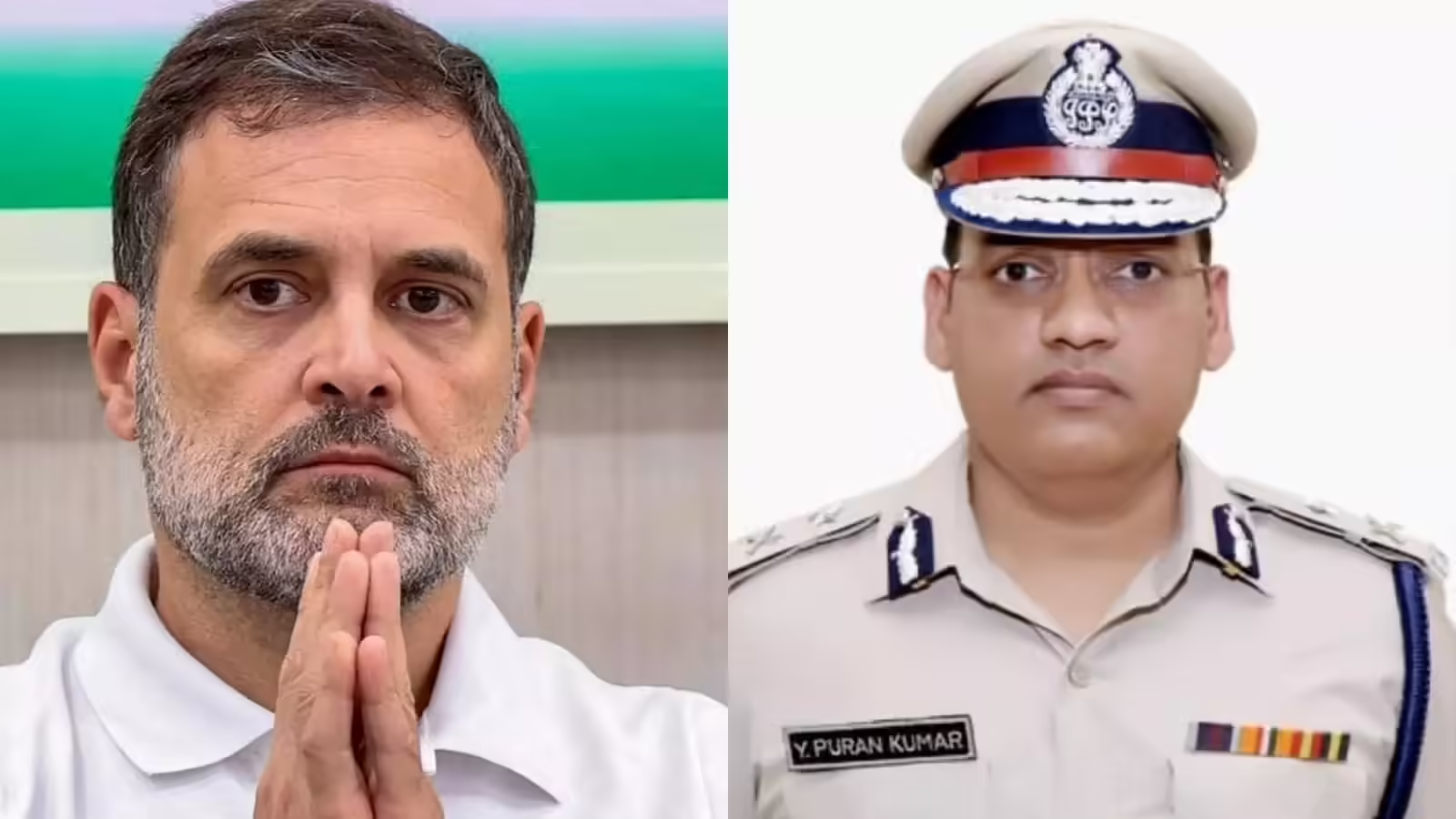
Rahul Gandhi Meets the Family of IPS Y Puran Kumar: A Heartfelt Visit that Sparked Emotional and Political Reactions
Rahul Gandhi Meets the Family of IPS Y Puran Kumar: In the often-polarized landscape of Indian politics, few gestures transcend party lines and touch the deeper chords of emotion and humanity. One such event occurred when Congress leader Rahul Gandhi visited the family of late IPS officer Y Puran Kumar, whose untimely death had recently shocked both the administrative and political circles of the country. This visit wasn’t just a condolence meeting — it became a symbol of compassion, empathy, and also political debate that continues to echo across India.
This blog delves into the emotional, social, and political layers surrounding Rahul Gandhi’s meeting with the bereaved family — examining what it meant for the family, the political message it sent, and how it resonated among the public, police fraternity, and political observers.
Who Was IPS Y Puran Kumar?
Before understanding the significance of Rahul Gandhi’s visit, it’s important to know who IPS Y Puran Kumar was — a name that had earned immense respect within the Indian Police Service.
A 2011-batch IPS officer, Y Puran Kumar was known for his honesty, discipline, and sense of justice. Serving in multiple challenging postings, he had carved a reputation for integrity and courage. Officers who worked with him describe him as a man who “stood by the uniform” even in the face of pressure.
Colleagues often recalled how Puran Kumar handled several sensitive law and order situations with a calm head and a people-first approach. He was not just an officer but also a mentor to younger IPS probationers who admired his dedication. His tragic demise left the entire force grieving and raised many questions about the mental health challenges, pressure, and lack of institutional support that officers often face in the line of duty.
Rahul Gandhi’s Visit — A Gesture Beyond Politics
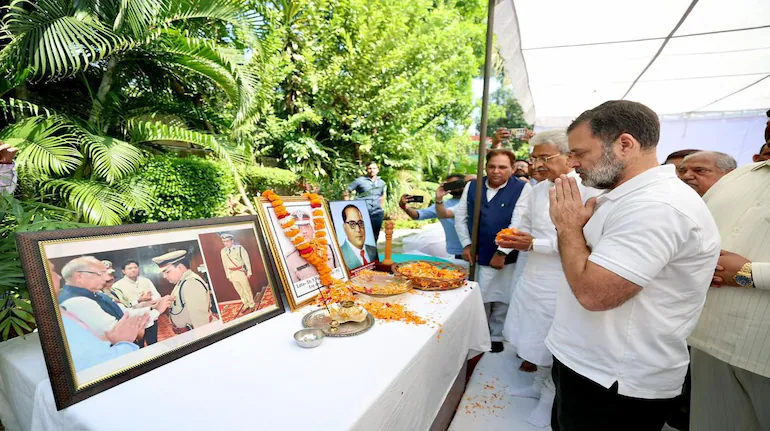
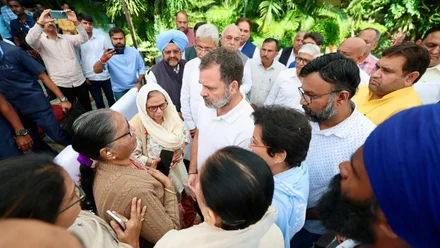
Rahul Gandhi’s visit to Y Puran Kumar’s family was not announced with much fanfare. According to reports, the Congress leader had quietly reached the family’s residence in Hyderabad to offer condolences. Accompanied by a few party leaders, Rahul Gandhi spent more than an hour with the family members, listening to their pain, sharing memories of the officer, and expressing his deep grief.
This act of compassion was widely appreciated by citizens who saw it as a human moment in the midst of India’s hyper-political environment. Rahul Gandhi’s demeanor, as seen in photos and videos from the visit, reflected empathy rather than political opportunism — something that even some critics quietly acknowledged.
During his interaction, Rahul reportedly told the family, “Your son served the nation with honor. We owe him respect and justice.” His words were simple, but they carried emotional weight.
The family members were visibly moved by the visit. Puran Kumar’s father, who himself had served in a government department, thanked Rahul Gandhi for “coming not as a politician but as a human being.” His mother, speaking softly to the media later, said, “He sat with us and listened. That meant more than anything.”
Emotional Impact on the Family
For a family mourning the sudden loss of a loved one, especially someone as dedicated as an IPS officer, such a visit carries deep emotional significance. The grief of losing a child or sibling who had dedicated his life to public service is indescribable. Rahul Gandhi’s willingness to personally reach out was seen by the family as a gesture of solidarity and respect.
Family sources said Rahul assured them that he would raise their concerns — including those related to the circumstances surrounding the officer’s death — in Parliament if necessary. He reportedly promised that he would push for better mental health support and stress management programs within the police force, an issue that has long been neglected in India’s administrative system.
This promise resonated strongly because it aligned with Rahul’s recent focus on “compassion-driven governance,” a philosophy he has been articulating in his public speeches and his Bharat Jodo Yatra journey.
Public Reactions — A Wave of Empathy
The news of Rahul Gandhi’s visit spread rapidly on social media, triggering an outpouring of emotional reactions. Citizens across political affiliations expressed sympathy for the late officer’s family and appreciation for Rahul’s humane gesture.
Hashtags like #RahulGandhi, #Y_PuranKumar, and #HumanityFirst started trending on X (formerly Twitter), with many users saying that this was the kind of politics India needed — one that values emotion, respect, and empathy over partisanship.
One user wrote:
“When politicians become human again, people feel seen. Rahul Gandhi visiting the family of IPS Puran Kumar is not about politics; it’s about decency.”
Another remarked:
“Beyond ideology, this is what leadership looks like — empathy and courage to stand with the grieving.”
Political Interpretations — Praise and Criticism
While the emotional impact was undeniable, the visit also inevitably entered the political discourse. Supporters of the Congress hailed it as an example of Rahul Gandhi’s maturing political sensibility and emotional intelligence, contrasting it with what they saw as the “mechanical politics” of other leaders.
Congress leaders praised Rahul for personally connecting with the people, reinforcing his image as someone who “cares for the common man and the forgotten families of public servants.”
However, the ruling party and its allies were quick to question the timing and intention of the visit. BJP spokespersons suggested that Rahul Gandhi’s outreach might have been “politically motivated,” given the upcoming state elections. Some accused him of trying to “capitalize on an officer’s tragedy for sympathy.”
Rahul’s supporters countered these claims, saying that empathy should not be politicized and that it was “unfair to doubt someone’s humanity just because they are a political leader.”
This clash of narratives once again showed the deep polarization in Indian politics, where even gestures of kindness are viewed through partisan lenses.
Media Coverage — Between Heart and Headlines
The media coverage of Rahul Gandhi’s visit was mixed but extensive. National and regional outlets covered the story prominently, highlighting both the emotional and political dimensions of the event.
Television debates featured emotional sound bites from family members alongside political commentary from party representatives. Some anchors framed it as “Rahul Gandhi’s emotional outreach to a grieving family,” while others asked, “Is this empathy or election strategy?”
Editorials in a few independent media platforms appreciated the visit, arguing that Indian politics needs more empathy and less aggression. One columnist wrote:
“Rahul Gandhi’s visit should not be dismissed as a political stunt. In an era of calculated photo-ops, the authenticity of empathy deserves recognition.”
The Broader Message — Humanizing Politics
Whether one supports or opposes the Congress, Rahul Gandhi’s visit highlighted a crucial theme: the need to humanize politics. Over the years, Indian politics has become intensely divisive, with leaders often reduced to caricatures or ideological symbols.
Rahul’s gesture, however, reminded many of the core values of public service — compassion, accountability, and emotional connection. It brought back memories of earlier generations of leaders who were known to personally comfort grieving families, irrespective of political gains.
The visit also sparked a larger conversation about how bureaucrats and police officers — who serve on the frontlines of governance — often face immense psychological pressure, sometimes leading to burnout or tragedy. Political leaders showing empathy towards such families can help create greater awareness and push for systemic change.
Mental Health in the Police Force — The Hidden Crisis
One of the most important outcomes of this event was that it reignited discussion on the mental health crisis within the Indian police and civil services.
IPS and IAS officers often face extreme work pressure, political interference, and public scrutiny. Many are expected to maintain law and order in violent or high-stress environments, often without adequate rest or counseling support.
Studies by the Bureau of Police Research and Development (BPR&D) have shown that stress, depression, and anxiety are rampant among officers, and yet, institutional response remains minimal.
Rahul Gandhi’s visit, in this context, also drew attention to the need for policy-level reform — to introduce regular psychological assessments, stress management training, and counseling facilities for officers and their families.
In his brief conversation with journalists after the meeting, Rahul reportedly said:
“We talk a lot about reforms in police efficiency, but not enough about reforms in police well-being. Officers are human beings first.”
This remark struck a chord across social media, especially among police personnel who rarely see top politicians address their emotional struggles.
Emotional Politics vs. Empathetic Politics
A recurring theme in the public debate was whether Rahul Gandhi’s approach should be seen as “emotional politics” or “empathetic politics.”
“Emotional politics” is often criticized for being performative — using emotion to generate sympathy. But “empathetic politics” goes deeper, implying genuine connection and care.
Rahul Gandhi’s supporters argue that his style of politics — from his Bharat Jodo Yatra to his quiet visits to victims’ families — represents empathetic politics, which focuses on healing social divides and acknowledging people’s pain.
This distinction is crucial because Indian politics has long been dominated by aggression and polarization. A softer, humane tone — if consistent — could redefine political engagement in the long run.
Reactions from the Police Fraternity
Among police officers and administrative circles, Rahul Gandhi’s visit was seen as a morale-boosting gesture. Several retired IPS officers commented on social media that the acknowledgment of a fallen colleague’s service by a national leader matters deeply to the community.
One retired DGP wrote:
“When a national leader takes the time to visit the family of an officer, it sends a message that our sacrifices are not invisible.”
Another officer added,
“Politics aside, such visits remind us that behind every uniform is a family waiting, worrying, and sometimes grieving.”
This sense of acknowledgment often strengthens the bond between the state and its public servants — a relationship that, in recent times, has been strained due to political interference and public mistrust.
Opposition and BJP Responses
Predictably, political reactions followed. The Congress party hailed Rahul Gandhi’s visit as an act of compassion that “showed what real leadership means.” Party spokespersons said the meeting was a reflection of the Congress’s philosophy — “listening to people, standing with them, and offering solidarity in pain.”
The BJP, however, took a critical tone. Party leaders argued that Rahul Gandhi was trying to “politicize a tragedy.” Some went as far as calling it a “photo opportunity,” while others said he should instead “focus on real policy work.”
Political analysts, however, pointed out that such criticism was part of routine partisan politics. As one senior journalist put it,
“When leaders show empathy, they are accused of being performative. When they stay silent, they are accused of being detached. It’s a no-win situation.”
A Glimpse of the ‘New Rahul Gandhi’
Over the past few years, Rahul Gandhi’s political image has undergone significant transformation. From being seen as a reluctant politician, he has evolved into a more confident and emotionally articulate leader. His nationwide travels during the Bharat Jodo Yatra and Bharat Nyay Yatra showed him engaging directly with citizens, farmers, students, and workers — often through heartfelt, unguarded conversations.
This latest visit to IPS Y Puran Kumar’s family adds another layer to that evolving image — one that blends political leadership with human warmth. Many observers note that Rahul’s emotional sincerity could be one of his most powerful assets in a political culture often dominated by aggression and propaganda.
Public Memory and Symbolism
In politics, symbolism often matters as much as substance. Rahul Gandhi’s act of visiting a grieving family may not immediately change votes or policies, but it contributes to shaping public memory — an archive of moments when leaders appeared genuinely connected to people’s emotions.
Such acts accumulate over time to build a leader’s identity. In Rahul’s case, each such gesture strengthens his image as a “people’s politician” — one who listens more than he speaks, and empathizes more than he argues.
Conclusion — Beyond Politics, Toward Humanity
Rahul Gandhi’s meeting with the family of IPS Y Puran Kumar stands as a reminder that politics, at its best, is about humanity. While opponents may see it as a political act, the emotional resonance it created cannot be dismissed.
In a time when public trust in institutions is fragile, gestures of empathy from national leaders offer hope. They remind the country that compassion and accountability can — and must — coexist.
Whether one agrees with Rahul Gandhi’s politics or not, this episode showed that empathy is not weakness — it is leadership.
The visit sparked both emotional responses and political debates, but perhaps its real success lies in bringing attention to the human side of governance — where officers like Y Puran Kumar serve silently, and leaders who recognize their sacrifice keep democracy humane.
read more latest news

