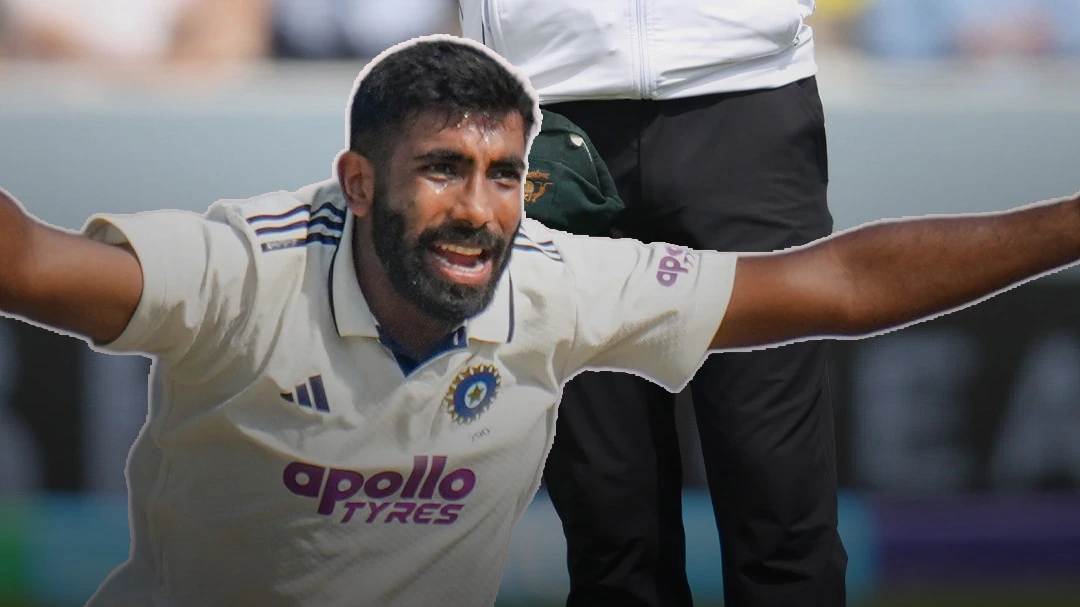
Jasprit Bumrah’s Anger Boils Over: Controversy Erupts During John Campbell’s Century in the Delhi Test
Jasprit Bumrah was furious with English umpire Richard Illingworth during West Indies’ Cricket has always been more than just a sport in India—it’s an emotion that binds millions. However, emotions can also boil over, as seen during the Delhi Test between India and the West Indies. The match, which was supposed to be a routine contest, turned into a heated debate about technology, umpiring, and the spirit of the game. Indian pace spearhead Jasprit Bumrah found himself in the middle of a major controversy after an umpiring decision by English official Richard Illingworth during John Campbell’s century innings sparked outrage on and off the field.
Let’s explore what exactly happened, how the drama unfolded, and what it tells us about the balance between passion and professionalism in modern cricket.
1. The Delhi Test: Setting the Stage
The India vs. West Indies Test at the Arun Jaitley Stadium in Delhi had all the makings of an exciting contest. India, led by Shubman Gill, had come off a string of victories at home, while the West Indies, under new leadership, were eager to prove that their red-ball side could still compete against the world’s best.
The pitch, a typical Delhi surface, offered early movement for seamers and later turned sharply for spinners. But the real story of the match wasn’t the pitch—it was the decision that made Jasprit Bumrah lose his composure.
2. The Incident That Sparked Controversy
It was Day 2 of the Test match. West Indies opener John Campbell had been batting confidently, mixing caution with aggression. He had reached the 90s when the crucial incident occurred.
Jasprit Bumrah delivered a perfect length ball that seemed to take the faintest of edges on its way to wicketkeeper KS Bharat. The Indian team went up in a loud appeal, convinced that Campbell had nicked it. On-field umpire Richard Illingworth, however, shook his head—not out.
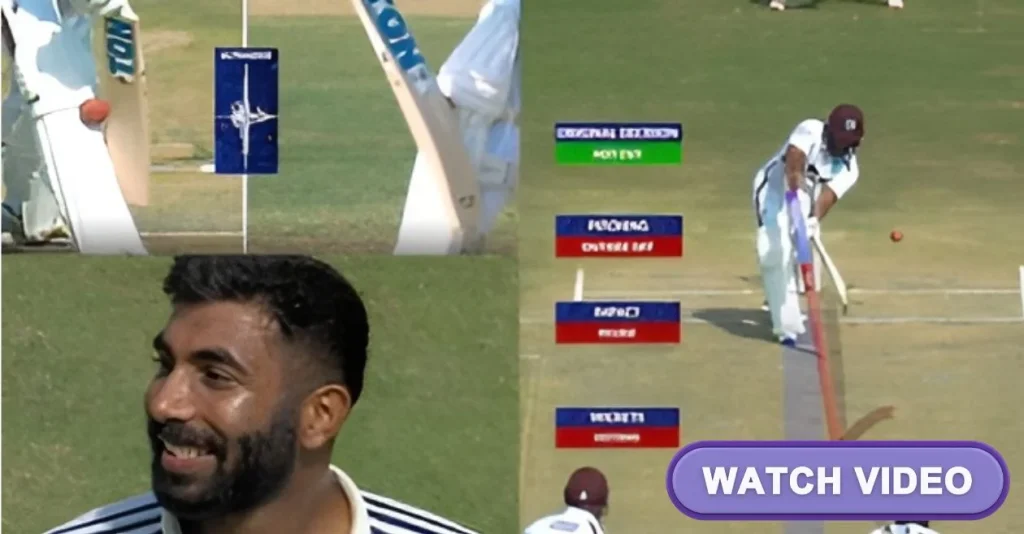
Skipper Gill immediately went for the DRS (Decision Review System), confident that the UltraEdge would show a spike.
And it did—a slight spike appeared just as the ball passed the bat. The Indian team expected the decision to be overturned, but to everyone’s shock, the third umpire upheld the on-field decision, stating that the spike was “inconclusive” and “could be due to another noise.”
That verdict didn’t sit well with Jasprit Bumrah.
3. Jasprit Bumrah’s Furious Reaction
Jasprit Bumrah, usually calm and composed, couldn’t believe what he had just witnessed. Television cameras captured him shaking his head in disbelief and muttering something under his breath. As play resumed, Bumrah was seen speaking to umpire Richard Illingworth at the end of his over, seemingly questioning the rationale behind the decision.
His frustration was understandable. In modern cricket, DRS technology is supposed to minimize such doubts. When there’s a visible spike exactly when the ball passes the bat, the benefit of the doubt rarely goes to the batter. But in this case, it did—and Campbell went on to score a brilliant 115 runs off 199 balls.
Jasprit Bumrah, after the day’s play, was heard saying:
“If that wasn’t out, I don’t know what is. We play with respect, but the decisions have to make sense.”
4. The Turning Point: How the Decision Impacted the Match
The decision turned out to be pivotal. At that moment, West Indies were reeling at 145 for 4. An early breakthrough could have opened the floodgates. Instead, Campbell settled back, regained his rhythm, and began counter-attacking.
His century was gutsy and well-crafted—but every run after that controversial decision felt like a wound to the Indian camp. The frustration was visible. Jasprit Bumrah, who had bowled an outstanding spell, seemed distracted for a few overs. Even captain Shubman Gill looked visibly irritated as the game began slipping away.

By the end of the day, West Indies reached 312 for 5, and the match had tilted slightly in their favor.
5. Richard Illingworth: A Profile in Pressure
Richard Illingworth, the English umpire at the center of this storm, is no stranger to big matches. A former England player turned ICC Elite Panel umpire, he has officiated in multiple World Cups and Test matches.
However, this decision brought renewed scrutiny to the umpiring fraternity. Fans questioned whether the DRS protocol was being followed correctly. Critics argued that Illingworth’s on-field decision had unduly influenced the third umpire’s call.
Cricket pundits like Aakash Chopra and Harsha Bhogle weighed in:
“If there’s a clear spike when the ball passes the bat, it should be out. Otherwise, what’s the point of DRS?” — Aakash Chopra
“This is the kind of inconsistency that frustrates players and fans alike.” — Harsha Bhogle
6. DRS Under the Microscope
This isn’t the first time that DRS has come under fire. From Hawk-Eye tracking to UltraEdge analysis, cricket has constantly debated the limits of technology.
The rule states that if the evidence is “inconclusive,” the on-field decision stands. However, players and experts often argue that the threshold for “conclusive” evidence is interpreted inconsistently.
Jasprit Bumrah’s reaction reflected a deeper frustration shared by many bowlers: that despite advancements in technology, the benefit of doubt still tends to favor batters.
7. Campbell’s Century: Brilliant or Fortunate?
To his credit, John Campbell made the most of his second chance. Once the decision went in his favor, he displayed remarkable composure, dispatching loose deliveries with elegance and punishing anything short or wide.
His 115 off 199 balls included 14 fours and 2 sixes—a technically sound innings on a challenging pitch. However, even Campbell’s celebrations were subdued, perhaps acknowledging the controversy surrounding his century.
In the post-match press conference, when asked about the incident, Campbell diplomatically said:
“Sometimes things go your way, sometimes they don’t. I just focused on batting.”
8. Social Media Erupts
The moment the replay aired, social media platforms exploded with reactions.
- #JaspritBumrah and #Illingworth began trending on X (formerly Twitter).
- Indian fans accused the umpires of “bias” and called for the ICC to review the decision.
- West Indies supporters, on the other hand, applauded Campbell’s resilience and dismissed the criticism as “overreaction.”
Cricket YouTubers and analysts broke down the footage frame-by-frame, showing how the UltraEdge spike aligned perfectly with the ball’s passage past the bat.
Memes flooded in:
- “Jasprit Bumrah appealing to logic like…”
- “DRS = Don’t Review Seriously!”
The incident reignited the debate over whether human intervention in DRS decisions should be reduced further.
9. Bumrah’s Legacy and Temperament
Jasprit Bumrah’s fiery response was unusual—but not out of character for a bowler of his caliber. Known for his precision and composure, Jasprit Bumrah rarely lets emotions take over. But when he does, it often points to something deeper—his uncompromising commitment to fairness and accuracy.
Over the years, Jasprit Bumrah has become a role model for young cricketers worldwide. His work ethic, discipline, and ability to bounce back from setbacks make him one of modern cricket’s most respected figures.
This incident, if anything, showed that even the calmest professionals can lose patience when the system fails them.
10. ICC and BCCI: What Next?
According to sources close to the Board of Control for Cricket in India (BCCI), the team management is likely to raise the issue with the match referee and seek a review of the DRS protocol.
While no official complaint has been made yet, reports suggest that India’s team analyst has already shared video evidence highlighting the UltraEdge spike.
The International Cricket Council (ICC), meanwhile, has maintained that all DRS procedures were followed “as per protocol.” However, insiders admit that such incidents dent the credibility of technology-assisted decisions.
11. Experts’ Take
Former Indian captain Sourav Ganguly commented on the controversy, saying:
“Jasprit Bumrah’s reaction was natural. Players invest emotion in every delivery. If technology shows a spike, there should be consistency in how it’s interpreted.”
Ex-umpire Simon Taufel, one of the most respected officials in cricket history, added perspective:
“The DRS system is designed to assist, not replace, human judgment. But when technology clearly indicates contact, the spirit of the game demands fair recognition.”
12. Lessons for the Future
This episode raises important questions about the balance between human judgment and technological assistance in cricket.
- Should third umpires have the authority to override on-field calls more frequently?
- Should the “inconclusive” clause be redefined?
- Should players have the right to challenge third umpire decisions in rare cases?
Cricket’s governing bodies will need to find answers soon, as the sport becomes increasingly data-driven and reliant on technology.
13. The Emotional Side of the Game
Beyond the rules and technology, the Delhi Test incident reminded fans why they love cricket. It’s not just about runs and wickets—it’s about passion, pride, and human emotion.
Jasprit Bumrah’s anger wasn’t about personal ego—it was about fighting for his team and the integrity of the game. In that moment, he became the voice of every player who has felt wronged by inconsistency in decision-making.
14. Match Summary
Despite the controversy, the match remained a fascinating contest.
- West Indies 1st Innings: 389/8 (decl.)
- John Campbell – 115
- Jermaine Blackwood – 84
- Jasprit Bumrah – 3/74
- India 1st Innings: 322 all out
- Yashasvi Jaiswal – 91
- Gill – 67
- Match Result: Drawn (Rain-affected last day)
While the game ended peacefully, the debate around the DRS call continued long after stumps were drawn.
15. Conclusion: A Lesson in Technology and Temperament
The Delhi Test will be remembered not just for John Campbell’s gritty century, but for the storm it created. It exposed the gray areas in cricket’s technological systems and highlighted how even the best players can be driven to frustration when fairness appears compromised.
Jasprit Bumrah’s outburst wasn’t merely anger—it was a reflection of a player’s deep belief in the spirit of the game.
In the end, cricket isn’t just about technology or umpiring—it’s about trust. Trust between players, officials, and fans. And when that trust wavers, even the most beautiful game in the world feels a little less perfect.
Read more latest sport news