

Google Maps’ Indian Challenger: Ashwini Vaishnaw Promotes Mappls as India’s Own Navigation Revolution
In the age of digital navigation, where Google Maps has dominated global positioning and route-mapping for years, a new wave of indigenous innovation is taking shape in India. Union Minister for Railways, Communications, and IT, Ashwini Vaishnaw, recently made headlines by publicly promoting Mappls — a Made-in-India alternative to Google Maps — calling it a symbol of India’s growing technological self-reliance. His statement has sparked a nationwide discussion about Atmanirbhar Bharat, digital sovereignty, and the future of Indian mapping technology.
This 3000-word blog explores why Vaishnaw’s endorsement matters, what makes Mappls unique, how it challenges Google Maps’ dominance, and what it means for India’s digital ecosystem and data independence.
1. The Rise of Mappls: India’s Own Mapping Revolution
The story of Mappls begins with MapmyIndia, a pioneering Indian company that has been mapping the country’s geography long before Google Maps became mainstream. Founded in 1995 by Rakesh and Rashmi Verma, MapmyIndia started by creating digital maps for government departments and automobile manufacturers.
In 2021, the company launched Mappls, its consumer-facing navigation app — a direct alternative to Google Maps. Unlike its global competitor, Mappls is entirely developed, hosted, and managed in India, offering users a sense of national pride and data security.
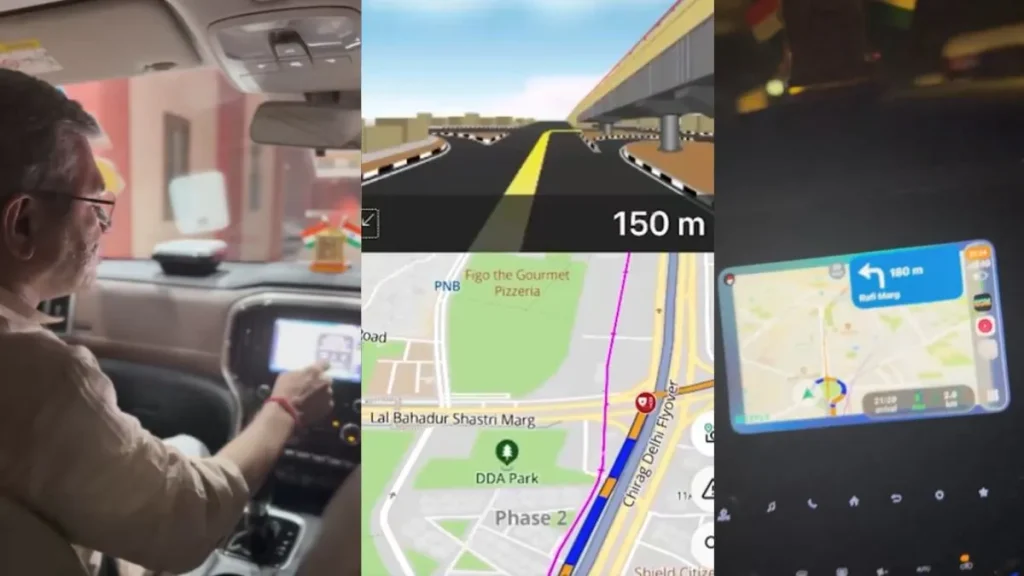
The app provides turn-by-turn navigation, real-time traffic updates, street-level imagery, and advanced 3D mapping — all crafted from data sourced indigenously.
When Ashwini Vaishnaw endorsed it, he didn’t just promote an app; he backed a vision of digital independence for India.
2. Ashwini Vaishnaw’s Endorsement: A Strong Message from the Government
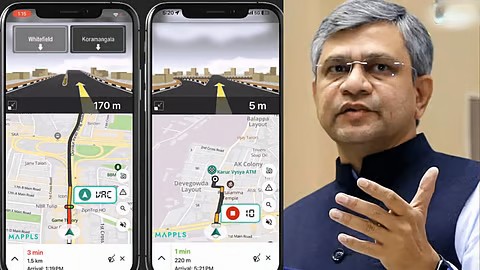
Union Minister Ashwini Vaishnaw recently took to social media to share his personal experience using Mappls, saying:
“Tried out the Indian app Mappls — it’s smooth, fast, and made in India! Proud of our innovators creating world-class tech solutions.”
This single message sparked a surge in downloads and national curiosity. It was more than a product endorsement; it was a policy signal — a push for citizens to adopt Indian alternatives to global tech monopolies.
In his capacity as Minister for Electronics and IT, Vaishnaw has been a key figure driving India’s Digital Public Infrastructure (DPI) agenda — a framework promoting indigenous digital platforms like UPI, ONDC, and now, Mappls.
By publicly backing Mappls, Vaishnaw reinforced the idea that India is ready to compete with Silicon Valley on its own terms, especially in strategic sectors like data, navigation, and artificial intelligence.
3. Why India Needs Its Own Mapping Ecosystem
India’s digital economy has grown exponentially, but much of its navigation and location data is controlled by foreign tech giants. This raises concerns about data privacy, national security, and economic dependency.
Google Maps aren’t just about finding directions — they are about strategic information. From urban planning and logistics to disaster management and defense mobility, accurate mapping is a national asset.
Relying solely on an American company like Google for such a crucial infrastructure tool leaves India vulnerable to data asymmetry — where location intelligence about Indian users and businesses is stored and monetized abroad.
Mappls aims to fix this imbalance. Built and operated in India, it ensures that critical mapping data stays within national borders, aligning with the vision of Digital India and Atmanirbhar Bharat.
4. What Makes Mappls Different from Google Maps
While Google Maps is the global standard, Mappls offers several India-centric advantages that set it apart:
a. Indigenous Data Ownership
Mappls sources, processes, and stores all mapping data within India. This ensures full data localization, complying with government regulations and ensuring that sensitive geographical information is not accessible to foreign entities.
b. Advanced 3D Google Maps and Real-View Navigation
Mappls offers 3D navigation, drone imagery, and street-level visualizations for major cities — features tailored for India’s dense urban environments.
c. Real-Time Traffic and Safety Alerts
The app integrates real-time updates on traffic jams, road hazards, and even air quality, giving users a 360-degree view of their travel environment.
d. Privacy-Focused Approach
Unlike Google Maps, which tracks and monetizes user data for advertising, Mappls promises a privacy-first model — no targeted ads, no hidden tracking.
e. Integration with Indian Platforms
Mappls seamlessly integrates with ISRO’s NavIC satellite navigation system, Digital India frameworks, and e-governance tools. It can even be linked with UPI-enabled services and logistics APIs, making it an all-in-one Indian mobility ecosystem.
5. Public Reaction: A Wave of Support and Pride
Following Vaishnaw’s endorsement, #Mappls trended on X (formerly Twitter), with thousands of users sharing screenshots and experiences of using the app. Many expressed pride in using an Indian-made product that rivals Google’s quality.
Users noted that the app offers precise pin codes, localized street names, and even custom location codes called Mappls eLocs — unique digital addresses for every location in India.
Prominent entrepreneurs and influencers also jumped in, with startup founders calling it a “bold step towards data sovereignty.”
One user wrote:
“Finally, an Indian app that challenges Google Maps! Mappls is fast, accurate, and respects my privacy. Kudos to Ashwini Vaishnaw for highlighting it.”
Another tweeted:
“Mappls is not just an app — it’s a statement. India is ready to lead in digital mapping too!”
6. Google Maps vs. Mappls: The Showdown
| Feature | Google Maps | Mappls (India) |
|---|---|---|
| Origin | USA (Google LLC) | India (MapmyIndia) |
| Data Storage | Global servers (mostly in the US) | Indian servers (data localized) |
| Satellite Integration | GPS (US-based) | ISRO’s NavIC (India-based) + GPS |
| Privacy Policy | Tracks user data for ads | No ads, privacy-first model |
| 3D Navigation | Limited to select cities | Expanding 3D navigation across metros |
| Offline Maps | Available | Available |
| Real-Time Traffic Alerts | Yes | Yes (enhanced for Indian roads) |
| Government Support | None | Strong (endorsed by IT Minister Ashwini Vaishnaw) |
This head-to-head comparison shows that while Google Maps remains a powerful global tool, Mappls is carving a niche as a nationally driven, privacy-focused, and localized alternative.
7. The Broader Vision: Digital Atmanirbharta
Ashwini Vaishnaw’s backing of Mappls aligns perfectly with Prime Minister Narendra Modi’s vision of an Atmanirbhar Bharat (Self-Reliant India).
The idea isn’t just about producing hardware or apps in India, but about creating entire ecosystems that operate independently of foreign dependence.
From UPI (which revolutionized digital payments) to ONDC (which aims to democratize e-commerce), India is building a robust digital infrastructure.
Mappls fits into this ecosystem — as the foundation of navigation and geospatial intelligence that powers logistics, transport, delivery, and urban governance.
In Vaishnaw’s own words:
“When India builds its own platforms, it doesn’t just create technology; it builds trust, security, and sovereignty.”
8. Partnership with ISRO: The NavIC Advantage
One of the key differentiators for Mappls is its collaboration with ISRO (Indian Space Research Organisation). The integration with NavIC, India’s homegrown navigation satellite system, enhances accuracy, reliability, and independence.
NavIC provides superior coverage in the Indian region, outperforming GPS in dense urban zones where signal interruptions are common.
This makes Mappls particularly useful for defense, logistics, and disaster response — areas where foreign dependency poses serious security risks.
This ISRO-Mappls collaboration represents the fusion of government and private innovation, showing how India’s public and private sectors can jointly build critical digital infrastructure.
9. Challenges Ahead: The Road to Mass Adoption
While Mappls has received government support and public appreciation, the journey ahead isn’t without hurdles.
- User Habit and Familiarity: Google Maps has been around for over a decade. Convincing users to switch requires consistent performance and awareness campaigns.
- Developer Ecosystem: Many third-party apps and services integrate with Google Maps APIs. Mappls must attract developers to build on its platform to expand usability.
- Continuous Updates: Maintaining real-time accuracy for millions of routes and addresses requires constant data validation — a costly, ongoing process.
However, with policy backing, public awareness, and corporate adoption, these challenges can be overcome.
10. Industry Impact: How Mappls Can Transform Indian Business
Mappls’ success could have a domino effect across multiple industries:
- E-commerce & Delivery: Companies like Swiggy, Zomato, and Amazon India can use localized data to improve delivery accuracy.
- Transportation & Logistics: Trucking and courier companies can optimize routes with Indian terrain data.
- Smart Cities: Government projects under the Smart Cities Mission can integrate Mappls for better urban planning and infrastructure mapping.
- Tourism: Enhanced 3D navigation and cultural mapping can revolutionize travel experiences for domestic and international tourists.
By localizing these services, India could save millions in licensing fees and strengthen its digital GDP.
11. The Global Signal: India as a Tech Creator, Not Just a Consumer
For decades, India has been viewed as a market for global tech giants. The rise of Mappls — and Vaishnaw’s vocal support — flips that narrative. It positions India as a creator of cutting-edge technology, not just a consumer.
This is part of a larger global trend where countries are asserting digital sovereignty. Just as China built Baidu Google Maps and Russia developed Yandex, India now has Mappls — its own mapping powerhouse.
12. Voices from the Tech Community Ashwini vaishnaw
Tech experts have praised the government’s stance.
NASSCOM President Debjani Ghosh remarked:
“Supporting indigenous platforms like Mappls is critical. It ensures India’s data remains in India and nurtures domestic innovation.”
Entrepreneur Anand Mahindra has also previously lauded MapmyIndia for its pioneering work, saying it “proves that Indian companies can lead the world in deep-tech innovation.”
13. The Nationalistic Sentiment: ‘Swadeshi Navigation’
For many Indians, Mappls represents more than just an app — it symbolizes Swadeshi innovation in the digital age.
Just as India embraced local brands during the freedom movement, this generation’s “Swadeshi” movement is digital — about controlling data, platforms, and algorithms.
Ashwini Vaishnaw’s words encapsulate this perfectly:
“Why depend on global platforms when our own are better, faster, and safer?”
14. The Future of Mapping: AI, AR, and Beyond Ashwini vaishnaw
Mappls is not just competing — it’s innovating. The company is investing heavily in AI-based predictive mapping, Augmented Reality navigation, and autonomous vehicle support.
Future updates aim to integrate real-time accident detection, voice-based navigation in Indian languages, and personalized route optimization based on weather and fuel consumption.
These innovations could place Mappls among the global leaders of geospatial intelligence, reshaping how Indians interact with the world around them.
15. Conclusion: A New Direction for Digital India Ashwini vaishnaw
Ashwini Vaishnaw’s public endorsement of Mappls is more than a tech headline — it’s a symbol of national transformation.
It signals that India is not content being a digital colony dependent on foreign apps. Instead, it is building its own platforms — secure, scalable, and sovereign.
If UPI changed the world of payments, Mappls (Ashwini vaishnaw) could redefine navigation for India and beyond.
As Vaishnaw aptly put it, India’s innovators are proving that “Made in India” can mean world-class technology — built not just for Indians, but for the world.
Read more latest news

