
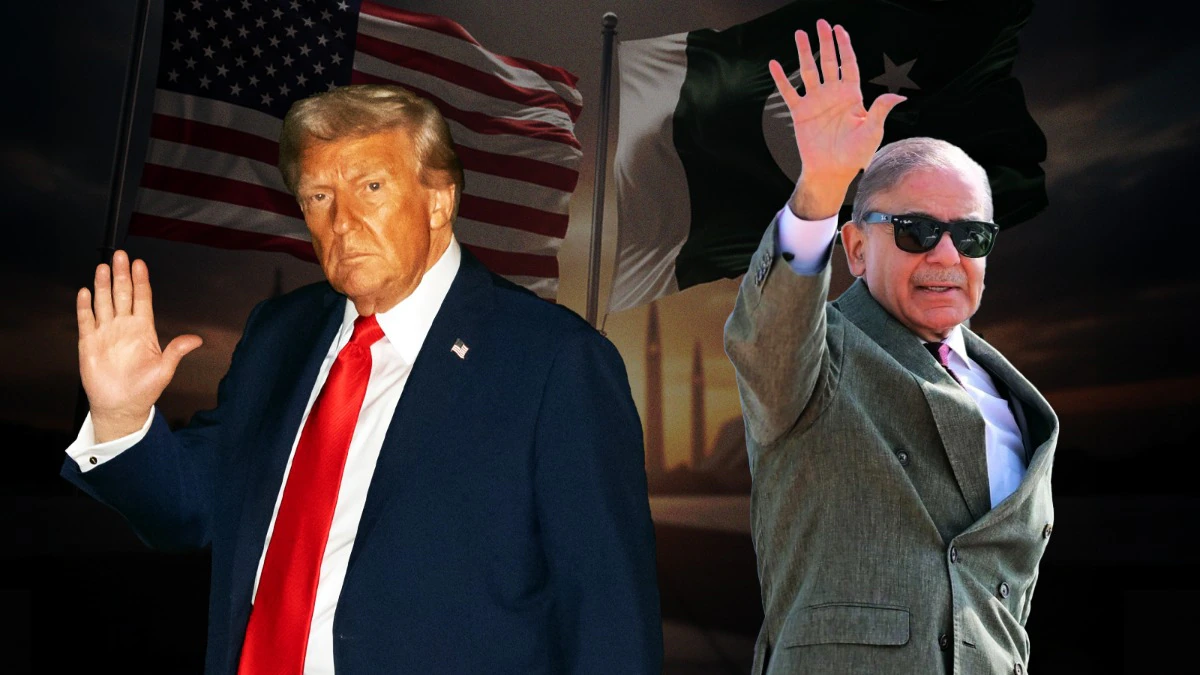
From Sharm el-Sheikh to Social Media: Meloni’s reaction Viral Moment over Shahbaz Sharif Trump Nomination
Read More Gaza place pale
Shahbaz Sharif re-nominating Trump for the Nobel Peace Prize from the Gaza Peace Summit goes viral. In October 2025, at the Gaza Peace Summit in Sharm el-Sheikh, global attention centered on ceasefire deals, diplomatic maneuvering, and who would be credited for brokering peace. Among the many headline moments, one gesture stood out on social media: Italian Prime Minister Giorgia Meloni’s facial reaction when Pakistani Prime Minister Shahbaz Sharif publicly re-nominated Donald Trump for the Nobel Peace Prize.
That split-second expression — part surprise, part inscrutable — was captured by cameras, clipped into memes, and circulated across platforms, accompanied by commentary, speculation, and satire. While the moment is small in diplomatic scale, it provides a window into complex relations between personalities, strategy, image, and geopolitics in the post-summit narrative.
In this blog, we explore:
- What happened at the Summit — Shahbaz Sharif nomination and Meloni’s reaction
- The viral spread of the clip and its interpretations
- Meloni’s political posture and diplomatic constraints
- Strategic messaging: Why Shahbaz Sharif nominated Trump and what Meloni’s reaction suggests
- Implications for Italy, for the Gaza peace agenda, and for alliances
- Larger lessons about optics, narrative, and soft power in modern diplomacy
Let’s begin with context.
I. Setting the Stage: Gaza Peace Summit, Shahbaz Sharif Nomination & the Moment
1. The 2025 Gaza Peace Summit: A Brief Recap
The 2025 Gaza Peace Summit (also called the Sharm el-Sheikh Summit) convened on October 13, 2025, in Egypt. It was convened to push forward the first phase of a Gaza peace plan, following years of conflict, humanitarian crisis, and stalled diplomacy.
While the summit was co-chaired by Donald Trump (representing the U.S.) and Abdel Fattah el-Sisi (Egypt), representatives for Israel and Hamas were not directly present.
In that charged diplomatic atmosphere, Khan, regional leaders, and international participants delivered statements on peace, ceasefire, reconstruction, and roles of different actors. Amid such proceedings came the moment — and the gesture — that would soon travel far beyond the summit halls.
2. Shahbaz Sharif Re-Nominates Trump: What He Said
At the summit, Pakistani Prime Minister Shahbaz Sharif made headlines by announcing that Pakistan would re-nominate Donald Trump for the Nobel Peace Prize, citing his role in brokering peace between India and Pakistan and, especially, his mediation efforts regarding the Gaza truce. Multiple news outlets covered the statement.
His exact words included recommendations that Trump’s diplomatic involvement “saved millions of lives” and helped bring ceasefire efforts in Gaza and peace efforts in South Asia.
That re-nomination (or reaffirmation) grabbed global media attention, both for its boldness and for the sense of gesture diplomacy in a gathering already rife with symbolism.
3. The Moment: Meloni Reaction Caught on Camera
During Shahbaz Sharif’s announcement or in the immediate vicinity of it, cameras captured Giorgia Meloni’s reaction facial expression — a flicker of surprise or bemusement. The imagery was subtle: not a dramatic reaction, but noticeable enough that social media users quickly clipped it and made it go viral.
This kind of “caught in the frame” moment is not new in diplomacy — but rarely does such a minor gesture get woven into larger narrative threads so swiftly.
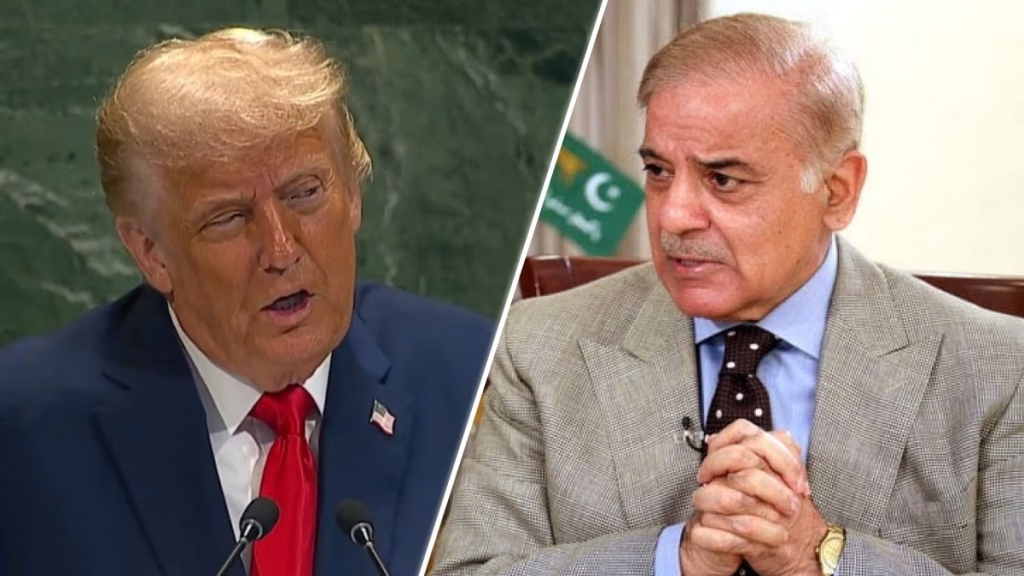
On social media, the clip was circulated with captions such as:
- “When you didn’t expect Shahbaz Sharif to nominate Trump again…”
- “Meloni reaction says it all”
- “Italy watching Pakistan play diplomatic chess”
Some accounts even paired the clip with meme formats or GIFs to exaggerate or humorize the expression.
Thus, a fleeting on-camera reaction became a symbolic piece of commentary in the larger diplomatic theater.
II. Why the Clip Resonated & How It Went Viral
It’s important to ask: why did this moment resonate so much more than hundreds of other summit interactions? Several factors combined to amplify it.
1. The Power of Microexpressions in Public Diplomacy
In diplomacy, gestures, facial expressions, and body language carry weight — they hint at underlying stances, disagreements, or emotional responses that words may hide. Observers often read into these “tells” for clues about alliances or disagreements.
Meloni’s reaction, as a prominent Western leader, was under photographic and video scrutiny throughout. A slightly raised eyebrow or shifted glance becomes fodder for narrative.
Once social media users caught the clip, it gave them a visual entrée into speculation: Was she surprised? Displeased? Caught off guard? Or merely neutral? That ambiguity invites commentary.
2. The Surprising Nomination & Political Stakes
The re-nomination of Trump by Shahbaz Sharif was itself a surprising move, especially at a peace summit focused on Gaza. That injected the event with extra drama. The optics of a leader from South Asia endorsing a U.S. former president for Nobel in a Middle Eastern forum was headline-grabbing.
When that unfolding moment intersects with another leader’s visible reaction — Meloni’s reaction— it becomes symbolic. It’s like watching a live chessboard, and players’ reactions become part of the play.
3. Meme Culture, Social Media Amplification & Short Attention Spans
In today’s media landscape, moments that can be clipped and captioned are amplified. The reaction video’s brevity made it perfect for TikTok, Instagram Reels, X (formerly Twitter), and WhatsApp forwards.
Once even a small chunk of the diplomatic community or media commentators flagged it, the momentum grew.
4. The Role of Political Narratives and Partisanship
Meloni’s reaction is a polarizing figure — viewed favorably by the political right, skeptically by her critics. Many saw in her reaction a symbolic contest: how would she respond to a bold, cross-regional diplomatic gesture involving Trump? Some partisan commentators interpreted her reaction as skepticism, judgment, or diplomatic discomfort; others claimed it was neutral or even favorable.
Because her political identity is already contested, her microreactions get read politically — not just diplomatically.
Thus, the viral moment crystallized something broader: expectations, alliances, and narratives in the post-summit era.
III. Meloni’s reaction: Political Posture, Constraints & Diplomatic Messaging
To understand her reaction (and the interpretations of it), we need to look at Meloni’s reaction position, Italy’s diplomacy, her constraints, and her broader messaging.
1. Giorgia Meloni’s Political Identity and Foreign Policy Style
Meloni leads a right-wing government in Italy, with strong leanings toward national identity, sovereignty, and conservative values. She often blends populist posture with strategic diplomacy.
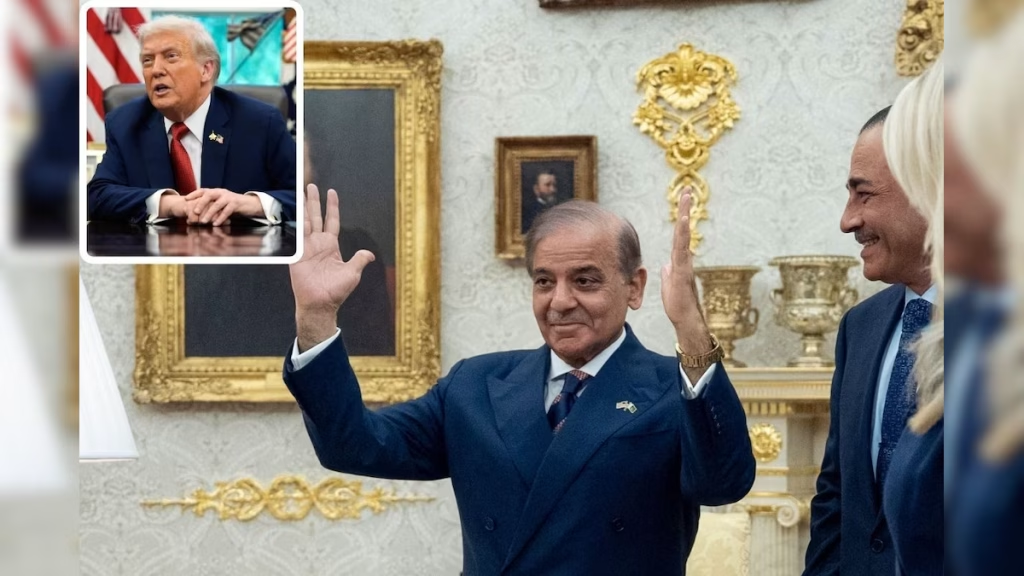
She has been vocal on matters of immigration, national security, and alignment with European conservative blocs. She tends to walk a fine line between emphasizing Italian sovereignty and maintaining Italy’s role within EU foreign policy.
In recent months, she has taken strong pro-Israel stances in relation to the Gaza conflict, while also stressing the need for humanitarian relief in Gaza. (Media reports suggest she viewed Trump’s “ambitious plan” as a possible turning point in the war.
So, in that context, her reaction to a diplomatic maneuver involving Trump would be colored by her existing posture: cautious alignment, domestic scrutiny, and external expectations.
2. Diplomatic Constraints: EU Alignment, Middle East Sensitivities & Optics
As leader of a European power, Meloni cannot simply act unilaterally without considering European Union foreign policy coherence. Her reaction cannot be overtly confrontational in a setting meant for diplomacy and consensus-building.
Moreover, in a summit focused on Gaza, many of the participants are from the Middle East, Muslim-majority countries, and nations sensitive to the Israeli-Palestinian conflict. A leader’s reaction to a controversial nomination could be interpreted as signaling a broader stance on U.S. involvement, regional legitimacy, or power projection.
Therefore, while she may have personal reactions or private reservations, she must manage optics carefully.
3. Strategic Signaling: What Her Reaction Implies
Given all this, what might Meloni’s reaction — as read by observers — signal?
- Measurement over Enthusiasm: Her restrained or surprised look suggests she was not expecting Shahbaz Sharif’s move; she may have been cautious about overt endorsement.
- Ambiguity as Strategy: By not visibly reacting strongly (in favor or against), she leaves room to calibrate her diplomatic stance in coming hours or days.
- Signaling to Allies and Opponents: Her reaction may be read in capitals like Washington, Brussels, and Cairo — diplomats and analysts will parse whether she views Shahbaz Sharif’s gesture as opportunistic, benign, or potentially disruptive.
In sum, while the reaction clip is just a moment, its significance rises from the intersection of diplomatic posture, identity politics, and the narrative moment that followed Shahbaz Sharif’s bold nomination.
IV. Shahbaz Sharif’s Nomination, Trump’s Aspirations & Meloni’s Position in that Chessboard
To further interpret Meloni’s reaction, it helps to unpack the motivations behind Shahbaz Sharif’s nomination and Trump’s role in the summit narrative — and how Meloni fits into those dynamics.
1. Why Sharif Re-Nominated Trump
Shahbaz Sharif’s re-nomination of Trump at the summit was a strategic move — not purely ceremonial. A few possible motivations:
- Boosting diplomatic credibility: Aligning Pakistan with the summit’s peace agenda. Casting Trump as a mediator helps Shahbaz Sharif claim Pakistan is proactive, influential, and moral in global diplomacy.
- Regional signaling: By endorsing Trump, Shahbaz Sharif signals to India, the U.S., and other powers that Pakistan seeks recognition for its role in brokering regionally relevant diplomacy.
- Narrative leverage: The nomination allows Shahbaz Sharif to push back against Pakistani domestic critics, portraying himself as engaged on the world stage.
- Trump’s personal ambitions: Trump has long coveted the Nobel Peace Prize. Shahbaz Sharif’s nominating him adds legitimacy to that ambition and joins a chorus of others nominating him.
Because of these overlapping goals, the gesture is not just symbolic — it’s an attempt to shape the post-summit narrative around who has ownership of “peace broker” status.
2. Trump’s Role & Expectations
Trump’s co-chairing of the summit, his mediation initiatives in Gaza, and his claims of conflict resolution (India-Pakistan, Middle East) have positioned him centrally in the discourse of “who deserves credit for peace.” Some nations (including Israel, Armenia) publicly supported him for future Nobel nominations.
For Trump, every nod in his favor helps bolster his global image as a statesman, which is important politically and symbolically.
Thus, Shahbaz Sharif’s nomination amplifies that narrative — and any reaction by other leaders becomes part of that competition for narrative legitimacy.
3. Meloni’s Role: Ally, Spectator, Gatekeeper
Meloni sits between several currents:
- She must manage Italy’s position in European foreign policy.
- She likely has a tactical interest in not alienating either the U.S. (where Trump remains influential) or regional powers.
- She needs to maintain credibility with domestic constituencies on foreign policy competence and not appear subsidiary to more assertive players.
Thus, her observed reaction (rather than immediate publicly affirming or rejecting Shahbaz Sharif’s nomination) gives her flexibility — she can later frame her stance in alignment or caution, depending on how the narrative evolves.
V. Implications & Possible Outcomes
Though the moment is small, the ripple effects may matter in several domains: diplomacy, public narrative, alliances, and soft power.
1. For Italy and Meloni’s Foreign Policy Credibility
- If critics interpret her reaction as dismissive, opponents domestically may argue she is detached from global influence.
- If she later explicitly endorses or distances herself from Shahbaz Sharif’s move, it will contribute to signals about Italy’s alignment with U.S. or regional peace agendas.
- The viral clip places Meloni’s image under a microscope: calm, composed responses in such moments matter for how she is perceived globally.
2. For the Gaza Peace Agenda
- The episode highlights how side gestures, nominations, and global optics can overshadow substantial agreements in public memory.
- It reminds summit organizers that controlling the narrative is as important as the agreements themselves.
- If Meloni later weighs publicly into the “who deserves credit” debate, it could shape coalitions or alliances in reconstruction funding and diplomacy.
3. For U.S. and Transatlantic Relations
- A European leader’s visible reaction to a gesture promoting Trump has symbolic weight. It could be parsed by U.S. political actors as friendly, cautious, or neutral.
- For Trump’s supporters, such a reaction might be read as implicit acknowledgment or validation. For his critics, the reflexive questioning of a European leader’s posture gains ammunition.
4. On Soft Power, Narrative Control & Media
- The viral moment underscores how modern diplomacy is as much theater as substance.
- Leaders must now anticipate how every glance, smile, or non-verbal cue may become fodder for media and meme culture.
- The clip also illustrates how public diplomacy and narrative control now extend into seconds-long camera grabs.
VI. Interpreting the Moment: Multiple Lenses
We should avoid over-reading the moment — but it is instructive to examine it through multiple lenses.
A. A Moment of Surprise or Unpreparedness
Maybe Meloni simply did not expect Shahbaz Sharif’s nomination at that time. The reaction may reflect a spontaneous reaction rather than a considered diplomatic stance.
B. A Diplomatic Restraint
Her reaction might intentionally be measured — not too positive, not too negative — leaving her options open in interviews or later statements.
C. Symbolic Disapproval or Discomfort
Some commentators interpret her expression as subtle skepticism — possibly questioning the propriety or logic of renominating Trump in that context.
D. Non-Interpretive: A Facial Tick
It’s possible her expression was mundane — a momentary look not meant to carry weight. The fact it got amplified is more about narrative hunger than actual meaning.
The truth is likely a mix: a fleeting moment, captured in a charged context, then amplified by media and political storytelling.
VII. How the Media and Social Platforms Framed It
The viral clip did not exist in a vacuum. Media outlets, commentators, and social users added layers of meaning.
- Headlines framed it as “Meloni’s reaction when Shahbaz Sharif nominates Trump” or “Italian PM looks surprised as Pakistan nominates Trump again.”
- Opinion writers used the clip to explore Italy’s position vs. U.S. and Middle East diplomacy.
- Meme creators turned it into GIFs, side-by-side reaction compilations, and humorous reinterpretations.
- Diplomatic analysts flagged it in newsletters and commentary as a “body language cue worth watching in summit diplomacy.”
- Political rivals in Italy will likely use it to critique her foreign policy engagement or reactions to global gestures.
Thus, the moment became a tiny pivot around which larger narratives spin.
VIII. What Meloni Could Do Next (and Should Consider)
To manage this narrative, Meloni has several paths forward:
- Issue a Clarifying Statement
She can comment on the summit, her support (or measured critique) for Trump’s nomination, and underscore Italy’s position in the peace process. A mild, diplomatic response would allow her to regain control of how the moment is framed. - Lean into the Peace Agenda
Rather than focusing on the nomination contest, she can emphasize her commitment to reconstruction, humanitarian aid in Gaza, and cooperation with European or Arab partners. - Control the Narrative Internally
In interviews, she can indicate that while she noticed Shahbaz Sharif’s gesture, her focus is on substance over symbolism. - Use the Moment in Diplomatic Messaging
The viral clip gives her an opportunity to signal her balance: that Italy is observing, that she is active, yet not reactive. She can portray calm competence rather than emotional alignment. - Avoid Overreactions
The more she defends or overinterprets her reaction, the more attention it draws. Often, letting the moment be — followed by substantive diplomacy — is wiser.
IX. Broader Lessons on Diplomacy in the Viral Age
This episode is illustrative of how diplomacy and public narrative intersect today more than ever. A few takeaways:
- Every glance matters: In high-stakes summits, even micro-expressions become data points for audiences.
- Photographic memory beats press releases: A soundbite or quiet deal may fade; but a compelling image or video spreads.
- Narrative control is part of diplomacy: Beyond agreements, how events are framed — and who gets credit — is central to influence.
- Leaders must anticipate optics: Non-verbal discipline is becoming a necessary skill.
- Viral moments can eclipse substance: There is danger that the peace terms or humanitarian policies are obscured by media fixation on gestures.
X. Conclusion: A Blink, a Message, a Moment Echoed
The viral clip of Meloni’s reaction to Sharif’s re-nomination of Trump is more than a footnote — it is a window into 21st century diplomacy, where every gesture is potentially amplified, read, and reinterpreted.
Though the moment is fleeting, its resonance is magnified by the context: a pivotal summit, competing claims to peacemaking credit, and dramaturgy in global politics.
What Meloni does next — in statements, posture, and action — will tell us more about whether that moment was incidental or emblematic.
In a world where diplomacy is lived as much in frames and feeds as in conference rooms, even a second’s reaction can open a thousand lines of interpretation.
Read more latest news

