
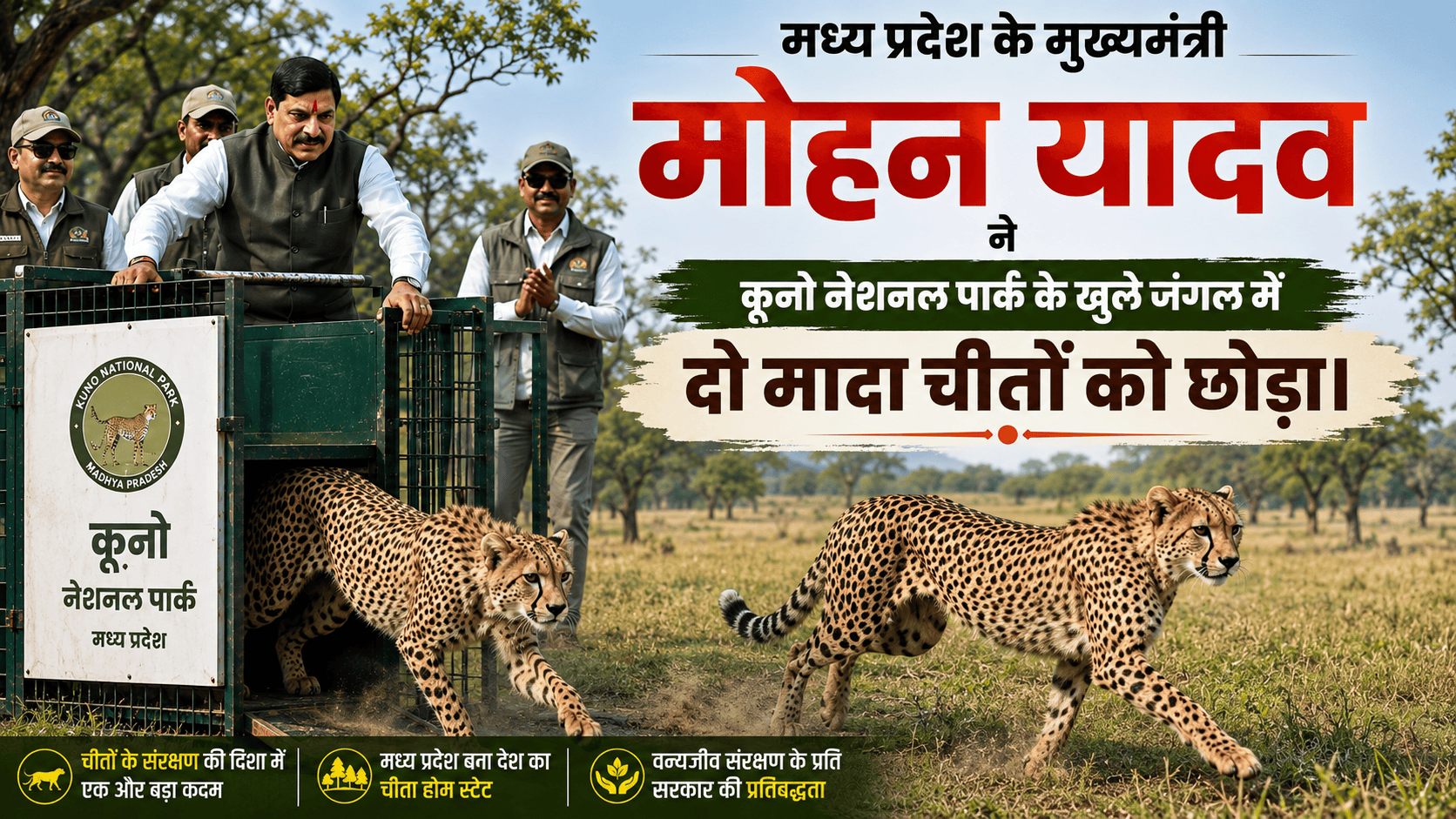
Madhya Pradesh CM Mohan Yadav Releases Two Female Cheetahs in Kuno National Park, Giving New Momentum to India’s Wildlife Conservation Campaign
The move has been hailed as a major milestone in India’s ambitious wildlife conservation campaign, bringing fresh hope to environmentalists, wildlife experts, and forest officials across the country.
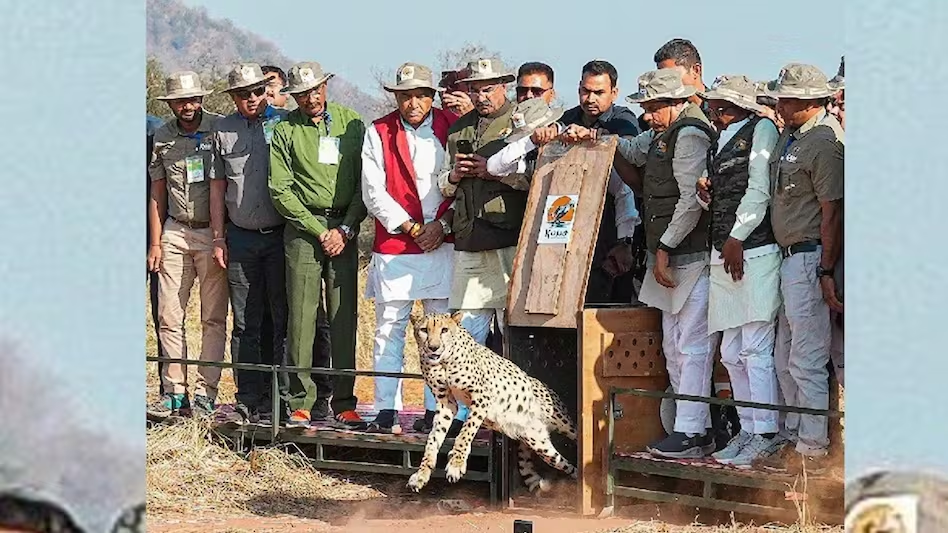
A historic moment unfolded in Madhya Pradesh as Chief Minister Mohan Yadav released two female cheetahs into the open forest area of Kuno National Park.
The release of the cheetahs into the natural habitat marks another important step in the reintroduction of cheetahs to India after decades of extinction. The event generated excitement among wildlife enthusiasts and local communities who gathered to witness this remarkable occasion. Experts believe this initiative will significantly strengthen the ongoing wildlife conservation campaign aimed at restoring ecological balance and protecting endangered species.
The atmosphere in Kuno National Park was filled with enthusiasm as forest officials, conservationists, and citizens celebrated the occasion. The release symbolizes India’s growing commitment toward biodiversity preservation and sustainable environmental practices.
A Historic Day for Kuno National Park
Kuno National Park has become the focal point of India’s ambitious cheetah reintroduction project. Spread across dense forests, grasslands, and river systems, the national park provides an ideal habitat for cheetahs to adapt and thrive.
The release of two female cheetahs into the open forest is considered a crucial stage in the broader wildlife conservation campaign because it demonstrates the confidence of experts in the animals’ ability to survive independently in the wild.
Chief Minister Mohan Yadav described the moment as a proud achievement for both Madhya Pradesh and the nation. He emphasized that protecting wildlife and maintaining ecological balance are essential responsibilities for future generations.
Forest officials explained that extensive preparations were made before releasing the cheetahs. The animals underwent health monitoring, behavioral assessments, and adaptation training to ensure they could adjust successfully to the natural environment.
The successful release has added new energy to the wildlife conservation campaign and increased public awareness about endangered species protection.
The Return of Cheetahs to India
India once had a thriving population of Asiatic cheetahs, but the species became extinct in the country decades ago due to hunting and habitat destruction. The cheetah reintroduction project aims to restore this magnificent animal to Indian forests.
The arrival and gradual release of cheetahs into Kuno National Park is one of the world’s most ambitious wildlife restoration efforts. Conservation experts believe this project could become a global example of species revival and habitat management.
The release of female cheetahs is particularly important because it may eventually contribute to breeding and population growth in the wild. This development is being viewed as a significant achievement in the larger wildlife conservation campaign focused on ecological restoration.
Wildlife scientists involved in the project stated that the cheetahs are being continuously monitored using advanced tracking systems. Their movements, hunting patterns, and adaptation to the environment are carefully studied.
The success of these efforts may pave the way for future expansions of the wildlife conservation campaign in other regions of India.
Mohan Yadav Commitment to Environmental Protection
Mohan Yadav has repeatedly emphasized the importance of environmental sustainability and wildlife preservation. During the cheetah release event, he highlighted how Madhya Pradesh continues to play a leading role in India’s forest and wildlife protection efforts.
The Chief Minister praised forest officials, scientists, veterinarians, and local communities for their contribution to the project. He said the release of the cheetahs reflects India’s determination to strengthen the wildlife conservation campaign and preserve natural heritage.
Madhya Pradesh is often referred to as the “Tiger State” of India because of its large tiger population. Now, with the successful cheetah project gaining momentum, the state is further strengthening its image as a leader in wildlife conservation.
Environmental groups welcomed the initiative and described it as an inspiring example of how governments can combine conservation science with public participation.
Importance of Female Cheetahs in the Ecosystem
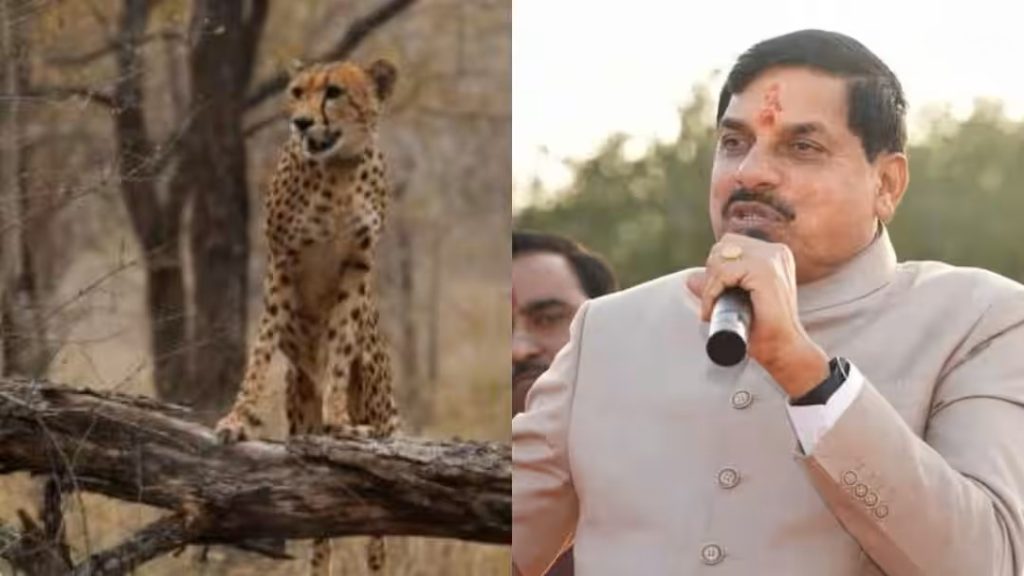
The release of female cheetahs into the wild has special ecological importance. Female cheetahs play a crucial role in establishing sustainable populations in natural habitats.
Wildlife experts explained that successful adaptation and future breeding could help create a self-sustaining cheetah population in India over time. This possibility has made the event even more significant within the ongoing wildlife conservation campaign.
Cheetahs contribute to maintaining ecological balance by regulating prey populations and supporting healthy grassland ecosystems. Their presence can also enhance biodiversity by influencing the behavior and movement patterns of other species.
Conservationists believe the successful establishment of cheetahs in Kuno National Park could inspire similar projects aimed at protecting endangered species across India.
The project has already attracted global attention from environmental organizations and wildlife researchers.
Role of Forest Officials and Scientists
Behind the success of the cheetah release lies years of scientific planning, habitat preparation, and dedicated work by forest officials and wildlife experts.
Special teams monitored the health and behavior of the cheetahs before their release. The animals were kept in controlled enclosures where they gradually adapted to local conditions and hunting environments.
Forest authorities also strengthened security measures to prevent poaching and human interference. Local communities were educated about the importance of the wildlife conservation campaign and encouraged to support conservation efforts.
Veterinarians and wildlife biologists continue to track the cheetahs using satellite collars and field observation systems. This monitoring helps ensure the animals remain healthy and safe.
Experts say the collaboration between scientists, forest departments, and policymakers has been essential for the success of the project.
Public Enthusiasm and Environmental Awareness
The release of the cheetahs generated widespread excitement among people across India. Images and videos from Kuno National Park quickly spread on social media, drawing praise from environmentalists and wildlife lovers.
Students, conservation groups, and local residents expressed happiness over the progress of the wildlife conservation campaign. Many people described the event as a proud moment for India’s environmental movement.
Educational institutions and environmental organizations also used the occasion to spread awareness about biodiversity protection and ecological sustainability.
The event encouraged discussions about the importance of forests, wildlife corridors, and responsible environmental policies. Conservation experts believe public participation will play a major role in the long-term success of wildlife protection initiatives.
Kuno National Park’s Growing Importance
Kuno National Park has now become one of India’s most important wildlife conservation zones. Once relatively lesser-known, the park is now attracting global recognition because of the cheetah reintroduction project.
The park’s grasslands, forests, and water sources provide a suitable environment for large predators and diverse wildlife species. Authorities have also invested in improving habitat management and ecological monitoring systems.
Tourism experts believe the success of the wildlife conservation campaign could significantly boost eco-tourism in the region. Increased tourism may create employment opportunities for local communities while promoting conservation awareness.
However, experts also caution that tourism development must remain environmentally sustainable to avoid disturbing wildlife habitats.
Challenges Facing the Cheetah Project
Despite the optimism surrounding the project, several challenges remain. Adapting cheetahs to a new environment requires constant monitoring and scientific management.
Experts note that factors such as climate conditions, prey availability, competition with other predators, and disease management must be carefully addressed. Ensuring adequate habitat connectivity is also essential for the long-term survival of cheetahs.
The success of the wildlife conservation campaign will depend on continuous policy support, funding, scientific research, and public cooperation.
Human-wildlife conflict is another concern. Authorities are working to ensure local communities benefit from conservation efforts so that coexistence remains peaceful and sustainable.
Conservationists stress that patience and long-term planning are necessary because ecological restoration projects often take years to show full results.
India’s Global Image in Wildlife Conservation
India has long been recognized globally for its efforts to protect endangered species such as tigers, elephants, rhinos, and lions. The cheetah project further strengthens the country’s international reputation in biodiversity conservation.
The successful release of female cheetahs demonstrates India’s commitment to scientific conservation practices and habitat restoration. International wildlife organizations have praised the project as a bold step in the global wildlife conservation campaign.
Experts believe India’s experience with tiger conservation provided valuable lessons that are now being applied to cheetah management.
The project also reflects growing awareness about the importance of protecting ecosystems in the face of climate change and environmental degradation.
Ecological Benefits of Predator Restoration
The return of cheetahs to Indian forests may provide several ecological benefits. Large predators play important roles in maintaining ecosystem stability and biodiversity.
Cheetahs influence prey populations, support healthy grasslands, and contribute to balanced food chains. Their presence can indirectly improve vegetation health and ecosystem resilience.
Environmental scientists say predator restoration is a key part of modern wildlife conservation campaign strategies worldwide. Restoring lost species helps revive natural ecological processes that may have weakened over time.
The success of the cheetah project may encourage further habitat restoration efforts for other endangered animals in India.
Local Communities and Conservation
The involvement of local communities has been crucial for the project’s success. Authorities conducted awareness programs to educate nearby villages about wildlife conservation and ecological benefits.
Many residents now view the cheetah project as an opportunity for regional development through tourism and employment. Local participation strengthens the broader wildlife conservation campaign by creating a sense of shared responsibility.
Community-based conservation models are increasingly recognized as effective tools for protecting biodiversity. Experts believe cooperation between governments and local populations is essential for long-term environmental success.
Villagers near Kuno National Park expressed pride in being associated with a globally significant conservation initiative.
Technology and Wildlife Monitoring
Modern technology has played an important role in the cheetah project. Satellite tracking collars, drones, GPS systems, and health monitoring tools are being used to study the cheetahs’ movements and behavior.
These technologies help forest officials respond quickly to potential risks and ensure the animals’ safety. The use of scientific monitoring reflects the advanced approach being adopted in India’s wildlife conservation campaign.
Researchers are collecting valuable data that could help improve future conservation programs both in India and internationally.
Educational and Scientific Importance
The cheetah project has also become an important educational and scientific initiative. Universities, wildlife institutes, and environmental organizations are studying the project closely.
Students and researchers are learning about habitat management, predator ecology, wildlife genetics, and biodiversity conservation through this initiative.
Experts say the project may contribute significantly to global conservation science and strengthen India’s role in international environmental research.
The successful release of the female cheetahs is now being viewed as a major milestone in the broader wildlife conservation campaign aimed at restoring ecological balance.
Future Prospects of the Project
Wildlife experts remain hopeful about the future of cheetahs in India. If the released cheetahs adapt successfully and future breeding occurs, the population could gradually expand over time.
Authorities are expected to continue improving habitat conditions and exploring additional conservation strategies. Plans may also include expanding protected wildlife corridors and strengthening ecological research.
The long-term success of the wildlife conservation campaign could transform India into a global leader in species restoration efforts.
Environmentalists believe the project has already inspired greater public interest in wildlife protection and biodiversity conservation.
Conclusion
The release of two female cheetahs into the open forests of Kuno National Park by Mohan Yadav marks a defining moment in India’s environmental history.
The initiative has brought fresh momentum to the country’s ambitious wildlife conservation campaign, inspiring hope among scientists, conservationists, and citizens alike. It symbolizes India’s commitment to restoring lost species, protecting biodiversity, and preserving ecological balance for future generations.
As the cheetahs begin their new life in the forests of Kuno, the project stands as a powerful reminder that determined conservation efforts can revive nature’s lost treasures. The success of this mission may shape the future of wildlife protection not only in India but across the world.
Read more latest news

