
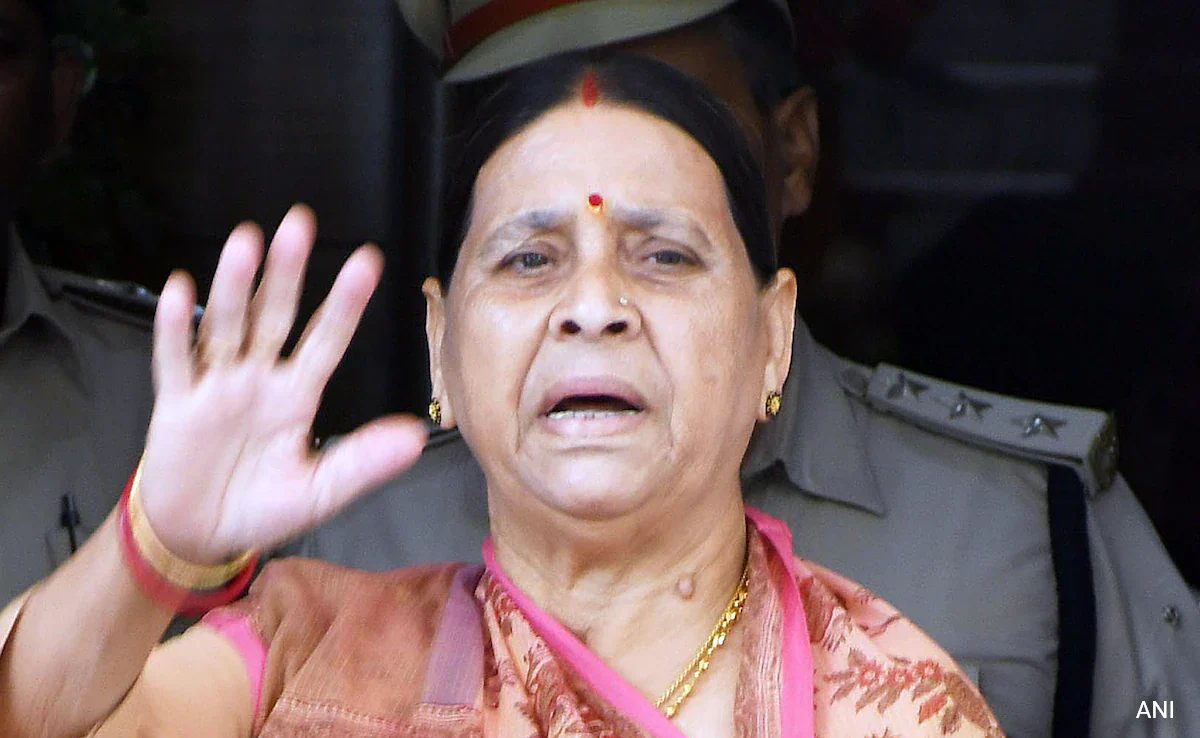
Rabri Devi Casts Her Vote, Wishes Tejashwi Yadav and Tej Pratap Yadav Ahead of the Bihar Elections
Introduction
Rabri Devi blessing As the early morning sun rose over Patna on election day, a familiar political face stepped out of her residence amid a swarm of cameras and supporters. Rabri Devi, the former Chief Minister of Bihar and matriarch of the Lalu Yadav family, arrived at a polling booth to cast her vote. Dressed in her traditional saree and calm demeanor, she smiled and greeted reporters before delivering a heartfelt statement that immediately went viral across Bihar:
“Both sons have mother’s blessings.”
With those simple yet powerful words, Rabri Devi once again showcased the emotional depth of Bihar’s political landscape—where family, faith, and politics are often deeply intertwined. As she cast her vote, she extended her best wishes to her sons—Tejashwi Yadav, the Leader of Opposition and chief ministerial face of the Rashtriya Janata Dal (RJD), and Tej Pratap Yadav, a senior RJD leader and sitting MLA.
Her brief yet significant statement symbolized not only her support for her sons but also the unity and continuity of the Yadav family’s political legacy in Bihar. In this 3000-word analysis, we explore the emotional, political, and symbolic layers of Rabri Devi’s statement and what it means in the larger context of Bihar’s ongoing electoral battle.
1. A Family Steeped in Bihar’s Political History
To understand the importance of Rabri Devi’s words, one must first understand the political weight carried by the Yadav family in Bihar’s history.
Lalu Prasad Yadav, the patriarch of the family, transformed Bihar’s political scene in the 1990s. He emerged as a champion of the backward classes and redefined the state’s power dynamics through his charisma and grassroots appeal. When corruption charges forced him to resign, Rabri Devi—then a political novice—took over as Chief Minister in 1997. Her leadership, though often criticized, represented the resilience of both her family and the RJD.
Over the years, their children—Tejashwi and Tej Pratap—have stepped into the political arena. While Tejashwi has risen as the political heir of Lalu Yadav, Tej Pratap remains known for his flamboyant personality and emotional connection with the people.
Rabri Devi’s statement, therefore, wasn’t merely about maternal affection—it was a reflection of a legacy that spans nearly three decades of Bihar’s political evolution.
2. The Scene at the Polling Booth
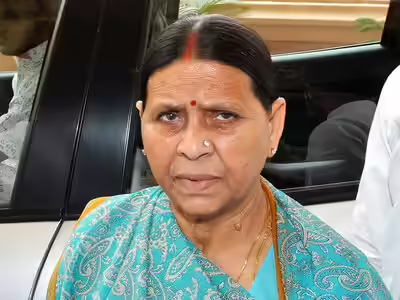
Rabri Devi arrived at the polling station accompanied by her security personnel and a few party workers. Despite her age, she looked confident and composed, interacting warmly with the polling officials.
After casting her vote, journalists gathered around, eager to get her comments. Her response was short and heartfelt:
“Both my sons have my blessings. May the people of Bihar also bless them.”
Her tone was neither aggressive nor political—it was a mother’s blessing intertwined with a subtle political message. The statement was immediately picked up by news channels and began trending on social media under hashtags like #RabriDevi, #TejashwiYadav, and #BiharElection2025.
For many observers, it was more than just a quote; it was a symbolic moment that reinforced the emotional connection between the Yadav family and their loyal voter base.
3. The Emotional Weight of a Mother’s Blessing
In Indian society, a mother’s blessings carry immense emotional significance. In politics, especially in Bihar, this emotional connection often transcends policy debates and ideological divides. Rabri Devi’s words evoke a sense of rootedness—of family values, unity, and cultural identity.
For the Yadav family, politics has always been a blend of emotion and strategy. Lalu Yadav famously said, “Politics is not arithmetic; it is chemistry.” Rabri Devi’s blessing to her sons represents that very chemistry—the invisible bond between leaders and their followers that goes beyond political calculations.
Supporters of the RJD saw her words as a reassurance that despite internal differences or media speculation, the Yadav family stands united.
4. Tejashwi and Tej Pratap: The Two Faces of RJD’s Future
Tejashwi Yadav, the younger son, has gradually established himself as the political face of the Rashtriya Janata Dal. Charismatic and articulate, he has emerged as the principal challenger to the ruling NDA coalition. His focus on employment, education, and governance has struck a chord with Bihar’s youth.
Tej Pratap Yadav, on the other hand, is known for his passion and his strong emotional connect with the grassroots. Though his statements sometimes stir controversy, his loyalty to the party and his father’s ideology remain unquestioned.
Rabri Devi’s statement—“Both sons have my blessings”—was also seen as a subtle message of unity within the family. Political observers noted that she wanted to dispel rumors of a rift between the two brothers that had occasionally surfaced in the media.
5. Rabri Devi: The Silent Strength Behind the Lalu Legacy
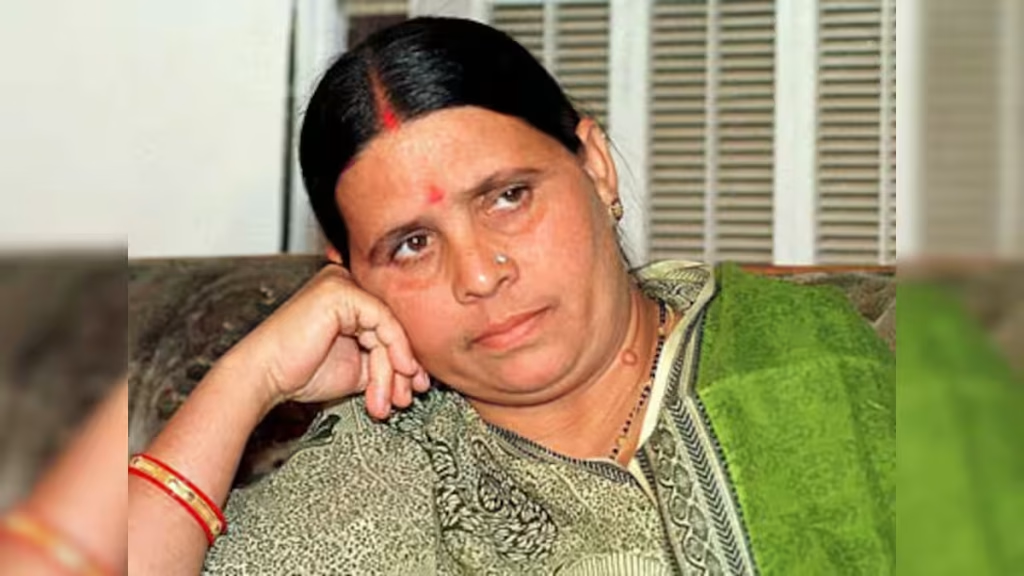
Rabri Devi’s political journey is itself a remarkable story. When she assumed the Chief Minister’s office in 1997, few took her seriously. Critics labeled her a “proxy leader,” but she gradually earned a reputation for her calm demeanor and political resilience.
As the matriarch of one of India’s most politically influential families, Rabri Devi has been both a mother and a strategist. She stood by her husband during his imprisonment, defended her sons during their political struggles, and maintained a dignified silence amid controversies.
Her appearance at the polling booth symbolizes continuity. It reminds voters that the Yadav family’s roots in Bihar’s politics remain as strong as ever.
6. The Timing of Her Statement
Elections in Bihar are as much about timing as they are about messaging. Rabri Devi’s statement came at a crucial moment—just as voting began in several constituencies across the state.
By giving her blessings publicly, she reinforced faith among party cadres and RJD supporters. Her message was clear: the family stands together, and their fight is united.
Political analysts believe her statement was aimed at strengthening RJD’s emotional connect with voters who have supported the Lalu-Rabri era of politics—a section that still remains loyal to the family’s narrative of social justice.
7. “Beti, Maa, Aur Bihar Ki Izzat” — The Cultural Dimension
Bihar’s political culture often intertwines with its social fabric. Family relationships and emotional narratives play a vital role in shaping public perception.
Rabri Devi’s image as a mother-figure resonates deeply with rural voters, especially women. She is seen not merely as a politician but as a motherly figure who has endured challenges with grace. Her blessing for her sons also symbolizes a mother’s hope for Bihar’s progress, peace, and stability.
In a state where respect for elders and family values are deeply ingrained, her words carry moral weight that goes beyond political slogans.
8. The Opposition’s Reaction
Unsurprisingly, opposition leaders reacted to Rabri Devi’s statement with a mix of sarcasm and respect. Some BJP leaders claimed that the RJD was trying to “emotionalize” the elections, while others acknowledged that such statements strengthen the party’s base.
One senior BJP spokesperson said, “Elections are not about blessings but about performance. The people will decide who deserves their vote.”
Meanwhile, RJD leaders and allies celebrated the moment, calling it a sign of the Yadav family’s unity. “A mother’s blessing is the biggest strength any leader can have,” one party worker said.
9. The Symbolism of the Yadav Family Voting Separately
Interestingly, while Rabri Devi voted early in the morning, her sons cast their votes later in the day from their respective constituencies. This separation symbolized both independence and coordination within the family.
Each of them spoke to the media after voting, echoing similar themes of change, governance, and social justice. But through it all, the emotional thread of their mother’s blessing remained constant.
It’s a subtle political choreography—each family member playing their part, but united under a shared emotional and ideological umbrella.
10. The People’s Response
Across social media platforms, Rabri Devi’s quote drew thousands of reactions. Many praised her for her simplicity and grace.
Supporters tweeted messages like:
- “A mother’s blessing is stronger than any campaign speech.”
- “Rabri Devi ji’s words remind us that politics in Bihar is still about relationships and values.”
- “No matter what happens, the Yadav family will always be a part of Bihar’s identity.”
Even neutral observers noted that in an era dominated by aggressive rhetoric, Rabri Devi’s calm and composed message stood out as refreshingly human.
11. The Political Strategy Behind Emotional Messaging
While Rabri Devi’s statement was heartfelt, it also fits into the RJD’s broader electoral strategy. The party has been emphasizing themes of family unity, social justice, and emotional connect with the masses.
Tejashwi Yadav’s campaign has focused on governance issues, but the emotional dimension—embodied by his mother’s presence—adds a layer of authenticity. It reminds voters that behind the young leader stands a legacy of struggle, resilience, and public service.
The BJP-led NDA, on the other hand, continues to highlight its record on development, infrastructure, and law and order. Rabri Devi’s statement provides a soft counterpoint to this—an appeal to emotion and loyalty rather than pure statistics.
12. The Emotional Vote in Bihar Politics
Elections in Bihar have always had a strong emotional undertone. Caste, community, and family loyalty often influence voter behavior. However, in recent years, the emotional narrative has evolved to include aspirations for employment, dignity, and identity.
Rabri Devi’s blessing combines both—the traditional and the modern. It speaks to older generations who remember Lalu Yadav’s era and to younger voters who respect family values but desire progress.
In essence, it bridges Bihar’s past and future.
13. From Personal to Political: The Power of Symbolism
Political analysts often say that in Bihar, symbolism is everything. When Rabri Devi blessed her sons publicly, it wasn’t just a family moment—it was a carefully framed political symbol.
It sent multiple messages at once:
- Unity within the Yadav family — silencing rumors of division.
- Emotional appeal to loyal supporters — reinforcing traditional voter bases.
- Cultural continuity — representing a mother’s role as the moral center of the political family.
It’s the kind of symbolism that works deeply in a state where politics and emotion are inseparable.
14. The Yadav Family and the Future of RJD
The Rashtriya Janata Dal’s strength has always come from its ability to blend ideology with emotional connection. Tejashwi Yadav’s leadership has given it a modern face, while Rabri Devi and Lalu Yadav represent its moral backbone.
Her statement during voting day could well be a message for the future—that the family remains united in purpose and vision. As Tejashwi looks to expand RJD’s influence beyond traditional caste lines, the emotional connect provided by his mother may help him reach deeper into the heart of Bihar.
15. The Broader Message: A Mother’s Hope for Bihar
At its core, Rabri Devi’s statement is not just about her sons—it’s about Bihar itself. When she said both her sons have her blessings, she was also speaking to every mother in Bihar who dreams of a better life for her children.
Her message reflects the emotional heartbeat of the state: a mother’s wish for peace, prosperity, and opportunity. It connects the personal with the political, the emotional with the electoral.
It is this blending of heart and strategy that makes Bihar’s politics so unique—and so deeply human.
16. The Day’s Larger Political Picture
As voting continued across the state, turnout figures indicated enthusiastic participation. Long queues were seen outside polling booths in Patna, Gaya, and Bhagalpur. Political leaders across parties cast their votes and appealed to citizens to exercise their democratic right.
But among all the soundbites of the day, Rabri Devi’s words stood out for their simplicity and emotion. They reminded everyone that beyond manifestos and rallies, politics remains, at its heart, a deeply human endeavor.
17. Media Coverage and Public Discourse
Television channels repeatedly aired the clip of Rabri Devi’s statement, while political talk shows debated its implications. Some anchors highlighted the emotional power of her words, while others analyzed their strategic timing.
News portals described her as “the emotional anchor of Bihar’s most influential political family.” Even rival parties acknowledged that such human moments often resonate more strongly than scripted speeches.
18. Legacy, Leadership, and Love: The Triad of Rabri Devi’s Message
Rabri Devi’s statement embodies three intertwined themes:
- Legacy: The Yadav family’s enduring presence in Bihar’s politics.
- Leadership: Her quiet but firm guidance to her sons and party.
- Love: The universal emotion that connects her to every mother and voter in Bihar.
These elements, when combined, create a powerful narrative—one that transcends party lines and speaks directly to the human heart.
19. The Symbol of the Inked Finger
After casting her vote, Rabri Devi proudly showed her inked finger to the cameras. The image quickly went viral. For her supporters, it was more than a sign of voting—it was a symbol of participation, continuity, and faith in democracy.
It reminded everyone that even political veterans who have seen decades of change still believe in the power of the ballot.
20. Conclusion: A Mother’s Blessing and Bihar’s Political Soul
Rabri Devi’s statement—“Both sons have mother’s blessings”—may appear simple, but it encapsulates the soul of Bihar’s politics. It blends emotion with strategy, love with leadership, and family with faith.
In a state where politics often feels like a battle of ideologies, her words remind us that it is also a story of human relationships—of parents and children, of dreams and duties, of hope and heritage.
As Bihar votes to decide its next chapter, Rabri Devi’s blessing echoes in the hearts of millions—not just as a mother’s love for her sons, but as a mother’s hope for the land she calls home.
Read More latest News

