

Bihar Deputy CM Vijay Kumar Sinha Casts His Vote, Says ‘Now Bihari Will Not Be an Abuse… Bihar Will Get Freedom from Jungle Raj Today if It Does So’
Introduction
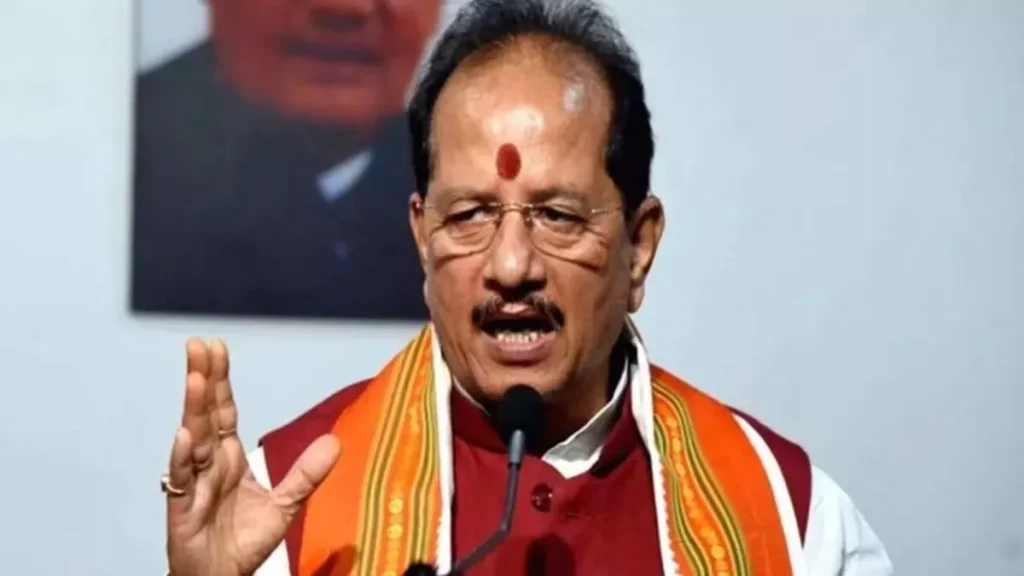
Bihar Deputy CM Vijay Kumar Sinha also cast his vote and said As Bihar votes in one of the most closely watched assembly elections in recent years, the atmosphere in the state is electric. On Thursday morning, Deputy Chief Minister Vijay Kumar Sinha arrived at a polling booth in Lakhisarai to cast his vote. Emerging from the booth with his inked finger raised, he made a powerful statement that resonated across political lines and social media platforms:
“Now ‘Bihari’ will not be an abuse… Bihar will get freedom from jungle raj today if it does so.”
His words captured not only the emotion of the moment but also the deep-seated political and cultural aspirations of millions of Biharis who have long been fighting stereotypes and yearning for better governance. This election, many believe, is not just about choosing a government—it’s about redefining the image of Bihar itself.
In this 3000-word blog, we will explore Vijay Kumar Sinha’s statement in depth—its political symbolism, historical context, and its connection to the evolving identity of Bihar. We will also analyze how his remarks have shaped the ongoing narrative of this election and what it could mean for the future of the state.
1. The Context: Bihar Goes to Vote
Bihar is no stranger to intense political battles. The 2025 Assembly Election is being seen as a decisive moment for the state, where voters are choosing between continuity and change, legacy and modernity, and development versus disorder. Over the past few weeks, campaigning reached a fever pitch, with leaders from all major parties—BJP, JDU, RJD, Congress, and smaller regional outfits—holding massive rallies and roadshows.
As the Deputy Chief Minister, Vijay Kumar Sinha represents both the government’s performance and its promise. When he walked into the polling booth early in the day, surrounded by security and cheering supporters, the symbolic weight of his vote was not lost on observers. His message after casting his vote was clear: Bihar is ready to shed its old image and embrace a new chapter of self-respect, progress, and governance.
2. “Now Bihari Will Not Be an Abuse” — A Statement of Dignity
To understand the depth of this remark, one must first grasp the decades-long stigma that people from Bihar have faced across India. Despite being one of the most historically rich and culturally vibrant states, Biharis have often been stereotyped as backward, uneducated, or politically chaotic. These prejudices, rooted in years of underdevelopment and migration, have hurt the pride of millions.
Vijay Kumar Sinha’s statement seeks to reclaim that lost dignity. By asserting that the term “Bihari” should never again be used as an insult, he tapped into a collective sentiment that transcends political affiliations. For many, this is not just an election slogan—it’s a declaration of identity.
He implied that a vote for good governance, law, and order is a vote for restoring Bihar’s pride. And if the people succeed in breaking the chains of the so-called “jungle raj,” Bihar will finally be free not only politically but psychologically—from decades of misrule and stereotypes.
3. The Political Undertone — “Freedom from Jungle Raj”
The phrase “jungle raj” has a long history in Bihar’s political vocabulary. It is often used to describe the lawlessness, corruption, and muscle power that characterized certain periods of governance in the state’s past. The BJP and its allies have consistently used the term to criticize the Rashtriya Janata Dal (RJD) and its leadership, holding them responsible for the deterioration of law and order in the 1990s and early 2000s.
By invoking “freedom from jungle raj”, Vijay Kumar Sinha effectively positioned the election as a moral battle between two eras—one defined by chaos and fear, and another by development and order. His message was not merely to the party’s supporters but to every citizen who remembers the struggle for peace and progress.
His statement also served as a rallying cry to the youth of Bihar, many of whom have grown up hearing about “jungle raj” from their parents but now demand employment, education, and modern infrastructure. It was a call to end that chapter once and for all through the power of the ballot.

4. The Symbolism of Casting the Vote
In Indian democracy, voting is more than a civic duty—it’s an act of empowerment. For leaders, it’s also a symbolic gesture of trust in the democratic process. Vijay Kumar Sinha’s public display of voting was not just about performing a routine electoral formality; it was a carefully choreographed statement of confidence.
He interacted with the media, greeted voters, and reminded everyone that each vote counts in shaping Bihar’s destiny. “This election will define Bihar’s future for generations,” he said. His words reflect the gravity with which the ruling coalition views this election—an opportunity to consolidate their developmental agenda and counter the opposition’s narrative.
5. From Stereotypes to Self-Respect — The Evolution of Bihar’s Image
To fully appreciate Sinha’s remark, one must look back at how Bihar’s image has evolved over the decades. Once the land of ancient universities like Nalanda and Vikramshila, and home to emperors like Ashoka, Bihar was a cradle of civilization. But after independence, it struggled with poverty, migration, and political instability.
By the 1990s, the state became synonymous with “jungle raj,” crime, and caste politics. Biharis who migrated to other states for work often faced ridicule, and the term “Bihari” became a derogatory label in popular culture.
However, in recent years, there has been a noticeable shift. Bihar has produced top IAS officers, entrepreneurs, artists, and sportspersons. The younger generation is reclaiming the term “Bihari” with pride. Movements like “Proud to be a Bihari” have gained traction on social media. Sinha’s statement is both a recognition of that movement and an attempt to give it political legitimacy.
6. Law and Order vs. Legacy Politics
One of the central issues in this election is law and order. While the ruling alliance touts its record in curbing crime, improving infrastructure, and ensuring welfare delivery, the opposition claims that unemployment and corruption remain unaddressed.
By saying that Bihar will gain freedom from jungle raj, Vijay Kumar Sinha reinforced the BJP’s long-standing position that their governance represents discipline and development, while their rivals symbolize disorder and decay. His statement subtly reminded voters that a regression to old politics could undo the progress Bihar has made in recent years.
7. The Election Mood: Public Sentiment on the Ground
Across Bihar, voters are turning up in large numbers. The Election Commission reported enthusiastic participation from both urban and rural voters, particularly women and first-time voters. The mood on the ground reflects a mixture of hope and fatigue—hope for better opportunities and fatigue from years of unfulfilled promises.
Voters in Patna, Lakhisarai, and Begusarai echoed similar sentiments: “We want jobs, not jumlas,” said one young voter. Another added, “Law and order has improved, but corruption at the lower level remains.”
Vijay Kumar Sinha’s statement resonates strongly in such a context—it appeals both to emotion and logic. Emotionally, it restores pride. Logically, it calls for continued stability and reform.
8. Opposition’s Response: “Jungle Raj is Just a Rhetoric”
Predictably, the opposition parties dismissed Sinha’s remarks as political theatrics. RJD leaders argued that the term “jungle raj” is an outdated insult used by those who have nothing new to offer. “People are more concerned about unemployment and inflation,” an RJD spokesperson said. “This is an attempt to divert attention.”
However, BJP leaders maintained that the memories of lawlessness cannot be erased so easily. “Bihar has suffered once; we cannot afford to go back,” said a senior BJP leader. This exchange highlights the central tension of the Bihar election: development vs. nostalgia, governance vs. populism.
9. The Role of Youth and Women in the Election
Bihar’s demography is young—over 58% of its population is under 30. Women voters, too, have become a decisive force in recent elections. The NDA government’s focus on women’s empowerment schemes, including education, health, and entrepreneurship, has helped it build strong grassroots support.
Vijay Kumar Sinha’s appeal to self-respect and dignity aligns with the aspirations of these groups. Young voters see it as a call to break free from the limitations of the past, while women see it as a validation of their growing voice in Bihar’s political landscape.
10. The Media and Social Media Impact
Within hours of his statement, hashtags like #BiharVotes, #BihariPride, and #FreedomFromJungleRaj began trending on X (formerly Twitter). Videos of Vijay Kumar Sinha interacting with voters went viral. News channels picked up his quote as one of the highlights of the polling day.
Political analysts noted that Sinha’s remark successfully blended emotional appeal with political messaging. It wasn’t confrontational but evocative—a reminder of the long journey Bihar has taken toward stability. For a state that has often been at the receiving end of mockery, the assertion “Bihari is not an abuse” was both cathartic and empowering.
11. Bihar’s Path to Development — Achievements and Challenges
Over the last decade, Bihar has seen measurable improvements in several sectors:
- Infrastructure: Thousands of kilometers of rural roads have been constructed under schemes like PMGSY. New bridges over the Ganga and Sone rivers have enhanced connectivity.
- Education: School enrollment, especially among girls, has increased due to scholarship and bicycle distribution programs.
- Electricity and Sanitation: The availability of power and sanitation facilities in rural areas has improved drastically.
- Healthcare: Initiatives like the Health and Wellness Centers and vaccination drives have shown results, though gaps remain.
- Investment: Efforts are underway to attract industrial investment, though the pace remains slow due to bureaucratic hurdles.
Yet, challenges persist—especially unemployment, migration, and underdeveloped industries. Sinha’s statement is aspirational—it acknowledges these gaps but urges the people to stay the course rather than revert to older systems of governance.
12. The Cultural and Emotional Reclamation of Bihar
Beyond politics, this election is also about reclaiming Bihar’s cultural pride. Bihar’s contributions to India’s intellectual and spiritual history are immense—from the birthplace of Buddha and Mahavira to the legacy of Chanakya and Aryabhata.
By invoking dignity and freedom in his statement, Vijay Kumar Sinha connected this rich cultural heritage with modern political consciousness. It is a subtle message that Bihar’s future lies in harmonizing its glorious past with its aspirations for modernity.
13. What “Freedom” Means in 2025
When Sinha said Bihar will get “freedom from jungle raj,” he wasn’t referring to literal independence. He was speaking of liberation in a moral, social, and political sense—freedom from fear, corruption, and the politics of division. Freedom to dream, to build, and to thrive as proud citizens.
In the 21st century, freedom for Bihar also means freedom from dependency—whether on Delhi for development funds or on migration for livelihood. It’s about creating local opportunities and restoring the dignity of labor and life within the state.
14. The Road Ahead — What Bihar Needs Next
If the Deputy CM’s optimism is to be realized, Bihar’s next government—regardless of party—must prioritize certain key areas:
- Job Creation: Industrialization, skill development, and rural entrepreneurship are essential to stem the tide of migration.
- Education Reform: Focus must shift from access to quality, especially in higher education and technical training.
- Healthcare Infrastructure: Post-COVID, rural healthcare systems need major strengthening.
- Law Enforcement: Sustaining law and order gains will be crucial to attract investors and ensure public trust.
- Empowering Local Governance: Panchayati Raj institutions and municipal bodies need more autonomy and funding.
These steps, if implemented sincerely, could make “freedom from jungle raj” not just a slogan but a lived reality.
15. Conclusion: A New Chapter in Bihar’s Story
Vijay Kumar Sinha’s statement after voting may seem like a short soundbite, but it encapsulates a much larger narrative—the journey of Bihar from stigma to self-respect, from instability to governance, from fear to freedom. His words—“Now Bihari will not be an abuse”—are more than a political statement; they are a moral assertion that Bihar has outgrown its old image.
Whether or not his prediction comes true depends on the people of Bihar. Democracy, after all, is not just about leaders but about citizens who believe in change. As the ballots are cast and the state waits for the results, one thing is certain: Bihar’s political awakening is deeply intertwined with its emotional and cultural resurgence.
If this election indeed marks the day when Bihar reclaims its pride and sets itself free from its past, Vijay Kumar Sinha’s words will be remembered not just as a campaign statement, but as a defining moment in Bihar’s history.
Read more latest news

