
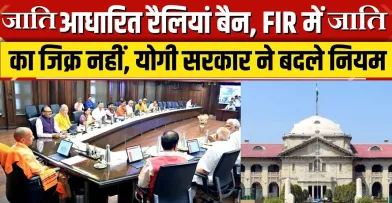
A Historic Move: Uttar Pradesh Bans Caste Mention in FIRs, Government Documents, and Rallies Following Allahabad High Court Order
Introduction
Uttar Pradesh government has taken a major step to eliminate caste discrimination, India has long struggled with the deep-rooted issue of caste-based discrimination. Though the Constitution abolished untouchability and promised equality, the shadow of caste continues to shape society, politics, and governance. In many parts of India, especially in northern states like Uttar Pradesh, caste has remained a defining identity—determining social relations, political mobilization, and even justice delivery.
But in a landmark development, the Allahabad High Court directed the Uttar Pradesh government to take strict measures against caste-based discrimination. Acting upon this, the state government announced sweeping reforms:
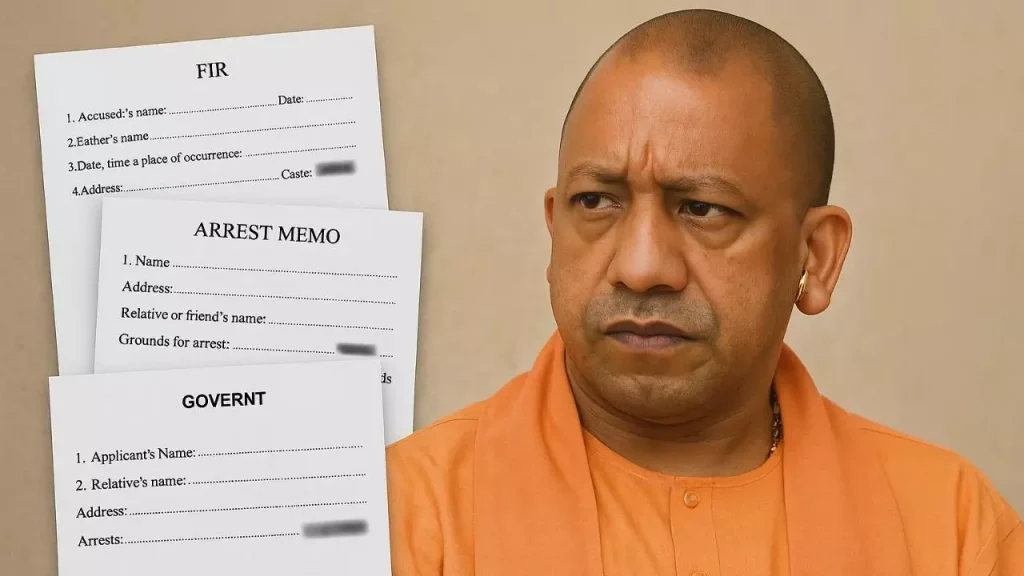
- Caste will no longer be mentioned in FIRs, arrest memos, and government documents.
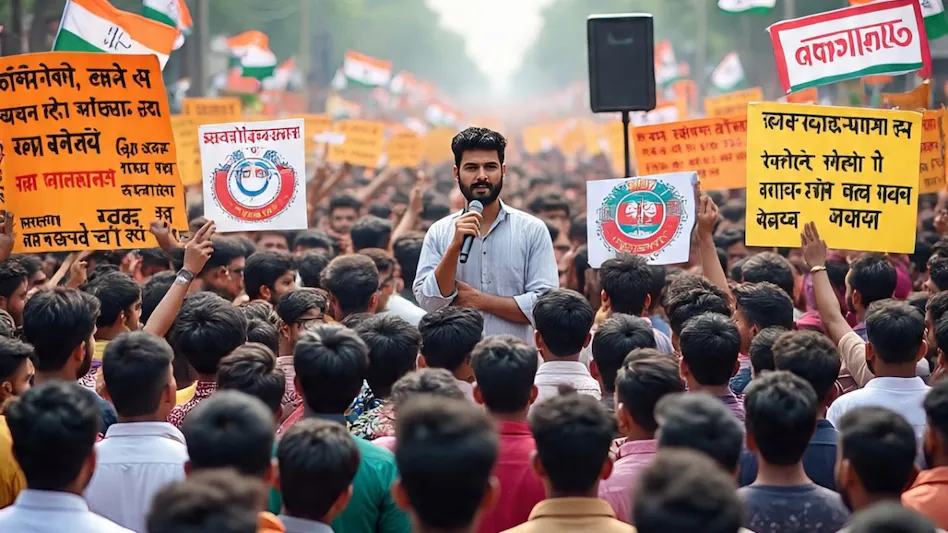
- Caste-based rallies and political gatherings centered on caste identity will be completely banned.
This move marks a paradigm shift in how the state machinery deals with identity and justice. It has sparked widespread debate across legal, political, and social circles. Is this the beginning of the end of caste politics in India? Or is it a symbolic move that will face resistance on the ground?
This blog explores the background, implications, challenges, and significance of this historic decision in detail.
The Allahabad High Court Order: A Turning Point
The Allahabad High Court, while hearing a case related to caste-based violence, observed that mentioning caste in legal and administrative documents unnecessarily reinforces divisions in society.
The Court argued:
- Justice must be individual-specific, not community-specific.
- Mentioning caste in FIRs or arrest memos often prejudices investigation or influences public perception.
- Political rallies organized along caste lines are a threat to harmony and equality.
The Court directed the Uttar Pradesh government to remove caste from all official procedures that do not require it for legal or administrative necessity. This included FIRs, police arrest records, memos, and daily government documentation.
The Uttar Pradesh Government’s Response
The Yogi Adityanath-led Uttar Pradesh government wasted no time in implementing the Court’s directions. The government announced:
- FIRs and Arrest Memos
- Police officers are strictly prohibited from mentioning caste in FIRs, arrest memos, or charge sheets.
- Instead, only the name, gender, and identity proof details of the accused or victim will be included.
- Government Documents
- Routine administrative documents, applications, or memos will no longer require caste details unless directly relevant (such as in reservation or welfare schemes).
- Ban on Caste Rallies
- Caste-based political or social rallies will be banned.
- Permission for rallies will be granted only if the gathering is issue-based, not caste-based.
- Awareness Drive
- A state-wide awareness campaign will educate people about the new law and the importance of moving beyond caste identity.
Why This Move Matters
This decision carries historic importance for multiple reasons:
- Justice Without Prejudice
- FIRs often mention caste, which can unconsciously bias investigating officers. By removing caste references, the process becomes neutral and fact-based.
- Curtailing Caste Politics
- Uttar Pradesh has long been known for caste-dominated politics, with parties like BSP, SP, BJP, and RLD relying on caste equations. A ban on caste rallies directly challenges this trend.
- Social Harmony
- The frequent emphasis on caste during administrative processes has historically deepened divisions. This reform is a step toward fostering a sense of shared identity beyond caste.
- Constitutional Spirit
- The Constitution emphasizes equality before the law (Article 14) and prohibits discrimination based on caste (Article 15). This move strengthens constitutional morality.
Political Reactions
As expected, political reactions have been mixed:
- BJP Government: Hailed it as a step toward “Sabka Saath, Sabka Vikas, Sabka Vishwas.” CM Yogi Adityanath said that Uttar Pradesh is determined to eliminate the caste divide.
- Samajwadi Party (SP): Expressed skepticism, arguing that while caste rallies are banned, the BJP itself has often mobilized people using religious identity. They accused the government of double standards.
- Bahujan Samaj Party (BSP): Mayawati criticized the move, saying caste identity is still essential to protect Dalits and backward communities. According to her, ignoring caste realities may silence marginalized voices.
- Congress: Called the step “progressive” but warned that it should not be misused to suppress political opposition under the guise of banning rallies.
Social Reactions
- Youth and Middle Class: Largely welcomed the move, seeing it as a step toward merit-based justice and equality. Many young professionals argue that caste should not determine opportunities or treatment in society.
- Marginalized Communities: Some sections expressed concern that caste identity is essential for claiming rights, protection under the SC/ST (Prevention of Atrocities) Act, and reservation benefits.
- Civil Society Organizations: Mixed responses—while they praised the vision of a caste-free administration, they demanded safeguards to ensure that protective laws for Dalits and backward classes are not diluted.
Legal Implications
The order raises interesting legal questions:
- SC/ST Protection Laws: Cases under the SC/ST (Prevention of Atrocities) Act require caste identification to establish the nature of the crime. How will police balance this need with the ban on caste references in routine FIRs?
- Reservation Policies: Government documents that deal with education, jobs, and welfare schemes often require caste details. The ban will apply only to general documents, not those specifically tied to reservation.
- Freedom of Expression: The ban on caste-based rallies may face constitutional challenges under Article 19 (freedom of speech and assembly). Courts may need to balance free expression with the goal of preventing social disharmony.
Historical Context: Caste and Uttar Pradesh
Uttar Pradesh has long been at the center of caste-based mobilization in India.
- BSP’s Rise
- Founded by Kanshi Ram and later led by Mayawati, the BSP mobilized Dalits under the slogan “Bahujan Hitay, Bahujan Sukhay.”
- SP’s Strategy
- Mulayam Singh Yadav and later Akhilesh Yadav consolidated OBC (particularly Yadav) support, alongside Muslim communities.
- BJP’s Coalition
- The BJP successfully built a broad coalition of upper castes, non-Yadav OBCs, and non-Jatav Dalits.
Thus, caste has not just been a social reality in UP—it has been the foundation of political power. The new ban challenges this very model.
Challenges in Implementation
- Ground-Level Resistance
- Police officers and bureaucrats used to traditional practices may resist the change. Proper training will be required.
- Political Resistance
- Parties that thrive on caste mobilization may find ways to bypass the ban by framing rallies in the name of “community development” or “social justice.”
- Legal Loopholes
- Balancing caste neutrality with the need for caste data in protective laws and reservations will require precise guidelines.
- Cultural Mindset
- Laws can change paperwork, but changing societal mindset takes longer. People may still identify each other by caste outside official documents.
The Way Forward
To make this reform successful, the following steps are crucial:
- Clear Guidelines – The government must issue detailed instructions to police, courts, and departments on when caste can or cannot be mentioned.
- Awareness Campaigns – Schools, colleges, and public platforms should promote the idea that identity must go beyond caste.
- Protective Safeguards – Ensure SC/ST laws and reservation systems remain unaffected.
- Strict Monitoring – A task force should monitor misuse of caste references in documents and rallies.
- Political Accountability – Parties must be held accountable if they attempt caste mobilization under other pretexts.
Broader Implications for India
If successful, Uttar Pradesh’s model could inspire other states to adopt similar measures. The ripple effects may include:
- Decline of Caste Politics: Political campaigns may shift focus to development, education, jobs, and governance.
- Fairer Justice System: Cases will be judged on facts, not prejudices linked to caste.
- Cultural Shift: Slowly, younger generations may stop identifying each other primarily by caste.
- National Legislation?: The move may trigger debates on a possible nationwide policy against caste references in non-essential documents.
Conclusion
The Allahabad High Court’s directive and the Uttar Pradesh government’s swift action represent a historic attempt to break caste barriers in governance and justice. By banning caste references in FIRs, arrest memos, and government documents, and by outlawing caste-based rallies, UP has taken a bold step toward equality.
Yet, the journey ahead is complex. Protecting marginalized communities while eliminating caste-based identity politics requires careful balance. Laws alone cannot erase centuries of discrimination—but they can set the stage for a new mindset where justice and opportunity are determined by individual merit, not inherited caste identity.
If implemented sincerely, this move may mark the beginning of a new Uttar Pradesh—and perhaps a new India—where equality is not just a constitutional promise but a lived reality.
Read more latest news

