Introduction
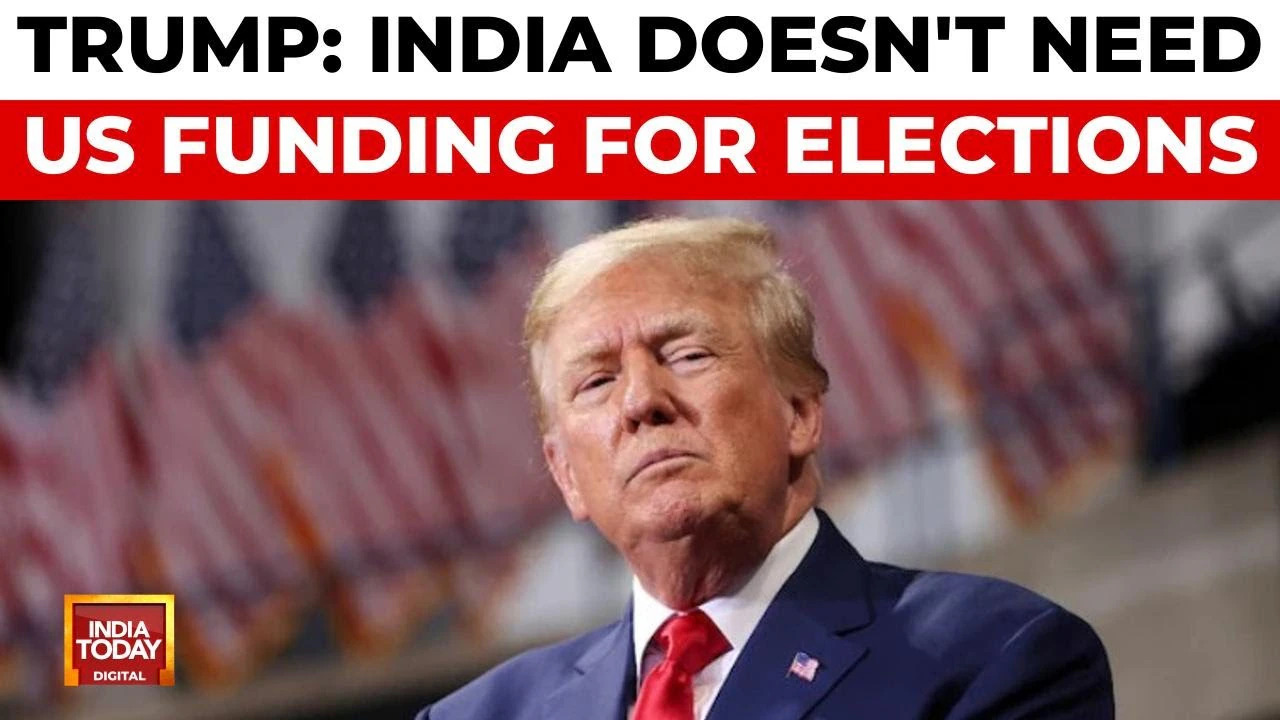
Turnout In a political landscape often filled with controversial statements, former U.S. President Donald Trump has once again made waves with his recent remarks. This time, his comments have centered on U.S. funding aimed at improving voter turnout in India. Trump, known for his blunt and often provocative statements, called the initiative a “kickback scheme”. These remarks have sparked an intense debate both in India and internationally. The controversy surrounds not just the accusation itself but the potential implications for U.S.-India relations, the integrity of foreign aid, and the political discourse on both sides of the globe.
Trump’s comments, especially coming from a figure with substantial influence in global politics, have raised several key questions. Why did Trump call the funding a kickback? What does this mean for the relationship between the U.S. and India? And what role does this statement play in the current political climate of both countries? In this blog, we will unpack these questions, analyze the political implications, and dive into the broader international context of the comments Voter Turnout.
The Row: Trump’s Statement on U.S. Funding for Indian Voter Turnout
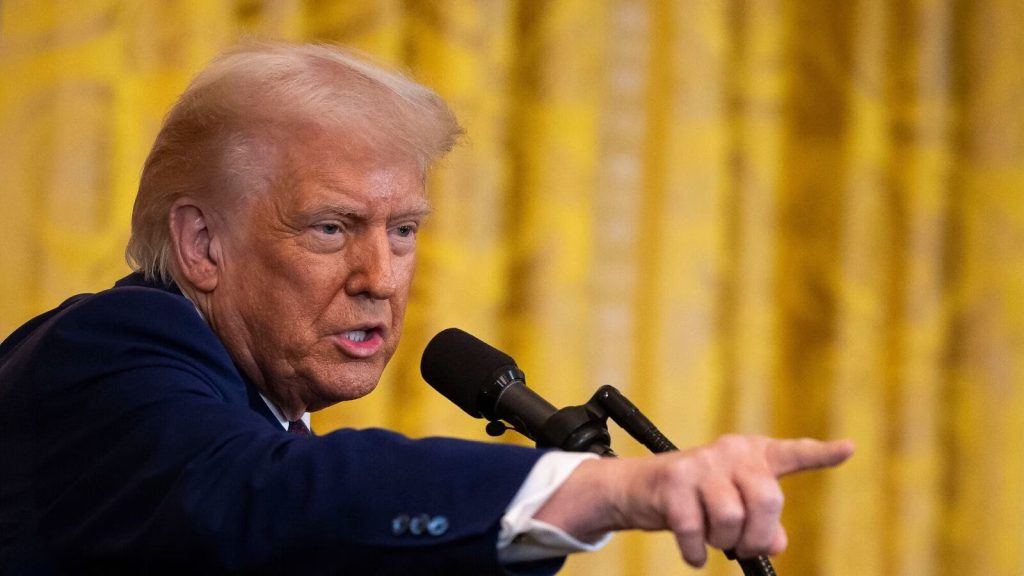
During a recent public appearance, Donald Trump was asked about U.S. funding aimed at increasing voter participation in India, particularly in the context of the 2024 Indian general elections. Without hesitation, Trump accused the United States of using the funds for political manipulation and described the funding as a “kickback scheme”. His exact words were:
“The U.S. is using taxpayer dollars to meddle in Indian elections. This funding to improve voter turnout in India is nothing more than a kickback scheme, a way for certain players to profit off the situation. It’s a dangerous precedent.”
Trump’s statement, despite being incendiary, is not without context. Over the past few years, the U.S. government has committed substantial resources to promoting democratic practices globally, including in India, a country with the largest democracy in the world. The U.S. Agency for International Development (USAID) and other governmental bodies have funded initiatives focused on improving electoral processes, ensuring voter education, and promoting transparency in India’s elections. These efforts are aimed at fostering a free, fair, and participatory democracy Voter Turnout.
However, Trump’s accusations challenge the intentions behind these funds. According to him, the funds could be used as part of a wider agenda to influence election outcomes in favor of certain political parties or groups within India. Trump’s remarks have been met with immediate backlash from various Indian political figures, international observers, and even some American political commentators Voter Turnout.
Understanding the Accusation: Is It Justified?
To fully understand the gravity of Trump’s statements, we need to first break down the claims he made. Specifically, his accusation of a “kickback scheme” carries several connotations. In political terms, a kickback typically refers to a bribe or illicit payment made in exchange for favorable treatment or influence. The use of this term implies that the funding for voter turnout is part of a larger corrupt system intended to benefit specific individuals or parties at the expense of public interest Voter Turnout.
But is there any evidence to support Trump’s assertion that the funding is part of a kickback scheme? According to most experts and analysts, U.S. efforts to improve voter turnout in India have been legitimate, transparent, and aligned with international norms of supporting democratic processes. These efforts focus on improving electoral transparency, providing voter education, and helping marginalized communities access the democratic process. Programs funded by the U.S. typically involve non-partisan entities that work to bolster democracy rather than influence specific elections Voter Turnout.
Furthermore, any allegations of a kickback scheme would require substantial evidence of financial misconduct, which has not been provided thus far. Trump’s comments, therefore, appear to be based more on political speculation rather than verifiable facts Voter Turnout.
However, the controversy lies in Trump’s accusation of interference in foreign elections. Historically, the United States has faced criticism for its involvement in foreign democracies under the guise of promoting democracy. While the U.S. claims that these efforts are intended to support democratic processes globally, some critics argue that the funding and support often have underlying geopolitical motivations. This may explain Trump’s skepticism about the true intentions behind such funding Voter Turnout.
Political Ramifications in India
Trump’s statements have sparked a fierce political debate in India, with politicians from across the spectrum weighing in. The ruling Bharatiya Janata Party (BJP), typically aligned with the U.S. on many issues, has expressed discomfort with Trump’s accusation. While the BJP supports initiatives aimed at improving democratic practices in India, it finds Trump’s comment about a kickback scheme to be inflammatory and misleading.
BJP spokespersons have argued that foreign aid aimed at improving electoral participation is a positive step that strengthens India’s democracy. They have emphasized that such assistance is critical in ensuring marginalized communities—such as rural voters, women, and economically disadvantaged groups—are not left out of the electoral process. India’s democracy, they argue, is strong enough to withstand external influence, and such funding is not a form of interference Voter Turnout.
On the other hand, opposition parties in India, including the Indian National Congress (INC), have seized on Trump’s remarks to criticize the BJP government’s relationship with the U.S. They have pointed to Trump’s comments as a reflection of a broader lack of respect for India’s sovereignty. Critics argue that the Indian government should be wary of accepting any foreign funding related to voter turnout or election campaigns, as it could lead to foreign interference in domestic politics Voter Turnout.
In fact, Congress leader Rahul Gandhi took to social media to express his concern, stating:
“If the U.S. is using taxpayer money to influence our elections, it shows the weakness of the BJP in protecting India’s sovereignty. India must safeguard its own electoral processes and not be influenced by external players.”
This political divide highlights the complexity of U.S.-India relations and the tensions that can arise when external funding is involved in domestic matters Voter Turnout.
International Perspective: Does U.S. Funding Affect Global Democracy?
Trump’s comments have also raised questions about the broader implications of foreign funding for democratic processes worldwide. The United States has long been a proponent of promoting democracy in other nations through initiatives such as the National Endowment for Democracy (NED), the U.S. Agency for International Development (USAID), and various non-governmental organizations (NGOs). These organizations typically aim to improve governance, transparency, and political participation in countries around the world.
While these initiatives are often framed as efforts to support democracy, they are not without controversy. Some critics argue that foreign aid can be manipulated for geopolitical gain. U.S. funding, in particular, has been scrutinized in regions like Eastern Europe, the Middle East, and Africa, where accusations of interference in local political systems have emerged.
In India’s case, however, the situation is somewhat different. India is the world’s largest democracy, and its electoral processes are already deeply institutionalized. Therefore, the question arises: to what extent does foreign funding contribute to improving democracy in a mature system like India’s? While the U.S. government has made it clear that its financial support is aimed at enhancing voter participation, critics question whether such efforts are necessary at all.
From an international perspective, Trump’s remarks could also be seen as a political maneuver intended to appeal to his domestic audience. By framing the funding as a “kickback scheme”, Trump is capitalizing on the populist sentiment that favors nationalism and skepticism toward foreign involvement. His comments fit into a broader narrative that paints the U.S. government as overreaching and potentially undermining the sovereignty of other nations, particularly India, which has historically been a non-aligned nation.
The Geopolitical Angle: U.S.-India Relations
Beyond the immediate controversy over Trump’s statements, his remarks could have broader geopolitical implications for U.S.-India relations. While India and the United States have enjoyed a growing partnership over the years, particularly in areas like trade, defense cooperation, and counterterrorism, the issue of foreign funding for elections could become a point of contention.
India has always been cautious about foreign influence on its domestic politics. The BJP government, in particular, has emphasized India’s sovereignty and its ability to chart its own political course. While the U.S. government has tried to be a partner to India in many areas, comments like Trump’s risk creating tensions in the relationship. In an era of geopolitical competition and rivalry with China, the U.S. would do well to avoid any actions that could be perceived as meddling in India’s domestic affairs.
On the other hand, India’s political leadership must continue to balance its relationship with the U.S. while ensuring that its electoral processes remain free from any undue influence. The conversation about foreign funding for elections in India is not just about the U.S., but also about India’s future trajectory as a sovereign and independent democratic nation.
Conclusion
In conclusion, Donald Trump’s remarks about U.S. funding to improve India’s voter turnout have sparked a controversial debate that touches on issues of sovereignty, foreign interference, and democratic integrity. While there is no substantial evidence to support Trump’s claim that the funding is part of a kickback scheme, his comments have raised important questions about the role of foreign aid in global democratic processes.
As the controversy continues to unfold, it remains to be seen how these remarks will affect U.S.-India relations and whether they will contribute to a broader discourse on the complexities of foreign involvement in domestic elections. For now, India’s political landscape is likely to be shaped by these developments as both sides of the debate continue to defend their positions on democracy, sovereignty, and international partnerships.
read more latest news