

Tejashwi Yadav Targets PM Modi During Bihar Visit: “He Will Come Till the Elections… This Prime Minister is Just a Shower of Slogans and Nothing Else”
Introduction
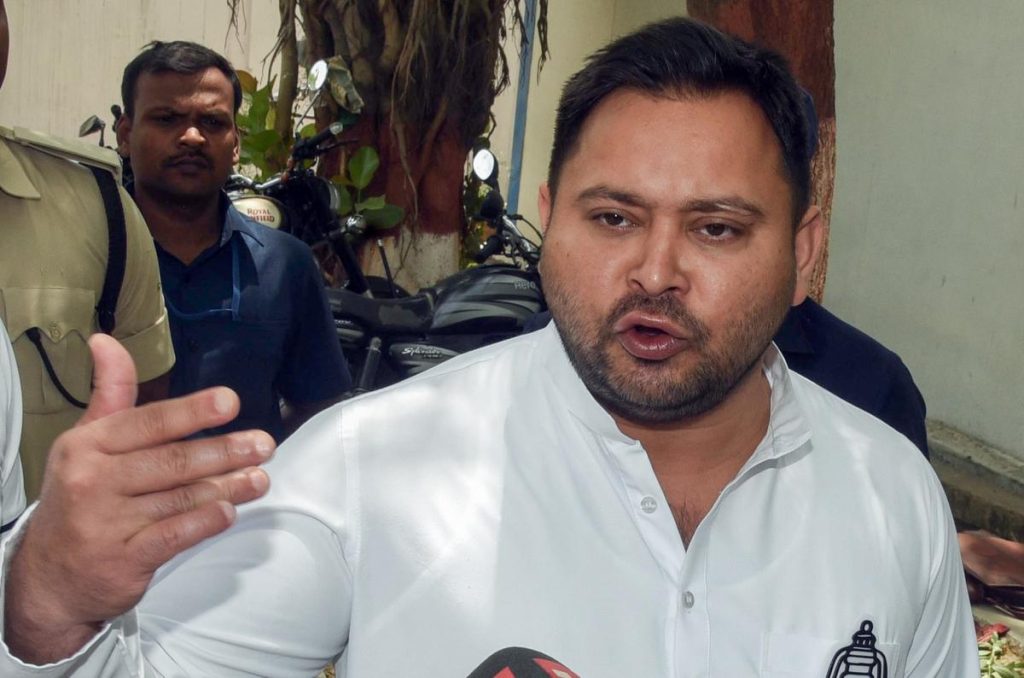
RJD leader Tejashwi Yadav targeted PM Modi, The political landscape of Bihar has once again heated up with fiery exchanges between the ruling party at the Centre and the opposition in the state. Prime Minister Narendra Modi’s recent visit to Bihar, as part of his outreach and election-oriented engagements, has drawn sharp criticism from Rashtriya Janata Dal (RJD) leader and former Deputy Chief Minister of Bihar, Tejashwi Yadav. Known for his sharp attacks on the Bharatiya Janata Party (BJP) and its leadership, Tejashwi seized the opportunity to target PM Modi by accusing him of being a leader who thrives on slogans rather than concrete work.
In a biting remark, Tejashwi said, “He will come till the elections… This Prime Minister is just a shower of slogans and nothing else.” His statement reflects the simmering political rivalry between the RJD and BJP in Bihar, where electoral battles are fought with a mix of development promises, caste arithmetic, and fiery rhetoric.
This blog will take an in-depth look at the context behind Tejashwi Yadav’s remarks, the history of RJD-BJP rivalry, the issues at stake in Bihar, the significance of PM Modi’s visit, and how these political developments might shape the upcoming electoral landscape.
Background: Bihar’s Political Chessboard
Bihar has always been one of the most politically significant states in India. With its 40 Lok Sabha seats, it plays a crucial role in determining the balance of power at the Centre. Historically, Bihar politics has revolved around caste dynamics, alliances, and strong regional leadership.
The RJD, founded by Lalu Prasad Yadav, has been one of the most influential parties in the state. Tejashwi Yadav, carrying forward his father’s political legacy, has emerged as the face of the opposition in Bihar. He has repeatedly positioned himself as the voice of youth and marginalized communities while criticizing the BJP and Janata Dal (United) [JD(U)] governments for their alleged failures in delivering real development.
On the other side, Prime Minister Narendra Modi and the BJP have used their national clout, welfare schemes, and brand of Hindutva politics to strengthen their presence in the state. Nitish Kumar, the JD(U) chief, has oscillated between alliances, but currently, Bihar politics remains a battleground between the INDIA bloc (including RJD) and the BJP-led NDA.
PM Modi’s Bihar Visit: The Context
Prime Minister Narendra Modi’s visit to Bihar was seen as part of the BJP’s broader strategy to maintain its stronghold ahead of the upcoming elections. During his visit, PM Modi inaugurated several infrastructure projects, addressed rallies, and highlighted the central government’s welfare schemes targeting farmers, women, and youth.
Modi emphasized development in sectors like:
- Roads and connectivity in rural Bihar.
- Electrification and renewable energy initiatives.
- Employment opportunities for youth.
- Healthcare and education improvements.
- Financial assistance programs aimed at marginalized communities.
His speeches were marked with his characteristic rhetorical flourish, invoking themes of nationalism, development, and the BJP’s commitment to Bihar’s growth. However, this narrative did not go uncontested.
Tejashwi Yadav’s Counterattack
In response to PM Modi’s visit, Tejashwi Yadav unleashed a scathing critique. He accused the Prime Minister of being more interested in election-time optics than in real development work. His statement, “He will come till the elections… This Prime Minister is just a shower of slogans and nothing else,” directly attacked Modi’s political style.
Tejashwi argued that while Modi’s speeches often highlight lofty promises, the ground reality in Bihar tells a different story. According to him, unemployment remains one of the biggest challenges for the state, migration continues unabated, and basic infrastructure like healthcare, education, and sanitation are still in dire need of improvement.

By labeling Modi as a “shower of slogans,” Tejashwi was not just attacking Modi personally but also questioning the BJP’s broader model of governance that emphasizes branding and messaging over long-term transformation.
RJD’s Narrative vs. BJP’s Development Claims
The clash between Tejashwi Yadav and PM Modi reflects a larger ideological and political battle.
- BJP’s Claim of Development:
The BJP projects Modi as a leader who has transformed India’s global image, boosted economic growth, and delivered welfare schemes like Ujjwala Yojana, Ayushman Bharat, PM Awas Yojana, and more. In Bihar, BJP leaders claim that the Centre’s initiatives have uplifted millions of families. - RJD’s Counter-Narrative:
Tejashwi and the RJD argue that despite these claims, Bihar still suffers from:- Lack of sufficient jobs for its youth.
- High poverty rates.
- Migration of laborers to other states.
- Collapsing healthcare and education infrastructure.
- Law and order concerns.
Tejashwi positions himself as the leader who understands the ground realities of Bihar and promises solutions tailored to the state’s unique challenges.
The Role of Youth and Employment
Tejashwi Yadav has consistently highlighted unemployment as the central issue in Bihar politics. In his election campaigns, he has promised lakhs of government jobs and vocational opportunities for youth. His criticism of PM Modi is tied to this promise, as he argues that the BJP has failed to address the employment crisis.
By calling Modi a leader of “slogans,” Tejashwi connects with young voters who feel disillusioned by unfulfilled promises. This strategy resonates particularly with Bihar’s large youth population, which often migrates to states like Delhi, Punjab, and Maharashtra for work.
Caste and Electoral Politics in Bihar
While development and jobs are important issues, caste remains the backbone of Bihar politics. The RJD traditionally draws its support from Yadavs and Muslims, while BJP has consolidated upper castes and sections of non-Yadav OBCs. The battle for Dalit votes remains crucial, with both parties making concerted efforts to woo these groups.
Tejashwi’s criticism of Modi also has a subtext: portraying the BJP as disconnected from Bihar’s socio-economic fabric and over-reliant on Modi’s national image rather than state-specific issues.
Modi’s Popularity vs. Opposition Unity
Despite the opposition’s criticism, PM Modi enjoys significant popularity across India, including in Bihar. His image as a strong leader, combined with the BJP’s organizational strength, makes him a formidable opponent. However, the INDIA bloc, led in Bihar by Tejashwi Yadav and other opposition leaders, aims to counter this by presenting a united front.
Tejashwi’s sharp rhetoric is not just about taking on Modi but also about rallying the opposition base and keeping morale high. His attacks serve as a rallying cry for opposition supporters who see Modi as unbeatable unless challenged consistently.
Media Coverage and Public Reactions
Tejashwi’s comments have received wide media coverage, with debates on television channels and discussions across social media. Supporters of the RJD hailed his courage in speaking truth to power, while BJP supporters dismissed his remarks as political posturing.
Social media amplified the clash, with hashtags around Modi’s visit and Tejashwi’s comments trending. Memes, debates, and opinion pieces highlighted the deep polarization in public opinion regarding Bihar’s political future.
The Road Ahead: Bihar’s Political Future
As elections draw closer, Bihar is poised for an intense political contest. PM Modi’s repeated visits signal the BJP’s intent to consolidate its hold, while Tejashwi Yadav’s consistent attacks show that the opposition is equally determined to resist.
Key factors that will shape Bihar’s political landscape include:
- Performance on unemployment and migration issues.
- Delivery of welfare schemes and infrastructure projects.
- Caste alliances and voting patterns.
- Unity within the INDIA bloc.
- Modi’s national appeal versus Tejashwi’s local connect.
Conclusion
Tejashwi Yadav’s sharp jibe at Prime Minister Narendra Modi — calling him a “shower of slogans” who appears only during elections — captures the essence of Bihar’s political battleground. It reflects not just personal criticism but also a broader ideological clash between the BJP’s development narrative and the RJD’s focus on jobs, social justice, and ground realities.
As Bihar gears up for another round of electoral battles, the exchange between Tejashwi and Modi underscores the high stakes involved. For voters, the question will be: Do they trust Modi’s vision for Bihar and India, or do they resonate with Tejashwi’s critique that slogans alone cannot solve Bihar’s pressing issues?
Only time will reveal which narrative finds deeper resonance with the people of Bihar. Until then, fiery speeches, sharp attacks, and political rallies will continue to dominate the state’s dynamic political theatre.
Read more latest news

