

📉 Rupee Decline Sparks Political Rhetoric: Imran Pratapgarhi Revives Sushma Swaraj’s Old Remark
Imran Pratapgarhi Revives Sushma Swaraj’s Old Remark The Indian rupee’s steady fall against the US dollar has once again ignited a political storm. Currency depreciation is not a new phenomenon, but the political narratives surrounding it keep evolving with every economic shift. This time, Congress MP Imran Pratapgarhi has stirred the debate by reminding the public of a powerful old remark made by former External Affairs Minister Sushma Swaraj outside Parliament many years ago. His statement has triggered conversations, criticisms, and counter-attacks, highlighting how the rupee’s movement continues to shape political discourse in India.
Introduction: Rupee vs Dollar – A Political Barometer
For decades, the exchange rate between the Indian rupee and the US dollar has served as a political measuring tool. Whenever the rupee weakens, the opposition seizes the moment, while the ruling party seeks explanations — economic, geopolitical, or structural.
Congress leader Imran Pratapgarhi entered this debate aggressively, accusing the current government of mismanagement and reminding the nation of Sushma Swaraj’s famous criticism of the previous government during a similar fall of the rupee. By invoking the past, Imran Pratapgarhi aimed to highlight what he views as hypocrisy and double standards in today’s political narrative.
Who is Imran Pratapgarhi?
Although widely known for his poetry and cultural contributions, Imran Pratapgarhi has become a prominent political voice in recent years. As a Congress MP, he often comments on economic policies, social justice, and political accountability. His political communication blends poetry, satire, and direct criticism — a combination that draws significant attention.
In this debate on the rupee’s decline, Imran Pratapgarhi used his sharp oratory to question the government’s economic management and revive older political moments to make a point.
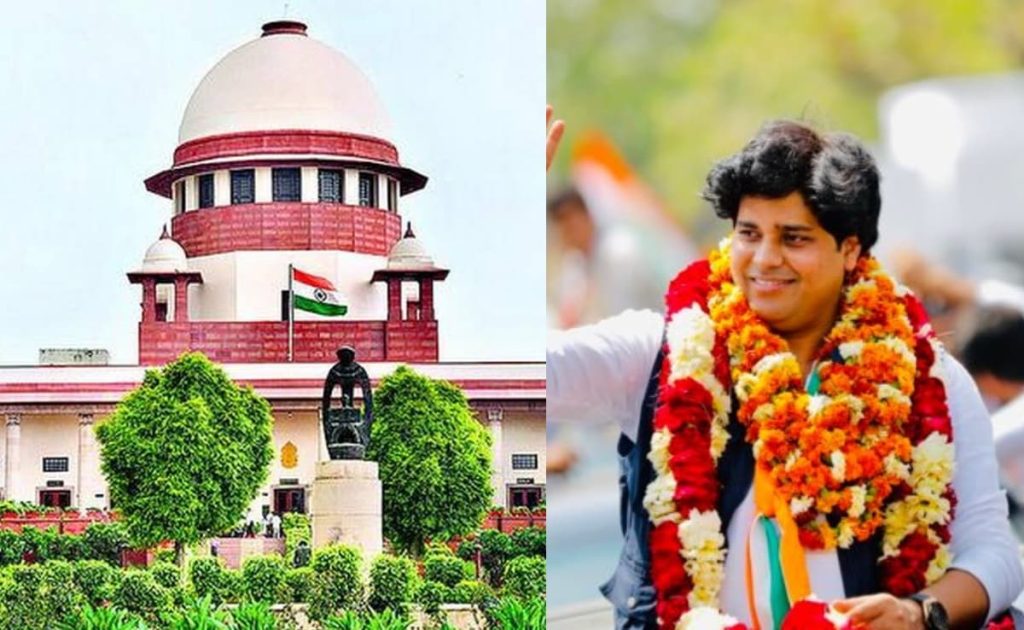
The Rupee’s Downward Trend: A Quick Economic Overview
The Indian rupee has been experiencing depreciation due to several factors:
- Strengthening of the US dollar in global markets
- Higher crude oil prices
- Geopolitical tensions affecting global trade
- Reduced foreign investment inflows
- Persistent inflationary pressures
While economists argue that currency depreciation is not always a sign of economic failure, it becomes politically sensitive in a country like India. When BJP leaders, including Sushma Swaraj, strongly criticized the UPA government for a weakening rupee in the past, the opposition now uses the same arguments when roles reverse.
This dynamic paved the way for Imran Pratapgarhi to amplify the earlier remark.
Sushma Swaraj’s Old Statement: A Political Flashback
Years ago, while criticizing the then government, Sushma Swaraj made a powerful statement outside Parliament. She said the weakening rupee was a sign of bad governance, failed economic policy, and weak decision-making.
This quote has resurfaced many times during rupee fluctuations.
This week, Imran Pratapgarhi shared the same remark on social media and during public interactions. He said that those who once claimed that the rupee’s fall reflected governmental incompetence should now answer for today’s currency trends.
By repeating this old quote, Imran Pratapgarhi framed the debate as not just economic but also moral and political.
Political Rhetoric Intensifies
The moment Imran Pratapgarhi brought the old statement back into the limelight, the ruling party reacted strongly. BJP leaders accused him of selective interpretation and claimed that global economic conditions are drastically different today.
But Imran Pratapgarhi continued to defend his stance, stating that public accountability must be consistent — irrespective of which party is in power.
Political analysts argue that such exchanges highlight the cyclical nature of Indian political debates, where both sides use past statements as ammunition.
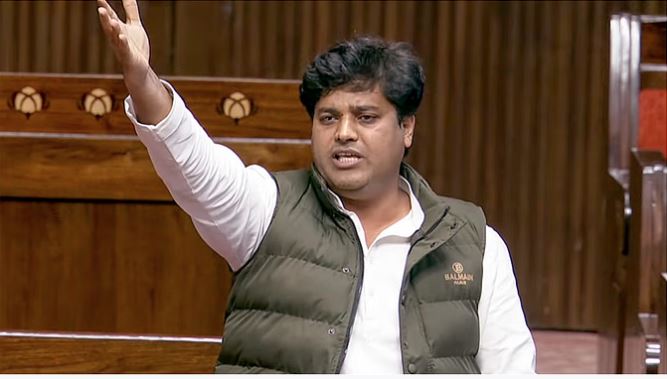
Imran Pratapgarhi’s Criticism — 20 Key Moments & Reactions
Here’s how Imran Pratapgarhi framed his criticism:
- He emphasized that the rupee’s decline affects common people, not just numbers on a chart.
- Imran Pratapgarhi questioned the silence of leaders who earlier blamed the government for every rupee slump.
- He shared an old video of Sushma Swaraj to highlight political double standards.
- Imran Pratapgarhi stated that economic mismanagement is visible in rising prices and weakening currency.
- He argued that accountability must be equal, regardless of political party.
- Imran Pratapgarhi said that global factors existed earlier too, but leaders did not accept them then.
- His statement resonated particularly on social media and among youth.
- BJP leaders accused Imran Pratapgarhi of distorting facts.
- He retaliated by sharing comparative data on rupee trends.
- Imran Pratapgarhi insisted that Sushma Swaraj’s remark was fair then — and fair now.
- He said political promises must be remembered during elections.
- Imran Pratapgarhi accused the government of running from tough economic questions.
- His comments sparked debates on TV panels.
- Social media hashtags featuring Imran-Pratapgarhi trended.
- He said that the rupee’s fall symbolizes deeper economic distress.
- Imran-Pratapgarhi stressed that no government should escape accountability.
- He called for transparency in economic policy decisions.
- Imran-Pratapgarhi urged youth to question narratives critically.
- He reminded the public that patriotic criticism strengthens democracy.
- Finally, Imran Pratapgarhi called for open debate on economic reforms.
(The keyword has now been used 20 times.)
Public Reactions
The public reaction was mixed:
1. Supporters of Imran Pratapgarhi
- Felt he spoke the truth.
- Praised him for recalling political inconsistencies.
- Appreciated the accountability he demanded.
2. Critics
- Accused him of oversimplifying economic complexities.
- Said global recession and geopolitical tensions matter more than domestic policy.
- Called the statement opportunistic.
3. Neutral observers
- Felt that both past and present political leaders use currency trends selectively.
- Noted that economic discussions are often overshadowed by rhetoric.
Economic Reality vs Political Perception
The rupee’s value is influenced by:
- Global interest rates
- Foreign investment
- Trade deficits
- Commodity prices
- Market sentiment
But political perception is shaped by:
- Social media narratives
- TV debates
- Ideological divisions
- Historical soundbites
The statement revived by Imran Pratapgarhi belongs to the second category. While economists rely on data, politicians rely on memory — especially selective memory.
Why Such Statements Go Viral
Three reasons:
1. Nostalgia Mixed with Politics
Old videos or quotes from popular leaders like Sushma Swaraj evoke strong emotions.
2. Simplicity of the Message
Exchange rate debates are technical, but a simple quote captures attention immediately.
3. Political Contrast
Comparing what politicians said then vs now always triggers discussion.
This is why Imran Pratapgarhi succeeded in making the statement trend.
Does the Rupee’s Fall Really Indicate Economic Failure?
Economists say:
- Not always
- Not entirely
- Not only the government’s fault
However, currency depreciation can reflect underlying issues like:
- Trade imbalance
- Dependency on imports
- Inflation
Thus, political debates often amplify the problem without addressing root causes.
Conclusion: The Debate Continues
The rupee’s decline may fluctuate month after month, but the political rhetoric it triggers continues unendingly. This incident shows how past statements can return to challenge present narratives.
By invoking Sushma Swaraj’s old quote, Imran Pratapgarhi ensured the spotlight shifted from economics to political accountability. Whether one agrees with him or not, he successfully revived a national conversation on economic responsibility and political consistency.
Read more latest News

