
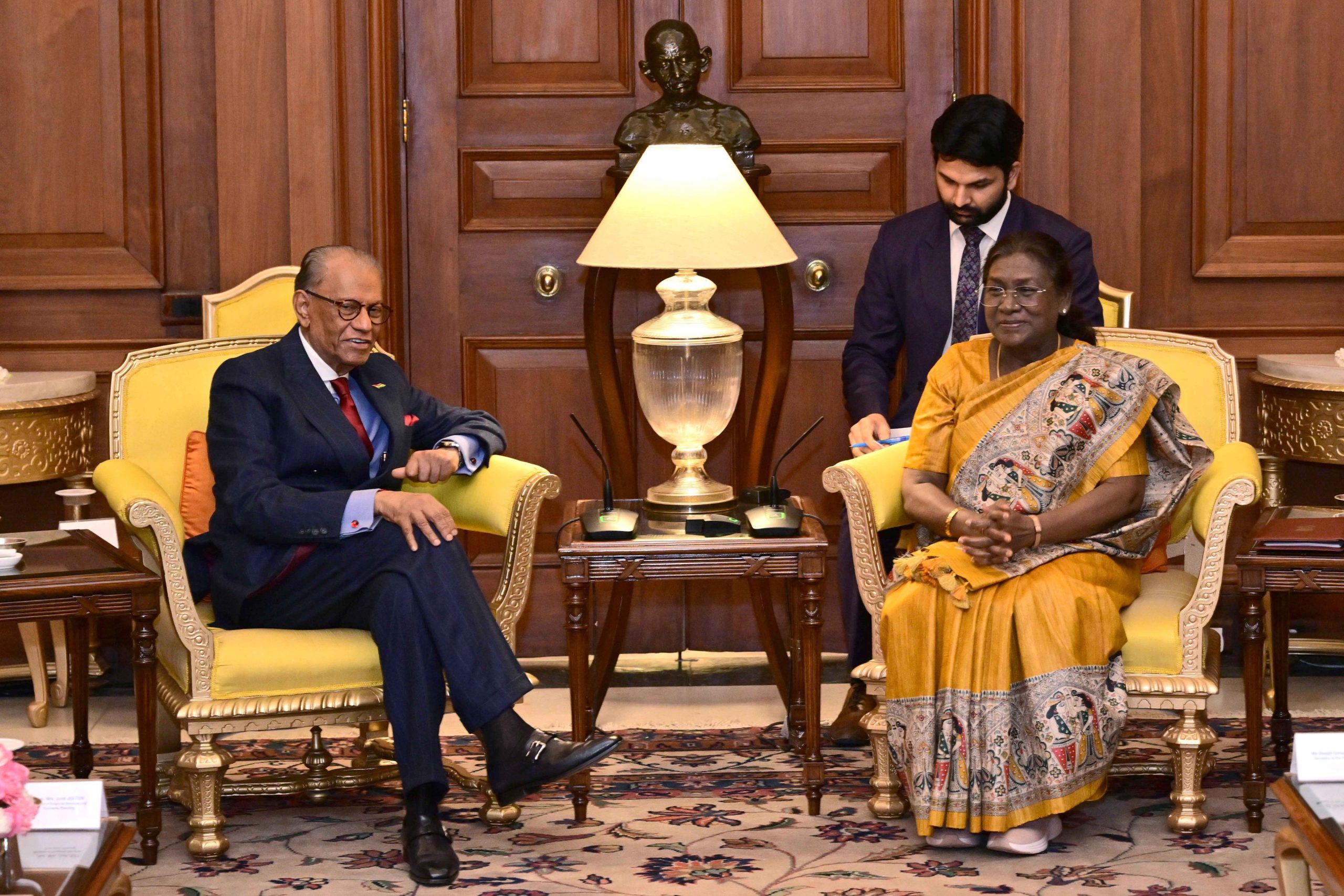
Mauritius Prime Minister Navinchandra Ramgoolam Meets President Droupadi Murmu at Rashtrapati Bhavan: Strengthening Historical Ties Between India and Mauritius
Introduction
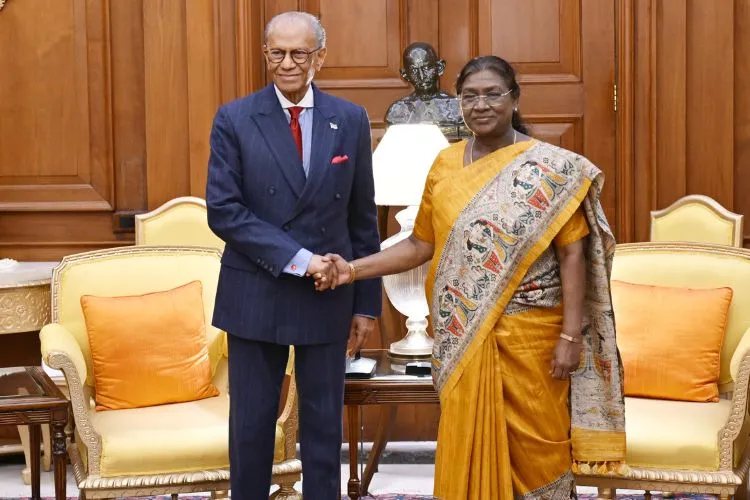
Diplomacy is not just about agreements and trade deals—it is about historical bonds, shared culture, and mutual respect. India and Mauri-tius share one of the most unique and enduring relationships in the world, rooted in history, culture, and people-to-people connections. This bond was once again highlighted when Mauri-tius Prime Minister Dr. Navinchandra Ramgoolam met Indian President Droupadi Murmu at Rashtrapati Bhavan in New Delhi.
The meeting reflected India’s growing engagement with its Indian Ocean neighbors and the importance it attaches to Mauritius, a country often described as India’s “extended family.” Beyond formal diplomacy, this meeting was a celebration of centuries of civilizational links and a roadmap for the future of Indo-Mauritian cooperation.
In this blog, we explore the significance of this high-profile meeting, the historical and cultural roots of India–Mauri-tius relations, the major issues discussed, and how this engagement will shape the future of the partnership.
Who is Dr. Navinchandra Ramgoolam?
Dr. Navinchandra Ramgoolam, often known as Navin Ramgoolam, is a prominent Mauritian politician and statesman. He has served multiple terms as the Prime Minister of Mauri-tius and is known for his strong commitment to democracy, development, and fostering international relations.
Coming from a family deeply rooted in politics, Ramgoolam’s leadership has often emphasized Mauritius’s unique multicultural identity, its ties with the Indian diaspora, and its strategic role as a bridge between Africa and Asia.
His visit to India is not just diplomatic—it carries strong emotional and historical value. Mauri-tius is home to a large Indian-origin population (around 70%), and Ramgoolam himself has always stressed the importance of nurturing this special bond with India.
President Droupadi Murmu: Symbol of India’s Inclusiveness
Meeting President Droupadi Murmu at Rashtrapati Bhavan added symbolic importance to the event. As India’s 15th President and the first tribal woman to hold the position, President Murmu embodies inclusiveness, diversity, and empowerment.
Her leadership and vision reflect the democratic spirit of India, which resonates deeply with a multicultural nation like Mauritius. For Mauri-tius, which also celebrates its pluralism and cultural harmony, this meeting highlighted the shared values of unity in diversity.
The Venue: Rashtrapati Bhavan
The Rashtrapati Bhavan in New Delhi, the official residence of the President of India, has historically been the stage for many landmark diplomatic engagements. Hosting Prime Minister Ramgoolam here underscored the importance India places on Mauri-tius.
The grand welcome, ceremonial guard of honor, and high-level discussions reflected the warmth of this long-standing partnership. Rashtrapati Bhavan is not just an official venue—it is a symbol of India’s hospitality and respect for its global friends.
India–Mauritius Relations: A Civilizational Bond
The India–Mauritius relationship goes beyond modern diplomacy. It is rooted in:
- Historical Migration: Large numbers of Indians migrated to Mauri-tius during the colonial era as indentured laborers. Today, Indo-Mauritians form nearly 70% of Mauri-tius’s population.
- Cultural Links: Festivals like Diwali, Holi, and Eid are celebrated with equal enthusiasm in Mauri-tius. Bhojpuri, Hindi, and other Indian languages are widely spoken.
- Spiritual Connections: Temples, gurudwaras, and cultural centers in Mauritius keep alive Indian traditions.
- Political and Economic Cooperation: Mauri-tius has always supported India at international forums, and India has extended consistent economic aid, trade partnerships, and defense cooperation.
Key Agendas of the Meeting
The meeting between Dr. Ramgoolam and President Murmu was not just ceremonial. Several important issues were discussed, reflecting the strategic nature of the relationship:
1. Economic Cooperation
India is one of Mauri-tius’s biggest trading partners. Discussions included:
- Expanding bilateral trade.
- Enhancing cooperation under the Comprehensive Economic Cooperation and Partnership Agreement (CECPA) signed in 2021.
- Exploring investments in digital economy, fintech, and renewable energy.
2. Defense and Security
Given Mauritius’s strategic location in the Indian Ocean, defense cooperation is critical. India has consistently helped Mauritius modernize its security apparatus. The two leaders discussed:
- Maritime security.
- Countering piracy and smuggling.
- Joint naval exercises.
3. People-to-People Ties
Cultural exchange programs, scholarships for Mauritian students in India, and promotion of tourism were highlighted as key areas.
4. Diaspora Connect
As Mauritius has one of the largest Indian-origin populations outside India, diaspora engagement was a central theme. President Murmu reaffirmed India’s commitment to strengthening these bonds.
5. International Collaboration
Both leaders discussed cooperation at forums like:
- United Nations (UN).
- Indian Ocean Rim Association (IORA).
- African Union partnerships.
India’s Role in Mauritius’s Development
Over the decades, India has played a crucial role in Mauritius’s infrastructure and social development:
- Construction of the Mahatma Gandhi Institute and Indira Gandhi Centre for Indian Culture.
- Assistance in building cyber towers, hospitals, and educational institutions.
- Providing concessional lines of credit for infrastructure projects.
- Cooperation in the field of IT and digital transformation.
Symbolism of the Meeting
Diplomatic meetings often carry symbolism beyond formal agreements. This meeting highlighted:
- India as Mauritius’s most trusted partner.
- Mauritius as India’s closest ally in the Indian Ocean.
- Shared cultural heritage and emotional ties.
- Future-oriented cooperation in digital, defense, and trade sectors.
The Emotional Connect: Mauritius as “Chhota Bharat”
Mauritius is often described as “Chhota Bharat” (Mini India). From temples to Bollywood, Indian influence is visible in daily life. For many Mauritians, India is not a foreign country but a “motherland.”
Dr. Ramgoolam’s meeting with President Murmu reinforced this sentiment. It was not just a meeting of two leaders, but of two families separated by geography but united by culture.
India in the Indian Ocean: Mauritius’s Role
India’s growing influence in the Indo-Pacific and Indian Ocean region places Mauritius at the center of its strategic vision. With increasing global competition in this region, Mauritius plays a key role in India’s “Security and Growth for All in the Region (SAGAR)” initiative.
The meeting reaffirmed Mauritius’s role as a trusted partner in India’s maritime strategy.
Future Prospects of India–Mauritius Relations
The discussions between Dr. Ramgoolam and President Murmu pave the way for:
- Enhanced maritime cooperation.
- Expansion of renewable energy projects.
- Stronger diaspora engagement.
- Joint work on climate change and sustainability.
- Deeper trade and investment partnerships.
Conclusion
The meeting between Prime Minister Dr. Navinchandra Ramgoolam of Mauritius and President Droupadi Murmu at Rashtrapati Bhavan was more than a diplomatic formality—it was a reaffirmation of a unique relationship rooted in history, culture, and shared vision.
For India, Mauritius is not just a neighbor but family. For Mauritius, India is not just a partner but a guiding light in its journey of progress.
As India celebrates its global rise and Mauritius continues to shine as a multicultural success story, this meeting marks another milestone in the ever-growing friendship between the two nations.
It is safe to say: India–Mauritius ties are not just bilateral, they are civilizational.
Read more latest news

