

India US Trade Deal Dispute: MEA Clarification, Strategic Realities, and the Modi–Trump Equation
Randhir Jaiswal said On January 9, the Ministry of External Affairs (MEA) of India issued a clear and carefully worded clarification regarding reports of a dispute between India and the United States over an ongoing trade deal. At a time when global trade is under strain due to geopolitical tensions, protectionist policies, and economic uncertainty, even minor disagreements between major partners tend to attract disproportionate attention. The MEA’s statement sought to put such speculation into perspective, emphasizing continuity, dialogue, and the broader strength of India–US relations.
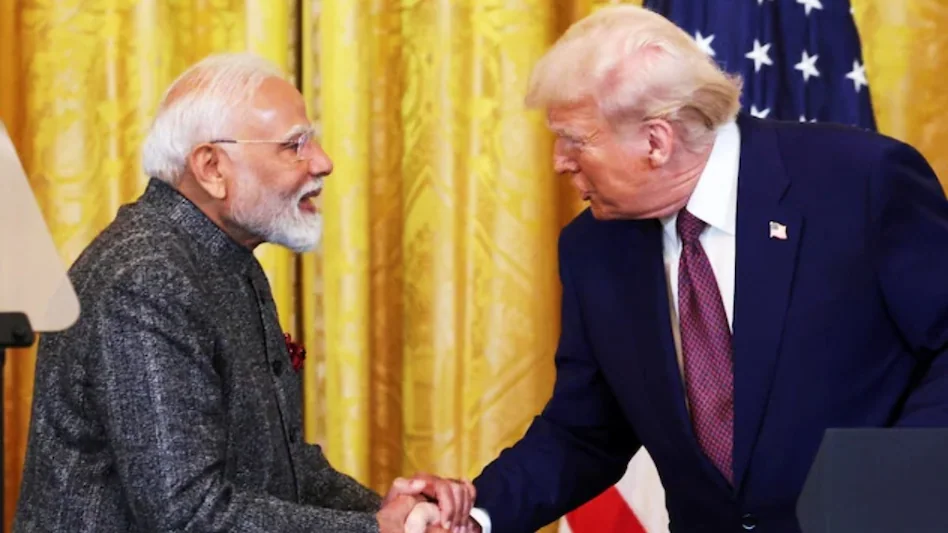
According to the MEA, differences over trade negotiations should not be interpreted as a breakdown in bilateral relations. Instead, they are part of a normal diplomatic process between two large economies with their own domestic priorities and strategic interests. Importantly, the spokesperson highlighted that Prime Minister Narendra Modi and former US President Donald Trump have shared a friendly and respectful relationship, which has helped steer the partnership through complex negotiations.
This clarification came amid intense media focus on trade tariffs, market access, and regulatory issues that have periodically surfaced between New Delhi and Washington. While these issues are real, the MEA’s position underlined that such disagreements are being addressed through institutional mechanisms rather than political confrontation.
Background of the India US Trade Deal Discussions
India and the United States have been engaged in trade negotiations for several years, aiming to strike a balance between market access, domestic industry protection, and strategic economic cooperation. The bilateral trade relationship, valued at over $190 billion in goods and services, has grown steadily, making the US one of India’s largest trading partners.
However, trade negotiations between two large economies are rarely smooth. The US has raised concerns about market access, tariffs on agricultural products, medical devices, and digital trade regulations. India, on the other hand, has consistently argued for the protection of its small farmers, domestic manufacturers, and public welfare policies.
The January 9 clarification must be viewed in this context. Rather than signaling a rupture, the MEA emphasized that trade talks are ongoing and that differences are being addressed through dialogue.

Why the Clarification Was Necessary
In recent weeks, sections of the international media suggested that the trade deal dispute could cast a shadow over India–US relations. Some reports even hinted at personal friction between the leadership of the two countries. Such narratives risk oversimplifying complex negotiations and ignoring the institutional maturity of modern diplomacy.
The MEA stepped in to counter these interpretations. By stressing the friendly ties between Prime Minister Modi and President Trump, the ministry aimed to reassure investors, policymakers, and the international community that the strategic partnership remains strong.
This approach aligns with India’s broader diplomatic style—avoiding public confrontation, maintaining strategic autonomy, and resolving disputes through engagement rather than escalation.
Modi–Trump Relationship: Beyond Trade
The personal rapport between Prime Minister Modi and President Trump has often been described as warm and pragmatic. From large public events such as “Howdy Modi” in Houston to reciprocal visits and high-level dialogues, both leaders projected a relationship built on mutual respect.
While trade differences did emerge during Trump’s presidency—particularly over tariffs and preferential trade status—these did not derail cooperation in other areas such as defense, counterterrorism, energy, and strategic alignment in the Indo-Pacific.
The MEA’s clarification highlighted this broader picture, reminding observers that bilateral relationships cannot be reduced to a single negotiating table or policy disagreement.

Strategic Importance of India US Relations
India–US relations today are multi-dimensional. They encompass defense cooperation, intelligence sharing, technology partnerships, climate action, education, and people-to-people ties. Trade is a critical pillar, but it is not the sole determinant of the relationship’s health.
Both countries share concerns about regional stability, supply chain resilience, and the need for a rules-based international order. These shared interests often outweigh short-term trade disagreements.
From India’s perspective, maintaining strong ties with the US supports its economic growth, technological advancement, and global standing. For the US, India represents a key partner in Asia, a large consumer market, and a democratic ally.
Domestic Considerations on Both Sides
Trade negotiations are shaped not only by foreign policy goals but also by domestic political and economic pressures. In India, protecting farmers, small businesses, and public health programs is a political and social imperative. In the US, trade policy is influenced by electoral considerations, industrial lobbies, and concerns about trade deficits.
Understanding this reality is essential to interpreting trade disputes. The MEA’s statement implicitly acknowledged these complexities, signaling patience and pragmatism rather than confrontation.
Role of the MEA in Shaping the Narrative
The Ministry of External Affairs plays a crucial role in articulating India’s position to both domestic and international audiences. By addressing media queries promptly and clearly, the MEA helps prevent speculation from hardening into misconceptions.
The January 9 clarification demonstrated this role effectively. Instead of reacting defensively, the ministry emphasized continuity, dialogue, and mutual respect—core principles of India’s diplomatic approach.
Key Statements by the MEA Spokesperson
Below are the key perspectives attributed to the spokesperson, reflecting India’s official position on the issue:
- Randhir Jaiswal stated that trade negotiations naturally involve differences between partners of comparable economic scale.
- Randhir Jaiswal emphasized that such differences should not be mistaken for a diplomatic rift.
- Randhir Jaiswal clarified that discussions with the United States are ongoing through established channels.
- Randhir Jaiswal underlined the importance of dialogue over public posturing.
- Randhir Jaiswal noted that Prime Minister Modi and President Trump have maintained friendly relations.
- Randhir Jaiswal said that personal rapport between leaders contributes positively to negotiations.
- Randhir Jaiswal highlighted that trade is only one pillar of the India–US partnership.
- Randhir Jaiswal reiterated India’s commitment to protecting its domestic economic interests.
- Randhir Jaiswal pointed out that the US also has its own domestic priorities.
- Randhir Jaiswal explained that disagreements are addressed through institutional mechanisms.
- Randhir Jaiswal stressed that media speculation often exaggerates routine negotiations.
- Randhir Jaiswal assured that investor confidence should not be affected by ongoing talks.
- Randhir Jaiswal observed that India–US relations have matured over decades.
- Randhir Jaiswal remarked that strategic cooperation continues irrespective of trade talks.
- Randhir Jaiswal said both sides remain committed to finding mutually acceptable solutions.
- Randhir Jaiswal highlighted the importance of patience in complex trade negotiations.
- Randhir Jaiswal reaffirmed India’s belief in a rules-based global trading system.
- Randhir Jaiswal stated that diplomatic engagement remains constructive and forward-looking.
- Randhir Jaiswal emphasized respect for each other’s sovereignty and policy space.
- Randhir Jaiswal concluded that India–US ties remain strong and resilient.
Implications for the Global Economy
The India–US trade relationship has implications beyond the two countries. As major economies, their policies influence global supply chains, investment flows, and trade norms. Stability and predictability in their relationship contribute to broader economic confidence.
The MEA’s clarification helped signal that despite disagreements, both sides remain committed to engagement. This reassurance is particularly important at a time when global markets are sensitive to political signals.
Media Responsibility and Public Perception
The episode also highlights the role of media in shaping public perception of foreign policy. While scrutiny is essential, oversimplification can distort reality. Trade negotiations are technical, iterative, and often confidential; portraying them as personal or political conflicts can be misleading.
By clarifying its position, the MEA sought to reset the narrative and encourage a more nuanced understanding of diplomacy.
Conclusion: Dialogue Over Dispute
The January 9 clarification by the Ministry of External Affairs served as a timely reminder that diplomacy is a process, not a spectacle. Differences between India and the United States over trade are real, but they exist within a broader framework of strategic partnership and mutual respect.
The emphasis on the friendly relationship between Prime Minister Modi and President Trump underscored the importance of leadership-level trust in navigating complex issues. More importantly, the statement reaffirmed India’s commitment to dialogue, strategic autonomy, and balanced engagement.
As India and the US continue to negotiate, the focus is likely to remain on long-term gains rather than short-term disagreements. In an increasingly uncertain world, such steady and mature diplomacy is not just desirable—it is essential.
Read More latest news

