IND vs WI Test in Ahmedabad: Empty Stands Raise Big Questions for BCCI
Introduction
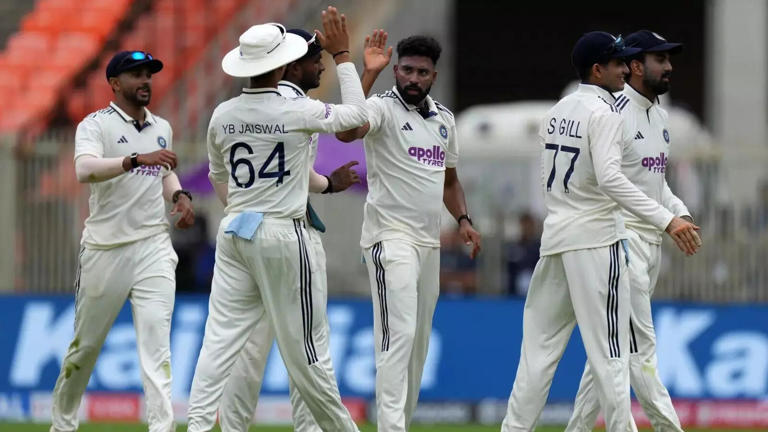
The IND vs WI Test in Ahmedabad was a flop, with empty stands raising questions about the BCCI’s decision. When India plays cricket at home, the expectation is always the same—massive crowds, roaring chants of “Bharat Mata Ki Jai,” and stadiums filled with tricolours waving in unison. Yet, the recent India vs West Indies Test match in Ahmedabad presented a shockingly different picture. The world’s largest cricket stadium, the Narendra Modi Stadium in Motera, stood embarrassingly empty for most of the five days. Television cameras panned across rows of vacant orange and blue seats, and the atmosphere felt more like a domestic Ranji Trophy game than an international Test featuring one of the most dominant cricketing nations.
This unexpected flop raises several pressing questions: Why did the Board of Control for Cricket in India (BCCI) schedule a marquee Test in Ahmedabad? Why were ticket sales so poor despite India’s passionate cricket fan base? Does this signal a larger crisis in Test cricket, or was it simply a miscalculation by cricket administrators?
In this blog, we will deeply examine the reasons behind the empty stands, the optics of this “flop” match, the lessons for BCCI, and what it means for the future of Test cricket in India.
The Optics of Empty Stands
The Narendra Modi Stadium in Ahmedabad is not just any ground. With a seating capacity of over 1,32,000, it is the largest cricket stadium in the world. When it is full, the venue creates an unparalleled spectacle. We saw glimpses of this during the 2022 IPL final and the 2023 World Cup games, when the sheer volume of the crowd became part of cricketing folklore.
But during the India vs West Indies Test, the stadium turned into a giant echo chamber. Sparse attendance, dull crowd participation, and dead silence between deliveries painted an uncomfortable picture. For television viewers, the contrast was glaring—while players fought hard in the middle, the ambience lacked the energy to elevate the contest.
For international audiences tuning in, this was a disastrous advertisement for Test cricket in India, a country often described as the heartbeat of the game. If India cannot fill seats even when its national team is playing, what message does that send globally?
Why Ahmedabad?
One of the biggest questions is: Why did BCCI choose Ahmedabad for a Test against the West Indies?
Several reasons may explain the decision:
- Showcasing the Stadium
The BCCI has repeatedly used the Narendra Modi Stadium as a showpiece venue. Its size, infrastructure, and grandeur are meant to project India’s sporting strength. Hosting Tests here is part of that narrative. - Political Symbolism
The stadium’s renaming and its prominence in recent cricket scheduling carry political undertones. The West Indies Test was another opportunity to showcase the venue on a global stage. - Logistics and Facilities
Ahmedabad’s stadium is equipped with state-of-the-art facilities for players, broadcasters, and officials. From a logistical perspective, it is easier for the BCCI to conduct matches here.
However, while the stadium is world-class, the city does not yet have the cricketing culture or fanbase to fill such a massive arena for every format. Unlike Mumbai, Chennai, or Bengaluru—where Tests often draw passionate crowds—Ahmedabad’s audience turnout has been inconsistent.

Audience Disconnect: Why Fans Didn’t Show Up
Several factors contributed to the poor attendance:
1. Lack of Hype Around the Opposition
The West Indies team, once the giants of world cricket, no longer command the same respect or excitement. In limited-overs formats, their explosive batting can still attract fans, but their Test side is seen as relatively weak. Many fans believed the result was a foregone conclusion, reducing the match’s appeal.
2. Format Fatigue
In an era dominated by IPL, T20s, and ODIs, Test matches struggle to attract crowds unless they involve high-profile opponents like Australia, England, or Pakistan. For a bilateral Test against West Indies, the demand was simply not there.
3. Poor Marketing
The BCCI did little to build hype around the match. There were no major promotional campaigns, community engagement programs, or initiatives to draw schools and colleges to the stadium. Compare this to Australia’s “Pink Test” or England’s “The Ashes,” where marketing transforms matches into events.
4. Ticket Pricing and Accessibility
Reports suggested that tickets were not priced affordably for the average cricket fan. For a family, attending a full day of Test cricket at such a venue can become expensive when factoring in travel, food, and accommodation.
5. Stadium Size Backfiring
Ironically, the sheer size of the Narendra Modi Stadium worked against it. Even if 20,000 people turned up, they were lost in the ocean of 1,32,000 seats. What might have looked like a decent crowd in a smaller venue felt like emptiness in Motera.
Impact on Players and Atmosphere
Crowd energy matters in cricket. In Tests, where momentum swings subtly, a cheer from the stands can lift a bowler’s intensity or spur a batter to dig deep. In Ahmedabad, the players were deprived of this crucial fuel.
Rohit Sharma, Virat Kohli, and other senior players are used to playing before packed houses. For them, walking out to near-empty stands must have felt underwhelming. For younger players like Yashasvi Jaiswal or Shubman Gill, this was a missed opportunity to showcase their skills before a roaring home crowd.
The silence also affected television broadcasts. Cricket commentary often feeds off crowd reactions, and the lack of background noise made the telecast feel lifeless.
What This Means for Test Cricket in India
This episode is not just about one match; it is a wake-up call about the state of Test cricket in India. While die-hard fans insist that India still loves Tests, the evidence suggests otherwise. Unless it is a marquee series like the Border-Gavaskar Trophy or a World Test Championship final, crowds are unlikely to show up in large numbers.
The younger generation, raised on IPL fireworks, does not find the slow grind of Test cricket appealing. Unless BCCI innovates, this format could lose its charm for Indian spectators.
Missed Opportunity for BCCI
By hosting this Test in Ahmedabad, BCCI missed a chance to reinvigorate the format. Imagine if the match had been played in smaller, Test-loving centres like Chennai, Bengaluru, Kolkata, or even Dharamshala. These grounds often draw passionate, knowledgeable crowds that create the perfect Test match atmosphere.
Instead, the empty seats in Motera became the story of the match. The decision reinforced the perception that BCCI prioritizes spectacle and symbolism over the actual fan experience.

Global Repercussions
The optics of empty stadiums in India have international implications. Broadcasters pay massive sums for rights under the assumption that Indian cricket guarantees eyeballs. Empty stands challenge that narrative. Sponsors, too, thrive on visibility—stadiums packed with fans waving branded flags.
When the visuals instead show emptiness, it hurts the commercial image of cricket. Rival boards and ICC officials are bound to question whether Test cricket in India is sustainable at such mega venues.
Lessons for the Future
So what can BCCI learn from this debacle?
- Right-Sizing Venues
Not every Test belongs in a 1,32,000-seater stadium. Smaller venues with loyal fanbases should host these matches. - Affordable Tickets
Pricing strategies need to be reconsidered. Filling the stands should be prioritized over premium pricing. - Better Marketing
The BCCI must build narratives around Tests. Engage schools, universities, and local cricket academies to fill stands with young fans. - Improve the Matchday Experience
Modern fans demand more than cricket—they want entertainment, facilities, food, and connectivity. Enhancing stadium experiences can make Test cricket more attractive. - Revive Contextual Rivalries
Bilateral Tests need more context. Introducing trophies, building rivalries, and marketing historical narratives can give fans reasons to care.
Test Cricket’s Existential Question
The Ahmedabad flop also ties into a larger global debate: Is Test cricket dying? Purists argue that the format is alive and well, pointing to the Ashes or India vs Australia clashes. But these are exceptions. For most bilateral series, crowd interest is waning.
The BCCI, as the financial powerhouse of world cricket, has a moral responsibility to protect Test cricket. But decisions like scheduling a low-hype Test in a mega stadium undermine that responsibility.
Conclusion
The India vs West Indies Test in Ahmedabad will not be remembered for its cricketing action but for its empty stands. The optics were damaging, the atmosphere disappointing, and the decision-making questionable.
For BCCI, this should be a moment of reflection. Test cricket deserves better than being reduced to a sideshow in the world’s biggest stadium. Fans deserve better than overpriced tickets and underwhelming experiences. And the players deserve better than performing in near silence.
If lessons are learned, this “flop” could become a turning point. But if ignored, it will remain yet another example of cricket administration losing touch with the game’s soul.
Read more sport news