
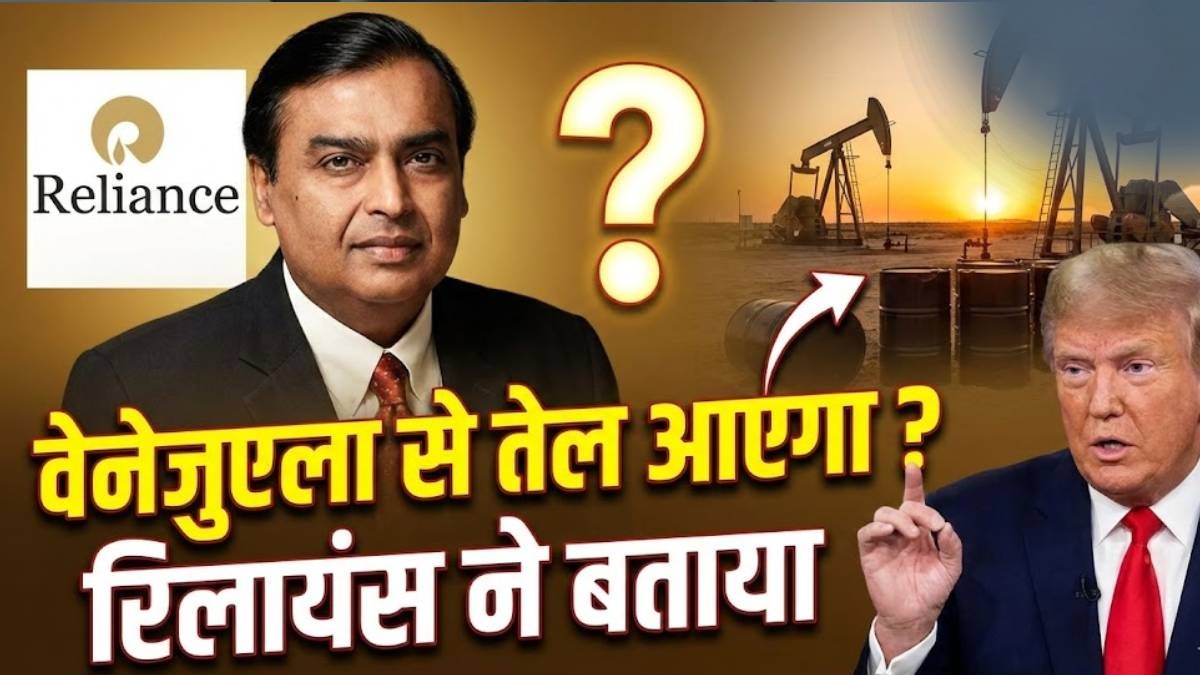
Will Reliance Industries Restart Buying Venezuelan Oil? A Deep Dive into the Strategic Implications.
In the ever-shifting landscape of global energy markets, Reliance Industries is once again at the center of a significant potential development. Reports indicate that Reliance-Industries may resume purchasing crude oil from Venezuela — a move that could have major implications for India’s energy security, global diplomacy, and the future strategy of one of Asia’s largest conglomerates.
This blog explores why Reliance Industries is considering this step, the geopolitical and economic backdrop that led to the pause, and the possible outcomes for India and the global oil industry. Let’s break down this complex story in a comprehensive and engaging way.
1. Background: How Reliance Industries Started Buying Venezuelan Oil
Long before discussions of resumption, Reliance-Industries established ties with Venezuela’s state-owned oil producer, PDVSA, and used Venezuelan crude as a key source of heavy, discounted oil for its refining complex. Historically, Reliance Industries has operated the world’s largest integrated refining and petrochemicals complex in Jamnagar, Gujarat — a facility well-suited to processing the heavy Venezuelan crude grades that many others find difficult to refine economically.
Through that relationship, Reliance-Industries had access to large volumes of heavy crude oil — such as the famous Merey blend — that contributed to the company’s competitive refining margins and strategic feedstock diversity. Such crude types are usually cheaper than lighter grades and help refiners maximize profit when efficiently processed.
So, the question naturally arises: if this arrangement worked before, why did Reliance-Industries stop importing Venezuelan oil in the first place?
2. The Pause: What Happened in March 2025
The pause in Venezuelan oil imports by Reliance Industries came in early 2025 amid U.S. policy changes. The U.S. government imposed a 25% tariff on countries importing Venezuelan crude, targeting buyers around the world with significant penalties. This development effectively raised the cost of Venezuelan oil purchases and forced companies like Reliance-Industries to reconsider direct trade.
Consequently, Reliance Industries halted its Venezuelan crude purchases, with its last shipment arriving in India in May 2025. This decision wasn’t driven by energy consideration alone — it was a response to the shifting global permissible trading environment, influenced by U.S. sanctions and tariff threats.
This disruption created a gap in Reliance Industries’ sourcing strategy. Now, with those strategic imports on hold, what does the company see in the current context that makes it revisit Venezuela?

3. The New Possibility: Resuming Purchases under Regulatory Clarity
The key reason Reliance-Industries is once again considering Venezuelan crude is regulatory clarity on whether non-U.S. buyers can legally source oil from Venezuela.
Recent reports indicate that Reliance Industries is waiting for a clear regulatory framework that would allow it to resume Venezuelan crude purchases without violating international rules. A spokesperson for Reliance Industries confirmed that the firm is monitoring changes and will consider buying Venezuelan crude if sales to non-U.S. buyers are permitted — and if they can do so in compliance with all regulations.
This would require approval not only from U.S. authorities but also compliance with international sanction regimes. The evolving diplomatic scenario involves ongoing talks between the U.S., Venezuela, and potential buyers like Reliance-Industries, making this a geopolitically sensitive development.
4. Why Venezuela? The Strategic Importance of Its Oil
Venezuela sits on one of the largest proven oil reserves in the world — over 300 billion barrels, according to various estimates — dominated by heavy crude grades.
For Reliance Industries, Venezuelan oil has historically been attractive for several reasons:
- Discounted Pricing: Venezuelan crude usually trades at a discount compared to benchmark crude oils like Brent. This makes it financially attractive for refiners such as Reliance-Industries.
- Complex Refining Advantage: The Jamnagar complex is designed to process heavier crude efficiently — something that many global competitors cannot do — giving Reliance Industries a competitive edge.
- Feedstock Diversity: Sourcing from Venezuela adds to the global mix of crude supplies for Reliance Industries, helping the company manage supply risks.
Despite these benefits, regulatory risk and geopolitical pressure previously limited Reliance Industries’ ability to continue these imports.
5. Global Geopolitics and Energy Security
The story of Venezuelan oil and Reliance Industries is not just about business — it’s deeply intertwined with international relations.
The U.S. sanctions were part of larger geopolitical efforts targeting Venezuela’s political leadership and energy industry. In response, the global oil market has been reshaped, forcing companies like Reliance Industries to adapt.
Today, Reliance Industries is essentially at a crossroads where energy security, regulatory compliance, and geopolitical diplomacy intersect. For India, this matters because:
- Dependence on oil imports is huge — India imports more than 80% of its crude oil needs.
- Having Reliance-Industries able to source diversified supplies enhances national energy resilience.
- Could reduce dependency on controversies around other major suppliers if Venezuelan oil becomes feasible again.
Thus, the discussion over Venezuelan crude isn’t happening in a vacuum — it affects broader strategic concerns about India’s energy future.
6. The U.S. Factor: Sanctions and Permits
One of the most complex aspects of this story is the role of the United States.
Reliance Industries historically received specific authorizations from the U.S. government to continue buying Venezuelan crude despite sanctions. However, following the 2025 tariff imposition, many such permissions were suspended, affecting Reliance Industries’ import strategy.
Now, the company is reportedly in talks — either directly or through government channels — to secure permissions that would allow Venezuelan crude to flow to non-U.S. buyers. If approved, this would open up a compliant pathway for Reliance-Industries to resume purchases.
The U.S. stance is a major variable here, largely because Venezuela’s crude exports are still often linked to sanctions and political maneuvering. Whether the U.S. will grant approval for Reliance-Industries and others to import oil from Venezuela remains a key question.

7. How Reliance Industries Could Benefit
If Reliance Industries successfully resumes Venezuelan oil imports, there could be several benefits:
a. Lower Feedstock Costs
Heavy Venezuelan crude is often priced below international benchmarks, meaning Reliance-Industries could lower its crude acquisition costs.
b. Margin Improvement
By processing cheaper crude in its high-efficiency refineries, Reliance-Industries could improve refining margins — helping profitability amid volatile global markets.
c. Supply Security
Diversifying sources to include Venezuela reduces dependence on a small group of exporters — a plus for Reliance Industries’ supply chain resilience.
d. Competitive Advantage
If other players face regulatory or compliance obstacles, Reliance-Industries may be able to seize a strategic lead.

8. What It Means for India’s Energy Security
India is the third-largest oil importer in the world. Energy security is a national priority, and corporate actions by Reliance Industries play a role in that context.
By potentially resuming Venezuelan oil imports:
- India’s overall crude import sources become more diversified.
- Energy pricing pressures might ease if cheaper crude enters supply channels.
- Reliance Industries could help reduce dependency on more politically fraught sources.
However, it’s important to understand that this is not guaranteed — everything depends on international permissions and the regulatory landscape.
9. Responding to Regulatory and Trade Risks
For Reliance-Industries, resuming Venezuelan imports isn’t simply a matter of commercial interest — it’s also a matter of regulatory risk management.
The company has emphasized that it will only proceed if Venezuelan oil can be acquired “in a compliant manner,” meaning that regulatory approval and adherence to international law are critical prerequisites.
In this light, Reliance Industries’ caution makes sense. International trade in sanctioned commodities carries legal and reputational risks, and any misstep could have serious consequences for the company.
10. Broader Market Reactions
Even before a final decision by Reliance Industries, global markets have been reacting to the possibility of Venezuelan crude re-entering the supply chain. For example, Indian oil stocks, including Reliance Industries, hit notable highs amid speculation about the return of discounted Venezuelan supplies.
This reflects investor expectations that:
- Crude supply diversification matters.
- Cheaper feedstock prospects could benefit refining margins.
- Political developments can quickly reshape energy trade patterns.
11. Chevron, Vitol, and Other Players
It’s also worth noting that Reliance Industries isn’t alone in eyeing Venezuelan crude. Major global players like Chevron, Vitol, and Trafigura are also pursuing licenses and export routes in the evolving landscape.
That said, Reliance Industries’ sheer refining capacity and experience with heavy crude make it one of the most capable candidates to benefit from this potential supply channel.
12. The Geopolitical Chessboard
Finally, this situation illustrates how energy markets and geopolitics are deeply intertwined. Venezuela’s oil reserves are valuable not just for their volume but also for their strategic influence. For Reliance Industries, successfully navigating this geopolitical chessboard could unlock new advantages — but only if global powers, trade regulations, and market conditions align.
Conclusion: A Calculated Yet High-Stakes Move
The possibility that Reliance Industries may once again purchase Venezuelan oil marks a pivotal moment in the company’s strategic evolution. It reflects:
- Persistent global energy volatility.
- Shifting regulatory and geopolitical parameters.
- An opportunistic yet cautious corporate strategy.
If Reliance Industries does resume Venezuelan crude purchases — and if it does so in a compliant and sustainable way — the move could bring economic and strategic benefits not just to the company itself but also to India’s broader energy landscape.
Reliance Industries remains a central figure in this evolving story, demonstrating how corporate decisions intersect with geopolitics and global trade.
As developments unfold and regulatory clarity emerges, all eyes will be on how Reliance Industries navigates this complex terrain — and what it means for the future of India’s energy portfolio.
Read More latest news

