

Karkardooma Court Orders Release of Four Accused in 2020 Delhi Riots Case: Legal, Political and Social Implications
Introduction: A Significant Judicial Development
On January 7, the Karkardooma Court issued an important order directing the release of four accused persons in a case related to the 2020 Delhi riots. The individuals granted relief are Shifa ur Rehman, Meeran Haider, Mohammad Salim Khan, and Gulfisha Fatima. The court’s decision has once again brought the spotlight back on the Delhi riots, one of the most violent episodes in the capital’s recent history, and the long legal process that followed.
The release order has triggered wide-ranging reactions—from legal experts and human rights activists to political parties and victims’ families. While some see the decision as a reaffirmation of constitutional safeguards and due process, others argue that justice for riot victims must not be diluted.
Background: The 2020 Delhi Riots
The 2020 Delhi riots erupted in February of that year, leaving over 50 people dead and hundreds injured. Large parts of northeast Delhi riots witnessed arson, stone-pelting, gunfire, and mob violence. Homes, shops, mosques, temples, and public infrastructure were damaged or destroyed.
The riots occurred against the backdrop of protests over the Citizenship Amendment Act (CAA), though investigations later widened to examine alleged conspiracies, organized mobilization, and inflammatory speeches. Multiple cases were registered under various sections of the Indian Penal Code (IPC), including rioting, murder, arson, criminal conspiracy, and provisions of the Unlawful Activities (Prevention) Act (UAPA).

The Accused: Who Are the Four Individuals?
The four accused released by the Karkardooma Court—Shifa ur Rehman, Meeran Haider, Mohammad Salim Khan, and Gulfisha Fatima—were among several individuals arrested in connection with riot-related cases.
- Shifa ur Rehman is known as a former political activist.
- Meeran Haider has been linked to student and civil society activism.
- Mohammad Salim Khan was accused of participating in alleged unlawful activities during the riots.
- Gulfisha Fatima, a women’s rights activist, had earlier drawn national attention after her arrest under stringent laws.
All four had spent considerable time in custody as undertrials while investigations and court proceedings continued.
The January 7 Order: What the Court Said
On January 7, the Karkardooma Court examined the material presented by the prosecution and the defense. After evaluating the evidence, witness statements, and the length of incarceration already undergone by the accused, the court ordered their release.
According to legal observers, the court emphasized that prolonged detention without trial violates the fundamental right to personal liberty guaranteed under Article 21 of the Constitution. The court reportedly found that the prosecution failed to establish sufficient grounds at this stage to justify continued custody.
Bail vs. Acquittal: Clearing the Confusion
It is important to clarify that the release ordered by the Delhi riots Karkardooma Court does not amount to acquittal. The accused have been granted relief from custody, but legal proceedings may still continue depending on the status of the case.
Legal experts point out that bail or release is not a declaration of innocence. Instead, it reflects the court’s assessment that detention is not necessary at that stage of the case, especially when trials are delayed.
Legal Reasoning: Importance of Due Process
The court’s decision reinforces a key principle of Indian criminal jurisprudence: Delhi riots “Bail is the rule, jail is the exception.” The judiciary has repeatedly held that undertrials cannot be kept behind bars indefinitely without the completion of trial.
In recent years, several courts have expressed concern over overcrowded prisons and prolonged incarceration of undertrials, particularly in cases involving stringent laws. The Delhi riots Karkardooma Court’s order aligns with this broader judicial trend.
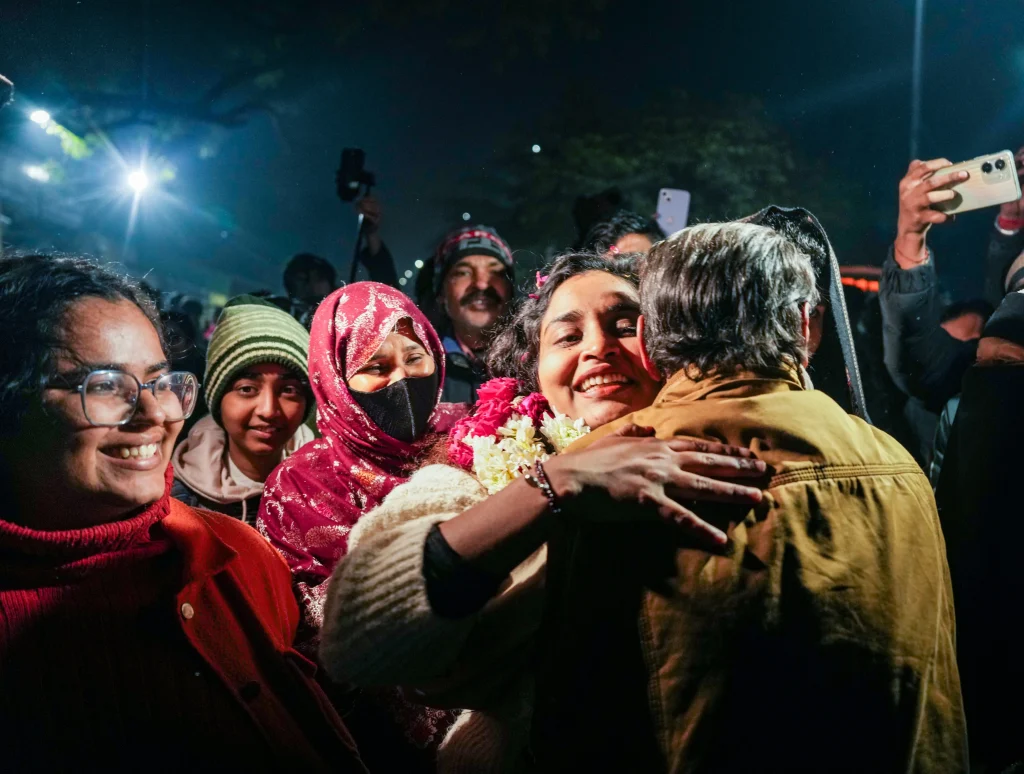
Reaction from Legal Experts Delhi riots
Many senior advocates and legal scholars welcomed the decision, stating that it upholds the spirit of the Constitution. They argue that criminal law must not be used as a tool for prolonged punishment before conviction.
Some experts also highlighted that in riot-related cases, evidence is often complex, witness testimonies can be contradictory, and investigations take years. In such circumstances, keeping accused persons in custody for extended periods undermines the principle of fair trial.
Political Reactions: Polarized Responses
As expected, the court’s order sparked political debate.
- Opposition parties and civil rights groups described the release as a victory for democracy and individual freedoms.
- Ruling party leaders and some victims’ representatives expressed concern, stating that accountability for the riots must be ensured and justice for victims should not be compromised.
The polarized reactions reflect the deeply political nature of the 2020 Delhi riots, which continue to influence public discourse even years later.
Voices of Human Rights Organizations
Several human rights organizations welcomed the release, arguing that the accused had already suffered years of incarceration without conviction. They emphasized that dissent and protest cannot automatically be equated with criminal conspiracy.
These groups have consistently raised concerns about the use of stringent laws, lengthy investigations, and the slow pace of trials in riot-related cases.
Concerns of Riot Victims
On the other side, families of riot victims expressed anxiety and disappointment. Many fear that delays and releases may weaken the cases and reduce the chances of justice.
For victims who lost family members, homes, or livelihoods, the legal process itself has been emotionally exhausting. They argue that accountability must be swift and visible to restore faith in the system.

The Broader Pattern: Bail Orders in Riot Cases
The January 7 order is not an isolated incident. Over the past few years, multiple courts have granted bail or release to accused in various Delhi riots cases, citing lack of concrete evidence, delays in trial, and constitutional safeguards.
This trend has led to renewed debate on the quality of investigations and the balance between national security, public order, and civil liberties.
Challenges Faced by the Prosecution
Prosecuting riot cases presents several challenges:
- Large number of accused and witnesses
- Reliance on digital evidence and call records
- Allegations of coerced testimonies
- Political overtones affecting public perception
Courts are required to sift through massive volumes of material, making the judicial process inherently slow.
Media’s Role and Public Narrative
Media coverage of the 2020 Delhi riots and subsequent arrests has been intense and often polarized. While some outlets focused on alleged conspiracies, others highlighted alleged misuse of law.
The release order by the Karkardooma Court has once again brought media scrutiny on how narratives are built and how they influence public opinion even before trials conclude.
Impact on Future Riot Investigations
Legal analysts believe that such court orders will push investigative agencies to strengthen evidence collection and avoid over-reliance on confessional statements or broad conspiracy theories.
Courts are increasingly demanding specific, individual roles rather than generalized allegations in riot cases.
The Question of Speedy Trial
One of the biggest lessons from this case is the urgent need for speedy trials. Justice delayed affects both the accused and the victims. Prolonged cases erode trust in institutions and deepen social divisions.
Judicial reforms, additional courts, and better case management are often cited as solutions.
Constitutional Values at the Center
At its core, the January 7 order highlights the judiciary’s role as the guardian of constitutional values. Personal liberty, presumption of innocence, and fair trial remain central to India’s legal framework.
The Karkardooma Court decision reflects the judiciary’s attempt to balance these principles against the gravity of allegations.
What Lies Ahead for the Accused?
While the four accused have been released, their legal journey is not necessarily over. They may still face trial, summons, or further proceedings depending on the case’s trajectory.
They are also expected to comply with court conditions, including cooperating with the investigation and appearing when required.
Conclusion: A Moment of Reflection for the Justice System
The release of Shifa ur Rehman, Meeran Haider, Mohammad Salim Khan, and Gulfisha Fatima by the Karkardooma Court on January 7 marks an important chapter in the long legal saga of the 2020 Delhi riots.
The decision underscores the importance of due process, constitutional safeguards, and judicial scrutiny in politically sensitive cases. At the same time, it reminds the system of its responsibility toward riot victims seeking closure and justice.
As the legal process continues, this case serves as a powerful reminder that justice must be both fair and timely, protecting individual rights while ensuring accountability for one of the darkest chapters in Delhi’s recent history.
Read More latest news

