
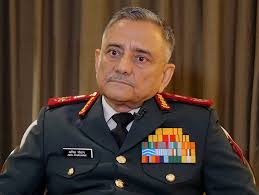
Operation Sindoor: CDS General Anil Chauhan Draws a New Red Line Against Terrorism at the Shangri-La Dialogue
Operation Sindoor On May 31, during the prestigious Shangri-La Dialogue Security Summit in Singapore, India’s Chief of Defence Staff (CDS) General Anil Chauhan delivered a powerful and uncompromising message to the global community. Speaking in a candid interview on the sidelines of the summit, General Chauhan declared that India’s Operation Sindoor has drawn a new red line against terrorism, sending a clear signal to both state and non-state actors across the region and beyond.
This statement marks a significant evolution in India’s national security posture, showcasing a shift from a reactive defense strategy to a proactive doctrine of deterrence and retaliation. In this blog, we explore the background of Operation Sindoor, General Chauhan’s key remarks, the strategic significance of the red line policy, international reactions, and what it means for India’s future defense policy.
1. What is Operation Sindoor? A Recap of India’s Bold Counter-Terror Mission
Operation Sindoor, launched in early 2025, is a highly confidential and precise counter-terror operation carried out by Indian special forces in cross-border regions. While the Indian government has maintained strategic ambiguity over the location and full scope of the operation, multiple defense sources have confirmed that it targeted terror launchpads across the Line of Control (LoC) and destroyed critical militant infrastructure.
The operation reportedly:
- Neutralized more than two dozen trained terrorists.
- Destroyed arms and ammunition stockpiles intended for infiltration.
- Captured digital intelligence exposing terror financing and recruitment networks.
By combining real-time satellite imagery, drone surveillance, and covert strike units, Operation Sindoor represented the pinnacle of India’s modern counter-terror capability.
2. General Anil Chauhan’s Statement: A Strategic Declaration
During his interview at the Shangri-La Dialogue, General Chauhan said:
“Operation Sindoor is not just a tactical mission—it is a strategic message. It clearly outlines India’s red line when it comes to terrorism. This red line is non-negotiable and now firmly entrenched in our national security doctrine.”
This declaration is unprecedented in its directness and clarity. Unlike previous Indian military actions where deniability or restraint was emphasized to avoid escalation, General Chauhan’s words mark a new era in India’s counter-terrorism policy.
He added:
“We are not seeking conflict, but we will not tolerate state-sponsored terrorism. Our forces are fully prepared to take decisive action at a time and place of our choosing. This is our new deterrence policy.”

3. India’s Policy Shift: From Strategic Restraint to Strategic Retaliation
India has traditionally maintained a policy of strategic restraint, especially when dealing with provocations from Pakistan. However, key turning points in recent years—such as the 2016 surgical strikes and the 2019 Balakot airstrikes—demonstrated a new assertiveness.
Operation Sindoor represents the maturation of this shift:
- It is not a reaction to a single terror attack.
- It is a proactive, long-term disruption of the terror ecosystem.
- It sends a message to both Pakistan and international terror networks: India will no longer wait for provocation to act.
This policy has received widespread public support in India, and is being closely studied by global security think tanks.
4. Why the Name “Sindoor”? Symbolism and Psychological Impact
The name “Sindoor” (vermillion) is deeply symbolic in Indian culture. It represents sacrifice, commitment, and the sanctity of protection—often associated with the red mark worn by married Hindu women, symbolizing devotion and preservation.
By naming the operation “Sindoor”, India has:
- Asserted its cultural identity in the realm of military doctrine.
- Delivered a psychological blow to adversaries by tying national defense to moral and emotional values.
- Reinforced the narrative that terrorism is not just a military issue, but a violation of India’s cultural and civilizational ethos.
5. India’s Red Line: What Does It Mean Strategically?
A red line in geopolitical terms refers to a limit or boundary which, if crossed, will result in serious consequences. By declaring a red line on terrorism, India now:
- Reserves the right to strike preemptively if credible intelligence suggests an imminent terror threat.
- Places the burden of escalation on adversaries who choose to ignore this warning.
- Sets a new doctrine of deterrence, aligning itself with global counter-terror norms practiced by nations like Israel and the United States.
General Chauhan emphasized that India’s red line is not symbolic—it is operational, and will be enforced consistently and without exception.
6. International Response: How the World is Reacting
🌍 United States and Western Allies
The United States, the UK, and France have largely supported India’s right to self-defense. In private briefings, U.S. military and diplomatic officials have acknowledged Operation Sindoor as a measured and professional operation, praising India’s use of precision and restraint.
🕊️ ASEAN and Indo-Pacific Neighbors
Given the Shangri-La Dialogue’s Asia-Pacific context, many Southeast Asian countries are closely watching India’s stance. With rising concerns about terrorism in the Malacca Strait, Myanmar, and Bangladesh, India’s red line may inspire a regional doctrine against terrorism.
❌ Pakistan’s Predictable Denial
Pakistan, as expected, has denied the existence of Operation Sindoor and accused India of fabricating narratives to justify aggression. However, the lack of international support for Pakistan’s position shows the growing credibility of India’s narrative in the global arena.
7. Domestic Political and Public Reactions in India
Across India, political parties and citizens have largely welcomed the declaration made by General Chauhan. Social media erupted with hashtags like:
- #OperationSindoor
- #RedLineAgainstTerror
- #IndiaStrikesBack
Defense analysts hailed the move as a long-overdue doctrine that places national security above international appeasement. Even opposition parties, while calling for transparency, supported the intent behind the operation.
Families of armed forces personnel have called Operation Sindoor a befitting tribute to soldiers who lost their lives in past terror attacks.
8. India’s Technological and Tactical Edge
Operation Sindoor also demonstrated India’s growing prowess in modern warfare, including:
- Drone-assisted strikes with minimal collateral damage.
- Use of cyber and psychological operations to disorient terror modules.
- Integration of space-based surveillance for real-time target acquisition.
The mission is being seen as a test run for India’s Theater Command integration plan, which aims to create joint operational structures for the Army, Navy, and Air Force by 2027.
9. The Role of Intelligence: Seamless Coordination
Behind the scenes, the Intelligence Bureau (IB), Research and Analysis Wing (RAW), and Defence Intelligence Agency (DIA) played a critical role in Operation Sindoor’s planning and execution.
Multiple reports suggest:
- Intercepts of satellite phones and encrypted chats triggered the mission.
- RAW operatives provided actionable intel weeks in advance.
- Cross-agency coordination ensured swift approval and minimal political delay.
10. Shangri-La Dialogue: Why General Chauhan’s Words Matter Here
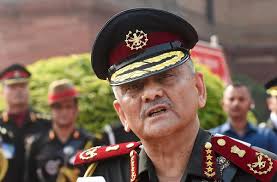
The Shangri-La Dialogue, hosted annually in Singapore, is one of the most influential security summits in the Indo-Pacific. By choosing this global platform to make India’s intentions clear, General Chauhan:
- Placed India’s counter-terror doctrine on the international map.
- Demonstrated that India is not just a regional power, but a responsible global actor.
- Gained the attention of strategic players like the US, Japan, and Australia in the Quad alliance.
This was more than a defense statement—it was a strategic messaging campaign to the global security community.
11. Looking Ahead: What Comes Next for India’s Defence Strategy?
With the success and political support behind Operation Sindoor, the following developments are expected:
- Establishment of a formal National Red Line Doctrine by the Ministry of Defence.
- Increased joint operations between paramilitary forces and armed forces in border areas.
- Greater investment in AI, satellite intelligence, and unmanned warfare systems.
- A more muscular foreign policy, particularly towards nations that harbor or fund terrorism.
India is likely to leverage international coalitions, such as the Quad and BRICS Counter-Terror Task Forces, to press for greater accountability for states sponsoring terrorism.
Conclusion: India Has Spoken—Loud and Clear
General Anil Chauhan’s bold declaration on Operation Sindoor at the Shangri-La Dialogue is more than just a military update—it is a doctrinal shift that redefines India’s position on terrorism. By drawing a red line, India has told the world—and its adversaries—that the era of passivity is over.
India will act before it’s attacked, and strike before terror takes root. The red line is clear. The resolve is firm. The message has been delivered.
📝 Meta Description for Blog SEO
India’s Chief of Defence Staff General Anil Chauhan declared at the Shangri-La Dialogue that Operation Sindoor has drawn a new red line against terrorism. This blog explores its implications on India’s defense strategy.


https://shorturl.fm/47rLb
https://shorturl.fm/hevfE