
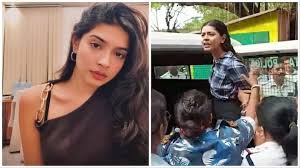
The arrest of 22-year-old law student and social media influencer Sharmistha Panoli has sparked a nationwide debate in India, touching upon themes of free speech, religious sentiments, and political dynamics. Her detention, following a controversial video related to Operation Sindoor, has drawn reactions from various quarters, including political leaders, celebrities, and international figures.
Background: Who is Sharmistha Panoli?
Sharmistha Panoli is a law student from Pune and an active social media influencer with a significant following on platforms like Instagram and X (formerly Twitter). Known for her outspoken views, she often posts content related to national issues and current affairs.
The Controversial Video
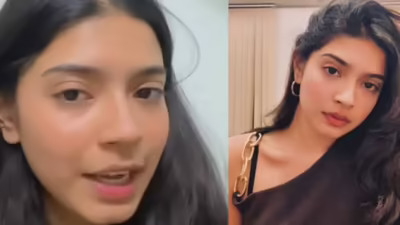
Sharmistha In mid-May 2025, Panoli posted a video criticizing Bollywood celebrities for their silence on Operation Sindoor, India’s military response to the Pahalgam terror attack. In the video, she used language that was deemed offensive and communal, particularly targeting a specific religious community. She also responded to a comment, allegedly from a Pakistani user, questioning India’s military actions, by making derogatory remarks about religious beliefs. The video was later deleted, and Panoli issued a public apology on May 15.
Legal Proceedings and Arrest
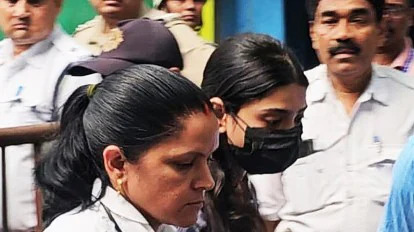
Sharmistha An FIR was lodged against Panoli at the Garden Reach Police Station in Kolkata under sections of the Bharatiya Nyaya Sanhita related to promoting enmity between groups, deliberate acts to outrage religious feelings, and inciting public mischief. Kolkata Police stated that multiple attempts were made to serve legal notices to Panoli, but she was reportedly absconding. Subsequently, a court issued an arrest warrant, leading to her apprehension in Gurugram, Haryana, on May 30. She was produced before the Alipore Court in Kolkata and remanded to 14 days of judicial custody.
Political and Public Reactions
The arrest has sparked a political controversy:
- BJP Leaders: Criticized the West Bengal government’s actions, labeling them as “appeasement politics” and an infringement on free speech.
- Kangana Ranaut: The actor and BJP MP compared the state’s actions to authoritarian regimes, urging the government not to suppress dissenting voices.
- Pawan Kalyan: Andhra Pradesh’s Deputy Chief Minister questioned the selective outrage and emphasized the need for consistent standards in addressing communal issues.
- International Voices: Dutch MP Geert Wilders condemned the arrest, calling it a “disgrace for freedom of speech” and urged Prime Minister Narendra Modi to intervene.
Kolkata Police’s Justification
Sharmistha In response to the backlash, Kolkata Police issued a statement asserting that the arrest was lawful and based on the content of the video, which they claimed promoted hatred and disturbed public harmony. They emphasized that the action was not against Panoli’s political views but against the communal nature of her remarks.
Broader Implications
The incident has reignited discussions on the boundaries of free speech in India, especially concerning online content. It raises questions about the balance between upholding freedom of expression and maintaining communal harmony. The case also highlights the responsibilities of social media influencers and the potential legal consequences of their content.
Media Coverage and the Role of Social Media
The mainstream media’s reaction to Sharmistha’s arrest has been split along ideological lines. Liberal platforms have largely defended the state’s action, emphasizing the need to curb hate speech, especially during sensitive times when national security operations like Operation Sindoor are underway. On the other hand, several right-leaning media outlets and commentators have described the move as an “example of selective targeting” where only one ideological spectrum is policed.
Meanwhile, on social media, hashtags like #JusticeForSharmistha, #FreeSharmistha, and #IStandWithSharmistha started trending almost immediately after her arrest. Users from various parts of India and even abroad have weighed in on the matter. Many noted the irony of arresting someone for allegedly hurting sentiments, while no action is often taken when people from minority communities post content that can be equally inflammatory.
This divergence in reactions illustrates a larger divide in Indian society regarding what constitutes “free speech” versus “hate speech,” especially in the digital era.
Legal Experts Speak Out
Prominent legal experts have provided a range of opinions on the arrest:
- Senior Advocate Harish Salve questioned whether Panoli’s comments met the legal threshold for hate speech under the Indian Constitution. “Disapproval and outrage are not enough for arrest under Sections 153A or 295A. There has to be a clear intent to incite violence or disharmony,” he said in a TV interview.
- Indira Jaising, another well-known Supreme Court lawyer, emphasized that while the state has a responsibility to maintain communal harmony, it must also ensure that any police action is “proportional and procedurally fair.”
The lack of prior notice, the arrest from a different state (Haryana) without adequate transparency, and the 14-day judicial custody have all raised eyebrows.
Public Outrage and Solidarity Protests
In cities like Pune, Delhi, and Bengaluru, small but visible protest gatherings have taken place, mostly organized by students, civil society groups, and right-wing youth organizations. Demonstrators argue that while communal harmony is important, India must not become a place where political dissent is treated as criminal behavior — especially when it originates from a young law student voicing her opinions in a personal capacity.
Some protesters held placards reading:
- “Today it’s Sharmistha, tomorrow it could be you.”
- “India is not China — Stop Censoring Dissent”
- “Freedom of Expression is not a Crime”
Additionally, online petitions calling for her immediate release have garnered tens of thousands of signatures within just a few days.
Comparison With Other Recent Cases
Many commentators are drawing comparisons between Sharmistha Panoli’s case and other recent controversial arrests or police inaction:
- Munawar Faruqui’s arrest in 2021 – The comedian was jailed for a joke he hadn’t yet made, which led to massive public outrage.
- Alt News co-founder Mohammed Zubair’s arrest – Arrested for an old tweet that some deemed offensive, sparking a free speech debate.
- No action on hate-speech cases from other ideological quarters – Critics argue that religious leaders or influencers making derogatory remarks against the majority community often go unpunished.
This perceived asymmetry in legal responses adds to the sense of injustice many feel regarding Panoli’s arrest.
Operation Sindoor and Its Connection
One cannot separate the context of Operation Sindoor from this controversy. The military operation — launched in retaliation for a deadly terror attack in Pahalgam — has become a highly emotive and nationalistic event in recent Indian discourse. Many people, like Panoli, felt that celebrities and public figures were not vocal enough in expressing solidarity with Indian forces.
Her video questioned this silence, but her language — deemed communal by the state — overshadowed her core message. The debate, then, is not only about freedom of speech but also about how nationalism, religion, and public discourse intersect in modern India.
Reactions from Academic Circles
Academic institutions and professors have also voiced opinions. Some feel this is a teachable moment for Indian youth about the power and responsibility that come with digital influence. Law faculties, in particular, have pointed to this incident as a real-world case study of how constitutional protections are tested in contemporary India.
Meanwhile, others worry that students and young voices are being silenced for challenging the status quo. In an open letter signed by 120 law students and professors, they demanded her release and called for greater judicial oversight in politically sensitive arrests.
Where the Case Stands Now
As of June 2, 2025, Sharmistha Panoli remains in judicial custody in Kolkata. Her legal team has filed for bail, and a hearing is expected later this week. Her supporters argue that she poses no flight risk and that continued detention is a violation of her basic rights.
Panoli’s parents, who have remained largely quiet, released a brief statement:
“Our daughter is a young, passionate Indian who made a mistake. She has apologized. She deserves a second chance, not jail time.”
The Broader Question: What Next for Digital India?
The incident opens a broader and more urgent debate: How should India handle provocative content in a digital space that is both deeply polarized and widely accessible?
As the world’s largest democracy with over 850 million internet users, India must now answer:
- What constitutes incitement in the age of memes and reels?
- Are law enforcement agencies applying the law consistently across ideologies?
- Should influencers be treated differently than average users due to their reach?
- Can the judiciary act quickly and independently in high-profile, politically charged cases?
Until India can develop consensus and clarity on these questions, incidents like Sharmistha Panoli’s arrest will continue to provoke controversy and deepen societal divides.
Conclusion
Sharmistha Panoli’s arrest underscores the complexities of navigating free speech, religious sensitivities, and political dynamics in the digital age. As the legal proceedings continue, the case serves as a focal point for broader debates on expression, accountability, and the role of state institutions in regulating content.


https://shorturl.fm/ypgnt
https://shorturl.fm/hQjgP