
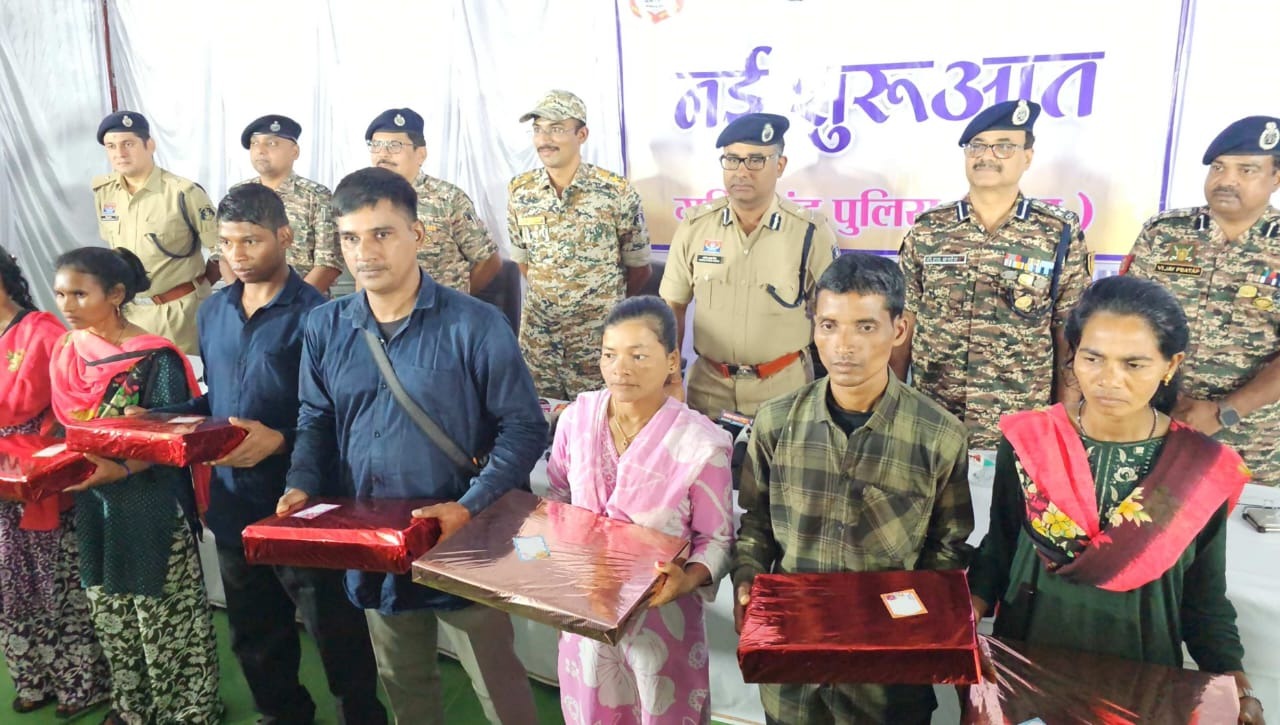
Chhattisgarh: Seven Naxalites Carrying a Reward of ₹37 Lakh Surrender Before Gariaband Police — A New Dawn of Peace in the Red Corridor
Introduction: A Step Toward Peace in the Heart of Chhattisgarh
Naxalites surrender In a significant development marking a crucial victory for law enforcement and peace initiatives in Chhattisgarh, seven Naxalites surrender with a collective reward of ₹37 lakh surrendered before the Gariaband police. This surrender not only highlights the success of government-led outreach programs aimed at rehabilitating extremists but also symbolizes a growing disillusionment among Naxalite cadres with the ideology of violence. The surrender comes at a time when the Chhattisgarh government has intensified its focus on bringing Naxal-affected areas into the mainstream through welfare schemes, education, and infrastructure development.
The event has sparked optimism among the security forces and citizens alike. For years, the dense forests of Bastar, Dantewada, Sukma, and Gariaband have been the epicenter of Maoist insurgency — a movement that once challenged the authority of the state. However, this latest surrender reflects a shifting tide, where hope and dialogue are beginning to replace fear and confrontation.
The Surrender: A Detailed Account of the Event
According to official sources, the seven surrendered Naxalites surrender were part of various active Maoist units operating in the Gariaband district and surrounding forest belts. They were responsible for multiple acts of violence, including ambushes on security forces, arson, extortion, and disrupting development activities in rural areas.
The surrendered cadres were identified as key members associated with local Naxal groups who had been carrying bounties ranging from ₹2 lakh to ₹10 lakh each. Collectively, the state government had announced rewards totaling ₹37 lakh for information leading to their capture or surrender.
The surrender ceremony took place at the Gariaband police headquarters, where senior officers, including Superintendent of Police (SP) Parul Mathur, were present. The event was conducted under the state’s Surrender and Rehabilitation Policy for Naxalites surrender, which offers financial assistance, vocational training, and housing support to those who renounce violence and choose to return to the mainstream.
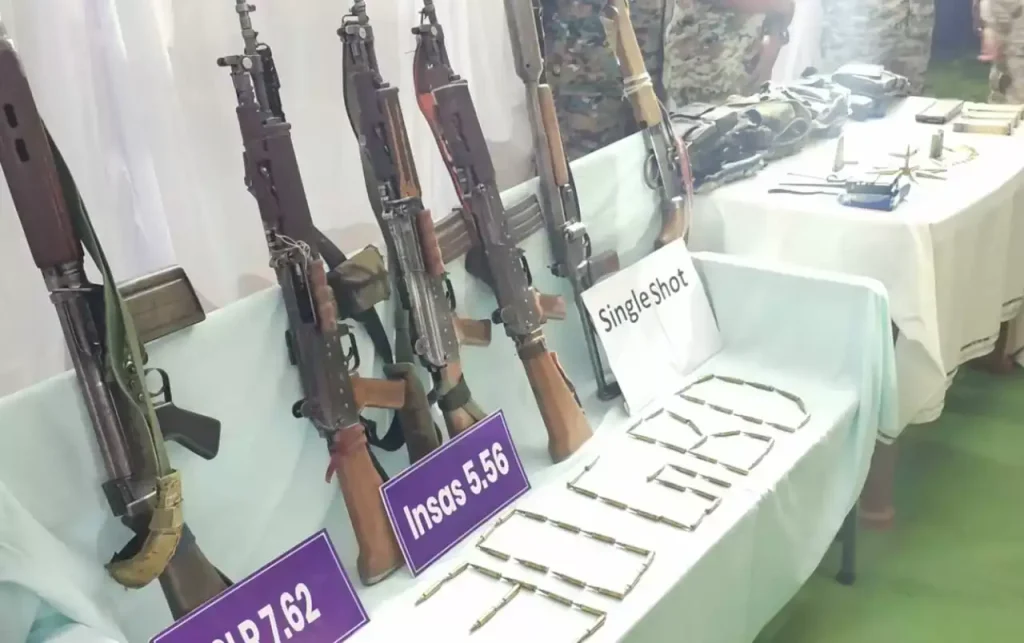
As part of the ceremony, the Naxalites surrender symbolically laid down their weapons — including rifles, country-made guns, and explosives — before the police. The gesture, both powerful and emotional, marked their departure from a life of conflict toward one of peace and stability.
Who Were the Naxalites surrender?
The surrendered individuals were long-time operatives who had spent years in the Maoist movement. Some had joined the insurgency as young as 16 or 17, lured by the promise of social justice and equality. However, after decades of struggle, many became disillusioned with the internal politics, violence, and exploitation that characterized the Naxal organization.
Among the surrendered were:
- Two area commanders who managed operations across Gariaband and neighboring Mahasamund districts.
- Three militia members involved in local-level propaganda, logistics, and extortion.
- Two foot soldiers who acted as couriers and guides for senior Maoist leaders in the forests.
Their decision to surrender was reportedly influenced by the continuous pressure from security operations, as well as the success of the government’s rehabilitation campaigns and community outreach programs.

Government’s Role and Rehabilitation Policy Naxalites surrender
Chhattisgarh has been one of the most affected states by Left-Wing Extremism (LWE), often referred to as the “Red Corridor.” However, in recent years, the state government, in coordination with the central government, has launched several initiatives to encourage surrenders and reintegration.
The Surrender and Rehabilitation Policy provides surrendered Naxalites surrender with:
- Immediate financial assistance ranging from ₹5 lakh to ₹25 lakh, depending on rank.
- A fixed deposit for long-term sustenance.
- Education and skill development opportunities, including vocational training in agriculture, construction, and small business management.
- Housing support and medical assistance.
- Legal aid to handle pending cases and reintegration into civil society.
Authorities emphasized that the purpose of this policy is not only to weaken Naxal networks but also to ensure that those who surrender find genuine opportunities for livelihood and dignity.
Voices of the Naxalites surrender: Why They Chose a New Path
During the press interaction following their surrender, several of the Naxalites surrender shared the reasons behind their decision to abandon the movement. One of them said, “We joined the movement thinking we could change the system, but all we saw was death and destruction. The leaders lived comfortably, while the poor villagers suffered.”
Another former cadre mentioned that the increasing development work in villages — roads, schools, healthcare facilities, and digital connectivity — had opened their eyes. “The government is working for the people now. We realized we were fighting against our own brothers and sisters,” he added.
The ex-Naxalites surrender also cited internal conflict, harsh living conditions, and fear of continuous police operations as key factors that drove them to surrender. In many cases, families of Naxalites were also pressuring them to give up arms and return home.
The Police Perspective: Building Trust and Dialogue
Superintendent of Police Parul Mathur praised the courage of the Naxalites surrenderand reiterated the department’s commitment to supporting their rehabilitation. “Every life saved from the path of violence is a victory for peace,” she said. She also credited the efforts of local police teams and intelligence units who maintained continuous communication channels with the Naxalites surrender, encouraging them to come forward.
In recent years, the Gariaband police have adopted a “trust and transform” approach — focusing not only on operations but also on building relationships with tribal communities. Police personnel regularly visit villages, participate in local festivals, and conduct awareness programs on education and health.
This human-centric approach has helped reduce the fear of police among villagers, making it easier for Naxal cadres to trust law enforcement and surrender peacefully.
Impact on Local Communities: A Wave of Hope
The surrender of these seven Naxalites surrender has brought a palpable sense of relief to residents in the Gariaband and Mainpur regions. For decades, villagers in these areas had lived under the shadow of violence and extortion. With the latest development, locals are beginning to hope for sustained peace and greater access to government welfare programs.
Many development projects that were previously stalled due to fear of Naxal attacks — such as rural roads, solar electrification, and water supply schemes — can now move forward more swiftly. Local youth, inspired by the surrender, are reportedly coming forward to join skill development programs and police recruitment drives.
Broader Implications: The Decline of the Naxal Movement
The surrender in Gariaband is part of a broader trend observed across Chhattisgarh and other affected states like Jharkhand, Odisha, and Maharashtra. In the past three years, thousands of Naxalites surrender have either been neutralized or surrendered due to continuous operations by the CRPF, COBRA units, and state police forces.
Security analysts believe that the ideological appeal of the Maoist movement has weakened significantly. The rise in rural connectivity, education, mobile communication, and local governance has empowered villagers, reducing the space for extremist propaganda.
Moreover, the central government’s National Policy and Action Plan to Combat Left Wing Extremism (2015) has played a pivotal role. Through a combination of security measures and socio-economic initiatives, the plan has helped bring down violent incidents by over 60% in the last decade.
Challenges Ahead: Sustaining the Momentum
While the surrender is a major breakthrough, experts caution that the fight against Left-Wing Extremism is far from over. There are still pockets in Bastar, Sukma, and Bijapur where hardcore cadres continue to operate and recruit new members.
To ensure lasting peace, the government will need to:
- Strengthen rehabilitation programs to ensure Naxalites surrender are not stigmatized or economically abandoned after surrender.
- Accelerate infrastructure projects in remote tribal areas, particularly roads, schools, and healthcare centers.
- Promote education and job opportunities for tribal youth to prevent them from being lured by extremist ideologies.
- Enhance coordination between central and state forces for effective intelligence sharing and operations.
- Continue dialogue and trust-building initiatives between police and local communities.
Only a balanced approach — combining firmness against violence with compassion for misguided individuals — can achieve enduring peace in the region.
Political and Social Reactions Naxalites surrender
Political leaders across party lines welcomed the surrender, calling it a major success for the state government’s peace strategy. Chief Minister Vishnu Deo Sai praised the police and expressed satisfaction that more extremists were abandoning the path of violence. “Every surrendered Naxalite is a citizen returning home,” he said, emphasizing that the government’s door remains open for dialogue.
Social activists and tribal leaders in Gariaband also hailed the development as a “ray of hope.” They urged authorities to provide the surrendered individuals with meaningful employment and social acceptance, preventing them from being alienated again.
Media and Public Response
The surrender made headlines across regional and national media, with commentators noting the symbolic importance of the move. Many observers pointed out that it reflects a broader shift in the socio-political fabric of rural Chhattisgarh — from a region of resistance to one of reconstruction.
Citizens on social media platforms like X (formerly Twitter) and Facebook shared messages of support for the police and state government. Hashtags such as #PeaceInChhattisgarh, #NaxalSurrender, and #NewDawnInGariaband trended locally, underscoring public optimism.
Conclusion: A New Chapter in Chhattisgarh’s Fight Against Extremism
The surrender of seven Naxalites surrender carrying a ₹37 lakh bounty before Gariaband police is not just a security success — it is a story of transformation, humanity, and hope. It reminds us that even after years of violence and alienation, reconciliation is possible through compassion, opportunity, and persistent dialogue.
As these former rebels step into a new life, their decision sends a powerful message to others still in the jungles — that the path of peace, development, and dignity is open for all. The challenge now lies in ensuring that this momentum is sustained, that surrendered individuals are truly rehabilitated, and that no young person feels compelled to take up arms again.
If the lessons from this event are implemented across the Red Corridor, India may soon witness a day when the guns of Naxalism fall silent forever, replaced by the sound of progress, education, and peace.
Read More latest news

