
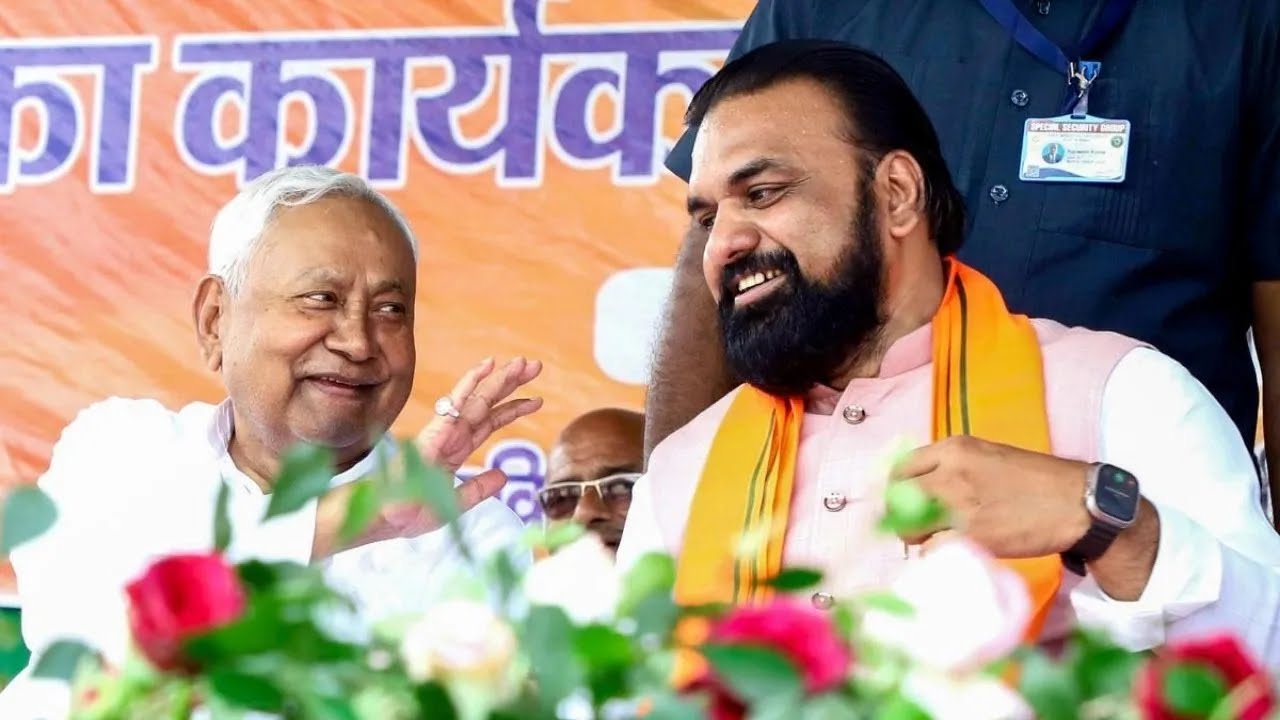
A Petition Filed in the Supreme Court Against Bihar Deputy Chief Minister Samrat Chaudhary for Alleged Misrepresentation of Age
Introduction
A petition has recently been filed in the Supreme Court of India against Bihar’s Deputy Chief Minister, Samrat Chaudhary, alleging that he misrepresented his age in multiple election affidavits. The petitioner has demanded that his nomination be cancelled, an FIR be filed against him, and that he be removed from his post as Deputy Chief Minister. The case has drawn national attention, as it involves serious allegations of false declarations, misuse of power, and possible violations of electoral law. This controversy not only puts Chaudhary’s political credibility at stake but also raises significant questions about the integrity of the democratic process and the accountability of public officials.
Background of the Allegations
The petitioner claims that Samrat Chaudhary provided contradictory details about his age in various election affidavits filed over the years. According to the allegations, in some records, Samrat Chaudhary declared himself a minor in the mid-1990s, while in his 1999 election affidavit, he claimed to be over the age of 25 — the minimum age required to contest assembly elections. This inconsistency suggests that either the earlier or the later declarations were false, thereby constituting a violation of the Representation of the People Act, 1951.
The petition points out that in one case, the Supreme Court had already established his correct date of birth as May 1, 1981, making him ineligible to contest the 1999 election, as he would have been below 25 years of age at that time. Despite this, Samrat Chaudhary allegedly continued to submit affidavits with inconsistent details regarding his age in subsequent elections, including the 2020 and 2025 assembly polls.
The petitioner has argued that such repeated misrepresentation cannot be dismissed as an error and has demanded strict legal action against him, including cancellation of his nomination, registration of an FIR, and removal from the position of Deputy Chief Minister.
Timeline of Events
- 1995: Samrat Chaudhary was reportedly involved in a case where he claimed to be a minor, thereby avoiding trial as an adult.
- 1999: He contested the Bihar Assembly elections, declaring an age that suggested he was over 25, while official records and later Supreme Court findings indicate that he was younger than 25 at the time.
- 2002–2003: The Supreme Court reportedly confirmed his birth date as May 1, 1981, questioning his eligibility in earlier elections.
- 2020 and 2025: New affidavits filed by Samrat Chaudhary allegedly contained varying ages and birth years, indicating continued discrepancies in official records.
This timeline highlights a pattern of inconsistencies, suggesting deliberate manipulation of age details to maintain political eligibility and avoid legal consequences.

Legal and Constitutional Aspects
Under Article 173 of the Indian Constitution, a person must be at least 25 years old to contest an election for the Legislative Assembly. Providing false information about one’s age directly violates this constitutional provision.
The Representation of the People Act, 1951 (RPA) also sets strict requirements for the truthfulness of information provided in election affidavits. Section 125A of the Act stipulates punishment for submitting false affidavits or declarations. If found guilty, the candidate can face imprisonment, a fine, or both. The Election Commission of India (ECI) also has the authority to investigate such discrepancies and disqualify a candidate for providing false information.
If the Supreme Court finds merit in the petition, it can direct the Election Commission to initiate proceedings against Samrat Chaudhary. His election could be declared void, and he could be disqualified from holding public office, including his current post as Deputy Chief Minister.
Political Context
Samrat Chaudhary is a key political figure in Bihar and a prominent leader of the Bharatiya Janata Party (BJP). He holds considerable influence as a representative of the Kushwaha (Koeri) community, a significant OBC group in Bihar’s caste-based political landscape. His political career has seen a rapid rise, and his position as Deputy Chief Minister makes this controversy even more sensitive.
Opposition parties have seized the opportunity to question the ruling government’s commitment to transparency and accountability. They allege that the BJP has protected Samrat Chaudhary despite serious discrepancies in his official records. Congress and other opposition leaders have pointed out that such manipulation of age and identity undermines the credibility of democratic institutions.
This case also emerges at a politically crucial time, with the 2025 Bihar Assembly elections approaching. The opposition hopes to use this issue to challenge the BJP’s claims of clean governance, while the ruling party faces the challenge of defending one of its top state leaders.
Legal Implications and Consequences
If the Supreme Court finds the allegations to be true, several consequences could follow:
- Disqualification from Office: If the Court rules that Samrat Chaudhary was ineligible at the time of nomination, his election would be declared void, resulting in automatic disqualification from the Legislative Assembly and removal from the post of Deputy Chief Minister.
- Criminal Prosecution: Filing false affidavits is a criminal offense under the Representation of the People Act. A conviction could lead to imprisonment and further bar him from contesting future elections.
- Political Fallout: Such a verdict could tarnish the image of the ruling coalition in Bihar, especially with elections around the corner. It could also impact Samrat Chaudhary political career and standing within his party.
- Institutional Accountability: The Election Commission may face scrutiny for not acting earlier despite visible contradictions in Samrat Chaudhary documents across multiple election cycles.
Ethical Dimensions
Beyond the legal issues, this case raises serious ethical concerns. Public officials are expected to maintain the highest standards of honesty and transparency. Misrepresenting personal details such as age strikes at the foundation of public trust. The controversy reinforces a growing perception that many politicians manipulate official records to gain eligibility or avoid legal scrutiny.
In a democracy, the legitimacy of leadership is based on truthfulness and adherence to the law. If elected representatives themselves are found falsifying key details, it erodes citizens’ faith in the electoral process and weakens democratic institutions.
Institutional Responsibilities
To address such issues effectively, several steps should be considered:
- Stricter Verification of Affidavits: The Election Commission must develop a more robust verification mechanism to cross-check candidates’ personal details, including date of birth, educational qualifications, and criminal records.
- Transparency and Public Access: Affidavits and supporting documents should be easily accessible to the public, allowing citizens to hold their representatives accountable.
- Judicial Oversight: Courts should expedite hearings in cases involving alleged falsification by public officials, ensuring swift justice to maintain public confidence.
- Political Accountability: Political parties must take responsibility for vetting their candidates. Nominating individuals with questionable credentials damages the party’s credibility and undermines democracy.
Counterarguments and Defense
While the allegations appear serious, supporters of Samrat Samrat Chaudhary may argue that inconsistencies in documents are often due to administrative errors, record-keeping issues, or clerical mistakes. In many parts of India, especially in rural areas, official records such as birth certificates and school documents have historically been inaccurate.
His defenders may also argue that the petition is politically motivated, aimed at discrediting a rising leader ahead of the elections. They could point out that no substantial proof has yet been presented to show deliberate intent to mislead the Election Commission. Until the Supreme Court verifies the claims, Samrat Chaudhary remains legally innocent.
Broader Implications for Indian Democracy
This case serves as a reminder that democracy depends on both institutional integrity and personal honesty. It underscores the need for continuous vigilance in ensuring that elected officials meet legal and ethical standards. The controversy also brings to light broader systemic weaknesses in India’s electoral framework, particularly in verifying the authenticity of candidates’ personal information.
For the Election Commission, this is a test of its credibility and independence. For the judiciary, it is an opportunity to reaffirm that the rule of law applies equally to all, regardless of political stature. And for the public, it is a lesson in democratic vigilance — the idea that citizens must demand transparency and honesty from their representatives.
Possible Outcomes
Depending on the Supreme Court’s findings, several scenarios could emerge:
- The Court may order a detailed inquiry into all affidavits filed by Chaudhary across elections.
- The Election Commission could initiate proceedings under Section 125A of the RPA.
- If the charges are substantiated, Chaudhary could face disqualification and criminal prosecution.
- Alternatively, if the inconsistencies are proven to be minor or unintentional, the Court may dismiss the petition.
Whatever the outcome, the case will likely set a precedent for future instances of alleged falsification in election affidavits.
Conclusion
The petition against Bihar Deputy Chief Minister Samrat Chaudhary brings to the forefront vital questions about honesty, eligibility, and accountability in public life. Whether or not the allegations are ultimately proven true, the case highlights a deep flaw in India’s political and administrative systems — the ease with which false information can enter the electoral process without prompt scrutiny.
In a democracy as large and complex as India’s, transparency and integrity are non-negotiable. Citizens deserve leaders who play by the rules and uphold the law, not those who bend it for political convenience. As the Supreme Court deliberates on this petition, the nation will be watching closely, not just for the verdict, but for the message it sends about the strength of India’s democratic institutions.
Ultimately, this case is a test of both individual accountability and institutional integrity. Its outcome will shape not just one politician’s future but also the standards of honesty and transparency that Indian democracy aspires to uphold.
Read More latest news

