
Home Minister Amit Shah Challenges Rahul Gandhi Over Ceasefire and UPA’s Terror Response in Lok Sabha
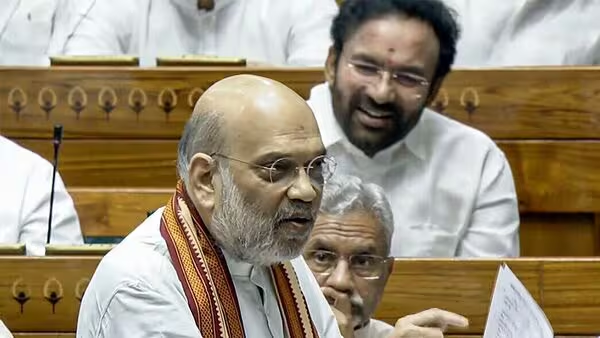
During a fiery session in the Lok Sabha, Home Minister Amit Shah directly challenged Rahul Gandhi, questioning the Congress party’s actions during its tenure in response to terror attacks. Shah’s remarks came amid a debate on Operation Sindoor, India’s tactical military response to cross-border terrorism. He asked Rahul to clarify what the UPA government had done post the Batla House encounter and other terror attacks that shook the country between 2004 and 2014.
Amit Shah accused the Congress leadership of showing sympathy towards terrorists, invoking Sonia Gandhi’s emotional response and Salman Khurshid’s controversial statements. He further blamed the Congress for repealing POTA and weakening India’s internal security framework. Declaring “Pakistan is a mistake committed by Congress,” Amit Shah linked historical political decisions to current-day security threats.
The challenge has intensified political rivalry, especially as the BJP aims to position itself as a party of decisive governance, strong defense, and national pride. The Congress, meanwhile, is under pressure to respond with concrete facts about its counter-terror strategy during its rule.
1. The Parliamentary Spark: Context of the Challenge
During the Monsoon Session 2025 debate on Operation Sindoor—India’s military strike in response to the Pahalgam terror attack—Home Minister Amit Shah took the Lok Sabha floor and issued a high-voltage challenge to Rahul Gandhi, Leader of Opposition. Amit Shah explicitly asked Gandhi to clarify the actions taken during the UPA era against terrorist attacks including the Batla House encounter, pressing him to account for inaction during his party’s rule.
2. Amit Shah’s Fiery Reckoning
🔹 “What did Congress do during terror attacks?”
Amit Shah demanded:
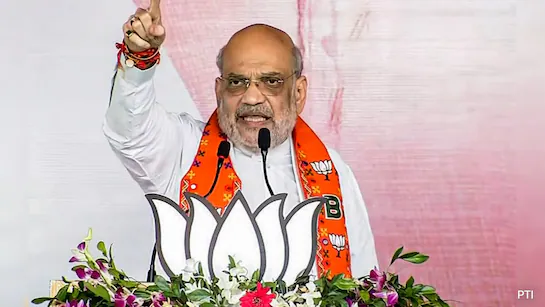
“I challenge Rahul Gandhi to tell what action you took in the wake of the series of terror attacks that happened during your regime.”
He pointedly contrasted past and present responses, claiming that under BJP rule, terror networks were dismantled, but during the Congress’s tenure there was inaction despite rising terror incidents (7,217 attacks in 2004–14).
🔹 Reference to Batla House Encounter
Invoking the 2008 Batla House encounter, Amit Shah criticized senior Congress leaders for allegedly sympathizing with the terrorists:
Recalling that Salman Khurshid cried for slain terrorists and Sonia Gandhi’s emotional reaction, Amit Shah accused them of being soft on terrorism. He urged Rahul to explain that narrative stance.
3. Broader Narrative: Rahul Gandhi’s Credibility Under Fire
🔹 “Pakistan—a mistake committed by Congress”
Shah asserted:
“Pakistan is a mistake committed by Congress.”
He blamed Congress for partition-related decisions, tying it to ongoing terror threats—suggesting the opposition’s origins, both political and historical, were intertwined with Pakistan’s creation.
🔹 Accountability and Sovereignty
Shah emphasized that while India under BJP actively responded to attacks, Congress leaders offered excuses and dossiers—he demanded:
“Who will take responsibility for the terror incidents under UPA?”
Shah said India’s anti-terror laws like POTA were scrapped by Congress after 2004, weakening counter-terror mechanisms.
4. Political Fallout & Opposition Reactions
🔹 Rahul Gandhi in the Spotlight
The challenge put Rahul Gandhi on the defensive, demanding public record on counterterror actions during the UPA years. While he later participated in the debate, his exact response remains unreported in detail.
🔹 Support and Backlash from Within Congress
Former leaders like Uma Bharti criticized Rahul’s remarks—especially his suggestion that the Prime Minister surrendered following US mediation—as misinformed and harmful to national integrity. Priyanka Gandhi expressed emotional regret at Shah’s Batla House jibe, defending family legacy.
5. Strategic Elements of Shah’s Address
🔹 Narrative Control
Shah masterfully reframed the debate: from immediate Operation Sindoor to long-term legacy issues—terror policy, diplomatic strategy, and Congress’s purported failure.
🔹 Voter Messaging & Symbolism
By juxtaposing the BJP’s operational decisiveness with Congress’s perceived inaction, Shah strengthened BJP’s standing as the party of national security—especially ahead of upcoming elections.
🔹 Moral High Ground
Invoking martyrdom, POTA repeal, and partition history, Shah appealed to nationalist sentiment and moral authority—implying Congress lacked both.
6. Implications in Indian Politics
⚖️ Democratic Accountability
Shah’s challenge reignited debates on how opposition leaders should account for the legacy and consequences of previous administrations—especially on sensitive issues like terrorism.
🕵 Transparency Matters
The speech demanded archival scrutiny of UPA years, transparency in handling terror investigations, and public disclosure of counterterror records.
🎯 Campaign Strategy
BJP’s framing could resonate with security-conscious voters, portraying the Congress as unprepared and contradictory on national strategy and symbolism.
7. India’s Evolving Counter-Terror Framework
🛡 From POTA to Sovereign Action
Shah highlighted how Congress scrapped POTA (Prevention of Terrorism Act) post-2004, while BJP introduced stricter measures post-Nehtroik—shaping the narrative that BJP confronts terrorism, while Congress hesitated.
💥 Operational Success vs. Reactive Posture
Shah praised recent operations—Uri, Pulwama airstrike, and Operation Sindoor—as evidence of proactive defense posture under the current regime.
8. Charting the Dispute: Timeline
| Timeline | Key Events & Statements |
|---|---|
| July 29, 2025 | Amit Shah challenges Rahul Gandhi in Lok Sabha debate on Operation Sindoor |
| Mention of UPA tenure | Cites statistics on terror incidents (2004–14) |
| Batla House invoke | Refers to Salman Khurshid & Sonia Gandhi’s emotional responses |
| Partition claim | Pakistan as “a mistake by Congress” |
| Responsibility demand | Questions accountability for repealing POTA and failing to act |
| Opposition fallout | Priyanka & Uma Bharti defend Gandhi; Congress under pressure |
9. Public Response & Media Interpretation
Several analysts and media outlets echoed Shah’s call for accountability. What got amplified was:
- The symbolic reference to Pakistan’s origins.
- The evocation of Batla House memories.
- The framing of Congress as historically soft on terrorism.
- Calls for Rahul Gandhi to present actionable data.
The speech created a political inflection point—gauging public sentiment on leadership, security, and narrative truth.
🔚 Conclusion
Amit Shah’s speech was more than a political attack—it was a clarion call demanding accountability from the opposition on matters of national security and historical consequence. By challenging Rahul Gandhi and Congress to explain their actions across multiple terror-related crises—from Batla House to Operation Sindoor—Shah framed the debate around leadership credence, moral authority, and administrative legacy.
In India’s intensifying political landscape, with national security as both an electoral and governance priority, Shah’s narrative—juxtaposing vigilance and inertia—sets the stage for how future debates around terrorism, history, and sovereignty are framed.
Read more latest news

