
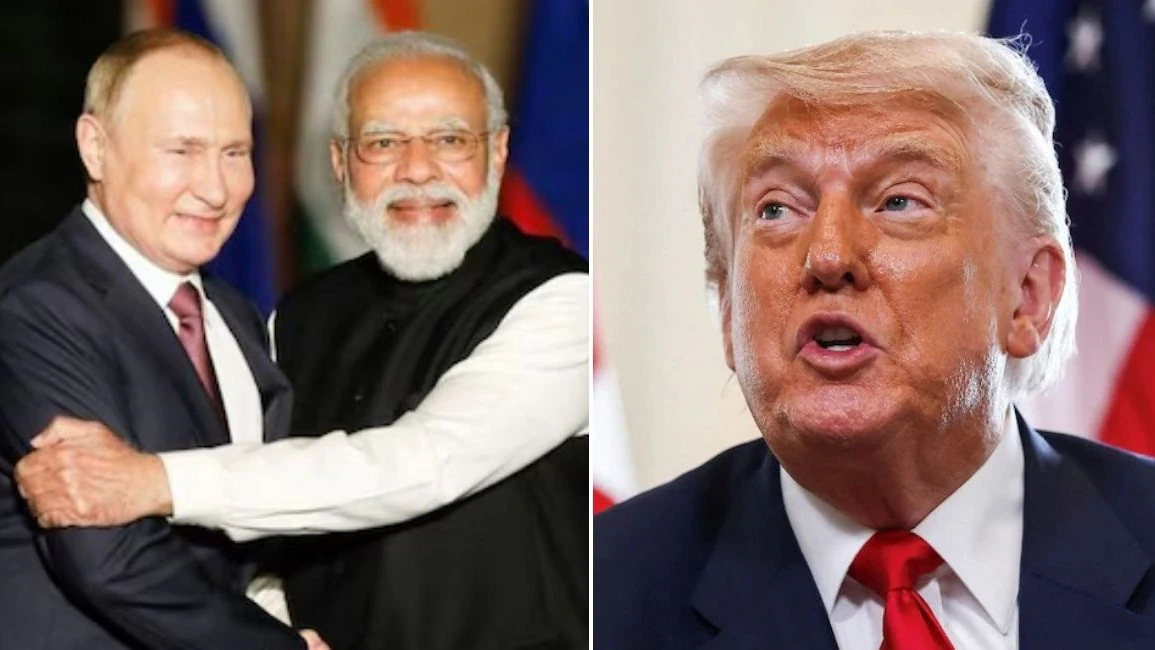
🇮🇳🇺🇸 Full Blog: Government’s First Reaction on Trump Tariff Announcement
In a significant geopolitical development, the Indian government has issued its first official reaction to the recent tariff announcement made by former U.S. President Donald Trump, who is expected to run for re-election in 2024. The Trump-led proposal suggests imposing a universal tariff on imports, aimed at reshaping America’s trade landscape. India, one of the key trade partners of the U.S., has voiced serious concerns over the implications of such a move. A spokesperson from the Ministry of External Affairs said, “We will take every necessary step to protect the country’s interests, both economically and diplomatically.”
The government emphasized that while it respects the sovereign decisions of other nations, it will not shy away from taking reciprocal or strategic actions if Indian exports and industries are adversely affected. With trade between India and the U.S. exceeding $190 billion in recent years, such a move could have deep consequences for sectors like pharmaceuticals, textiles, and IT services. The government has also indicated its intention to consult WTO guidelines and strengthen trade ties with alternative markets.
“We will take every necessary step to protect the country’s interests…”
These words from the Indian government, issued in response to Donald Trump’s controversial tariff announcement, reflect not just a diplomatic caution but a firm assertion of national interest. As former U.S. President Donald Trump reemerges as a dominant political figure on the global stage with his 2024 election bid, his proposed economic policies—especially universal tariffs—are ringing alarm bells in international trade circles. India, as a major trading partner of the United States, is right at the epicenter of this potential upheaval.
📌 What Did Trump Announce?
In a campaign-style address, Trump proposed what he termed as “universal baseline tariffs” on all imports into the United States. While he didn’t disclose exact rates, insiders from his campaign suggested a minimum of 10% on most goods. The rationale, as he outlined, was to strengthen domestic manufacturing, reduce dependence on foreign supply chains, and “rebalance” trade deficits.
However, critics argue that such policies amount to a trade war in disguise—one that could be detrimental to developing economies, including India, which relies heavily on export-led growth.

🇮🇳 India’s Economic Stakes in US Trade
The India-US trade partnership has grown substantially over the last decade. In 2023, bilateral trade between the two countries crossed $190 billion, with India exporting pharmaceuticals, textiles, gems and jewelry, IT services, and machinery to the U.S.
Trump’s tariff proposal directly threatens this trade balance. A blanket 10% duty could make Indian goods significantly less competitive in the American market, impacting Indian businesses and employment across various sectors.
The Indian government’s statement comes after high-level meetings in South Block, where officials from the Ministries of Commerce, External Affairs, and Finance analyzed possible outcomes.
A government spokesperson said:
“India remains committed to global trade norms under WTO frameworks. We respect America’s internal policy debates, but any step that threatens the growth of Indian industries will be countered with suitable diplomatic and economic measures.”
🏛️ India’s Multi-Pronged Strategy
Sources inside the government suggest that India is preparing a comprehensive action plan to safeguard its interests. The measures under consideration include:
- Diplomatic Engagement: India is likely to engage U.S. lawmakers and trade representatives to express concerns and seek exemptions.
- Diversification of Export Markets: Strengthening trade ties with the EU, ASEAN, and African nations to reduce over-reliance on the U.S.
- Utilizing WTO Dispute Resolution: If tariffs are found to violate WTO norms, India may consider challenging them at the global trade body.
- Domestic Subsidies & Incentives: Providing cushion to export-driven sectors through Production-Linked Incentive (PLI) schemes and other fiscal measures.
A senior trade official said:
“This isn’t the first time we’ve had to deal with protectionist measures. During Trump’s earlier term, we handled it through a mix of strategy and patience. This time, we’re prepared for a quicker and stronger response.”
📉 Potential Impact on Key Indian Sectors
Here’s a look at how the proposed tariffs may impact specific Indian sectors:
💊 Pharmaceuticals:
India is the world’s largest provider of generic medicines, much of which is exported to the U.S. A 10% hike could disrupt supply chains and raise healthcare costs for American consumers while reducing Indian pharma companies’ margins.

🧵 Textiles & Apparel:
With a sizable export volume to the U.S., the textile sector could suffer due to price disadvantages, leading to layoffs and factory closures, especially in Tamil Nadu, Gujarat, and West Bengal.
💻 IT & Services:
Although tariffs don’t directly apply to services, any economic strain could lead to U.S. companies cutting costs—including outsourcing contracts with Indian IT firms.
💎 Gems & Jewelry:
India exports billions worth of diamonds and jewelry to the U.S. Tariffs would make them less attractive compared to domestic alternatives or cheaper competitors.
🌍 Global Reactions & Trade Realignment
The U.S. isn’t targeting India alone. Countries like China, Mexico, Vietnam, and Germany are all on alert. The EU Trade Commission has warned of retaliatory tariffs and potential blockages in WTO cooperation.
India, too, is closely watching these developments. A senior economist at NITI Aayog said:
“We are likely to see a realignment of global trade. If Trump’s policies materialize, emerging markets will start forming their own pacts, perhaps even excluding the U.S.”
India’s foreign trade policy team is reportedly accelerating FTA (Free Trade Agreement) negotiations with the UK, EU, and Gulf nations to hedge against any shocks from the American market.
🗳️ Trump’s Domestic Politics, Global Fallout
Trump’s tariff plans are largely aimed at bolstering domestic manufacturing jobs, a cornerstone of his ‘America First’ ideology. But in a hyper-connected global economy, unilateral moves can trigger unintended global consequences.
Indian diplomats stationed in Washington DC are lobbying to ensure bipartisan understanding of the Indian viewpoint. The Modi government is also leveraging its growing influence in global forums such as the G20, BRICS, and SCO to rally support for fair trade practices.
🔄 Historical Context: Trump and Trade Tensions with India
This isn’t the first time Trump and India have clashed on trade. During his presidency, the U.S. revoked India’s preferential trade status under the Generalized System of Preferences (GSP), affecting $6 billion worth of exports.
India had retaliated by imposing tariffs on 28 American goods, including almonds, apples, and walnuts. The situation was eventually brought under control through bilateral talks and the Modi-Trump bonhomie.
This time, however, the tone is more guarded. Indian policymakers are not willing to take chances in an election year, especially when manufacturing and MSMEs are still recovering from the post-pandemic slowdown.
🧭 The Road Ahead
India’s response is expected to be layered and measured. Government insiders confirm:
- A high-level delegation may be sent to the U.S. after the official Republican Convention.
- Stakeholder meetings with exporters and industry bodies like FIEO, CII, and FICCI are already underway.
- Budgetary provisions may be revised in 2026 to include export protection funds.
The Indian business community has welcomed the government’s proactive stance. The Confederation of Indian Industry (CII) issued a statement urging “continued dialogue with the U.S. and parallel diversification of trade avenues.”
✍️ Conclusion: Resilience in a Changing World Order
As global geopolitics shifts and nationalism shapes economic policy, countries like India must remain agile. Trump’s tariff threat is not just a trade issue—it’s a stress test for India’s diplomatic maturity, economic resilience, and strategic clarity.
The Indian government’s clear message—“We will take every necessary step to protect the country’s interests”—is more than a statement. It’s a policy direction. A reminder that New Delhi will no longer remain silent or reactive on matters affecting its sovereignty and economic stability.
Whether Trump wins or not, India is preparing for all outcomes—and that, perhaps, is the most responsible course in uncertain times.
read more latest news

