
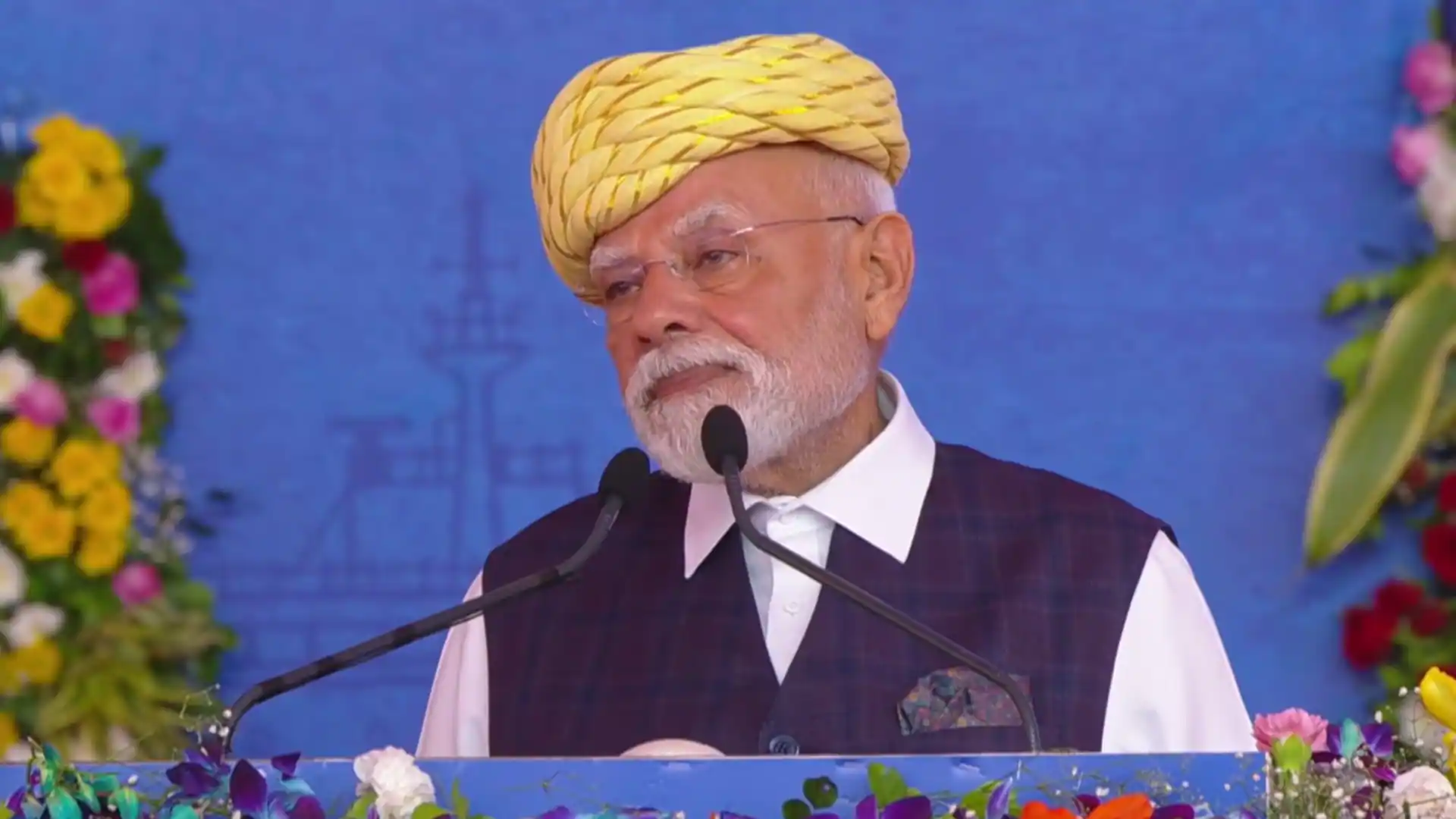
If We Want to Develop by 2047, We Must Become Self-Reliant: PM Modi’s Call for a Self-Sufficient India
Introduction
Prime Minister Narendra Modi has consistently emphasized the vision of a self-reliant India (Atmanirbhar Bharat). In one of his recent addresses, he reiterated that if India truly wants to emerge as a developed nation by 2047—the centenary of India’s independence—then the country must focus on manufacturing everything within its own borders. Using a powerful metaphor, Modi stated:
“Whether it’s chips or ships, we must manufacture them in India.”
This simple yet impactful statement captures the core philosophy of Atmanirbhar Bharat—a self-sustaining, innovation-driven, technologically advanced, and economically independent India.
This blog explores the historical context, current progress, challenges, and future roadmap for India’s journey to self-reliance by 2047.
India’s Development Goals for 2047
1. From Developing Nation to Developed Powerhouse
India has already emerged as the world’s fifth-largest economy, but to be recognized as a developed country by 2047, it must achieve:
- $30 trillion economy target (as projected by experts).
- High human development index (HDI).
- Advanced infrastructure comparable to global powers.
- Strong industrial and defense manufacturing base.
2. Viksit Bharat@2047
The government’s blueprint, called “Viksit Bharat 2047”, includes:
- Universal access to quality education and healthcare.
- 100% digital and financial inclusion.
- Net-zero emissions by 2070 (green economy).
- Global leadership in technology, space, and defense.
Why Self-Reliance is the Key
1. Global Lessons from COVID-19
The pandemic revealed India’s dependence on foreign supply chains for critical goods like semiconductors, medical equipment, and raw materials.
2. National Security & Strategic Independence
Relying on other nations for essentials like defense equipment, energy, or semiconductors creates vulnerabilities. A self-reliant India can withstand global shocks, sanctions, and geopolitical turbulence.
3. Job Creation & Economic Growth
Manufacturing in India ensures:
- More employment opportunities.
- Boost to MSMEs and startups.
- Higher exports and reduced imports.
Chips to Ships: The Spectrum of Self-Reliance
When Modi says “chips to ships”, he refers to the entire range of industrial and technological ecosystems.
1. Chips – The Semiconductor Revolution
- Semiconductors are the backbone of electronics, AI, defense, and 5G/6G technology.
- Currently, India imports 90% of semiconductors.
- Initiatives:
- India Semiconductor Mission (ISM) with ₹76,000 crore PLI scheme.
- Partnerships with Micron, Foxconn, Vedanta.
- Aim: Make India a global chip manufacturing hub by 2030.
2. Ships – The Maritime & Defense Industry
- India imports warships, submarines, and merchant ships.
- “Make in India, Make for the World” push:
- INS Vikrant (India’s first indigenous aircraft carrier).
- Submarine manufacturing under Project-75 (I).
- Expanding shipbuilding industry for global trade.
3. Other Sectors of Self-Reliance
- Energy Security – Green hydrogen mission, solar and wind energy projects.
- Space Technology – ISRO’s Chandrayaan-3 and Aditya-L1 showcase indigenous capability.
- Defense – From importing 70% of defense needs, India now exports defense equipment to 75+ countries.
- Agriculture – From being food-deficient in 1947, India is now a food exporter.

Government Policies Driving Self-Reliance
- Atmanirbhar Bharat Abhiyan (2020): Pandemic-era reforms for MSMEs, agriculture, and digital India.
- Production Linked Incentive (PLI) Schemes: For sectors like electronics, semiconductors, EVs, pharma, drones, textiles, and telecom.
- Digital India Mission: To make India a leader in digital infrastructure and fintech.
- Startup India: Boost to entrepreneurship and innovation.
- Skill India Mission: Preparing India’s youth for global opportunities.
Challenges in Becoming Self-Reliant
Despite progress, India faces multiple challenges:
- Technology Gap – Still dependent on advanced nations for semiconductor fabrication, AI chips, and defense avionics.
- Infrastructure Bottlenecks – Ports, roads, logistics, and power supply need massive upgrades.
- Capital & Investment – Indigenous R&D funding is low compared to the US, China, or Japan.
- Bureaucratic Hurdles – Complex regulations discourage private sector innovation.
- Global Competition – China, South Korea, and Taiwan dominate electronics and shipbuilding.
Opportunities for India
- Demographic Dividend – India has the world’s largest youth population.
- Rising Global Trust – The world views India as a reliable partner, especially post-COVID.
- Geopolitical Shift – As tensions grow between the West and China, India can emerge as the alternative manufacturing hub.
- Digital Strength – India leads in fintech, UPI, and digital governance.
- Green Revolution 2.0 – With renewable energy, India can lead the global climate movement.
Voices Supporting Modi’s Vision
- Industry Leaders like Mukesh Ambani and Anand Mahindra have supported the Atmanirbhar Bharat push.
- Global Investors see India as the next manufacturing hub.
- Youth and Startups are embracing Make in India with innovative solutions.
Roadmap to 2047: How India Can Achieve Self-Reliance
1. Strengthening Core Sectors
- Electronics and semiconductors.
- Renewable energy and hydrogen economy.
- Defense and aerospace.
- Healthcare and pharma.
2. Education & Skill Development
- Industry-oriented curriculum.
- AI, robotics, and advanced tech training.
3. Policy Reforms
- Ease of doing business reforms.
- Simplified taxation.
- Incentives for R&D and innovation.
4. Global Trade Partnerships
- Strategic alliances with friendly nations for technology transfer.
- Strengthen ties with Quad, EU, Africa, and ASEAN.

Modi’s Vision of New India
PM Modi’s call is not just about economic self-sufficiency—it’s about national pride, dignity, and independence. A self-reliant India will not only serve its own people but also contribute to global growth.
By 2047, Modi envisions an India where:
- Farmers use AI-powered precision farming.
- Youth work in advanced manufacturing and research.
- Indian Navy sails indigenous warships across the globe.
- India leads in space missions and AI innovations.
- Every citizen feels the pride of Made in India.
Conclusion
Prime Minister Narendra Modi’s statement—“If we want to develop by 2047, we must become self-reliant. Whether it’s chips or ships, we must manufacture them in India”—is more than a slogan. It is a strategic roadmap for India’s future.
Self-reliance will not be easy, but with strong political will, people’s participation, and technological innovation, India can truly achieve the dream of becoming a Viksit Bharat by 2047.
The journey from import dependence to global leadership begins now. And when India manufactures both chips and ships at home, the world will see the rise of a nation that is independent, resilient, and unstoppable.
Read more latest news

