
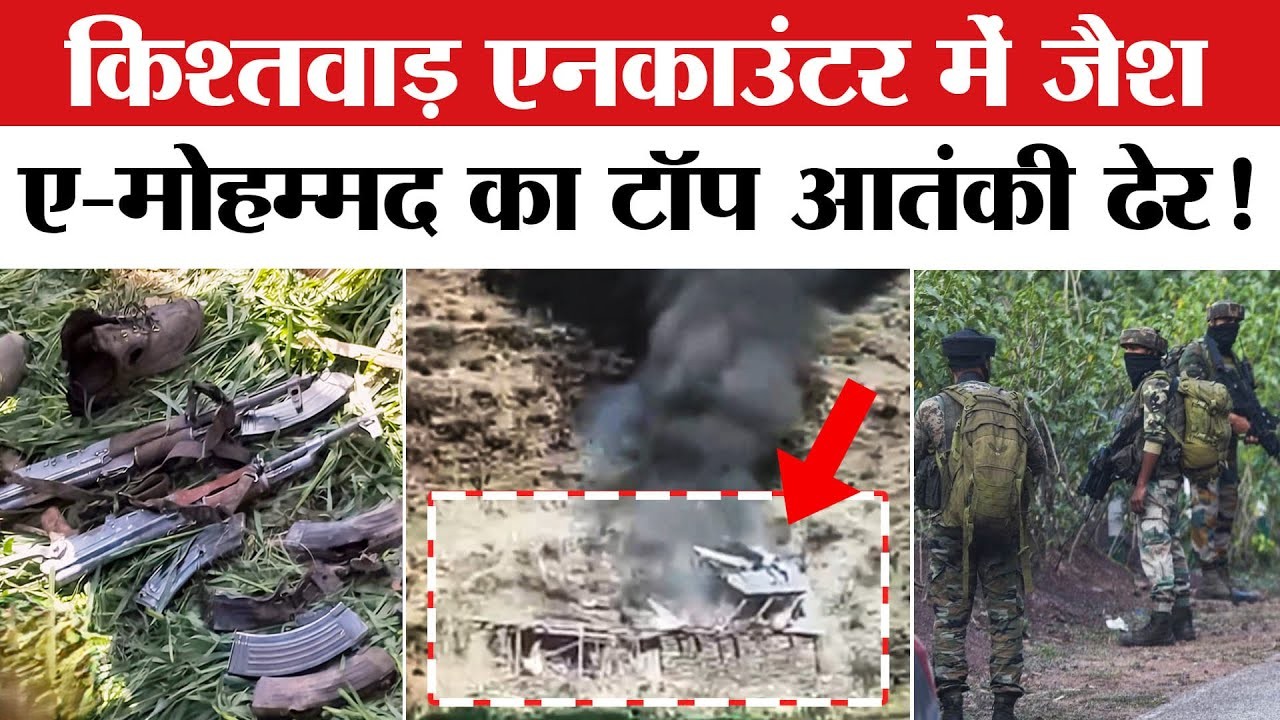
Old Video Surfaces After Kishtwar Encounter: Security Agencies Examine Propaganda Trail in Jammu & Kashmir
In a development that has once again drawn attention to the evolving security dynamics of Jammu and Kashmir, an old video of a Jaish e Mohammed commander, who was killed in the Kishtwar region, has surfaced online. The emergence of the footage has sparked discussions across security circles, intelligence agencies, and among residents of the region. While the video is believed to have been recorded before the encounter in which the Jaish e Mohammed commander was neutralized, its circulation highlights the persistent challenge posed by digital propaganda in conflict zones.
The resurfacing of the video comes months after the encounter in Kishtwar, a mountainous district known for its strategic terrain and challenging geography. The Jaish e Mohammed commander, who had reportedly been active in the region for some time, was eliminated during a coordinated operation by security forces. Officials had described the operation as a significant breakthrough in counter-terror efforts in the Chenab Valley.
The Kishtwar Operation A Strategic Breakthrough
Kishtwar district has, over the years, witnessed sporadic militant activity due to its difficult terrain and forested areas. Security agencies have maintained a vigilant presence, conducting intelligence-based operations to dismantle militant networks. The operation in which the Jaish e Mohammed commander was killed was the result of precise intelligence inputs and coordinated action between local police and central forces.
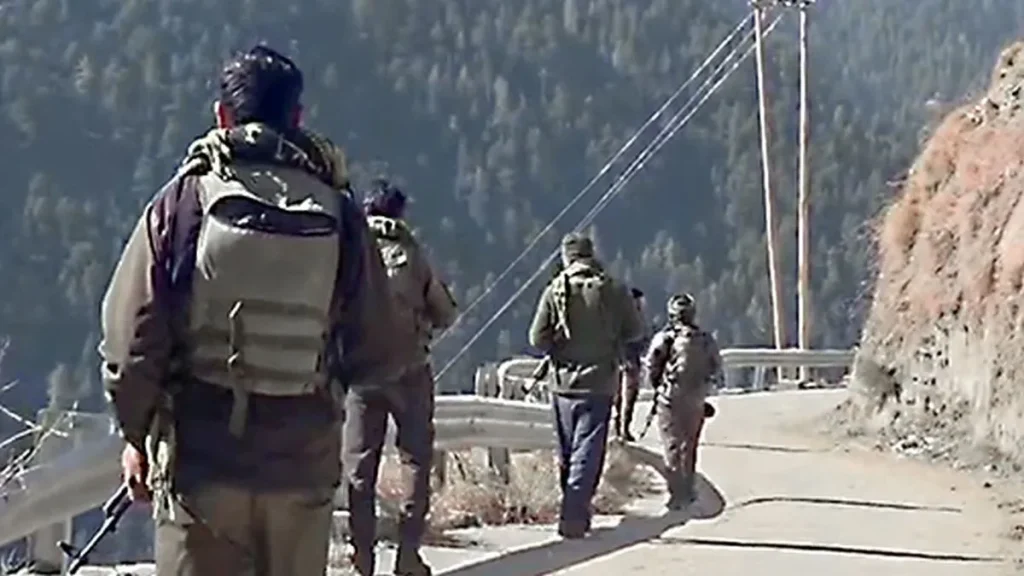
According to officials familiar with the operation, the Jaish e Mohammed commander had been under surveillance for weeks. His movement patterns were carefully tracked before the final operation was launched. The encounter reportedly took place in a remote forested belt, where security forces had established a perimeter after receiving actionable intelligence.
The neutralization of the Jaish e Mohammed commander was considered a major success, particularly because he was believed to be involved in recruitment and logistical coordination. Authorities stated that eliminating the Jaish e Mohammed commander significantly disrupted militant plans in the region.

The Resurfaced Video What It Shows
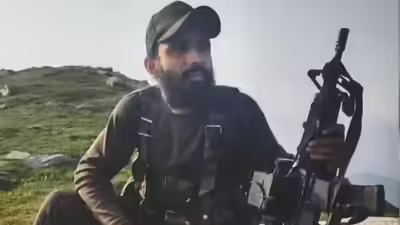
The old video that has now surfaced allegedly shows the Jaish e Mohammed commander sitting near a stream in a secluded area of Kishtwar. In the footage, he appears calm and composed, reciting verses from the Quran. Analysts suggest that such visuals are often crafted to project a particular image aimed at potential recruits.
Security experts note that propaganda videos frequently attempt to humanize militant figures, portraying them in serene natural surroundings to romanticize their activities. The Jaish e Mohammed commander in the video appears to be addressing the camera intermittently, though audio quality in the clip is unclear.
Officials have urged the public not to circulate the video further, emphasizing that the Jaish e Mohammed commander was involved in activities that posed serious threats to peace and stability. Authorities believe that sharing such footage inadvertently amplifies extremist messaging.
Digital Propaganda and Its Impact
The resurfacing of this footage underscores the continuing role of digital platforms in extremist propaganda. Security agencies have repeatedly warned that militant groups use online content to influence vulnerable individuals. In this context, the video featuring the Jaish e Mohammed commander becomes part of a broader narrative strategy.
Experts in counter-radicalization argue that visual storytelling is a powerful recruitment tool. By showcasing a Jaish e Mohammed commander in a composed and reflective setting, propagandists attempt to frame militancy as ideological devotion rather than violence. However, officials stress that such portrayals are misleading and ignore the consequences of extremist actions.
The Indian government has strengthened cyber-monitoring mechanisms to counter such content. Following the encounter in which the Jaish e Mohammed commander was killed, agencies intensified efforts to track online networks associated with militant propaganda.
Kishtwar Changing Security Landscape
Kishtwar has witnessed improved security conditions in recent years due to sustained operations and community outreach programs. The elimination of the Jaish e Mohammed commander was part of a broader strategy to ensure long-term peace in the Chenab Valley.
Local residents expressed relief after the operation, stating that the presence of the Jaish Mohammed commander had created an atmosphere of uncertainty. Community leaders emphasized the importance of education and employment opportunities to prevent youth from being influenced by extremist ideologies.
Authorities have increased patrols and surveillance in forested belts, aiming to prevent any resurgence of militant activity. Officials stated that after the Jaish e Mohammed commander was neutralized, follow-up searches were conducted to dismantle any remaining networks.
The Broader Militant Network
Security experts suggest that the Jaish e Mohammed commander was part of a larger operational framework that sought to revive militant activity in relatively quiet districts. Intelligence agencies believe that eliminating a Jaish e Mohammed commander disrupts not only immediate operations but also recruitment pipelines.
Investigations are ongoing to determine who recorded and preserved the video of the Jaish e Mohammed commander. Agencies are examining digital footprints to identify those responsible for circulating the clip.
Officials emphasize that while the Jaish e Mohammed commander has been neutralized, vigilance must continue. Militant networks often attempt to exploit symbolic narratives after such encounters.
Counter-Radicalization Efforts
In response to incidents like this, authorities have strengthened counter-radicalization programs. Educational institutions in the region conduct awareness workshops to highlight the dangers of extremist propaganda. Religious leaders have also played a role in clarifying that violence and extremism have no place in faith.
The resurfaced video of the Jaish e Mohammed commander serves as a reminder of the importance of proactive community engagement. By addressing grievances and providing economic opportunities, authorities aim to reduce the appeal of militant narratives.
The Role of Intelligence Coordination
The successful operation against the Jaish e Mohammed commander was the result of seamless coordination between multiple agencies. Intelligence-sharing mechanisms have improved significantly in recent years, enabling precise and timely interventions.
Officials note that the encounter that led to the death of the Jaish e Mohammed commander demonstrated the effectiveness of surveillance technologies and human intelligence networks. Security forces have reiterated their commitment to maintaining peace in the region.
Regional and National Implications
The elimination of a Jaish e Mohammed commander in Kishtwar carries broader implications for national security. Experts argue that sustained pressure on militant leadership disrupts operational continuity.
The resurfaced video, while old, highlights the enduring challenge of extremist propaganda. Authorities have urged media outlets to exercise caution when reporting on such content, ensuring that coverage does not inadvertently glorify those involved.
Community Response and Future Outlook
Residents of Kishtwar have largely welcomed the security forces’ efforts. Many believe that peace and development are closely linked. The removal of the Jaish e Mohammed commander has been viewed as a step toward stability.
However, experts caution that long-term peace requires sustained efforts. The resurfacing of the video of the Jaish e Mohammed commander demonstrates how narratives can resurface even after operational successes.
Authorities continue to monitor online platforms to prevent the misuse of such footage. Cyber units are working to trace the origin of the clip and identify individuals responsible for sharing it.
Conclusion
The emergence of an old video featuring a Jaish e Mohammed commander who was killed in the Kishtwar region underscores the complex interplay between on-ground security operations and digital propaganda. While the Jaish e Mohammed commander was neutralized in a decisive encounter, the circulation of past footage reflects the ongoing challenges faced by security agencies.
The incident serves as a reminder that counter-terrorism extends beyond physical operations. It involves disrupting narratives, strengthening communities, and ensuring that extremist messaging does not gain traction. As Kishtwar moves forward, authorities remain vigilant, committed to maintaining stability and preventing any resurgence of militancy.
The story of the Jaish e Mohammed commander and the resurfaced video ultimately highlights a broader truth: peace requires constant effort, collaboration, and resilience.
Read More latest news

