

In Greater Noida, Husband Vipin Who Burnt His Wife Nikki to Death for Dowry Had an Encounter with Police – Shot in the Leg
Introduction
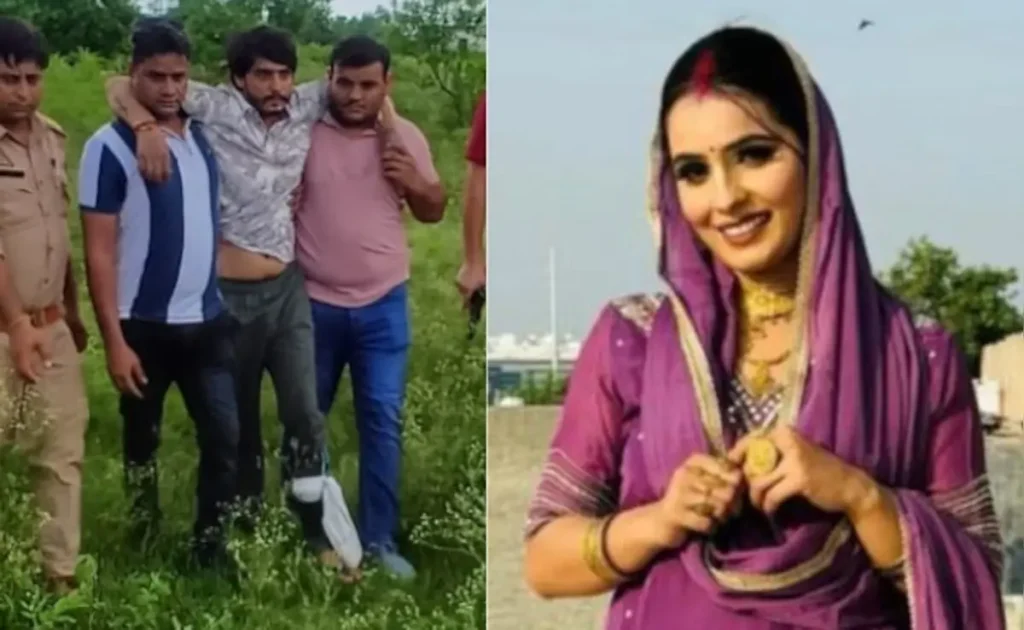
Vipin Encountered by police, Dowry-related crimes continue to haunt Indian society despite decades of legal reforms, awareness campaigns, and women’s rights activism. A chilling incident from Greater Noida has once again highlighted the brutality of such crimes. A young woman, Nikki, was burnt alive by her husband Vipin and his family members over alleged dowry demands. While the murder shook the community, the story took another dramatic turn when Vipin was later involved in a police encounter. During the confrontation, he was shot in the leg and captured.
This shocking chain of events has reignited discussions about dowry harassment, the rise in crimes against women, and the increasing frequency of police encounters in Uttar Pradesh. In this detailed blog, we will cover the case from its background to legal implications, the police narrative, public reactions, and the larger socio-political questions it raises.
1. The Tragic Murder of Nikki
The victim, Nikki, was a young married woman full of aspirations and dreams. However, her marriage turned into a nightmare after consistent harassment by her husband Vipin and his family. According to initial police reports and statements from Nikki’s relatives, she was subjected to continuous physical and mental torture for dowry.
- Demands of cash and gifts: Vipin’s family allegedly pressurized Nikki’s parents for additional money and expensive items despite already receiving a dowry during the wedding.
- Domestic violence: Neighbors reported frequent quarrels and instances of Nikki being beaten.
- The final crime: On the fateful day, Nikki was allegedly doused in kerosene and set on fire by her husband. She sustained severe burn injuries and succumbed despite medical intervention.
The brutality of the act shocked Greater Noida and quickly drew media attention.
2. Police Investigation and FIR
Nikki’s parents filed an FIR under IPC Sections 302 (murder), 304B (dowry death), 498A (cruelty by husband), and sections of the Dowry Prohibition Act.
- Police arrested family members and launched a hunt for Vipin, who initially absconded.
- The National Commission for Women (NCW) and local women’s rights groups demanded strict action.
- The incident added to the statistics of rising dowry deaths in Uttar Pradesh, with activists warning that despite awareness campaigns, enforcement remains weak.
3. The Encounter in Greater Noida
The story took a dramatic turn when police tracked Vipin’s movements. According to official reports:
- Vipin was spotted in Greater Noida by a police team conducting a search operation.
- When asked to surrender, he allegedly tried to flee and even fired at the police.
- In retaliation, police opened fire, and Vipin was shot in the leg.
- He was immediately taken to the hospital and kept under custody.
While the police hailed it as a success, the incident also raised questions about the increasing trend of encounters in Uttar Pradesh, often celebrated as “instant justice” but also criticized for bypassing legal procedures.
4. Public Reaction to the Encounter
The reaction to Vipin’s encounter was mixed:
- Support for the police: Many locals and social media users praised the police, calling it a “befitting punishment” for a man accused of burning his wife alive.
- Demand for stronger justice: Women’s rights activists argued that while the encounter brought relief, the judicial process must ensure life imprisonment or capital punishment.
- Human rights concerns: Some legal experts and rights groups raised questions about the “encounter culture” and whether Vipin was given a fair chance to face trial.
5. Dowry Deaths – A Grim Reality
Nikki’s murder is not an isolated incident. Despite laws such as:
- Dowry Prohibition Act, 1961
- Section 304B of the Indian Penal Code (dowry death)
- Section 498A (cruelty by husband and relatives)
India still records a disturbing number of dowry-related deaths.
📌 Statistics:
According to the National Crime Records Bureau (NCRB), India witnesses over 6,000 dowry deaths every year, translating to nearly one death every 90 minutes. Uttar Pradesh remains among the worst-affected states.
This indicates that laws exist on paper but fail in implementation due to societal pressure, lack of timely intervention, and reluctance of victims to speak up.
6. Women’s Rights Activists Speak Out
Prominent activists condemned the brutal killing of Nikki and demanded that such cases be treated as rarest of the rare, deserving the maximum penalty.
- Call for speedy trial: Courts must fast-track such cases to deliver justice within months.
- Counseling and helpline services: Women must be encouraged to report harassment at the earliest signs.
- Accountability of in-laws: Not only the husband but also the extended family must be punished if involved.
7. Political Reactions
The case, coming from politically sensitive Uttar Pradesh, also saw strong reactions:
- BJP leaders hailed the police for the encounter, presenting it as proof of “zero tolerance” towards crimes against women.
- Opposition parties accused the government of focusing on “encounter politics” rather than addressing root causes like gender inequality and weak law enforcement.
- Women MPs in Parliament raised the issue, urging the government to ensure prevention mechanisms rather than post-crime action.
8. The Debate on Police Encounters
Vipin’s encounter also sparked a larger debate on law enforcement methods in UP.
- Pro-encounter argument: Quick justice, instills fear among criminals, public satisfaction.
- Against encounter argument: Violates legal principles, risks targeting innocents, creates a “police state” image.
Uttar Pradesh has witnessed over 10,000 encounters in the past decade, with both praise and criticism following each case.

9. Lessons from the Case
Nikki’s tragic death and Vipin’s encounter highlight several important lessons:
- Need for early intervention: If Nikki’s complaints had been taken seriously earlier, her life might have been saved.
- Strengthening women’s safety nets: Helplines, women police stations, and community vigilance need expansion.
- Public mindset change: Society must shun dowry practices at the root, not just punish after tragedies.
- Balance between law and order: Police encounters cannot replace a fair judicial system.
10. Conclusion – A Society at Crossroads
The Greater Noida incident is a painful reminder of the dark reality of dowry deaths in modern India. Nikki’s murder reflects the failure of social change despite education and urbanization. Vipin’s encounter adds another layer of complexity, highlighting the rising trend of police taking justice into their own hands.
While many celebrated his capture, true justice lies not in bullets but in ensuring that laws work, victims are protected, and perpetrators face full legal consequences. For India to move forward, the fight must be two-fold: eradicate dowry as a social evil and ensure that women feel safe within their own homes.
Read more latest news

