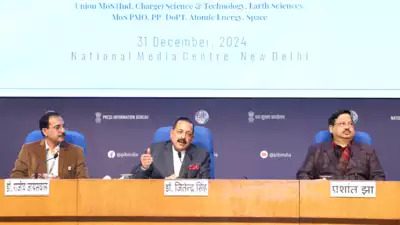
ISRO Lining Up Half-a-Dozen Big Launches in First Half of 2025: Space Minister’s Vision for India’s Space Program
India’s space exploration and satellite deployment ambitions continue to scale new heights, with the Indian Space Research Organisation (ISRO) preparing for a series of high-profile launches in the first half of 2025. This announcement was made by India’s Space Minister, who outlined the nation’s ambitious plans during a press briefing, reaffirming ISRO’s pivotal role in advancing technological prowess, boosting economic opportunities, and strengthening global partnerships. Here, we delve into the details of these upcoming missions, their potential impact, and what they signify for India’s space odyssey.
ISRO’s Ambitious Schedule: An Overview
The Lineup of Missions
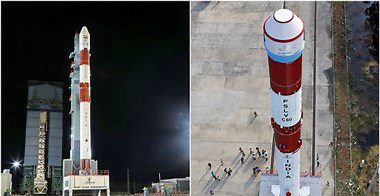
The Space Minister revealed that ISRO has scheduled at least six significant launches between January and June 2025. These missions encompass diverse objectives, from deploying satellites for communication and navigation to testing advanced technologies and exploring interplanetary science.
Key missions include:
- Chandrayaan-4 Lunar Lander Mission
Building on the success of Chandrayaan-3, this mission focuses on long-term scientific exploration of the Moon’s surface and subsurface. - Aditya-L2 Solar Mission
Positioned closer to the Sun than its predecessor, Aditya-L1, this mission aims to deepen our understanding of solar activities and their impact on Earth. - Gaganyaan Human Spaceflight Test Missions
As part of India’s maiden manned spaceflight program, Gaganyaan will involve several test launches, including crew module validation and emergency escape system tests. - GSAT Satellite Series Launches
Multiple satellites under the GSAT program will be launched to strengthen India’s communication and broadcasting capabilities. - EOS (Earth Observation Satellites)
Two advanced EOS satellites will enhance India’s capabilities in disaster management, environmental monitoring, and agriculture planning. - Commercial Launches
Collaboration with global clients through ISRO’s commercial arm, Antrix Corporation, and its new entity, NSIL (NewSpace India Limited), is set to grow, including the deployment of foreign satellites.
Technological Advancements and Preparations
Reusable Launch Vehicle (RLV) Tests
One of the most awaited developments is the testing of ISRO’s Reusable Launch Vehicle (RLV). This technology aims to drastically reduce the cost of accessing space by enabling the recovery and reuse of rocket components.
Cryogenic Engine Upgrades
ISRO’s Geosynchronous Satellite Launch Vehicle Mark III (GSLV Mk III) will feature an upgraded cryogenic engine, promising greater payload capacities and improved efficiency.
Small Satellite Launch Vehicle (SSLV) Expansions
Following the success of SSLV’s initial missions, ISRO plans to refine this vehicle further, making it a go-to choice for deploying small satellites in low Earth orbit.
Global Collaborations and Strategic Significance
International Partnerships
ISRO’s robust collaboration with NASA, ESA (European Space Agency), and ROSCOSMOS (Russian Space Agency) continues to flourish. These partnerships are instrumental in knowledge exchange, co-developing missions, and leveraging each other’s infrastructure for ambitious projects like the NISAR Earth observation satellite.
Strengthening India’s Position in the Global Space Economy
The upcoming launches also underscore India’s emergence as a preferred destination for cost-effective and reliable space services. By catering to global satellite deployment needs, ISRO aims to capture a significant share of the $400 billion global space economy.
Economic Implications
Boosting Domestic Industries
ISRO’s projects are intertwined with India’s Make in India initiative, promoting indigenization in space technology. The demand for high-precision components, electronics, and software from Indian manufacturers is set to rise significantly.
Job Creation
With the burgeoning space program, new opportunities are emerging across sectors such as aerospace engineering, data analytics, and materials science.
Private Sector Participation
The rise of private players, facilitated by reforms from the Department of Space, has catalyzed the development of innovative technologies and startups, further diversifying the ecosystem.
Scientific and Social Impact
Advancing Research
From solar science to planetary geology, the scientific payloads aboard ISRO’s missions contribute valuable data for global research initiatives. Missions like Chandrayaan-4 and Aditya-L2 will push the boundaries of human knowledge about celestial phenomena.
Applications for Everyday Life
Satellites like GSAT and EOS directly impact sectors such as agriculture, urban planning, and disaster management, providing real-time data and actionable insights.
Education and Inspiration
ISRO’s achievements inspire a generation of young Indians to pursue careers in STEM (Science, Technology, Engineering, and Mathematics). Educational outreach programs tied to missions like Gaganyaan aim to ignite curiosity about space exploration.
Challenges and Solutions
Technical Hurdles
While ISRO has demonstrated remarkable reliability, challenges like launch delays, payload optimization, and systems integration remain. Stringent testing and quality assurance protocols are in place to mitigate these risks.
Geopolitical Concerns
With space emerging as a strategic domain, ensuring the security of space assets against threats like cyberattacks and debris becomes crucial. ISRO is working with international agencies to address these challenges.
Budgetary Constraints
While ISRO is celebrated for its cost-effectiveness, its expanding mission portfolio requires increased funding. The government has pledged robust support, emphasizing the strategic importance of space exploration.
The Road Ahead: Vision 2030
Deep Space Exploration
ISRO is setting its sights on Mars, Venus, and beyond. Missions like Mangalyaan-2 and Shukrayaan will pave the way for more ambitious interplanetary endeavors.
Space Stations
Plans for an indigenous space station highlight India’s long-term vision for a sustained human presence in space.
Commercial Space Ventures
With entities like NSIL and partnerships with startups, ISRO aims to become a key player in space tourism, resource extraction, and orbital manufacturing.
Conclusion
The first half of 2025 is poised to be a transformative period for ISRO and India’s space program. With an ambitious lineup of launches, the nation is set to solidify its reputation as a spacefaring power. From advancing scientific discovery to bolstering the economy and inspiring future generations, ISRO’s missions represent a beacon of innovation and resilience. As the world watches, India’s space journey continues to unfold, charting a course for a brighter future among the stars.
Read More Latest News