
India New Zealand FTA: A New Chapter of Growth, Trade, and Opportunity
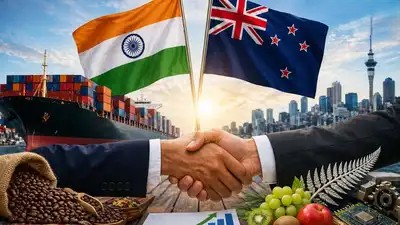
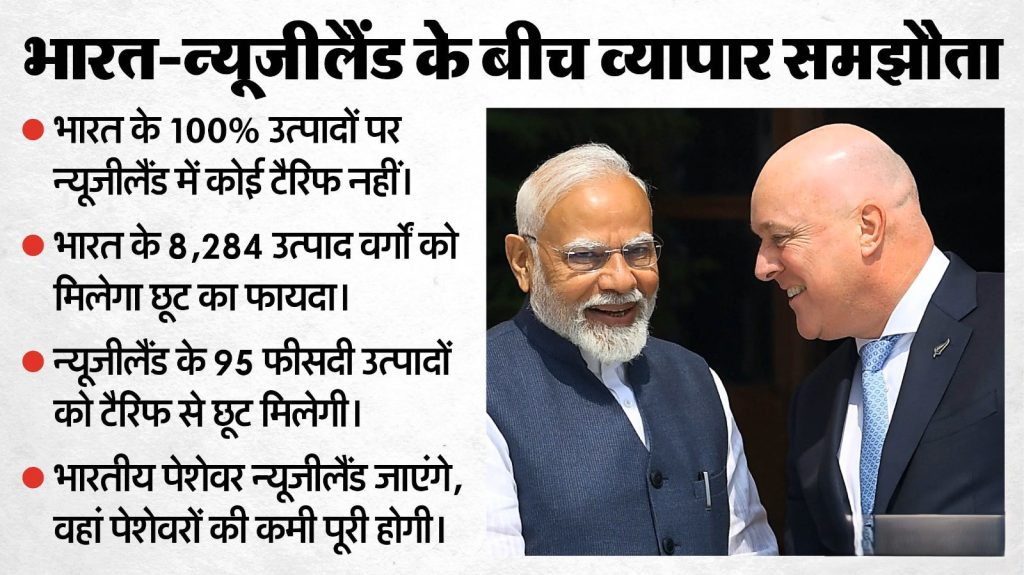
The much-discussed India New Zealand FTA has the potential to reshape trade dynamics, unlock new markets, and create a wealth of opportunities across multiple sectors. With duty-free access to more than 8,000 Indian products, this agreement signals a strong intent from both nations to deepen cooperation and expand economic engagement.
The proposed trade agreement between India and New Zealand is being seen as a transformative step in strengthening bilateral economic ties.
A Strategic Economic Partnership
The relationship between India and New Zealand has steadily evolved over the years, marked by mutual respect, shared democratic values, and growing economic interaction. The India-New Zealand FTA represents a culmination of these efforts, aiming to remove trade barriers and foster seamless exchange of goods and services.
Trade agreements of this scale are not merely about tariffs—they are about creating long-term frameworks that encourage investment, innovation, and collaboration. The India-New Zealand FTA is expected to enhance market access for Indian exporters while providing New Zealand businesses with opportunities to engage with one of the world’s fastest-growing economies.
Duty Free Access A Game Changer
One of the most significant highlights of the India New Zealand FTA is the provision of duty-free access to over 8,000 Indian products. This move is expected to give Indian exporters a competitive edge in the New Zealand market.
Industries that have traditionally faced tariff barriers will now find it easier to expand their footprint. The India-New Zealand FTA ensures that Indian goods can compete on price and quality, opening the door for increased exports and higher revenue generation.
For small and medium enterprises (SMEs), this is particularly important. The India-New Zealand FTA could enable them to scale operations, explore new markets, and integrate into global supply chains.
Boost to the Textile Sector
India’s textile industry is one of its oldest and most significant contributors to the economy. With the India New Zealand FTA, textile exporters are expected to gain substantial benefits.
Duty-free access will allow Indian textiles to become more competitive in New Zealand, potentially increasing demand. The India New Zealand FTA could also encourage innovation in fabric design, sustainability practices, and production techniques to meet international standards.
This sector employs millions of people, and the India-New Zealand FTA could lead to job creation and improved livelihoods for workers across the textile value chain.
Pharmaceutical Industry Expansion
India is often referred to as the “pharmacy of the world,” and the India New Zealand FTA could further strengthen this reputation. Indian pharmaceutical companies will benefit from easier access to the New Zealand market.
Reduced regulatory hurdles and tariffs under the India-New Zealand FTA are expected to facilitate the export of affordable medicines. This will not only boost India’s pharma industry but also contribute to better healthcare access in New Zealand.
The India New Zealand FTA could also pave the way for collaborative research and development initiatives between companies from both countries.
Agriculture Sector Opportunities
Agriculture remains a cornerstone of India’s economy, and the India New Zealand FTA presents new opportunities for farmers and agribusinesses.
With improved market access, Indian agricultural products such as spices, tea, rice, and processed foods can find a larger audience in New Zealand. The India-New Zealand FTA may also encourage the adoption of modern farming techniques and quality standards.
At the same time, the agreement could facilitate knowledge exchange in areas like dairy technology and sustainable farming, benefiting both nations.
Footwear Industry Gains
The footwear sector is another area poised for growth under the India-New Zealand FTA. Indian manufacturers, known for their craftsmanship and cost-effectiveness, will gain a competitive advantage in the New Zealand market.
Duty-free access under the India New Zealand FTA will make Indian footwear more attractive to consumers, potentially increasing exports and boosting production capacity.
This growth could lead to increased employment in manufacturing hubs, contributing to economic development.
Investment Opportunities: $20 Billion Potential
Beyond trade, the India New Zealand FTA is expected to attract significant investment, estimated at around $20 billion. This influx of capital could transform industries, infrastructure, and technology sectors.
Foreign direct investment (FDI) plays a crucial role in economic growth, and the India-New Zealand FTA could create a favorable environment for investors. Enhanced transparency, simplified regulations, and mutual trust are likely to encourage businesses to invest.
The India New Zealand FTA could also lead to joint ventures, technology transfers, and innovation-driven growth.
Visa Facilitation and Workforce Mobility
Another important aspect of the India New Zealand FTA is visa facilitation. Easier movement of professionals, students, and workers between the two countries can significantly boost economic and cultural ties.
The India-New Zealand FTA may simplify visa processes, making it easier for skilled professionals to work in New Zealand and for businesses to access talent.
This increased mobility can lead to knowledge sharing, skill development, and stronger people-to-people connections.
Employment Generation and Economic Growth
The combined impact of increased trade, investment, and mobility is expected to generate employment opportunities. The India New Zealand FTA could create jobs across sectors, from manufacturing and agriculture to services and technology.
Economic growth driven by the India New Zealand FTA will not only benefit businesses but also improve living standards for citizens. Increased income, better job prospects, and enhanced infrastructure are some of the potential outcomes.
Strengthening Bilateral Relations
Trade agreements often serve as a foundation for broader diplomatic relations. The India New Zealand FTA is likely to strengthen political and cultural ties between the two nations.
Regular interactions, collaborative projects, and mutual support on global platforms could further enhance the relationship. The India New Zealand FTA represents a commitment to shared growth and cooperation.
Challenges and Considerations
While the benefits are substantial, the India New Zealand FTA also comes with challenges. Domestic industries may face increased competition, requiring them to adapt and innovate.
Regulatory alignment, quality standards, and logistical considerations will need to be addressed for the India New Zealand FTA to be fully effective.
However, with careful planning and implementation, these challenges can be managed.
Global Trade Context
In an increasingly interconnected world, trade agreements like the India New Zealand FTA are essential for economic resilience. They help countries diversify markets, reduce dependency, and enhance competitiveness.
The India New Zealand FTA positions both nations to better navigate global economic uncertainties and capitalize on emerging opportunities.
Future Prospects
Looking ahead, the India New Zealand FTA could serve as a model for future agreements. Its success may encourage similar partnerships with other countries.
Continuous dialogue, monitoring, and adaptation will be key to ensuring that the India New Zealand FTA delivers on its promises.
Conclusion
The India New Zealand FTA marks a significant milestone in the economic relationship between India and New Zealand. With duty-free access to thousands of products, potential investments worth billions, and enhanced mobility, the agreement holds immense promise.
From textiles and pharmaceuticals to agriculture and footwear, multiple sectors stand to gain. The India New Zealand FTA is not just a trade deal—it is a pathway to growth, innovation, and shared prosperity.
As both nations move forward with this agreement, the focus will be on translating potential into reality. If implemented effectively, the India New Zealand FTA could redefine trade relations and create lasting benefits for businesses and citizens alike.
Read more latest news