
Tensions in West Asia Continue to Escalate: Iran’s Response, Strait of Hormuz Closure, and Global Implications
The geopolitical situation in the Middle East has entered a dangerous new phase as military tensions between the United States and Iran continue to intensify. Recent developments have raised concerns across the world, with governments, energy markets, security analysts, and international organizations closely monitoring the situation.
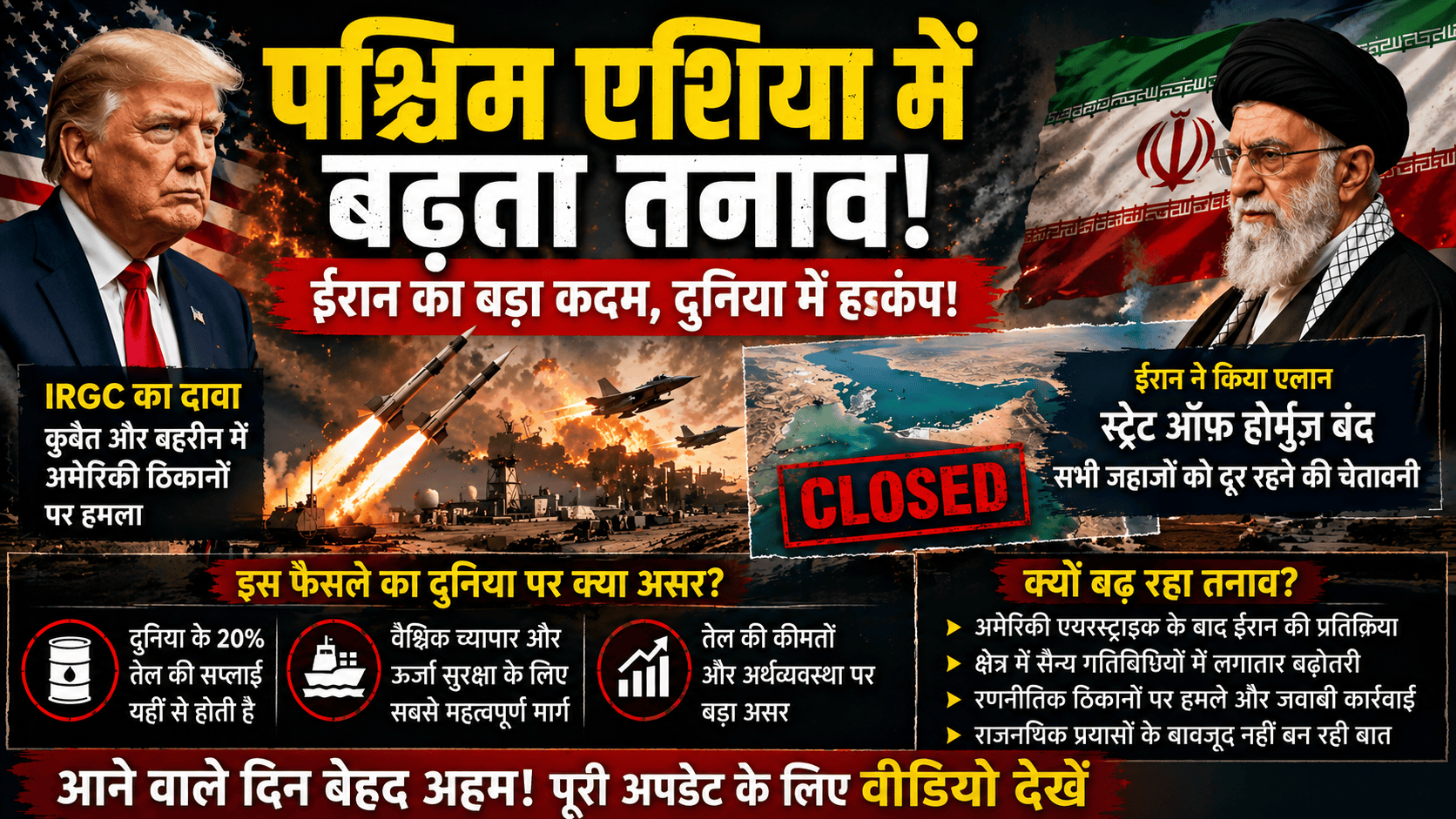
According to reports, Iran’s Islamic Revolutionary Guard Corps (IRGC) has claimed responsibility for attacks targeting key U.S. military-linked facilities in Kuwait and Bahrain following American airstrikes against Iranian targets. At the same time, Tehran has announced the complete closure of the Strait of Hormuz, one of the world’s most strategically important maritime routes, warning all commercial and military vessels to stay away from the area. Iran’s military command has publicly declared that any vessel attempting to pass through the strait could face military action. Reports also indicate that the United States has disputed some Iranian claims regarding the effectiveness of the strikes and the impact on U.S. military assets.
These developments have sparked fears of a wider regional conflict, threatening global energy supplies and economic stability.
Tensions in West Asia Continue to Escalate as Conflict Expands
The latest developments underscore how rapidly the crisis is evolving. Tensions in West Asia continue to dominate international headlines as both Washington and Tehran exchange military actions and accusations.
The region has witnessed a series of escalating incidents over recent weeks. What began as targeted military actions has now transformed into a broader confrontation involving strategic waterways, military bases, and regional allies.
Analysts warn that if diplomatic efforts fail, the current crisis could become one of the most significant geopolitical confrontations of the decade.
Background of the Current Crisis
The latest escalation follows U.S. military strikes targeting Iranian military and strategic assets. According to American officials, the strikes were conducted as defensive actions intended to protect U.S. interests and regional security.
Iran, however, views the attacks as acts of aggression and has vowed a strong response. Soon after the strikes, Iranian authorities announced retaliatory measures aimed at demonstrating their military capabilities and deterring further attacks.
As a result, Tensions in West Asia continue to rise with each new military exchange.
IRGC Claims Attacks on U.S.-Linked Military Facilities
Iran’s Islamic Revolutionary Guard Corps has stated that it targeted several strategic sites associated with U.S. military operations in Kuwait and Bahrain. Iranian media and official statements claim that missile and drone attacks were carried out against key military installations, including facilities linked to the U.S. Fifth Fleet and American airbases in the Gulf region.
The United States has challenged some of these claims and stated that its forces remain operational. Nevertheless, the announcements themselves represent a significant escalation in the confrontation.
As these events unfold, Tensions in West Asia continue to create uncertainty throughout the region.
Why Bahrain and Kuwait Matter
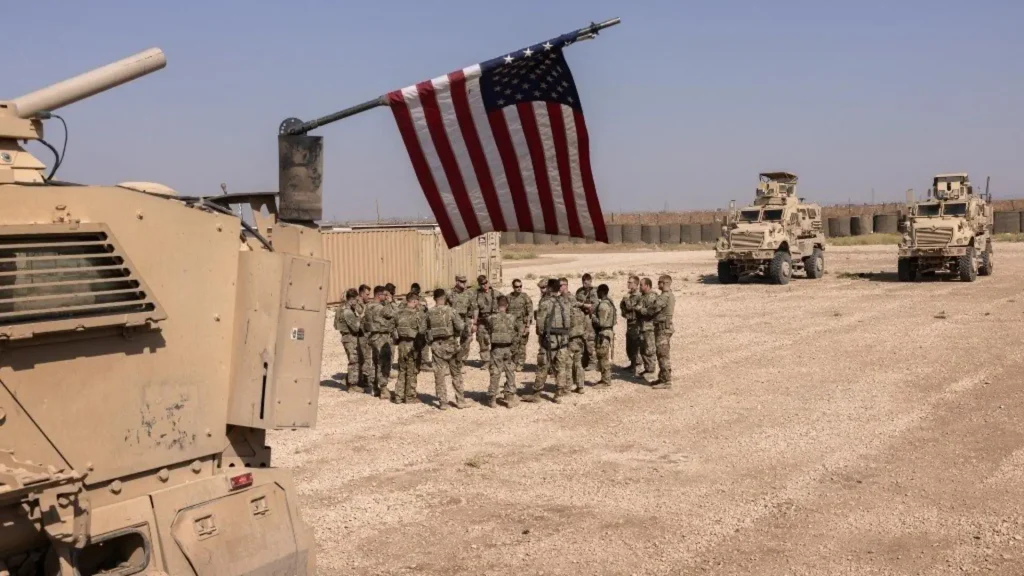
Bahrain hosts the headquarters of the U.S. Navy’s Fifth Fleet, making it one of America’s most important military hubs in the Middle East.
Kuwait also hosts major American military facilities that play a critical role in regional operations and logistics.
Any attack on these facilities sends a strong geopolitical message and carries the risk of triggering further military responses.
For this reason, security experts believe that Tensions in West Asia continue to move closer to a potentially broader regional confrontation.
Strait of Hormuz: The World’s Most Important Oil Chokepoint
One of the most dramatic developments has been Iran’s announcement regarding the Strait of Hormuz.
The Strait of Hormuz is a narrow waterway connecting the Persian Gulf to the Gulf of Oman and the Arabian Sea. Roughly one-fifth of the world’s oil supply passes through this strategic route.
Iran’s military command announced the closure of the strait and warned that vessels attempting passage could be targeted. Reports indicate that the order applies to oil tankers, commercial ships, and other maritime traffic.
As a consequence, Tensions in West Asia continue to have immediate implications far beyond the Middle East.
Global Oil Markets React
Energy traders around the world are watching developments with growing concern.
Any disruption to traffic through the Strait of Hormuz has the potential to affect global oil prices significantly. Major energy-importing countries depend on stable maritime routes to maintain fuel supplies and economic stability.
Market analysts fear that prolonged disruption could lead to:
- Higher crude oil prices
- Increased transportation costs
- Inflationary pressures
- Supply chain disruptions
- Increased economic uncertainty
Because of these risks, Tensions in West Asia continue to influence global financial markets.
Impact on Asian Economies
Asian economies are particularly vulnerable to disruptions in Gulf energy supplies.
Countries such as India, China, Japan, and South Korea rely heavily on oil imports that pass through the Strait of Hormuz.
Any prolonged closure could increase fuel costs, affect industrial production, and put pressure on national budgets.
As governments monitor developments, Tensions in West Asia continue to raise concerns among policymakers across Asia.
International Reactions
Several governments have urged restraint and called for diplomatic solutions.
The international community recognizes that a wider conflict would have consequences extending far beyond the region.
Global leaders are emphasizing dialogue, de-escalation, and adherence to international law.
Despite these calls, Tensions in West Asia continue to increase as military activities persist.
Risk of Regional Expansion
Security experts warn that additional countries could become involved if hostilities continue.
The Middle East contains numerous military alliances, strategic partnerships, and security commitments that could draw other actors into the conflict.
This possibility is one reason why Tensions in West Asia continue to worry international observers.
Military Capabilities on Display
The current confrontation has highlighted advanced military technologies used by both sides.
Missiles, drones, surveillance systems, air defenses, and naval assets have all played roles in the unfolding crisis.
Military analysts note that modern warfare increasingly involves precision strikes and technological capabilities rather than large-scale troop deployments.
Even so, Tensions in West Asia continue to create the risk of unintended escalation.

Diplomatic Channels Under Pressure
Diplomatic efforts remain active despite the military exchanges.
Several countries are reportedly attempting to mediate between Washington and Tehran.
History has shown that communication channels are critical during periods of heightened confrontation.
However, Tensions in West Asia continue to challenge diplomatic efforts and make negotiations more difficult.
Impact on Global Trade
The Strait of Hormuz is not only important for oil shipments but also for broader international trade.
Any disruption could affect shipping schedules, insurance costs, and maritime security.
Global businesses are closely monitoring developments because Tensions in West Asia continue to affect commercial confidence.
Humanitarian Concerns
Beyond military and economic implications, humanitarian concerns are also growing.
Regional populations face uncertainty regarding security, economic stability, and access to essential goods.
International organizations have expressed concern that a prolonged conflict could worsen humanitarian conditions.
These concerns are growing as Tensions in West Asia continue to intensify.
The Strategic Importance of De-Escalation
Experts widely agree that de-escalation remains the most effective path forward.
Military confrontations often carry risks that neither side initially intends.
Preventing further escalation will require diplomatic engagement, confidence-building measures, and international cooperation.
Without such efforts, Tensions in West Asia continue to threaten regional and global stability.
What Happens Next?
The coming days are likely to be crucial.
Several key questions remain unanswered:
- Will additional military strikes occur?
- Can diplomatic negotiations succeed?
- How long will restrictions around the Strait of Hormuz remain in place?
- Will global energy markets remain stable?
- Can broader regional involvement be prevented?
The answers to these questions will shape the future of the crisis.
Conclusion
The Middle East is once again at the center of global attention as military confrontation between Iran and the United States reaches a dangerous level. Iran’s claims of targeting U.S.-linked facilities in Kuwait and Bahrain, combined with its announcement of the closure of the Strait of Hormuz, represent major developments in an already volatile situation. Reports indicate that Iran has announced the closure of the strategic waterway, while the United States disputes some Iranian claims about military impacts.
The world is closely watching events unfold because Tensions in West Asia continue to influence global energy markets, international trade, diplomatic relations, and regional security.
As governments seek solutions and military forces remain on alert, one reality remains clear: Tensions in West Asia continue to pose one of the most significant geopolitical challenges facing the international community today.
Read more latest news

