
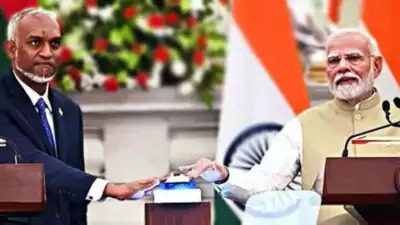
Report Links India to Anti-Muizzu Plot, Maldives Ex-President Denies Allegations
Recent media reports have drawn significant attention to claims suggesting India’s alleged involvement in a plot to undermine Maldivian President Mohamed Muizzu. These allegations have sparked a diplomatic controversy, raising questions about the delicate balance of power in the Indian Ocean region. While India categorically denies any interference, former Maldivian President Abdulla Yameen has also dismissed the allegations as baseless, further complicating the narrative. This article delves into the allegations, their geopolitical implications, and the responses from various stakeholders.
Background: Maldives’ Strategic Importance
The Maldives, a strategically located archipelago in the Indian Ocean, has often found itself at the center of geopolitical tussles between regional powers. Its location along vital sea lanes has made it a key focus for India, China, and other global players seeking influence in the Indo-Pacific region.
India-Maldives Relations
India has historically maintained strong ties with the Maldives, emphasizing “Neighborhood First” policies and fostering economic and defense cooperation. Over the years, India has provided aid, infrastructure support, and military assistance to its southern neighbor.
The Rise of Mohamed Muizzu
President Mohamed Muizzu’s election in 2023 marked a shift in Maldivian politics. Seen as leaning towards China, Muizzu campaigned on reducing India’s influence, even advocating the withdrawal of Indian military personnel stationed in the Maldives under security agreements.
The Allegations: Anti-Muizzu Plot
Media Reports
Recent media reports claim that India has been linked to efforts to destabilize the Muizzu administration. The reports cite unnamed sources and alleged intelligence findings that suggest Indian officials had engaged in discussions with opposition elements in the Maldives.
Key Allegations
- Support for Opposition Groups: India is accused of secretly supporting factions opposing President Muizzu to counter his pro-China policies.
- Interference in Domestic Politics: The allegations include claims of India influencing judicial decisions and funding anti-government protests.
- Espionage Activities: Reports also mention alleged intelligence operations aimed at undermining Muizzu’s leadership.
Responses to the Allegations
India’s Reaction
The Indian Ministry of External Affairs (MEA) has strongly denied any involvement in Maldivian domestic politics, reiterating its commitment to non-interference and respect for sovereignty. A spokesperson stated:
“India values its historical and friendly relations with the Maldives. We categorically reject these baseless allegations and remain committed to supporting the democratic aspirations of the Maldivian people.”
Former President Abdulla Yameen’s Denial
Yameen, a prominent opposition leader and vocal critic of Indian presence in the Maldives, dismissed the allegations as “fabrications.” He emphasized that his political efforts are independent of any foreign influence and called for transparency in investigating the claims.
Maldivian Government’s Stance
President Muizzu’s administration has yet to issue a comprehensive statement but has warned against external interference. Officials have indicated they are closely monitoring the situation to ensure national stability.
China’s Perspective
China, an emerging partner of the Maldives under Muizzu’s leadership, has remained silent on the issue but is likely monitoring developments. Any substantiation of the allegations could have implications for China’s strategic calculus in the Indian Ocean.
Geopolitical Implications
India’s Regional Strategy
India views the Maldives as a cornerstone of its Indian Ocean strategy. Allegations of interference, whether true or not, could strain relations and provide an opportunity for China to expand its influence.
China’s Role in the Maldives
Muizzu’s administration has signaled a pivot towards China, with discussions on Belt and Road Initiative (BRI) projects and debt renegotiation deals. Increased Chinese presence could challenge India’s traditional dominance in the region.
The Role of the United States
The U.S. has strategic interests in maintaining stability in the Indian Ocean. While Washington has not commented on the allegations, any tensions between India and the Maldives could complicate broader Quad (India, U.S., Japan, Australia) strategies.
Domestic Politics in the Maldives
Polarization in Maldivian Politics
The Maldives remains deeply polarized, with debates over foreign policy shaping its domestic landscape. The alleged plot has reignited these divisions, with Muizzu’s supporters accusing India of overreach and opposition groups questioning the government’s transparency.
Public Sentiment
Anti-India sentiment has grown in recent years, fueled by campaigns like “India Out,” which gained traction during Yameen’s presidency. However, there is also significant public support for India’s developmental assistance and disaster relief efforts.
Historical Context: India’s Role in the Maldives
1988: Operation Cactus
India’s military intervention to thwart a coup attempt in 1988 established its role as a security guarantor for the Maldives.
2020s: Growing Skepticism
Recent agreements allowing Indian military presence in the Maldives have sparked domestic backlash, with critics viewing them as encroachments on sovereignty.
Potential Outcomes and Scenarios
Scenario 1: Improved Transparency
If the allegations are thoroughly investigated and proven baseless, it could lead to improved trust between India and the Maldives.
Scenario 2: Escalation of Tensions
Unresolved accusations could deepen mistrust, leading to diplomatic friction and reduced cooperation.
Scenario 3: Shift in Alliances
Heightened tensions might accelerate the Maldives’ pivot towards China, potentially altering the strategic balance in the Indian Ocean.

Expert Opinions
On the Allegations
Dr. Ayesha Siddiqa, a South Asia expert, remarked:
“While the Maldives is critical to India’s regional security calculus, direct interference could backfire. Diplomacy and dialogue are the way forward.”
On Geopolitical Stakes
Admiral (Retd.) Arun Prakash commented:
“The Maldives is a microcosm of the larger India-China rivalry in the Indian Ocean. Allegations like these, regardless of their veracity, highlight the fragility of regional dynamics.”
India-Maldives Relations: The Way Forward
To navigate the fallout from these allegations, both nations must prioritize dialogue and mutual respect. Key steps include:
- Strengthening Diplomatic Channels
Regular consultations at the highest levels can mitigate misunderstandings. - Enhancing People-to-People Ties
Educational and cultural exchanges can foster goodwill and counter anti-India narratives. - Promoting Transparency in Agreements
Clear communication about defense and economic partnerships can address sovereignty concerns.
Conclusion
The allegations linking India to an anti-Muizzu plot have underscored the complexities of regional politics in the Indian Ocean. While both India and former Maldivian President Yameen have denied these claims, their very existence highlights the fragile trust in bilateral relations. As global and regional powers vie for influence in this strategically critical nation, the Maldives’ leadership faces the challenge of navigating external pressures while safeguarding national interests. Transparency, diplomacy, and a focus on shared goals remain essential for fostering stability and mutual growth in the region.
Read More Latest News

