
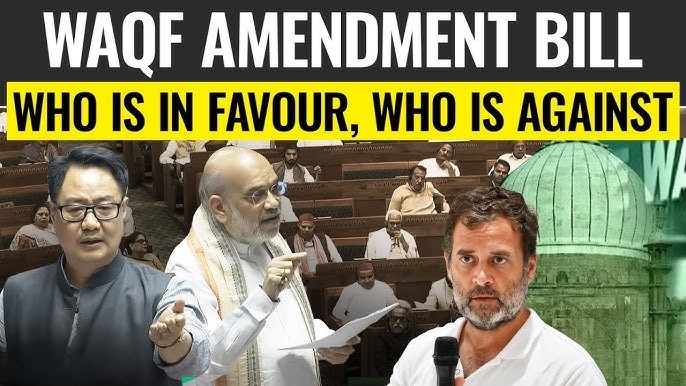
Threats Over Supporting the Waqf Bill: BJP Spokesperson’s Claim
In India, various policies have been formulated based on the principles of secularism, socialism, and constitutional values. Waqf institutions, which manage properties donated by the Muslim community for religious, educational, and social activities, play a significant role in the country’s socio-political landscape. Recently, a major controversy erupted when a BJP spokesperson claimed to have received threats after supporting the Waqf Bill. This issue has not only sparked discussions in political circles but has also caught the attention of the general public.
In this blog, we will explore the significance of the Waqf Bill, the threats reportedly received by the BJP spokesperson for supporting it, and the broader implications of such claims. Additionally, we will discuss the impact such controversies have on Indian politics and society, and why it is essential to address such issues in a balanced and fair manner.
The Waqf Bill: What Is It and Why Is It Important?
The Waqf system refers to properties donated by Muslims under Islamic law (Sharia) for religious, educational, and charitable purposes. These properties are usually managed and administered by Waqf boards, which ensure their proper use for public benefit. Waqf properties often include land, buildings, mosques, madrasas (schools), hospitals, and other facilities aimed at community welfare.
The Waqf Bill is intended to reform the management and administration of Waqf properties in India. In 2021, the central government proposed a new version of the Waqf Bill to improve transparency, efficiency, and accountability in the functioning of Waqf institutions. The proposed Bill aims to address issues such as corruption, mismanagement, and lack of proper governance within Waqf boards. One of the key objectives of the Waqf Bill is to ensure that the resources are used optimally for the welfare of the community and to avoid any potential misuse.
By introducing reforms to the Waqf system, the Bill seeks to bring Waqf institutions in line with modern governance practices. It aims to provide clear guidelines for the administration of Waqf properties and improve the accountability of the Waqf boards. With the growing importance of transparency in governance, the Waqf Bill has become a critical piece of legislation that seeks to ensure that the properties are used in a manner that benefits society as a whole.
BJP Spokesperson’s Claim: Receiving Threats Over Supporting the Waqf Bill
The controversy surrounding the Waqf Bill gained momentum when a prominent spokesperson of the Bharatiya Janata Party (BJP) claimed to have received threats after publicly expressing support for the Bill. According to the spokesperson, the threats were allegedly made by individuals or groups who opposed the Bill, citing their concerns about the potential misuse of the legislation or its impact on Muslim religious and social institutions.
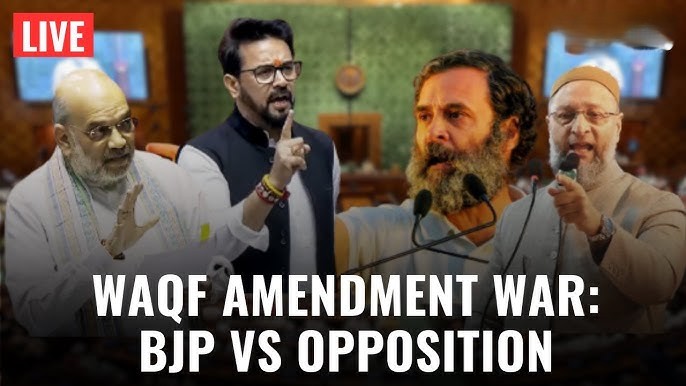
In his statement, the BJP spokesperson emphasized that his support for the Waqf Bill was driven by the need to ensure that Waqf properties were managed more efficiently and transparently. He argued that the reforms proposed in the Bill would help improve the functioning of Waqf institutions and protect their assets from exploitation or mismanagement. However, his stance appears to have angered certain individuals or factions who believed that the Bill could have unintended consequences, potentially altering the control over Waqf properties in ways that could affect their religious and cultural significance.
The threats, according to the spokesperson, were both verbal and written, with some individuals going so far as to make direct threats to his personal safety. This claim has raised concerns about the growing polarization in Indian politics, where even seemingly neutral or constructive initiatives are met with hostility, often leading to such extreme reactions.
The Context of the Threats
The reactions to the BJP spokesperson’s support for the Waqf Bill are rooted in the larger political and social context of religious and communal tensions in India. In a country as diverse as India, issues related to religion and religious institutions are highly sensitive. Any reform or legislation that touches on religious practices, especially those involving Muslim institutions like Waqf, often attracts attention from various quarters of society, including religious organizations, political parties, and activist groups.
Some critics argue that the Waqf Bill could lead to the centralization of power over Waqf properties, which could impact the autonomy of Muslim religious institutions. They fear that such control could result in the marginalization of Muslim communities or interference in their religious affairs. As a result, individuals who publicly support the Bill may face backlash from those who perceive it as a threat to their rights or community interests.
On the other hand, supporters of the Bill argue that the reforms are necessary to ensure that Waqf properties are properly managed and used for the benefit of society at large. They emphasize that the Bill’s provisions would address long-standing issues of corruption, mismanagement, and lack of accountability within Waqf boards. This perspective views the Bill as a means of safeguarding the interests of the community by providing greater oversight and transparency.
In this charged atmosphere, the BJP spokesperson’s decision to support the Bill made him a target of criticism and, allegedly, threats from those who viewed the Bill as harmful to Muslim interests. Such threats reflect the deep divisions in Indian society over issues related to religious reform, governance, and the balance of power.
The Role of Political Parties in Religious Reform
The Waqf Bill controversy highlights the role of political parties in shaping religious reforms and how such reforms can become intertwined with political ideologies. The BJP, as a prominent political party with a significant base among Hindu voters, has often been accused by critics of pursuing policies that favor Hindu interests over those of religious minorities. On the other hand, the party has also made efforts to promote policies aimed at improving governance and accountability, especially in sectors such as education, healthcare, and religious institutions.
In this context, the Waqf Bill is seen as an attempt by the BJP to bring greater transparency and accountability to Waqf properties. While this may be viewed as a positive step by some, it has also attracted opposition from groups that fear the Bill could undermine Muslim religious institutions. The debate around the Waqf Bill thus underscores the complexity of balancing religious reform with the need to maintain communal harmony and protect the rights of minority communities.
Political parties play a crucial role in determining the course of such reforms. Their support or opposition to specific pieces of legislation can influence public opinion and shape the outcome of political debates. In the case of the Waqf Bill, the BJP’s decision to back the Bill has put it at odds with some factions of the Muslim community and their political representatives, who are concerned about the implications of the legislation.
The Broader Implications of the Threats
The threats received by the BJP spokesperson over his support for the Waqf Bill raise several important questions about the state of political discourse and religious tolerance in India. These incidents of intimidation and hostility are concerning because they reflect a growing climate of intolerance and polarization. In a democratic society, it is essential for individuals to be able to express their views, particularly on issues of public policy, without fear of retribution.
When political figures, regardless of their party affiliation, face threats for expressing their opinions, it undermines the principles of democracy and freedom of speech. Such incidents can also contribute to a culture of fear, where people are hesitant to engage in constructive dialogue or express support for policies that they believe are in the public interest. This, in turn, stifles debate and limits the ability of the public to engage in meaningful discussions on important issues.
Moreover, the threats also highlight the growing polarization between different religious communities in India. While the country is home to a diverse array of religions, the tensions between majority and minority communities often spill over into political discourse, making it difficult to have objective discussions on sensitive topics. The fear of backlash or retaliation can lead to the silencing of voices that are essential for creating a more inclusive and equitable society.
The Need for Constructive Dialogue
In order to address the issues surrounding the Waqf Bill and other similar reforms, it is crucial to foster a culture of constructive dialogue. Political leaders, religious leaders, and civil society organizations need to engage in open and honest conversations about the challenges and opportunities presented by such reforms. The goal should be to find common ground and build policies that serve the best interests of all communities, ensuring that the rights of minorities are protected while promoting transparency, accountability, and governance.
It is important for the government to listen to the concerns of those who oppose the Bill and work toward finding solutions that address their fears. At the same time, it is equally important to ensure that reforms are not stalled due to the pressures of opposition or threats. The challenge lies in balancing the interests of different communities and finding a way forward that benefits the nation as a whole.
Conclusion
The controversy surrounding the Waqf Bill and the threats received by a BJP spokesperson for supporting it is a reflection of the larger challenges facing Indian democracy today. As a diverse and pluralistic society, India is constantly grappling with issues related to religious identity, governance, and the balance of power. The Waqf Bill, in this context, is an important piece of legislation that seeks to reform the management of Waqf properties and bring greater transparency to their administration.
However, the threats faced by the BJP spokesperson over his support for the Bill underscore the deep divisions that exist within Indian society, particularly when it comes to issues of religion and community interests. These threats are a troubling reminder of the need for greater tolerance, dialogue, and understanding in political and public discourse.
As India moves forward, it is essential for all stakeholders to engage in constructive dialogue and work toward solutions that promote transparency, accountability, and the protection of minority rights. Only through mutual respect and collaboration can India build a future that is inclusive, democratic, and just for all its citizens.
read more latest news

