
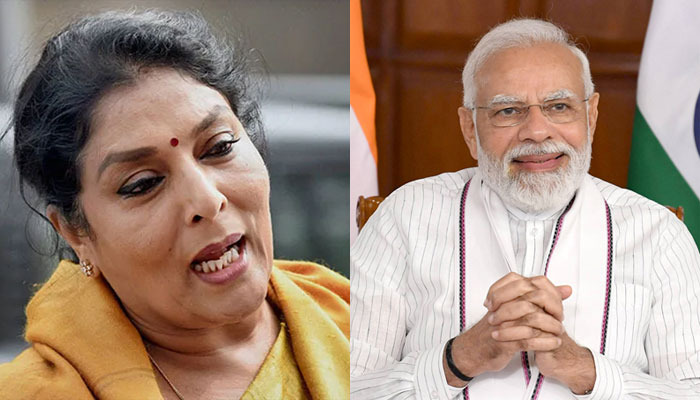
Renuka Chowdhury Quotes Devdas to Target PM Modi – “What Do You Know About the Value of a Pinch of Vermilion?”
Renuka In a fiery political moment that quickly caught the nation’s attention, Congress leader Renuka Chowdhury used a dramatic line from the iconic Bollywood film Devdas to launch an emotional and symbolic attack on Prime Minister Narendra Modi. During a public interaction, Chowdhury said:
“Aap sindoor ki keemat kya jaanenge Modi ji?”
(“What do you know about the value of a pinch of vermilion, Mr. Modi?”)
This emotionally charged statement, originally delivered by Paro (Aishwarya Rai) in Devdas, was repurposed by Chowdhury to underscore what she called the Prime Minister’s lack of empathy toward Indian women, especially widows, victims of communal violence, and those affected by state policies. The line resonated deeply with many, while also triggering a storm of political backlash.
Supporters hailed it as a powerful feminist stand, while BJP leaders condemned it as melodramatic and disrespectful to the office of the Prime Minister. Social media exploded with mixed reactions, turning the moment into both a political and cultural flashpoint.
🎭 Politics Meets Bollywood: When Art Becomes a Weapon
In Indian political discourse, the lines between drama and debate often blur. But even by those standards, Renuka Chowdhury’s fiery speech, quoting from a Bollywood classic, stood out.
“Aap sindoor ki keemat kya jaanenge Modi ji?”
(“What do you know about the value of a pinch of vermilion, Mr. Modi?”)
Delivered with the same emotional charge as in Sanjay Leela Bhansali’s Devdas, this one-liner created a sensation both in Parliament and on social media. What was intended as a feminist and emotional criticism of the Prime Minister’s policies quickly turned into a nationwide debate on decorum, symbolism, gender, and the limits of political theatre.
This blog takes a deep dive into the context, implications, political fallout, and cultural meaning of that now-viral moment.
🧭 The Context: Where Was the Statement Made?
Renuka Chowdhury’s comment was made during a Congress women’s convention held in Delhi, where she was addressing the media and party workers. The theme of the convention was “Women’s Voice, Women’s Dignity”, focusing on how government policies have affected Indian women—especially widows, single mothers, domestic violence survivors, and victims of mob lynching or displacement.
Chowdhury was making the point that symbolism like “Beti Bachao” or “tricolour at homes” cannot compensate for real suffering, especially when women are losing their husbands to riots, terrorism, or administrative negligence.
She ended her fiery remark with the Devdas line, directly addressing PM Modi:
“Aap sindoor ki keemat kya jaanenge Modi ji?”
🎬 The Devdas Reference – A Cultural Symbol
The line is lifted directly from the 2002 film Devdas, spoken by Aishwarya Rai’s character Parvati (Paro), who questions her lover Devdas’s understanding of a married woman’s dignity and pride represented by sindoor (vermilion).
In Indian culture, sindoor is a powerful symbol of marital status, commitment, identity, and respect. For many Indian women, it is emotionally sacred—often representing not just the presence of a husband, but social security and personal honour.
By using this line, Renuka Chowdhury not only invoked Bollywood but touched upon a deep cultural and emotional chord, accusing the Prime Minister of being disconnected from the pain and dignity of Indian women who have lost their husbands due to various state failures.
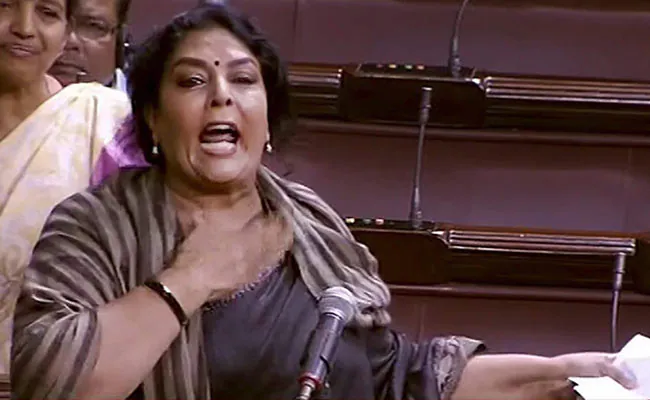
🗣️ What Did Renuka Chowdhury Really Mean?
Renuka Chowdhury’s statement was multi-layered. Here’s what it attempted to convey:
- Critique of Emotional Disconnect: She implied that PM Modi, never married in a traditional sense (despite being officially wedded), cannot empathize with the emotional and symbolic pain that widowed or grieving Indian women go through.
- Attack on Governance: She was referencing alleged apathy in the government’s response to women affected by riots, mob lynching, communal violence, or martyrdom in conflicts.
- Feminist Undertone: The sindoor was used as a metaphor for womanhood, loss, and grief—saying that leadership without emotional understanding is hollow.
🔥 Political Fallout – Reactions from BJP
The BJP wasted no time in responding.
Smriti Irani, Union Minister and one of BJP’s most prominent women leaders, said:
“This is not feminism; this is filmy melodrama. Women empowerment does not come from quoting Paro, but from building policies that protect and uplift them.”
Ravi Shankar Prasad, senior BJP leader, added:
“This shows Congress has reduced itself to drama. The PM comes from the soil, he understands Indian women far better than a Congress elite sitting in a convention hall.”
Many BJP supporters saw this as an attack on Modi’s personal life—specifically referencing his estranged marital status—calling it cheap and below the dignity of political discourse.
💬 Public Opinion – A Nation Divided
The internet was split. On one hand, Congress supporters and women’s rights groups applauded Renuka’s boldness, calling it the most powerful political quote of the year.
On the other, BJP supporters and neutral commentators found it too theatrical and accused the Congress of using Bollywood drama instead of policy critique.
Trending hashtags on Twitter/X:
- #SindoorPolitics
- #RenukaVsModi
- #DevdasInParliament
- #FilmyPolitics
- #WomenDignityDebate
Meme culture thrived for days—with clips of Paro’s line intercut with Renuka’s speech, turning politics into pop culture.
📜 Historical Patterns – When Politicians Used Cinema
Renuka Chowdhury is not the first to quote a Bollywood dialogue for political impact. India’s political history is full of filmy punchlines used in speeches:
- Raj Babbar quoting Sholay during a campaign in UP.
- PM Modi himself using “Na khaunga, na khane dunga” inspired by anti-corruption themes.
- Lalu Prasad Yadav referencing Munna Bhai in Bihar speeches.
However, quoting Paro’s grief-stricken line in a direct attack on the Prime Minister marked a new level of personal dramatization in political messaging.
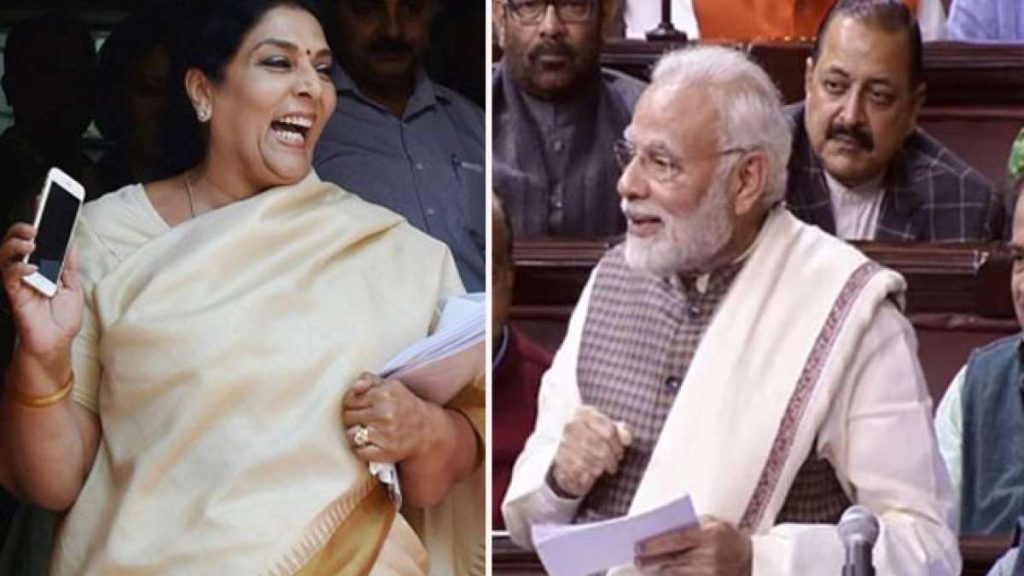
👥 Congress’s Stand – Symbolism over Statistics?
While Renuka’s statement made headlines, critics also raised the question: Where is the policy?
- The Congress party has been pushing hard to reclaim the women’s vote.
- Leaders like Priyanka Gandhi Vadra have emphasized issues like women’s safety, employment, and representation.
- However, moments like this, while attention-grabbing, are seen as lacking substance by political analysts.
Still, Renuka’s line did succeed in:
- Making headlines
- Creating public empathy
- Drawing attention to widows and grieving women affected by violence
🧭 Is This the New Political Language?
India’s electorate is young, media-savvy, and culturally engaged. Politicians using film analogies, cricket metaphors, or poetry now do so knowing it will go viral.
Renuka Chowdhury’s statement, whether intentional or spontaneous, was tailored for the headline economy.
As one media analyst noted:
“A one-liner now reaches farther than a manifesto. And when it’s emotionally familiar, like a line from Devdas—it sticks.”
💡 The Real Question – What About the Sindoor?
Ultimately, the question “What do you know about the value of a pinch of vermilion?” isn’t just about Modi. It’s about how power understands or ignores the emotional, cultural, and human side of governance.
It challenges:
- Policymakers to think beyond numbers.
- Governments to prioritize human stories.
- Leaders to be emotionally intelligent, not just administratively efficient.
And in that sense, Renuka Chowdhury’s line may go down as one of the most poignant feminist-political one-liners in recent memory—controversial, yes, but impactful.
🔚 Conclusion – When Paro Meets Politics
In the grand theatre of Indian democracy, Renuka Chowdhury quoting Devdas might be seen by some as theatrics—but for others, it was theatrical truth.
It fused cinema with symbolism, emotion with accusation, and culture with criticism—making the audience reflect, even if briefly, on how much empathy really exists in politics.
So, the next time a leader launches a scheme, asks for votes, or talks of pride in the nation—perhaps the people will ask in return:
“Do you understand the pain behind the sindoor, or just the power of the slogan?”
Because sometimes, it takes a Paro to tell the truth that policy papers cannot.
Read more latest news

