
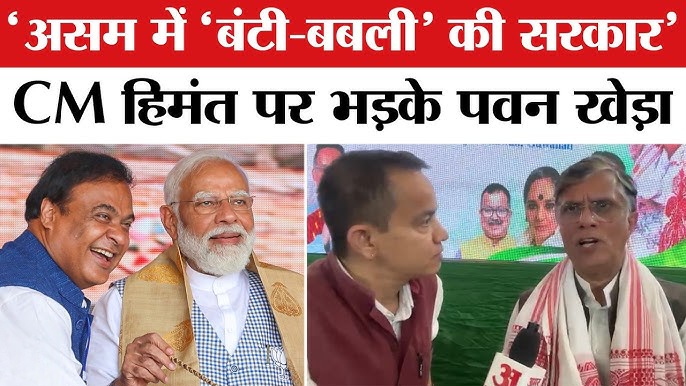
CM Himanta Biswa Sarma Launches Scathing Attack on Congress Leader Pawan Khera: A Deep Dive into Political Rhetoric, Strategy, and Implications
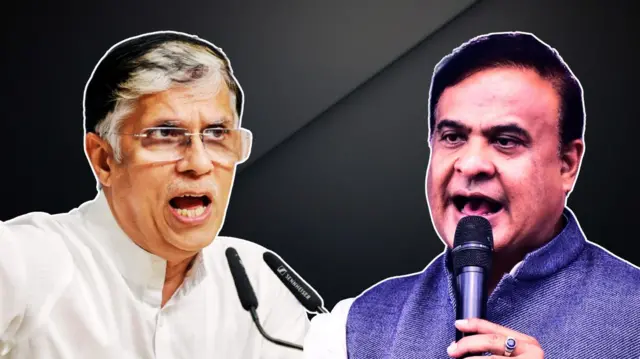
CM Himanta Biswa Sarma made a striking comment targeting Congress leader Pawan Khera. His statement, “I will turn Pawan Khera into Pawan Peda,” has stirred debates across political circles, media platforms, and among the general public.
Indian politics has always been vibrant, dynamic, and often charged with sharp exchanges between leaders. In recent developments, Assam Chief Minister Himanta Biswa Sarma has once again grabbed headlines with his aggressive political stance. Known for his straightforward communication style and impactful rhetoric,
This remark is not just a casual political jab but reflects the deeper tensions between the Bharatiya Janata Party (BJP) and the Indian National Congress. It also highlights the evolving nature of political communication in India, where sharp phrases often become tools for gaining attention and rallying supporters.
Background of the Political Exchange
The friction between BJP and Congress is not new. Over the years, leaders from both parties have engaged in intense verbal battles, especially during elections or on controversial issues. CM Himanta Biswa Sarma, who himself was once a prominent member of the Congress before switching to BJP, has often been vocal in criticizing his former party.
CM Himanta Biswa Sarma has built a reputation for being an assertive leader who does not shy away from making bold statements. His recent comment directed at Pawan Khera comes amid ongoing political disagreements, where both sides have been exchanging allegations and counter-allegations.
The phrase “Pawan Peda” appears to be a metaphorical expression aimed at undermining or mocking his political opponent. Such language, while controversial, is not uncommon in Indian political discourse, where symbolic and culturally resonant phrases are used to make a point.

The Statement That Sparked Controversy
During a public interaction, CM Himanta Biswa Sarma sharply criticized Pawan Khera, saying that he would “turn Pawan Khera into Pawan Peda.” The statement quickly gained traction on social media, with supporters and critics interpreting it in different ways.
For supporters of CM Himanta Biswa Sarma, the comment was seen as a display of confidence and political dominance. It was perceived as a clever and humorous way of responding to criticism from the Congress leader. On the other hand, critics argued that such language lowers the standard of political debate and distracts from substantive issues.
CM Himanta Biswa Sarma has often used humor and wordplay in his speeches, making his communication style relatable to the masses. However, this approach also invites scrutiny, especially when the remarks are perceived as personal attacks.
Understanding the Political Context
To fully grasp the significance of this statement, it is important to consider the broader political context. Assam has been a crucial battleground for both BJP and Congress. Since taking office, CM Himanta Biswa Sarma has focused on strengthening BJP’s position in the state while also playing a significant role in the party’s strategy in the Northeast.
CM Himanta Biswa Sarma has consistently criticized the Congress for its policies and leadership, often highlighting what he sees as failures during their tenure. His remarks against Pawan Khera can be seen as part of a larger strategy to keep the opposition on the defensive.
The Congress, on the other hand, has been attempting to regain its footing in Assam and other parts of India. Leaders like Pawan Khera have been vocal in their criticism of BJP governments, leading to frequent clashes with leaders like CM Himanta Biswa Sarma.
The Role of Political Rhetoric
Political rhetoric plays a crucial role in shaping public perception. Statements like the one made by CM Himanta Biswa Sarma are designed to capture attention, create a narrative, and energize supporters.
CM Himanta Biswa Sarma understands the power of words in politics. His statement, while controversial, ensures that he remains at the center of political discourse. It also shifts the focus from policy debates to personality-driven narratives, which often dominate media coverage.
However, such rhetoric also has its drawbacks. It can lead to increased polarization and reduce the scope for constructive dialogue. Critics argue that leaders should focus more on addressing key issues such as development, economy, and governance rather than engaging in personal attacks.
Public and Media Reaction
The reaction to the statement has been mixed. Supporters of CM Himanta Biswa Sarma have praised his boldness and wit, sharing the remark widely on social media platforms. Memes and discussions around the phrase “Pawan Peda” have further amplified its reach.
At the same time, opposition leaders and some sections of the media have criticized CM Himanta Biswa Sarma for using language that they consider inappropriate for someone holding a high public office. They argue that such comments detract from the seriousness of political discourse.
CM Himanta Biswa Sarma, however, remains unfazed by the criticism. He has often maintained that his statements are a reflection of his straightforward approach and resonate with the जनता.
Historical Perspective on Political Exchanges
Indian politics has a long history of sharp verbal exchanges. From parliamentary debates to election rallies, leaders have used strong language to criticize their opponents.
CM Himanta Biswa Sarma’s comment can be seen as part of this tradition. Over the years, many leaders have used metaphors, sarcasm, and humor to make their points. While some of these statements have been appreciated for their creativity, others have sparked controversy.
CM Himanta Biswa Sarma has positioned himself as a leader who is not afraid to speak his mind. His approach aligns with the current trend of direct and unfiltered communication, which is often amplified by social media.
The Impact on Political Strategy
Statements like this are not made in isolation. They are often part of a broader political strategy aimed at shaping narratives and influencing public opinion.
For CM Himanta Biswa Sarma, the remark serves multiple purposes. It reinforces his image as a strong and assertive leader, keeps the opposition on the defensive, and ensures that he remains in the spotlight.
CM Himanta Biswa Sarma also understands the importance of engaging with the public in a way that is both impactful and memorable. His use of catchy phrases helps in achieving this objective.
However, the effectiveness of such a strategy depends on how it is perceived by the जनता. While some may appreciate the boldness, others may prefer a more measured and issue-focused approach.
The Role of Social Media
In today’s digital age, statements like “Pawan Peda” quickly go viral. Social media platforms play a crucial role in amplifying political messages and shaping public discourse.
CM Himanta Biswa Sarma’s remark spread rapidly across platforms like Twitter, Facebook, and Instagram. Supporters used it to create memes and slogans, while critics used it to question the quality of political debate.
CM Himanta Biswa Sarma is known for his active presence on social media, where he regularly interacts with the public. This allows him to directly communicate his message and respond to criticism.
Ethical Considerations in Political Communication
While political rhetoric is an integral part of democracy, it also raises important ethical questions. Leaders are expected to maintain a certain level of decorum, especially when addressing the public.
CM Himanta Biswa Sarma’s statement has reignited the debate on whether political leaders should exercise more restraint in their language. Critics argue that such remarks can set a negative example and contribute to a culture of disrespect.

On the other hand, supporters believe that CM Himanta Biswa Sarma’s style reflects authenticity and resonates with the जनता. They argue that politics is inherently competitive and such statements are part of the game.
The Broader Implications
The remark by CM Himanta Biswa Sarma is not just about one individual or one party. It reflects the broader trends in Indian politics, where communication has become more direct, personal, and media-driven.
CM Himanta Biswa Sarma’s approach highlights the importance of narrative-building in modern politics. By making a memorable statement, he has ensured that the focus remains on him and his message.
However, it also raises questions about the future of political discourse. Will such rhetoric become the norm, or will there be a shift towards more substantive debates?
Conclusion
The statement “I will turn Pawan Khera into Pawan Peda” by CM Himanta Biswa Sarma has once again demonstrated the power of words in politics. It has sparked discussions, debates, and reactions across the political spectrum.
CM Himanta Biswa Sarma has effectively used this remark to assert his position and challenge his opponent. Whether one views it as witty or inappropriate, there is no denying its impact.
As Indian politics continues to evolve, leaders like CM Himanta Biswa Sarma will play a key role in shaping its direction. Their words, actions, and strategies will influence not only political outcomes but also the nature of public discourse.
In the end, the responsibility lies with both leaders and the जनता to ensure that political debates remain meaningful, respectful, and focused on the issues that truly matter.
Read more latest news

