

Azam Khan’s Defiance: “If There Was Merit in the Cases, I Wouldn’t Be Outside Today” – A Battle for Justice and Political Survival.
Introduction
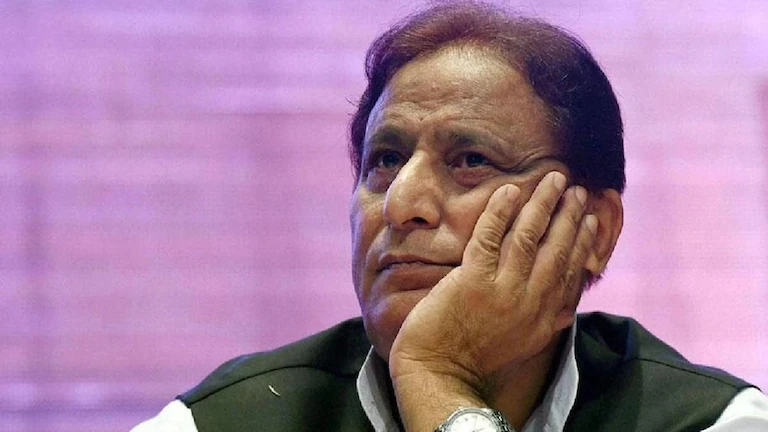
Samajwadi Party leader Azam Khan said Indian politics has always been intertwined with the legal system. Leaders across party lines have faced court cases, some politically motivated, others grounded in real charges. Few politicians, however, have fought as many legal battles while staying in the political spotlight as Samajwadi Party (SP) stalwart Azam Khan.
Recently, Azam Khan made a powerful statement, saying:
👉 “As far as the cases are concerned, if there was any merit in those cases, I would not be seen outside today. I hope to get justice from the lower court to the Supreme Court. One day I will be exonerated.”
This remark not only reflects his confidence in his innocence but also underscores the longstanding debate in India about the intersection of politics, law, and justice. In this blog, we will examine Azam Khan’s political journey, his legal troubles, the meaning behind his latest statement, and its larger implications for Uttar Pradesh and Indian politics.
Who is Azam Khan?
- Full Name: Mohammad Azam Khan
- Party: Senior leader of the Samajwadi Party
- Constituency: Rampur, Uttar Pradesh (often considered his stronghold)
- Career Highlights:
- Nine-time MLA from Rampur
- Former Cabinet Minister in Uttar Pradesh
- Known as the Muslim face of the Samajwadi Party
Azam Khan has been one of the most influential leaders in UP politics, commanding loyalty in Rampur and enjoying prominence in SP’s organizational structure. However, his political career has been consistently overshadowed by legal controversies.
The Legal Cases Against Azam Khan
Over the years, Azam Khan has faced dozens of cases, ranging from land grabbing and corruption to hate speech and intimidation. Some of the most notable allegations include:
- Land Encroachment – Accused of grabbing farmers’ land for building the Mohammad Ali Jauhar University in Rampur.
- Corruption Charges – Multiple FIRs alleging misuse of funds.
- Hate Speech – Several complaints regarding inflammatory remarks during election campaigns.
- Property Disputes – Cases related to government land encroachment and illegal possession.
- Library Case – Accusations of stealing rare books and manuscripts.
While some cases have seen him get relief from courts, others are still pending. Critics argue that many cases are politically motivated, aimed at weakening SP’s hold in Rampur.
Azam Khan’s Statement – A Closer Look
When Azam Khan said,
👉 “If there was any merit in those cases, I would not be seen outside today”
he was essentially asserting two key points:
- Political Vendetta – That the cases were manufactured to target him and silence his political influence.
- Faith in Judiciary – Despite his troubles, he expressed hope that from lower courts to the Supreme Court, justice would prevail, and he would ultimately be cleared of all charges.
This dual message of victimhood and confidence resonates with his supporters, many of whom believe he has been unfairly targeted for his outspoken nature and minority identity.
Political Vendetta in Indian Politics
Azam Khan’s claim isn’t unique. Across party lines, leaders have often alleged that cases filed against them are politically motivated.
- Lalu Prasad Yadav (RJD) – Claimed conspiracy in the fodder scam cases.
- Arvind Kejriwal (AAP) – Called multiple defamation and corruption cases an attempt to derail his politics.
- Opposition leaders under ED/CBI radar – Many leaders allege central agencies are misused to weaken them.
For Azam Khan, a Muslim leader in a communally sensitive state like Uttar Pradesh, the claim of political vendetta gains additional weight. His supporters argue that targeting him helps political opponents weaken SP’s Muslim vote base.
The Symbolism of Rampur
Rampur is not just Azam Khan’s constituency; it is his political fortress. For decades, he has built institutions, colleges, and universities there, projecting himself as a guardian of education and culture for the region’s Muslim population.
- His Mohammad Ali Jauhar University was meant to be his legacy project, but it became the center of multiple legal disputes.
- Many of the cases against him are linked directly to land and resources in Rampur.
Thus, attacking Azam Khan legally also means attacking his power base.
Azam Khan and the Samajwadi Party
For the Samajwadi Party, Azam Khan has been a crucial figure:
- He served as a bridge between the party and Muslim voters, especially in western UP.
- Despite his legal troubles, SP has continued to back him, though not always as strongly as before.
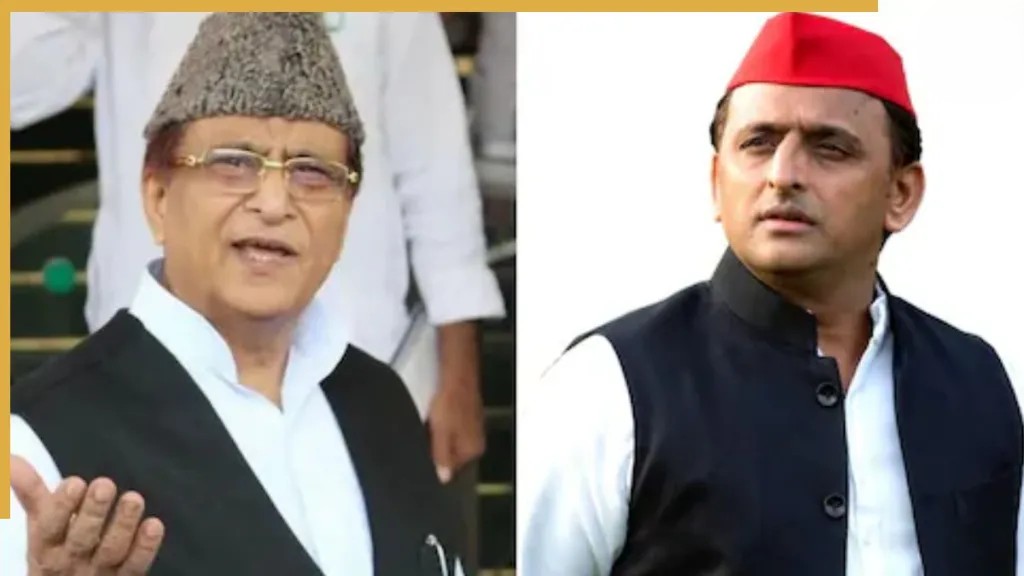
- With Akhilesh Yadav leading the party, Azam Khan’s role has diminished, but his symbolic importance remains high.
His statement about being exonerated also indirectly serves SP’s narrative that opposition leaders are being harassed by state machinery.
The Road Ahead – Legal and Political
1. Legal Battle
Azam Khan faces a long legal battle ahead, with cases still pending in lower courts and High Court. His statement shows he is prepared to fight till the Supreme Court if needed.
2. Political Future
While his influence has declined in recent years, especially with SP focusing on new-generation leaders, Azam Khan still commands respect and sympathy among certain sections.
3. 2027 UP Assembly Elections
If Azam Khan is cleared in major cases before the elections, it could revive his stature and allow him to play a bigger role in SP’s strategy. If not, the party may sideline him further.
Public Reactions to His Statement
- Supporters: See him as a victim of political conspiracy and applaud his courage to keep faith in the judiciary.
- Opponents: Argue that he is trying to play the victim card despite serious charges.
- Neutral observers: Note that while vendetta politics exists, leaders like Azam Khan also face genuine allegations that must be legally examined.
Judiciary and the Question of Fair Trial
Azam Khan’s case highlights a critical issue in India’s democracy: Can opposition leaders get a fair trial when legal cases overlap with political interests?
- Courts have often stepped in to provide relief in politically sensitive cases.
- However, the slow pace of trials means leaders remain entangled for years, affecting both their political career and public perception.
- Azam Khan’s trust in the Supreme Court reflects the ultimate faith in the judiciary as the last safeguard.
Conclusion
Azam Khan’s latest statement is more than just a defense against legal allegations—it is a political message, an emotional appeal, and a reaffirmation of faith in India’s judiciary.
By saying “If there was any merit in those cases, I would not be seen outside today”, he positions himself as a victim of vendetta politics while expressing confidence that justice will ultimately clear his name.
For his supporters, it strengthens his image as a leader who refuses to bow down. For his opponents, it is just another attempt to evade accountability. But for the larger public, it reignites the debate about the thin line between law and politics in India.
As his legal battles continue, one question remains: Will Azam Khan be remembered as a political warrior wronged by the system, or as a leader entangled in too many controversies to be exonerated?
Read more latest news

