
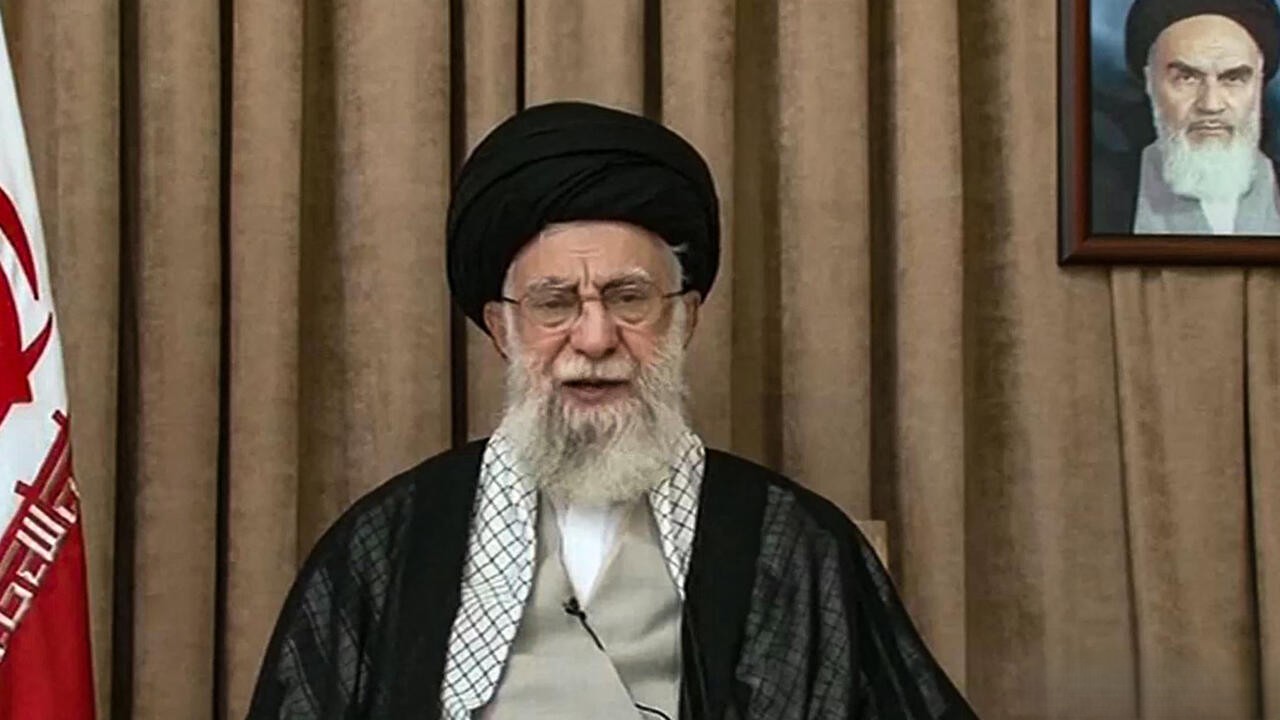
Iran’s Supreme Leader Ayatollah Ali Khamenei Declares Victory Over Israel: “We Have Slapped America in the Face”
Introduction
Khamenei On June 26, 2025, Iran’s Supreme Leader Ayatollah Ali Khamenei delivered a fiery and defiant speech declaring victory in the war against Israel, a conflict that has rattled the geopolitical balance in the Middle East. With his statement that “Iran has slapped America in the face,” Khamenei has reignited global tensions and sharpened the fault lines between rival ideological blocs.
This proclamation comes at a critical juncture when the Middle East is experiencing a dangerous escalation in hostilities, proxy battles, and direct confrontations. Iran’s bold declaration has not only heightened tensions with Israel but also directly challenged the role of the United States, Israel’s key ally and the self-proclaimed guarantor of security in the region.
In this blog, we will explore the background of the conflict, the events leading up to Khamenei’s statement, its implications on global politics, the reaction from Israel, the U.S., and other stakeholders, and what this means for the future of West Asia and beyond.
The Road to June 26: Timeline of the Iran-Israel Conflict
1. Background Tensions
Khamenei The roots of animosity between Iran and Israel go back decades. While Israel views Iran as an existential threat due to its nuclear ambitions and sponsorship of armed groups like Hezbollah and Hamas, Iran has never recognized the state of Israel and consistently calls for the “liberation of Jerusalem.”
2. Escalation in 2025
In early 2025, a series of missile attacks, cyber strikes, and drone warfare marked a sharp escalation. Key incidents included:
- Alleged Israeli sabotage at Iran’s Natanz nuclear facility.
- Iran-backed militias launching rocket attacks on Israeli territory from Syria and Lebanon.
- A dramatic drone assault by Iran on Israeli airbases.
- Retaliatory Israeli airstrikes on Iranian military outposts in Syria.
3. The Turning Point
Khamenei By mid-June, both countries had entered direct conflict. While Israel deployed its Iron Dome and Arrow missile defense systems, Iran overwhelmed them with “smart swarm drones” and long-range ballistic missiles, some of which allegedly breached Israeli airspace and caused infrastructural damage.
This marked the first time in years that Israel’s security infrastructure was visibly breached by an adversary, leading to shock across the region.
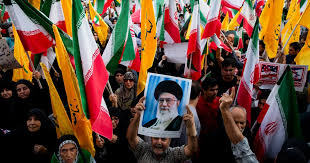
June 26, 2025 – Ayatollah Khamenei’s Speech
On the morning of June 26, Ayatollah Ali Khamenei addressed the Iranian nation in a nationally televised broadcast. His words were bold, accusatory, and highly symbolic.
“Today, the Islamic Republic of Iran has proven that its resistance is not in vain. We have defeated the Zionist regime on the battlefield. This is not just our victory but the victory of all Muslims. And to the American regime—we have slapped you in the face.”
This statement was followed by images of pro-Iranian rallies in Tehran, Beirut, Baghdad, and Gaza. The tone of the speech was triumphant, aimed at galvanizing Iran’s allies and signaling that the regional balance of power was shifting.
“Slapping America in the Face”: What Does It Mean?
This phrase isn’t new in Khamenei’s vocabulary. He has used it multiple times over the years to indicate:
- Defiance against U.S. dominance in the Middle East.
- Resilience in the face of sanctions and international pressure.
- Symbolic victories that challenge American military and political superiority.
However, in the context of an actual war against Israel (a U.S. ally), the statement carried more weight than ever before.
It also signaled a strategic shift—Iran no longer fears the consequences of open confrontation. Instead, it sees the current global order, weakened by economic crises, declining U.S. influence, and a distracted Europe, as ripe for disruption.
Israel’s Response: Retaliation and Silence
Israel, under Prime Minister Benjamin Netanyahu, has not issued a direct response to Khamenei’s speech, but military actions continued:
- Airstrikes on Iranian assets in Aleppo and Deir ez-Zor (Syria).
- Cyberattacks that temporarily disabled power grids in Tehran and Esfahan.
- Deployment of additional Iron Dome batteries and Arrow-3 interceptors.
A senior Israeli military source said:
“We do not respond to propaganda. We respond on the battlefield. The operation is ongoing.”
U.S. Reaction: Condemnation Without Escalation
The United States, already stretched with commitments in Ukraine, the Indo-Pacific, and domestic challenges, condemned Khamenei’s remarks but stopped short of announcing new military action.
White House Statement:
“The United States condemns the hostile actions and rhetoric of the Iranian regime. We stand firmly with Israel and will continue to support its right to self-defense.”
Behind the scenes, diplomatic backchannels are reportedly working overtime to prevent the conflict from spiraling into a full-blown regional war.
The Proxy Element: Iran’s Axis of Resistance
Iran’s war against Israel is not fought by its military alone. Its strength lies in its network of regional militias and proxies:
- Hezbollah in Lebanon
- Houthi rebels in Yemen
- Hashd al-Shaabi in Iraq
- Palestinian Islamic Jihad and Hamas in Gaza
These groups intensified their operations during the June conflict, creating multiple fronts against Israel. Iran’s declaration of victory was partly due to the success of its proxies, who disrupted Israeli life across different regions.
Regional Reactions: Polarized Middle East
Support for Iran:
- Lebanon: Hezbollah praised Iran’s “historic stand.”
- Iraq: Pro-Iranian political parties organized celebratory marches.
- Syria: President Assad declared solidarity with the “axis of resistance.”
Condemnation from Sunni Powers:
- Saudi Arabia, UAE, Egypt, and Jordan condemned Iran’s aggression, fearing that further escalation could destabilize their own regimes.
- These countries called for immediate de-escalation and international mediation.
Global Implications: Is a Larger War Looming?
Iran’s claim of victory and its inflammatory rhetoric toward America risk setting the stage for a larger confrontation. Analysts fear:
- Expanded cyber warfare affecting global finance and infrastructure.
- Energy supply disruptions as Iran threatens shipping lanes in the Strait of Hormuz.
- A renewed arms race in the region, with Israel and Gulf states ramping up military purchases.
What This Means for India and Other Asian Powers
India, which maintains cordial relations with both Israel and Iran, has urged restraint and emphasized diplomacy. However, there are real concerns:
- Oil imports from Iran and Gulf nations may be affected.
- Indian workers in the region face uncertainty.
- Maritime security in the Arabian Sea may require naval redeployment.
China and Russia, meanwhile, have backed Iran diplomatically, calling it a sovereign nation defending itself. This marks a clear East-West divide.
Media and Public Reactions: A Divided Discourse
Social media has exploded with contrasting narratives:
- Pro-Iran users hail the victory as a “defeat of Zionist imperialism.”
- Pro-Israel supporters share images of destruction caused by Iranian rockets.
Mainstream media in the West has been cautious, with many outlets not independently verifying Iran’s claim of victory. Israeli media has remained largely focused on security operations and recovery efforts.
Analysis: Is Iran’s Victory Real or Propaganda?
The answer depends on the metrics of success:
- Militarily, Iran scored limited victories, but Israel remains intact and capable.
- Symbolically, Iran has shown it can challenge Israel’s defense and America’s deterrence.
- Psychologically, Iran’s narrative has boosted morale across its proxy network.
Thus, even if the war ends without territorial changes, Iran’s perceived ‘victory’ may reshape regional alignments.
The Way Forward: Can Peace Return?
The path ahead is uncertain. Key players must now choose between:
- Escalation, risking regional war and global economic fallout.
- De-escalation, via diplomatic talks possibly mediated by Qatar, Turkey, or the UN.
Iran’s claim of victory may harden its position, while Israel’s silence may be strategic before launching a major counterstrike.
Conclusion
Ayatollah Ali Khamenei’s declaration of victory over Israel and his bold assertion that “Iran has slapped America in the face” mark a pivotal moment in 21st-century geopolitics. Whether this statement is rhetoric or reflects a new power equilibrium remains to be seen. But one thing is certain: the Middle East is entering a new era, where proxy wars, ideological battles, and global rivalries converge more openly than ever before.
read more latest news

