
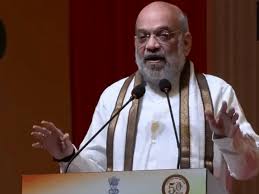
Amit Shah’s Call for Linguistic Pride: “No Opposition to Foreign Languages, But Pride in Indian Languages Must Rise”
Introduction
In a diverse and multilingual country like India, language is not just a medium of communication—it’s a powerful symbol of identity, culture, and history. Recently, Union Home Minister Amit Shah made a noteworthy statement that resonated deeply with millions across the country. He said:
“There is no opposition to any language; there should be no opposition to any foreign language either, but the emphasis should be on increasing the pride of our languages.”
At first glance, it appears to be a simple declaration of linguistic balance. However, beneath the surface, it touches on a series of crucial debates—about cultural preservation, linguistic hegemony, globalization, education policy, and national identity.
In this blog, we explore the context, implications, and significance of Amit Shah’s statement, the linguistic landscape of India, past controversies, and the way forward to truly empower Indian languages without alienating global progress.
The Context Behind the Statement
Amit Shah made the statement during an event focused on the promotion of Indian languages, particularly in governance, administration, and education. It came at a time when discussions on implementing the National Education Policy (NEP)—which recommends teaching in mother tongues and regional languages—were gaining traction across states.
Over the years, Shah has often emphasized the need to strengthen Indian languages—especially Hindi—without creating hostility towards English or other international tongues.
This time, his measured tone marked a departure from the usual “Hindi imposition” debates. By clearly stating that no foreign language should be opposed, he tried to dispel fears that promoting Indian languages would mean restricting access to English or other global languages.
India’s Linguistic Diversity: A Legacy and a Challenge
India is home to 22 scheduled languages and over 1,600 dialects, making it one of the most linguistically diverse countries in the world.
Top Indian Languages by Number of Speakers:
- Hindi
- Bengali
- Marathi
- Telugu
- Tamil
- Gujarati
- Urdu
- Kannada
- Odia
- Punjabi
Each language carries with it a rich literary tradition, cultural practices, and historical significance. However, due to colonial influence and modern economic pressures, English has taken center stage in many spheres—from governance and law to education and business.
This has led to:
- Perceived linguistic inequality
- Marginalization of regional languages
- Educational disparity

Amit Shah’s Balanced View: Promoting Without Opposing
Shah’s statement is significant because it aims to strike a balance:
- No hatred for English or any global language, which is essential in a globalized world.
- No imposition of any single Indian language, particularly Hindi, over others.
- Encouragement to take pride in our mother tongues, which are often looked down upon in formal settings.
This balanced approach recognizes the practical necessity of English in global affairs, while also advocating for cultural self-respect and inclusivity.
Why Pride in Indian Languages Matters
Shah’s emphasis on “pride” is critical. Over the years, a colonial mindset has made many Indians feel that speaking English is a sign of status, while speaking regional languages often invites ridicule.
Impacts of Linguistic Inferiority Complex:
- Children in rural areas feel inferior for not knowing English.
- Local language literature, cinema, and journalism are often undervalued.
- Government services in native languages are limited.
Reviving pride in Indian languages can lead to:
- More inclusive education.
- Preservation of cultural heritage.
- Wider access to government schemes and services.
- Better mental health among regional students.
Language and Education: The NEP 2020 Vision
The National Education Policy 2020 lays strong emphasis on mother-tongue-based education:
- Primary education in regional language or mother tongue till at least Grade 5.
- Translation of global scientific and technical content into Indian languages.
- Promotion of regional language universities and institutions.
Amit Shah’s statement aligns with this vision, supporting the idea that language should not be a barrier to quality education. It also opens the door for regional languages to reclaim their place in higher learning and scientific discourse.
Addressing the Criticism: The ‘Hindi Imposition’ Fear
Any time a central leader speaks about Indian languages, particularly Hindi, southern states like Tamil Nadu, Kerala, and Karnataka raise concerns about “Hindi imposition.”
Amit Shah’s latest remarks, however, clearly distance themselves from exclusivity. By stating that no foreign language should be opposed, he tried to present a non-threatening narrative—one that values multilingualism instead of monolingual nationalism.
This nuance is vital to national unity and linguistic harmony.
The Role of Technology in Promoting Indian Languages
One of the biggest enablers in reviving Indian languages is technology. From AI-powered translation tools to regional language keyboards, technology can help:
- Translate legal and educational content into Indian languages.
- Make government websites multilingual.
- Allow local entrepreneurs to engage in e-commerce in their native tongues.
- Promote Indian language apps and media platforms.
India’s growing digital landscape must be inclusive, or it risks excluding millions from the digital revolution.
Economic Implications of Language Diversity
Language isn’t just a cultural issue—it’s an economic one too.
Benefits of Local Language Empowerment:
- Increases employability of regional youth.
- Helps MSMEs (Micro, Small & Medium Enterprises) engage customers better.
- Facilitates inclusive banking and digital literacy.
- Strengthens the local publishing and entertainment industries.
By promoting Indian languages alongside global ones, India can truly unlock the economic power of its linguistic diversity.
How to Instill Pride in Indian Languages
Here are some actionable suggestions to promote Indian languages:
1. Curriculum Reform
- Include more regional literature in school syllabi.
- Encourage students to write essays, poems, and stories in their mother tongue.
2. Media and Cinema
- Promote regional films through OTT platforms.
- Introduce language-based awards and incentives.
3. Government Communication
- Ensure all central and state government websites are multilingual.
- Translate major schemes and policies into local languages.
4. AI and Digital Innovation
- Invest in AI-powered translation tools.
- Support startups working in local language technology.
5. Celebrating Language Days
- Organize language-specific cultural festivals.
- Encourage public figures to speak in their native languages during events.
Voices from the Ground
“It feels good when a leader acknowledges our language. I don’t know English but I am proud of my mother tongue Odia.”
— School teacher from Bhubaneswar
“We’re not against English. But we want our kids to learn Kannada too, not forget it.”
— Parent in Bengaluru
“Speaking Tamil is not just culture; it’s our identity. We appreciate leaders who respect that.”
— Activist from Chennai
These voices reflect the deep emotional connection people have with their languages.
Global Comparisons: Learning from the World
Several countries have successfully maintained pride in their native languages while adapting to global communication needs:
- France protects its language through legal frameworks while using English globally for trade.
- China promotes Mandarin internationally but encourages minority languages domestically.
- Japan remains strongly monolingual but ensures its citizens learn global languages for business.
India can similarly craft a policy that respects diversity while ensuring global competitiveness.
A Future of Linguistic Harmony
Amit Shah’s statement can be a turning point if followed by concrete policies and cultural encouragement. India has the potential to be a global leader in multilingual inclusivity, showing the world how a nation can grow economically, socially, and technologically without sacrificing linguistic roots.
Let this not be a one-time headline, but the start of a national movement toward linguistic equality and pride.
Conclusion
In a nation as vast and varied as India, language is not just communication—it’s identity, memory, and power. Amit Shah’s balanced statement—“There is no opposition to any language; there should be no opposition to any foreign language either, but the emphasis should be on increasing the pride of our languages”—should not just be seen as political rhetoric but a call for introspection and action.
We must ensure that our children grow up not ashamed but proud of their mother tongues, while also becoming global citizens equipped with the tools of modern communication. The journey to linguistic equality is not about choosing one over the other—it’s about finding balance, promoting inclusivity, and building a nation that respects all voices, all scripts, and all stories.
read more latest news

