

Lord Jagannath’s Rath Yatra Begins in Puri Today: Devotion, Tradition, and Grand Celebrations
Introduction
Today marks the grand commencement of one of the most celebrated and sacred festivals in India – the Rath Yatra of Lord Jagannath in Puri, Odisha. This annual chariot festival is not just a significant religious event, but a cultural and spiritual phenomenon that draws millions of devotees and tourists from across India and the world. As the chariots of Lord Jagannath, Lord Balabhadra, and Devi Subhadra are pulled through the streets of Puri, a wave of divine energy, faith, and celebration fills the air.
The Odisha administration is on high alert and fully prepared to ensure that this centuries-old tradition is carried out with the utmost safety, devotion, and grandeur. In this blog, we will explore the rich history of the Rath Yatra, the rituals involved, the administrative readiness, and the spiritual significance of the event.
What is Rath Yatra?
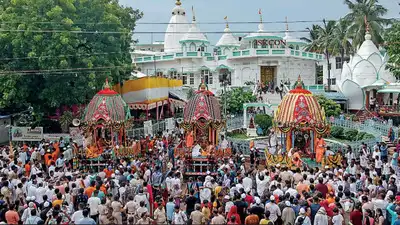
The Rath Yatra, or Chariot Festival, is a yearly ritual during which the three deities—Lord Jagannath, Lord Balabhadra, and Devi Subhadra—are taken out of the Jagannath Temple and placed on massive, beautifully decorated wooden chariots. These chariots are then pulled by thousands of devotees to the Gundicha Temple, which is approximately 3 kilometers away from the main temple.
The festival symbolizes Lord Jagannath’s annual visit to his aunt’s place and is an occasion of massive religious fervor. It is the only time of the year when devotees, irrespective of caste or religion, can see and even touch the deities.
Historical Significance
The Rath Yatra has been celebrated since time immemorial and has deep roots in Indian mythology. It is mentioned in various Puranas, and the Skanda Purana gives a detailed description of this festival. According to legend, Lord Jagannath once expressed his desire to visit his birthplace—Mathura. Respecting his wish, every year he embarks on a journey with his siblings.
This ritual is also seen as a symbolic representation of the Bhakti Movement, emphasizing devotion over ritualism and advocating a direct relationship with the divine.
The Grand Chariots
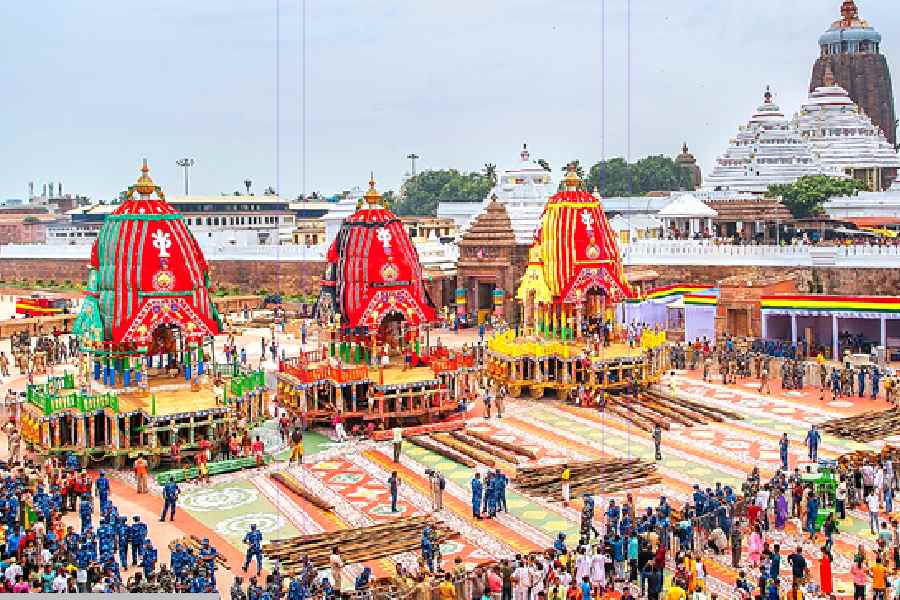
Each deity has a distinct chariot, constructed anew every year by a dedicated group of artisans known as Maharanas. Here’s a brief description of each:
- Nandighosha (Lord Jagannath): 45.6 feet tall, 16 wheels, decorated in red and yellow.
- Taladhwaja (Lord Balabhadra): 45 feet tall, 14 wheels, decorated in red and green.
- Darpadalana (Devi Subhadra): 44.6 feet tall, 12 wheels, decorated in red and black.
These chariots are constructed from sacred Neem wood (Daru Brahma) and symbolize not just vehicles but moving temples.
Key Rituals of Rath Yatra
- Snana Purnima: The deities are bathed with 108 pitchers of water, which leads to them falling ill and resting for 15 days (Anasara period).
- Netrotsav: The deities are seen again in public after their recuperation.
- Rath Yatra Day: The deities are brought out in a grand procession called Pahandi Bije and placed on their respective chariots.
- Chhera Pahara: The ceremonial sweeping of the chariot floors by the Gajapati King of Puri, symbolizing that everyone is equal in the eyes of the divine.
- Gundicha Yatra: The chariots are pulled to the Gundicha Temple.
- Return Journey (Bahuda Yatra): After a week-long stay, the deities return to the Jagannath Temple.
- Suna Besha: The deities are adorned with gold ornaments on their return.
Puri Gears Up for the 2025 Rath Yatra
With the Rath Yatra being celebrated today in June 2025, the Odisha government and district administration have gone into full preparedness mode. Here are the major steps taken:
1. Security Arrangements
- More than 150 platoons of police deployed.
- CCTV surveillance at key locations and drone monitoring.
- Special anti-terror units, bomb squads, and rapid response teams on standby.
2. Crowd Management
- Over 10 lakh devotees expected.
- Dedicated barricades and crowd-control lanes created.
- Volunteers, scouts, and student cadets deployed for assistance.
3. Medical Facilities
- 50+ temporary medical camps established.
- Availability of over 100 ambulances.
- Doctors and paramedics stationed along the Rath route.
4. Cleanliness and Sanitation
- Over 1,000 sanitation workers deployed.
- Clean drinking water and mobile toilets at multiple locations.
- Real-time monitoring of hygiene conditions through mobile apps.
5. Transportation and Connectivity
- Special trains and bus services from Bhubaneswar, Cuttack, and nearby cities.
- Dedicated parking zones for private and commercial vehicles.
- Shuttle services for elderly and specially-abled pilgrims.
Global Devotion: Rath Yatra Beyond India
Though Puri remains the epicenter, Rath Yatra is celebrated globally by the ISKCON (International Society for Krishna Consciousness) and Indian diaspora. Major cities like London, New York, San Francisco, Sydney, and Durban organize Rath Yatras with chariots, kirtans, cultural shows, and food festivals.
These global events have transformed Rath Yatra into a symbol of unity, devotion, and spiritual expression, resonating across cultures and religions.
Cultural and Economic Impact
The Rath Yatra is not just a religious occasion; it also plays a massive role in Odisha’s cultural and economic landscape:
- Handicrafts and Local Art: The demand for traditional Pattachitra art, souvenirs, and wooden chariot models spikes.
- Tourism Revenue: Hotels, transport, and hospitality sectors see a major boost.
- Employment Generation: Thousands of artisans, weavers, cooks, and vendors find seasonal employment.
The state government often links the festival with cultural tourism promotion, highlighting Odisha’s unique traditions.
Digital and Global Coverage
With the increasing digital penetration, the Rath Yatra is now accessible globally through live streaming on YouTube, Doordarshan, and dedicated apps. The temple administration has also collaborated with tech partners to provide:
- Live Darshan
- Real-time chariot tracking
- Online donation and e-pooja services
This digital outreach ensures that devotees across the world can remain connected spiritually, even if physically distant.
Environmental Concerns and Green Rath Yatra Initiatives
Recent years have seen the adoption of eco-friendly measures:
- Ban on plastic during the entire Yatra period.
- Use of eco-friendly materials in food packaging.
- Solar-powered lighting and LED screens.
- Awareness drives for pilgrims on environmental responsibility.
The state has been gradually shifting toward a green Rath Yatra, setting a benchmark for sustainable pilgrimage management.
Quotes from Devotees and Organizers
“Pulling the chariot of Lord Jagannath is not just a ritual—it’s a moment of divine connection. Even if you touch the rope once, it’s like attaining moksha.”
– A devotee from Gujarat
“Managing such a massive gathering is challenging, but it’s also an honor. This festival unites people beyond language, caste, and country.”
– Police Superintendent, Puri District
“Our mission is to bring Rath Yatra to every screen and heart worldwide. The Lord must be accessible to all.”
– ISKCON Media Spokesperson
Conclusion
The Rath Yatra of Lord Jagannath in Puri is more than a festival—it is a living tradition that encapsulates the divine, the democratic, and the dramatic. As the mighty chariots roll forward today, pulled by lakhs of hands and fueled by unshakable faith, the streets of Puri become a canvas of devotion, discipline, and celebration.
read more lates news

