
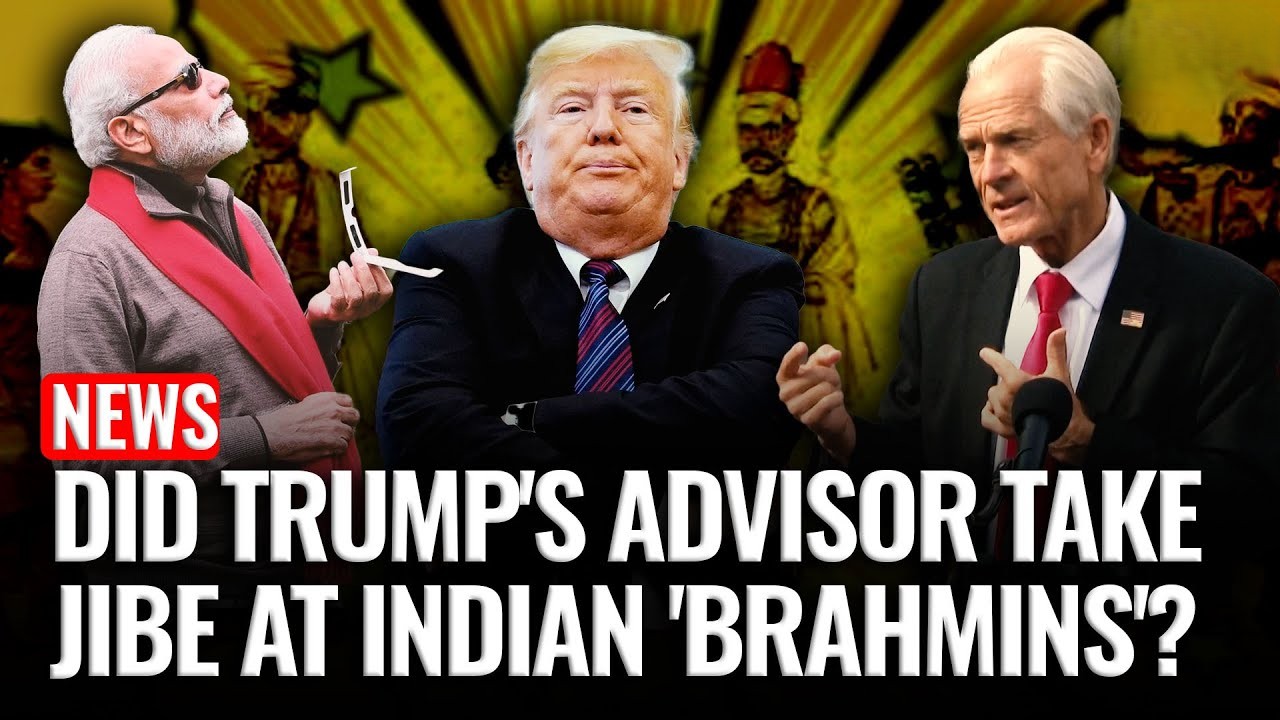
India Hits Back at Donald Trump’s Advisor Navarro’s ‘Brahmin’ Comment
Introduction
Statement on Brahmin Diplomatic relations between India and the United States have always been a complex mix of strategic cooperation, economic negotiation, and occasional friction. The partnership has evolved significantly over the decades, with both nations recognizing the importance of mutual collaboration in global trade, defense, technology, and geopolitics. However, diplomatic ties often face turbulence when controversial remarks from political leaders or their advisors disrupt the tone of engagement.
One such controversy emerged recently when Peter Navarro (Statement on Brahmin), a senior advisor to former US President Donald Trump, made a remark referring to India’s “Brahmin elite.” His statement sparked outrage across India, cutting across political, social, and intellectual circles. The comment was not merely perceived as an offhand remark but as an ignorant stereotyping of Indian society, misrepresenting its complexities, sensitivities, and cultural dynamics.
India’s reaction was sharp and united. Politicians, intellectuals, and ordinary citizens voiced strong opposition, viewing Navarro’s words as both offensive and diplomatically irresponsible. This blog dives deep into the controversy, India’s official and public reaction, and the broader implications it has on Indo-US relations.
The Context: Who is Peter Navarro and Why Does it Matter?
Peter Navarro (Statement on Brahmin), known as a hardliner on trade and China policy, played a crucial role in Donald Trump’s administration. He was the architect behind several of Trump’s aggressive trade policies, including tariffs and reshaping global supply chains. While his expertise lay largely in economics and trade, Navarro frequently made remarks that stretched into the domain of geopolitics and cultural analysis—often without adequate nuance.
When Navarro (Statement on Brahmin) brought India into his rhetoric, invoking the term “Brahmin elite,” it raised eyebrows globally. The remark suggested that India’s policymaking was dominated by an upper-caste elite class, implying that this shaped New Delhi’s trade and diplomatic decisions. Such a statement was not only factually misleading but also seen as an unnecessary intrusion into India’s internal social fabric.
This wasn’t just about one advisor’s comment—it was about how such remarks could color American public perception of India, feed stereotypes, and undermine the dignity of diplomatic engagements.
Why Navarro’s ‘Brahmin’ Comment Hurt India
1. Oversimplification of Indian Society (Statement on Brahmin)
India is home to over 1.4 billion people, belonging to thousands of communities, castes, languages, and cultures. Reducing its governance and decision-making to the dominance of “Brahmins” reflects a superficial and outdated understanding of Indian society. While caste is indeed a part of India’s historical structure, today’s political, social, and economic power is distributed across communities.
2. Ignoring Democratic Representation (Statement on Brahmin)
India is the world’s largest democracy. Its leadership is chosen through elections, not by caste monopoly. In fact, many of India’s top leaders, from Presidents to Prime Ministers, have come from diverse backgrounds—sometimes from historically marginalized communities. By suggesting otherwise, Navarro’s comment dismissed the democratic legitimacy of India’s system.
3. A Diplomatic Insult
For a US presidential advisor (Statement on Brahmin) to invoke caste identities while commenting on trade relations was seen as unnecessary and insulting. India views itself as an equal partner on the world stage, and any attempt to frame its policies through a narrow lens risks undermining bilateral trust.
4. Fueling Stereotypes Abroad
Indian-origin communities abroad, especially in the US, have long battled stereotypes. Remarks like Navarro’s amplify misconceptions, which can be damaging not only to diplomacy but also to the diaspora.
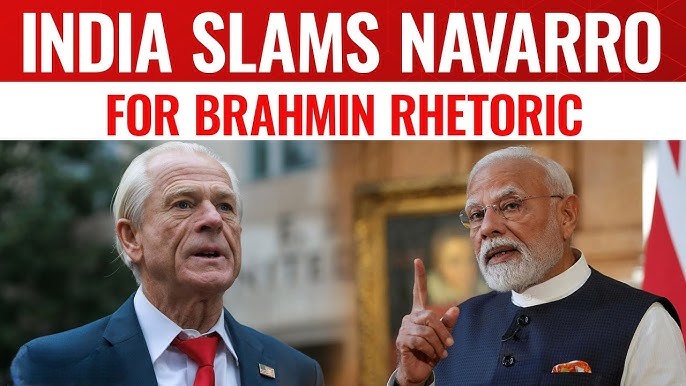
India’s Reaction: Sharp, Swift, and Strategic
1. Official Response from New Delhi
The Ministry of External Affairs (MEA) strongly rejected Navarro’s comment, calling it “baseless and unacceptable.” Officials stressed that India’s policy decisions are made in the national interest, not based on caste, community, or elite groups. By addressing the issue directly, the government sent a clear message: India will not tolerate cultural misrepresentation by foreign leaders.
2. Political Parties United in Criticism
For once, leaders across the political spectrum—ruling party and opposition alike—condemned the remark. BJP spokespersons described it as an “ignorant attack on India’s democracy,” while Congress leaders pointed out that such remarks betray a lack of cultural understanding among American policymakers. Even regional leaders spoke out, emphasizing the importance of dignity in international dialogue.
3. Intellectuals and Social Commentators Speak Out
Scholars, journalists, and commentators were vocal in explaining why the comment was deeply problematic. Many highlighted that caste remains a sensitive issue within India, and foreign leaders must exercise caution and respect when discussing it. Others pointed out the hypocrisy of an American advisor lecturing India on inclusivity when the US itself continues to grapple with issues of racial inequality.
4. The Public Outrage on Social Media
Social media platforms exploded with criticism. Hashtags like #RespectIndia, #NavarroInsult, and #IndiaUSRelations trended, with thousands of users demanding an apology. Memes, op-eds, and video discussions dissected the remark, creating pressure on American diplomatic channels to issue clarifications.
Historical Sensitivities: Why Caste References Are a Diplomatic Red Line
Caste has always been a complex and sensitive aspect of Indian society. While it is an undeniable part of India’s social history, modern India has made conscious efforts to move beyond caste hierarchies through policies of reservation, affirmative action, and political representation.
For a foreign leader or advisor to comment on caste without context risks reopening wounds and fueling divisions. Past instances—such as Western media reports framing India exclusively through caste oppression narratives—have often been criticized in India for lacking nuance. Navarro’s comment was seen as part of this pattern, making it especially unacceptable.
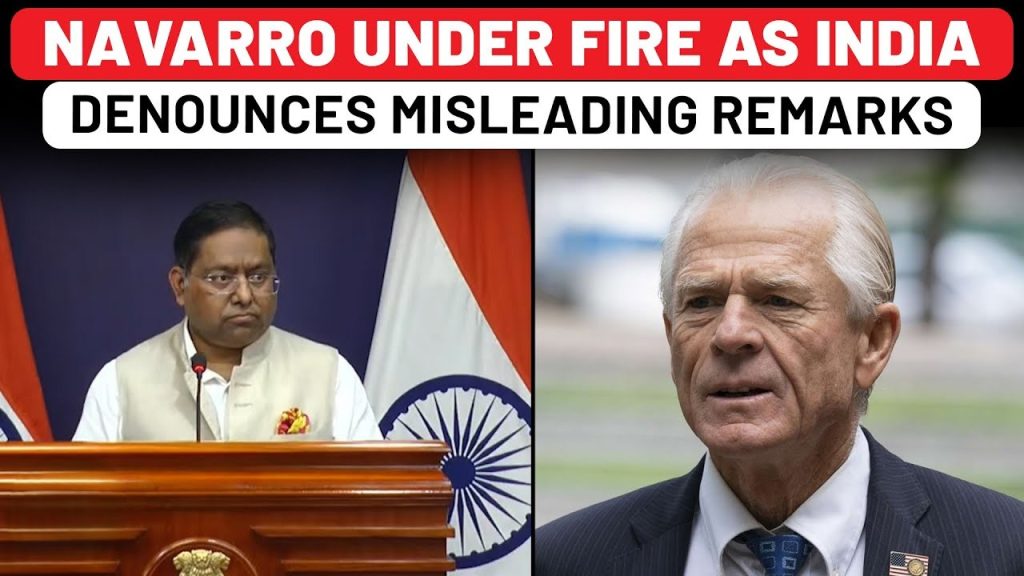
Impact on Indo-US Relations
1. Short-Term Tensions
While the controversy is unlikely to derail long-term relations, it does create short-term diplomatic unease. At a time when India and the US are strengthening ties in defense, technology, and trade, such remarks can momentarily sour the atmosphere.
2. Lessons for Diplomacy
This incident underscores the need for US policymakers to be culturally sensitive when engaging with India. Strategic partners must respect each other’s internal complexities without resorting to stereotypes.
3. Impact on Public Perception
For ordinary Indians, such comments feed skepticism about whether the US truly understands India. This could influence public opinion about US-India partnerships, making it harder for policymakers to build trust.
The Deeper Narrative: American Hypocrisy?
Several commentators in India pointed out the irony of Navarro’s remark. The US itself has deep issues of inequality, systemic racism, and elite dominance in politics. From Wall Street’s influence to systemic barriers faced by marginalized communities, American society is far from free of its own “elite dominance.”
By pointing fingers at India’s supposed “Brahmin elite,” Navarro was accused of hypocrisy. Instead of introspection, he seemed eager to frame India in simplistic, stereotypical terms.
Global Reactions
Interestingly, the controversy also drew attention internationally. Some Western media outlets picked up the story, highlighting India’s strong pushback. Analysts in think tanks and universities cautioned against reducing India’s complex democracy to caste-based caricatures.
Meanwhile, Indian diaspora groups in the US also voiced concern. They highlighted how such comments can affect how Indian-origin Americans are perceived, especially in professional and academic circles.
Moving Forward: How Should India Handle Such Remarks?
- Diplomatic Clarity: India must continue to respond firmly to any misrepresentation, making it clear that respect is non-negotiable in international dialogue.
- Public Diplomacy: Beyond official statements, India can invest in public diplomacy campaigns to educate global audiences about its diversity and democratic structures.
- Strengthening Diaspora Engagement: By empowering Indian-origin communities in the US, India can counter stereotypes and shape narratives more effectively.
- Focus on Partnership, Not Provocation: While reacting strongly, India must avoid over-escalation. The broader Indo-US partnership is too important to be derailed by one advisor’s careless remark.
Conclusion
The controversy surrounding Peter Navarro’s “Brahmin” comment is a reminder of how sensitive words can be in international relations. For India, the remark was not just an insult—it was a misrepresentation of its democracy, its diversity, and its global standing.
India’s sharp response demonstrated its growing assertiveness on the world stage. No longer willing to be stereotyped or lectured, India made it clear that it demands respect as an equal partner.
As the dust settles, this episode should serve as a lesson for American policymakers: cultural insensitivity can cost diplomatic goodwill. The Indo-US relationship is too significant to be jeopardized by stereotypes. If the two nations are to truly shape the future together, mutual respect must be at the heart of their dialogue.
Read more latest news

