
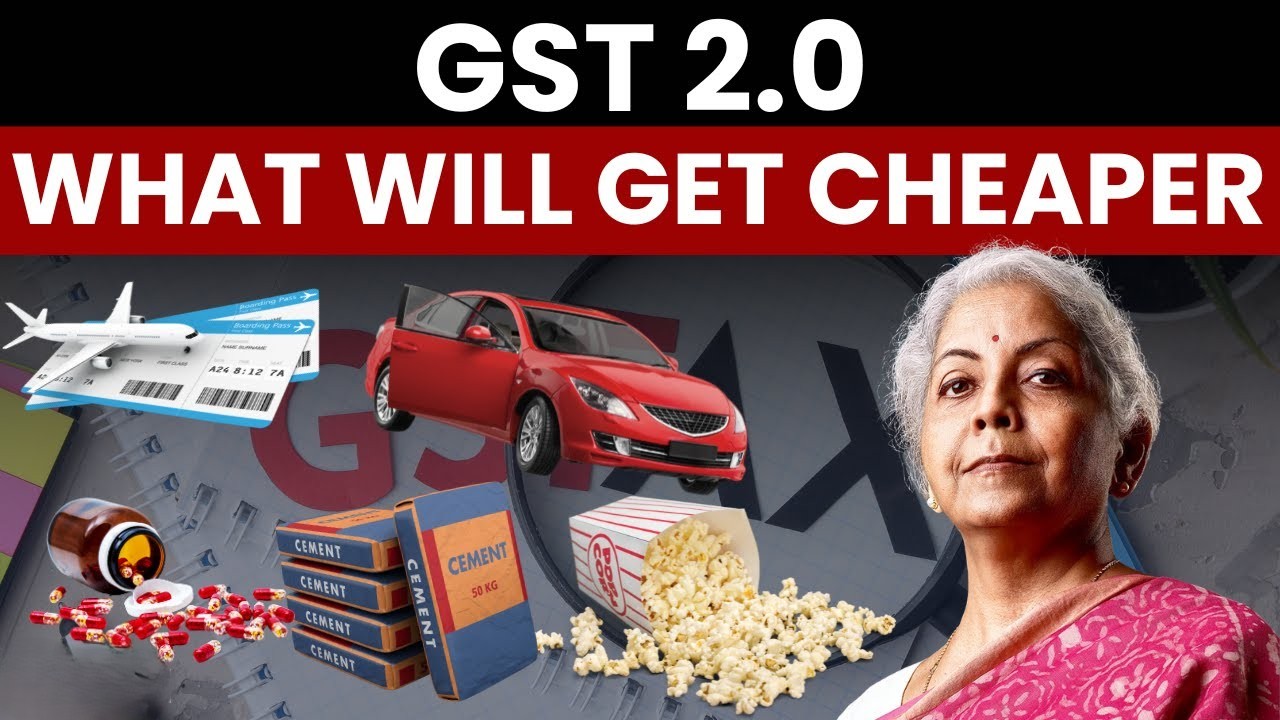
Know Which Things Will Become Cheaper Due to Reduction in GST Rates?
Introduction: Understanding GST and Its Impact
The Goods and Services Tax (GST) was introduced in India in July 2017 as one of the most revolutionary tax reforms in the country’s economic history. Designed to replace multiple indirect taxes like VAT, excise duty, and service tax, GST created a “One Nation, One Tax” framework.
Over the years, the GST Council has regularly revised tax slabs to ensure consumer relief, boost business competitiveness, and balance government revenues. Recently, another round of GST rate cuts was announced, leading to excitement among consumers and traders alike.
The key question is: Which items are now cheaper due to the Goods and Services Tax reduction, and how will this impact the economy? Let’s explore in detail.
GST Rate Structure in India
Before understanding the rate cuts, it’s important to recall how Goods and Services Tax is structured:
- 0% slab – Essential items like fresh milk, vegetables, grains.
- 5% slab – Items of mass consumption such as packaged food, footwear, and rail tickets.
- 12% slab – Processed food, mobile phones, and household appliances.
- 18% slab – Consumer durables, electronics, financial services, restaurants.
- 28% slab – Luxury goods, premium vehicles, tobacco, aerated drinks.
The GST Council, comprising Union Finance Minister and state finance ministers, frequently reviews these slabs to make adjustments.
Categories of Items That Will Become Cheaper
1. Daily Household Essentials
One of the biggest beneficiaries of Goods and Services Tax rate cuts has been household goods used in everyday life.
- Detergents, soaps, and toiletries – Reduced from 28% to 18% earlier, and some categories further cut to 12%. This brings relief to middle-class families.
- Packaged food items – Biscuits, ready-to-cook meals, and branded cereals are now taxed at a lower slab, making them more affordable.
- Footwear and clothing – Footwear up to ₹1,000 and affordable apparel see Goods and Services Tax rates reduced to 5%, benefiting small traders and large consumers alike.
2. Electronics and Consumer Durables
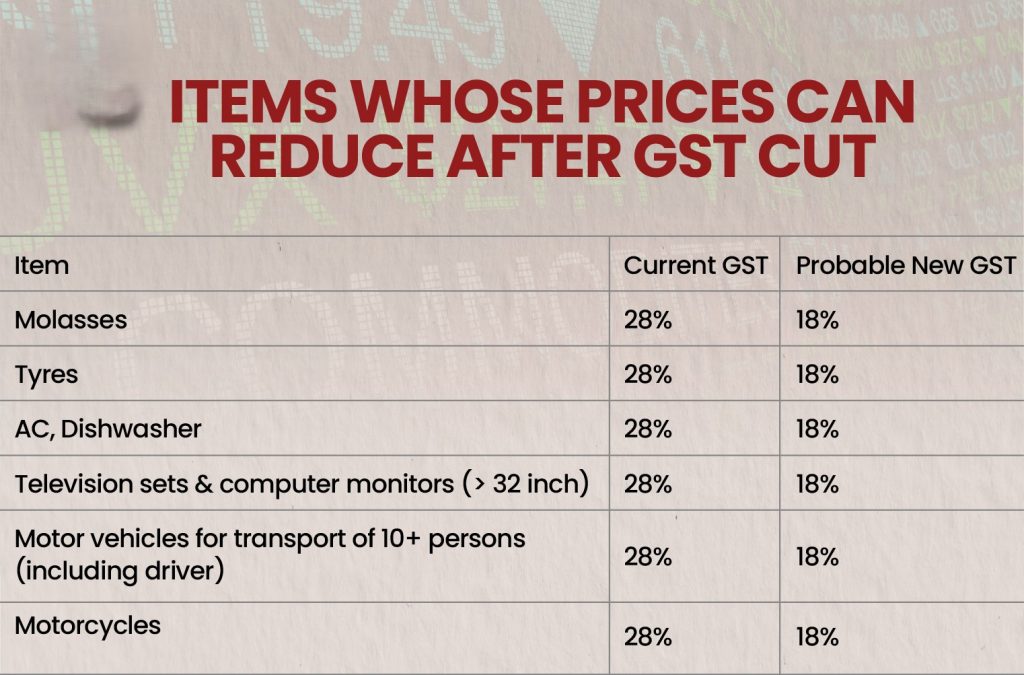
- Televisions up to 32 inches – Earlier taxed at 28%, now brought down to 18%. This makes televisions more accessible to middle-income households.
- Washing machines, refrigerators, small kitchen appliances – GST reduced from 28% to 18%, leading to direct price cuts.
- Mobile phones and accessories – Rationalized at 12% for phones and 18% for accessories, ensuring affordability in the digital India push.
3. Transport and Automobiles
- Small and medium cars – The Council has considered reducing cess and Goods and Services Tax on entry-level vehicles to boost sales in the auto sector.
- Electric vehicles (EVs) – GST reduced from 12% to 5%. This not only makes EVs cheaper but also aligns with India’s green mobility mission.
- Spare parts for two-wheelers and tractors – Reduced GST rates make maintenance of vehicles cheaper, especially benefiting farmers.
4. Housing and Construction
- Affordable housing – Goods and Services Tax reduced from 12% to 5% without input tax credit. This has made under-construction flats in affordable projects cheaper.
- Cement and construction materials – Recent discussions in the Council suggest moving cement from 28% to 18%, which would drastically reduce construction costs.
5. Services
- Cinema tickets below ₹100 – Tax reduced from 18% to 12%, benefiting moviegoers in smaller towns.
- Hotel accommodation (₹1,000–₹7,500 per night) – Goods and Services Tax cut from 18% to 12%, boosting domestic tourism.
- Railways and air travel (economy class) – Rationalized at 5%, making travel cheaper for the common man.
Why the Reduction? Government’s Objectives Behind GST Cuts
The decision to cut GST rates is not random—it is based on a combination of economic, political, and social objectives.
- Boosting Consumer Demand
Lower GST rates reduce prices, which in turn encourage spending, especially in a demand-slow economy. - Encouraging Industry Growth
Sectors like real estate, automobiles, and electronics get a major boost when taxes are lowered. - Promoting Employment
Cheaper goods lead to higher demand, pushing companies to increase production and hire more workers. - Political Will
Ahead of elections, governments often reduce GST to send a pro-consumer message.
Impact on Consumers
- More disposable income – With essentials and durables cheaper, families save money for other needs.
- Improved lifestyle – Access to electronics, EVs, and better services at lower prices raises living standards.
- Housing affordability – Reduced rates in the real estate sector help middle-class families achieve the dream of owning a home.
Impact on Businesses
- Boost in sales – Retailers and manufacturers benefit as lower GST attracts more buyers.
- Compliance relief – Lower slabs reduce disputes over classification and simplify tax filing.
- Startup ecosystem – Affordable electronics and services encourage young entrepreneurs to invest.
Impact on Government Revenue
While lower GST means reduced immediate revenue collection, the government bets on higher volumes of sales and long-term growth to balance the gap. In fact, sectors like real estate and auto have shown signs of revival after previous rate cuts.
Expert Opinions
- Economists believe GST rationalization was long overdue and helps India’s goal of becoming a $5 trillion economy.
- Industry bodies like CII and FICCI have welcomed the move, citing it as a relief for manufacturing and MSME sectors.
- Consumer activists argue that businesses should pass on the full benefit to customers instead of inflating profits.
Challenges Ahead
- Revenue Deficit – States may worry about short-term loss in GST compensation.
- Rate Rationalization Pending – Many experts call for a simpler GST system with just three slabs (5%, 12%, 18%).
- Passing on Benefits – Strict anti-profiteering measures are required to ensure that reduced tax actually reflects in market prices.
Real-Life Example: Effect on Middle-Class Family
Imagine a family buying a refrigerator (₹20,000). Earlier at 28% GST, the tax was ₹5,600, making the total price ₹25,600. Now at 18%, the tax is ₹3,600, reducing the total price to ₹23,600. That’s a direct saving of ₹2,000.
Multiply this across essentials, travel, and housing—it translates into thousands of rupees saved annually.
Future of GST in India
Experts believe the long-term direction of GST is towards:
- A two-slab structure (merging 12% and 18%) for simplicity.
- Lower taxes on essentials and green technologies.
- Digital compliance to ensure zero tax evasion.
Conclusion
The reduction in GST rates is a welcome relief for millions of Indian consumers. From daily essentials like soaps and footwear to big purchases like TVs, refrigerators, and even houses, the impact is wide-ranging.
Not only does it make living more affordable, but it also boosts the economy by encouraging demand, supporting industries, and promoting sustainable sectors like electric mobility.
In short, the GST cuts are a win-win situation for consumers, businesses, and the overall economy—provided the benefits are fairly passed on to the end user.
Read more latest news

