
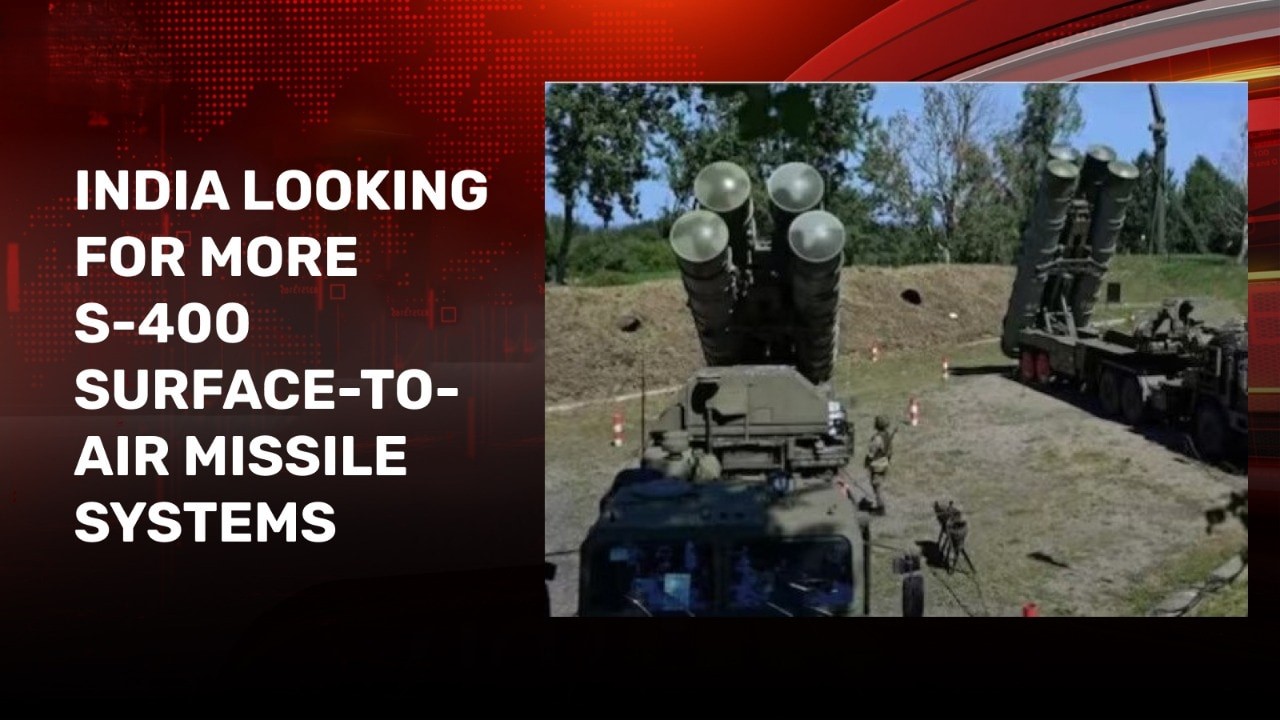
India Will Get More S-400 Systems: Talks Successfully Concluded with Russia!
Introduction: Strengthening India’s Shield
In a significant boost to national security, India has decided to acquire additional S-400 Triumf air defence systems from Russia after successful talks between the two nations. This development reaffirms the deep-rooted defence partnership between New Delhi and Moscow, while also underlining India’s commitment to modernising its military in the face of evolving regional threats.
The decision comes at a time when India faces persistent security challenges from both China on the northern border and Pakistan on the western front. With increasing geopolitical turbulence, India’s move to strengthen its air defence umbrella is not just strategic but also essential.
What is the S-400 Triumf System?
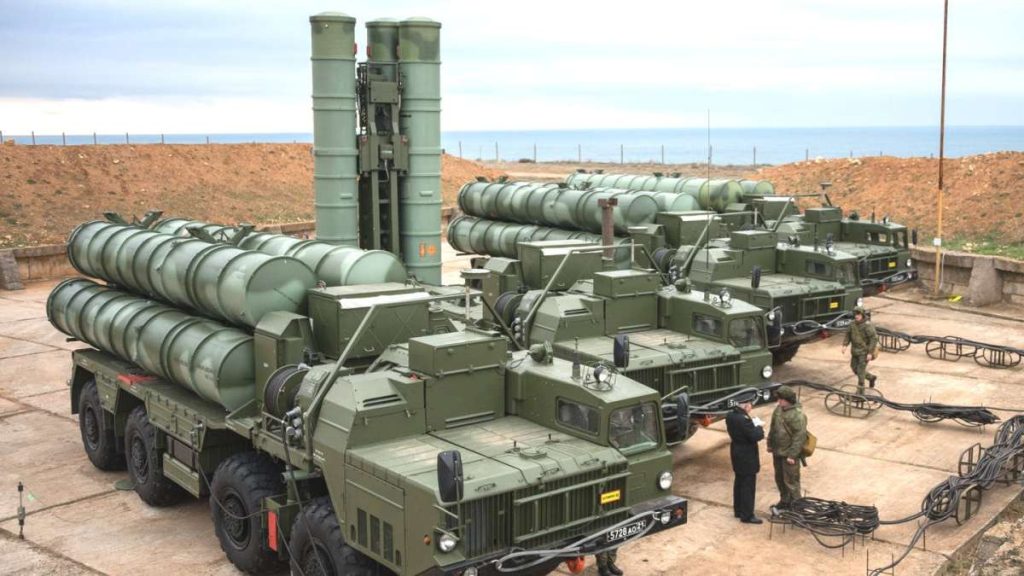
The S-400 Triumf, developed by Russia’s Almaz-Antey, is considered one of the most advanced long-range surface-to-air missile (SAM) defence systems in the world.
Key Features:
- Detection range: 600 km (can track up to 80 targets simultaneously).
- Engagement range: Up to 400 km.
- Altitude: Can target aircraft, drones, cruise missiles, and even ballistic missiles flying as high as 30 km.
- Missile types: The S-400 can fire four different types of missiles, designed for varying ranges (40 km, 120 km, 250 km, and 400 km).
- Multi-layered defence: Capable of intercepting stealth fighters like the F-35, as well as drones and precision-guided munitions.
For India, the S-400 system acts as a strategic game-changer, providing defence against enemy aircraft and missile threats across long distances.
India’s Initial S-400 Deal with Russia
- In October 2018, India signed a $5.43 billion deal with Russia for five regiments of S-400 systems.
- Despite US objections under the CAATSA (Countering America’s Adversaries Through Sanctions Act), India moved ahead with the deal, prioritising national security.
- Deliveries began in December 2021, and as of now, three regiments have already been deployed at strategic locations to protect against both Chinese and Pakistani threats.
- The remaining deliveries are expected to be completed by 2026, despite disruptions caused by the Russia–Ukraine war.
Why India Needs More S-400 Systems
1. Two-Front Security Challenge
India is one of the few countries facing the risk of a simultaneous two-front war—with China in Ladakh/Arunachal Pradesh and Pakistan across LoC. More S-400 systems will provide layered air defence for critical regions.
2. Defending Strategic Assets
India needs to protect key military installations, nuclear sites, metros, and strategic cities like Delhi, Mumbai, Bengaluru, and Chennai from aerial threats.
3. China’s Military Modernisation
China has already deployed the S-400 system in Tibet. To balance this, India must strengthen its own defence with more regiments.
4. Missile Defence Gap
While India has indigenous systems like Akash and Advanced Air Defence (AAD), they cover shorter ranges. The S-400 fills the gap for long-range defence.
Recent Talks with Russia: What We Know
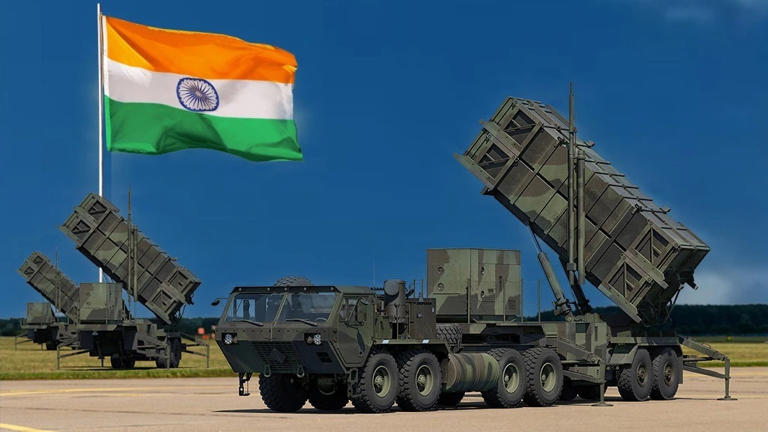
According to defence sources, high-level discussions between Indian and Russian delegations concluded recently, where India expressed its intent to procure additional S-400 regiments beyond the five already ordered.
- Russia has shown readiness to supply more, despite ongoing commitments in Ukraine.
- Discussions also covered joint production, maintenance, and spares supply to ensure uninterrupted operational capability.
- This move cements India’s long-term strategic partnership with Russia.
Strategic Implications for India
1. Regional Superiority
With more S-400s, India can effectively deter enemy fighters, drones, and ballistic missiles long before they enter Indian airspace.
2. Confidence in Defence
Possession of additional regiments gives the Indian Armed Forces greater flexibility to deploy systems across different regions without overstretching.
3. Impact on Pakistan
Pakistan’s air force relies on F-16s and JF-17s, which will find it nearly impossible to penetrate Indian airspace guarded by S-400s.
4. Impact on China
Although China also operates the S-400, India’s acquisition ensures strategic parity and prevents Chinese dominance in the Himalayas.
Global Reactions
United States
The US has consistently opposed India’s S-400 deal under CAATSA sanctions, but has so far refrained from penalising India due to strategic ties and the need to counterbalance China in the Indo-Pacific. With new procurements, Washington may increase pressure, but India is expected to stand firm.
China
China views India’s strengthening of its air defence as a direct countermeasure. This will likely push Beijing to accelerate its own modernisation.
Pakistan
Islamabad is concerned, as its offensive air capabilities are already limited. The induction of more S-400s puts Pakistan at a serious disadvantage in aerial warfare.
Russia
For Moscow, the deal is not just about defence exports but also about geopolitical partnership. It ensures that Russia remains India’s most trusted supplier despite India’s growing ties with the West.
Challenges in the S-400 Acquisition
1. Sanctions Risk
CAATSA sanctions remain a looming threat. The US could restrict technology transfer if India continues large-scale Russian purchases.
2. Financial Burden
Each S-400 regiment costs nearly $1 billion+. Additional procurement means higher budget allocation at a time when India is already investing in indigenous defence.
3. Dependence on Russia
Long-term reliance on Russian equipment may affect India’s goal of self-reliance (Atmanirbhar Bharat) in defence.
4. Operational Challenges
Logistics, spare parts, and training are crucial for S-400 efficiency. Ensuring smooth operation despite the Russia–Ukraine conflict will be a key test.
India’s Balancing Act: Russia vs West
India’s decision to procure more S-400s underlines its strategic autonomy. While strengthening ties with the US, France, and Israel, India has made it clear that national security cannot be compromised due to geopolitical pressures.
This balancing act reflects India’s independent foreign policy:
- Buying S-400s from Russia.
- Buying Rafale jets and drones from France & US.
- Developing indigenous systems like Akash and Prithvi Defence Vehicle (PDV).
Future of India–Russia Defence Cooperation
- Discussions are not limited to S-400s. India and Russia are also exploring:
- Su-30MKI upgrades.
- Ka-226 helicopters.
- Joint production of spare parts in India.
- Russia remains a trusted supplier despite India diversifying its defence imports.
Conclusion: A Stronger Sky Shield for India
India’s decision to procure more S-400 systems is a strategic masterstroke. In an era of increasing aerial threats—from drones to ballistic missiles—strengthening air defence is non-negotiable.
This move not only boosts India’s security against China and Pakistan but also signals to the world that India will continue to prioritise national defence over external pressures.
The S-400 Triumf has already become a symbol of India–Russia defence partnership. With additional systems on the way, India’s skies will be safer, its military more confident, and its citizens more secure.
Read more latest news

