

Ujjain SBI Bank Robbery of ₹5 Crore Solved in 12 Hours: Outsourced Employee Jai Bhavsar Alias Zeeshan Exposed as Mastermind
Introduction: A Heist That Shocked SBI Bank robbery
The holy city of Ujjain Ujjain SBI Bank Robbery of ₹5 Crore, known for its spiritual significance and as the land of Mahakal, woke up to a sensational piece of news—a daring robbery at the State Bank of India (SBI) branch where nearly ₹5 crore worth of cash and gold was looted.
In an era where bank security is equipped with CCTV, alarms, biometric locks, and modern vaults, such an audacious crime stunned not only the people of Madhya Pradesh but also law enforcement agencies nationwide.
What surprised everyone even more was the speed with which the police cracked the case. In just 12 hours, the robbery mystery was solved, the stolen assets were recovered, and the culprits—including the mastermind—were put behind bars.
The Incident: Robbery Inside SBI Bank robbery
- Date & Place: The incident unfolded at an SBI branch in Ujjain.
- Loot: Robbers managed to steal cash and gold worth ₹5 crore.
- Method: Instead of an armed attack or external break-in, the crime was carried out using insider knowledge and access.
- Shock Factor: The involvement of an outsourced bank employee turned it into a chilling reminder that not all threats to financial institutions come from outside.
Police Swing Into Action Ujjain SBI Bank robbery
As soon as the bank officials noticed the missing assets, they alerted the police. A special investigation team (SIT) was immediately formed.
Key highlights of the probe:
- CCTV Footage Analysis: Police went through hours of footage to trace movements around the bank.
- Employee Scrutiny: All employees and outsourced staff were questioned.
- Technical Surveillance: Mobile phones, GPS locations, and digital footprints were tracked.
Within hours, investigators zeroed in on a suspicious employee who was missing since the robbery—Jai Bhavsar alias Zeeshan.
The Mastermind: Who is Jai Bhavsar Alias Zeeshan?
The arrest of Jai Bhavsar, also known by his alias Zeeshan, shocked the banking community(SBI Bank robbery).
His Profile:
- An outsourced employee of the bank.
- Had been working in the branch long enough to understand the security systems and loopholes.
- Maintained a friendly exterior but secretly plotted the crime.
His Role:
- Planned the entire heist.
- Recruited accomplices from outside to carry out the physical execution.
- Knew the exact timing when the vault could be accessed with minimal monitoring.
This betrayal of trust by an insider added an emotional dimension to the crime, as customers and officials felt deeply cheated.
The Accomplices: 5 Arrested in Total
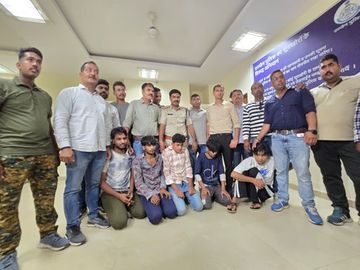
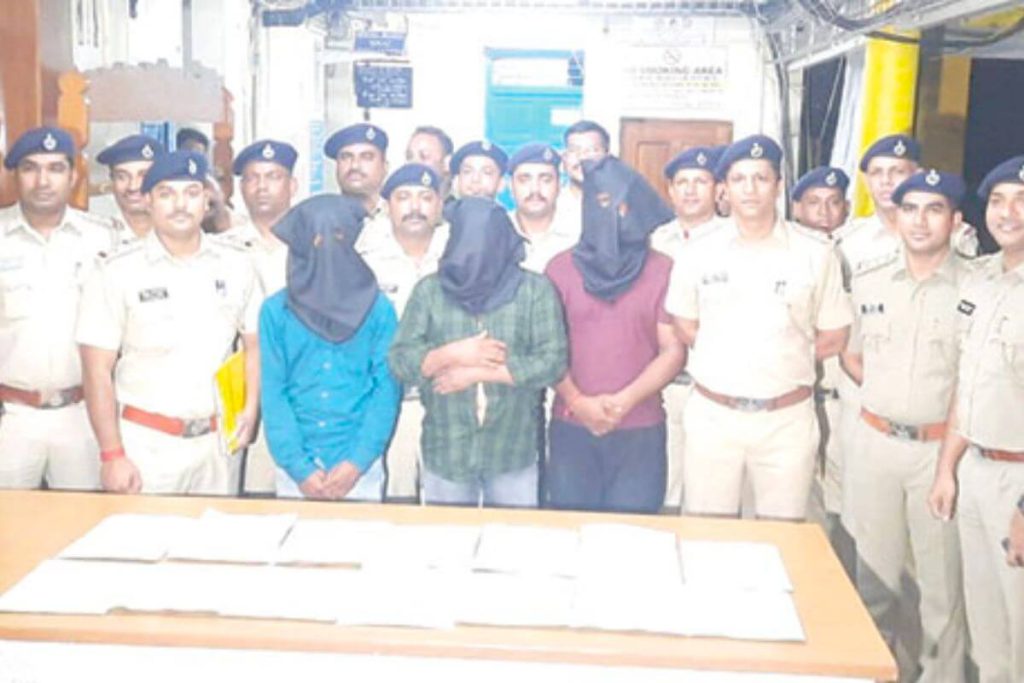
The police arrested five accused, including Jai Bhavsar. Each played a specific role:
- One arranged logistics and getaway vehicles.
- Another managed the storage of stolen assets temporarily.
- Two accomplices were involved in physically moving the loot.
- The mastermind (Jai Bhavsar alias Zeeshan) coordinated the operation.
How Police Cracked the Case in 12 Hours SBI Bank robbery
1. CCTV Clues
The footage revealed unusual movement by an employee around restricted areas.
2. Mobile Tracking
Investigators traced call records and locations of the suspects. Multiple phones switched off at the same time raised suspicion.
3. Forensic Evidence
Fingerprints on lockers and bags used for carrying gold helped confirm inside involvement.
4. Rapid Coordination
The Ujjain police, cybercrime unit, and intelligence networks worked in sync, leaving no time for the culprits to escape (SBI Bank robbery).
5. Swift Raids
By midnight, the police carried out targeted raids and nabbed the culprits along with the stolen gold and cash.
Recovery of Loot
The most remarkable aspect was that the entire ₹5 crore loot was recovered within 12 hours.
- Cash bundles were seized.
- Gold ornaments and bars were restored.
- Vehicles used in the crime were impounded.
This swift action not only brought relief to SBI but also restored customer confidence.
Public Reaction: Shock and Relief SBI Bank robbery
The incident initially sparked panic among customers, especially those with lockers and accounts in the branch. Social media buzzed with criticism of bank security lapses.
However, the speed of police action won widespread appreciation. Citizens praised the Ujjain police for cracking such a high-profile case in record time.
SBI’s Stand and Security Concerns
The bank has assured customers that their money is safe and that insurance covers such incidents. But the robbery raises serious questions:
- Should outsourced employees be given access to sensitive areas?
- Are regular security audits enough?
- How vulnerable are banks to insider threats compared to armed robberies?
Crime Trend Analysis: Insider Jobs on the Rise
This case highlights a disturbing pattern: many high-value robberies in recent years have had internal involvement. Employees or outsourced staff, with inside knowledge, exploit weak spots.
In India, cases like:
- The 2017 Mumbai Bank locker scam.
- The 2018 Pune cooperative bank fraud.
- Several ATM thefts using insider access.
…all point to the same conclusion—banks must rethink employee vetting, surveillance, and security architecture.
Lessons for Banks
- Strict Background Verification for outsourced employees.
- Rotation of duties to prevent over-familiarity with systems.
- Real-time monitoring of CCTV instead of post-incident checks.
- Two-factor authentication for vault and locker access.
- Cyber-surveillance integrated with physical security.
Wider Implications for Law Enforcement
- This case shows the importance of technology-driven investigation.
- It reinforces the role of cyber and forensic units in modern policing.
- Sets a benchmark for swift resolution of financial crimes.
Conclusion: Trust Restored, But Questions Remain
The Ujjain SBI bank robbery was not just about stolen crores—it was about trust broken by an insider. The fact that police solved the case within 12 hours and recovered the loot is commendable.
However, the incident serves as a wake-up call for financial institutions across India. Security cannot be limited to walls, vaults, and cameras—it must extend to human behaviour, employee trust, and systemic checks.
Read more latest news

