
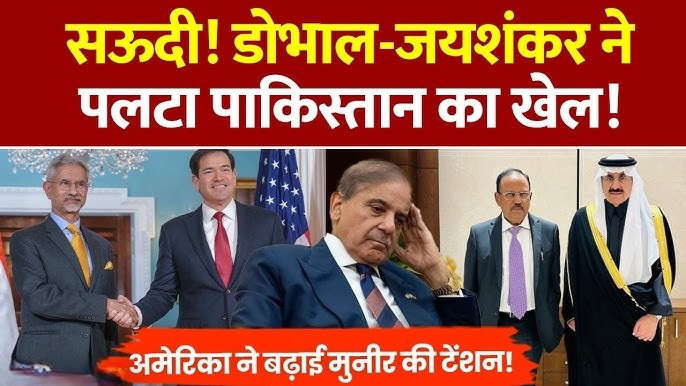
India’s Strategic Autonomy on Display: As Jaishankar Was in the US Doval Saudi Visit Signals New Delhi Clear Message
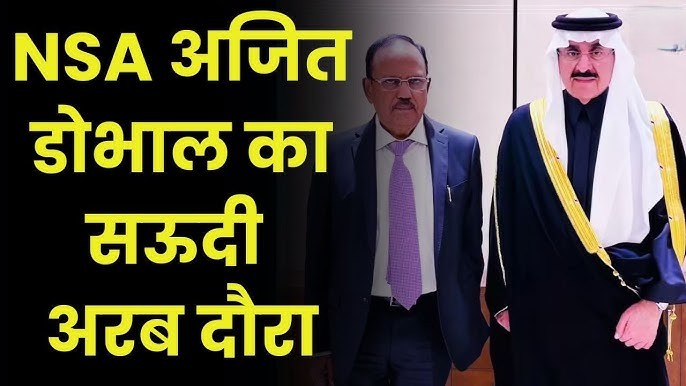
India’s foreign policy in recent years has been marked by confidence, clarity, and an unmistakable sense of strategic autonomy. A powerful example of this approach emerged when Jaishankar was in the US, engaging with American leadership and policymakers, while simultaneously National Security Advisor Ajit Doval arrived in Saudi Arabia for high-level strategic discussions. This parallel diplomatic engagement underlined a crucial message: India will engage with global powers on its own terms, without yielding to pressure or compromising national interests.
The timing of these diplomatic moves was especially significant. With US President Donald Trump’s return to power reshaping Washington’s foreign policy priorities, geopolitical equations began shifting rapidly. Pakistan’s leadership, sensing an opportunity, made visible attempts to reset and improve relations with the United States. India, however, chose a different path. As Jaishankar was in the US, New Delhi continued to pursue its independent foreign policy, maintaining balance, dignity, and firmness in international relations.
A Tale of Two Diplomatic Tracks
The fact that Jaishankar was in the US while Doval was in Saudi Arabia was not coincidental. It reflected a well-calibrated diplomatic strategy where India engaged simultaneously with the West and the Middle East—two regions critical to its economic growth, energy security, and strategic stability.
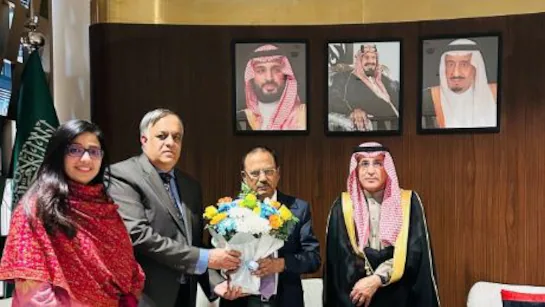
External Affairs Minister S. Jaishankar’s presence in Washington focused on strengthening India-US ties, addressing global security challenges, and reinforcing cooperation in technology, defense, and trade. At the same time, Ajit Doval’s Saudi visit emphasized India’s deepening partnership with Riyadh, especially on counterterrorism, energy cooperation, and regional security.
This dual engagement highlighted that even as Jaishankar was in the US, India’s diplomatic focus was not limited to one power center. Instead, New Delhi demonstrated that it could manage multiple strategic relationships without allowing one to dictate the terms of another.
Trump Return and a Changing Global Order
Donald Trump’s return to power brought with it a familiar “America First” approach, impacting global diplomacy. Many countries recalibrated their foreign policies in response. Pakistan, in particular, saw Trump’s return as a potential opening to revive its strained ties with Washington.
Islamabad’s leadership reached out diplomatically, hoping to reposition Pakistan as a key regional partner for the US. However, as Jaishankar was in the US, India made it clear that its relationship with Washington was not contingent on Pakistan’s actions or expectations.
India refused to be drawn into reactive diplomacy. Instead, it emphasized shared democratic values, economic cooperation, and mutual strategic interests with the United States—on its own terms.
Pakistan Outreach vs India Confidence
Pakistan’s attempt to improve relations with the US stood in sharp contrast to India’s calm confidence. While Islamabad sought validation and leverage through Washington, New Delhi focused on long-term national interests. As Jaishankar was in the US, Indian diplomacy remained steady, not influenced by Pakistan’s overtures or regional maneuvering.
India’s leadership understood that global respect comes from consistency and strength, not desperation. Rather than lobbying or seeking favors, India presented itself as a reliable partner capable of contributing to global stability.
Strategic Autonomy at the Core
One of the defining features of India’s foreign policy today is strategic autonomy. The events surrounding Jaishankar was in the US perfectly illustrated this principle. India engaged with the US, Saudi Arabia, and other partners without aligning blindly or compromising sovereignty.
New Delhi’s message was unambiguous: partnerships are built on mutual respect, not pressure. Whether it was defense cooperation, energy security, or regional stability, India refused to accept external dictates.

Saudi Arabia A Pillar of India Middle East Policy
While Jaishankar was in the US, Ajit Doval’s visit to Saudi Arabia underscored the importance of the Middle East in India’s strategic calculations. Saudi Arabia is not only a key energy supplier but also a critical partner in counterterrorism and regional security.
Doval’s discussions reportedly focused on intelligence sharing, combating extremism, and ensuring stability in West Asia. This engagement sent a clear signal that India values its Middle Eastern partnerships independently of its relations with the US or other global powers.
India-US Relations Beyond Personalities
Another key takeaway from the moment when Jaishankar was in the US is that India-US relations have matured beyond individual leaders. While Trump’s return altered the tone of US foreign policy, India’s engagement remained consistent.
Jaishankar emphasized institutional cooperation, people-to-people ties, and long-term strategic alignment. This approach ensured that bilateral relations were not overly dependent on the political climate in Washington.
No Compromise Under Pressure
Perhaps the most significant aspect of India’s stance during this period was its refusal to compromise under any pressure. As Jaishankar was in the US, India resisted attempts—subtle or otherwise—to link regional issues or bilateral cooperation to third-party interests.
New Delhi made it clear that its policies toward Pakistan, regional security, and internal matters were non-negotiable. Dialogue and cooperation were welcome, but only on the basis of equality and mutual respect.
Global Reactions and Strategic Signaling
The international community closely watched these developments. Analysts noted that the parallel engagements—Jaishankar was in the US and Doval in Saudi Arabia—sent a strong strategic signal. India was no longer a passive player reacting to global shifts; it was shaping outcomes through proactive diplomacy.
This approach enhanced India’s credibility as a rising power capable of managing complex geopolitical challenges.
Pakistan’s Dilemma
For Pakistan, India’s confident diplomacy posed a dilemma. Islamabad’s attempts to gain leverage through Washington appeared less effective when compared to India’s direct and mature engagement. As Jaishankar was in the US, India did not feel the need to counter Pakistan’s moves aggressively; its own strategic weight spoke for itself.
A Balanced Foreign Policy Model
India’s actions during this period showcased a balanced foreign policy model—engaging with multiple powers, avoiding entanglements, and prioritizing national interest. The fact that Jaishankar was in the US while Doval was in Saudi Arabia symbolized this balance perfectly.
It demonstrated that India could maintain strong ties with the US while deepening relationships in the Middle East, without creating conflicts of interest.
Domestic Confidence and Global Posture
India’s domestic political stability also played a role. Strong leadership and public mandate allowed policymakers to act decisively on the global stage. As Jaishankar was in the US, there was no sense of insecurity or urgency—only confidence.
This domestic strength translated into a firm global posture, reinforcing India’s image as a self-assured nation.
Long-Term Implications
The long-term implications of this diplomatic phase are significant. By standing firm while Jaishankar was in the US, India reinforced the principle that partnerships must be equitable. This approach is likely to influence future engagements with not just the US, but also Europe, the Middle East, and the Indo-Pacific.
India’s Message to the World
The overarching message from this episode was clear: India will engage, but it will not bend. As Jaishankar was in the US, India demonstrated that it could navigate changing global dynamics without compromising its core interests.
This message resonated across capitals, reinforcing India’s reputation as a nation that values dialogue but stands firm on sovereignty.
Conclusion: Diplomacy on India’s Own Terms
In conclusion, the period when Jaishankar was in the US and Ajit Doval was in Saudi Arabia marked a defining moment in India’s foreign policy journey. Against the backdrop of Donald Trump’s return to power and Pakistan’s attempts to re-engage Washington, India chose confidence over compromise.
By refusing to yield to pressure and by engaging multiple partners simultaneously, India reaffirmed its commitment to strategic autonomy. As Jaishankar was in the US, New Delhi sent a powerful signal to the world: India will cooperate, collaborate, and contribute—but always on its own terms.
Read More latest news

