
Putin at 73: Russia’s “5,000 Square Kilometer” Claim and the Battle for Narrative Power
Introduction: A Birthday Speech That Made Headlines
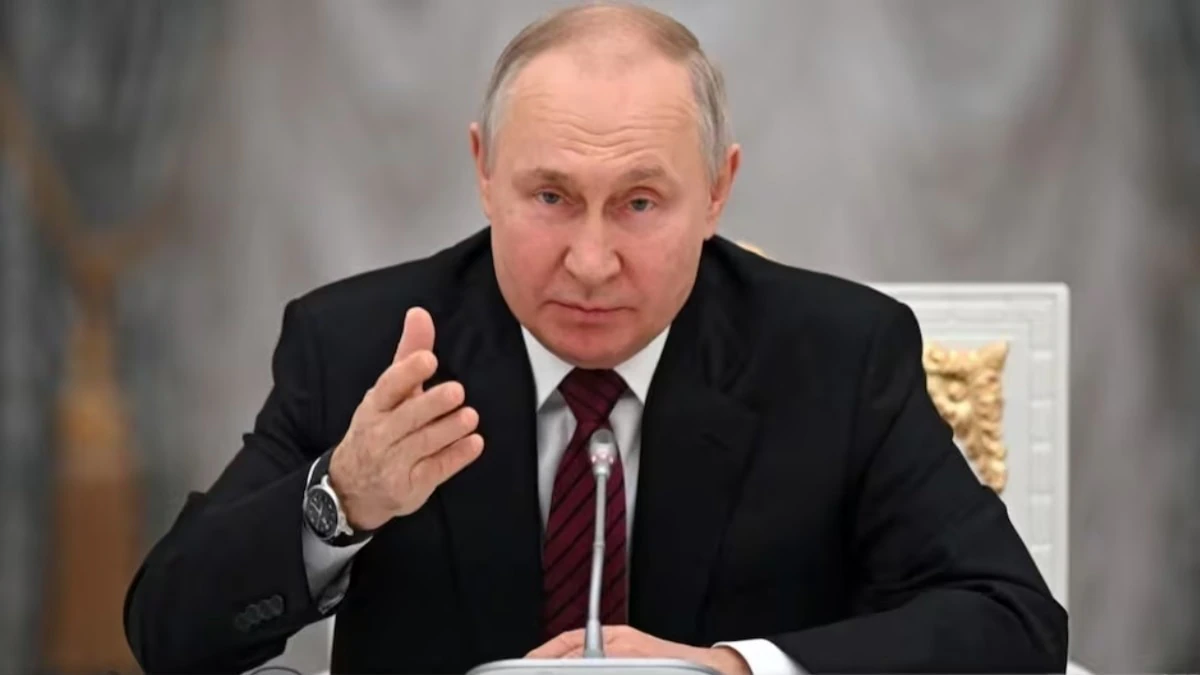
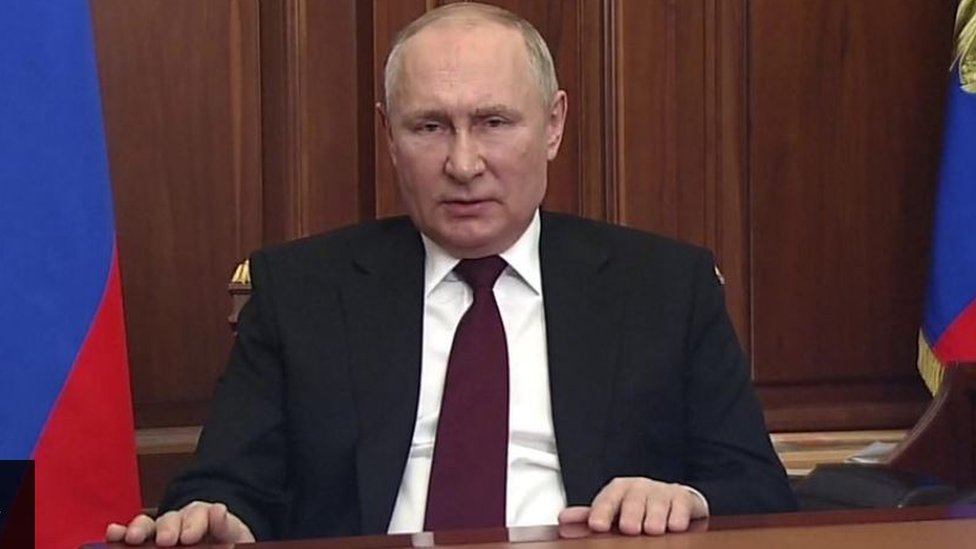
On October 7, 2025, Russian President Vladimir Putin celebrated his 73rd birthday not with a personal reflection, but with a public message about the state of the war in Ukraine. During a televised meeting with senior military officials, Vladimir Putin declared that Russian forces had captured nearly 5,000 square kilometers of Ukrainian territory since the beginning of 2025. He added that Moscow “retains the strategic initiative” across the front, and that Ukrainian troops were “retreating in several sectors.”
This statement was both symbolic and strategic. Coming on his birthday, it was a moment of self-affirmation — a message of strength directed to both domestic and international audiences. Yet, behind these bold claims lies a complex reality marked by uncertainty, propaganda, and an ongoing information war.
This blog takes a deep look at:
- The facts and sources behind Vladimir Putin claim
- The motives and strategic timing of the announcement
- How independent analysts view the situation
- What this statement means for Russia, Ukraine, and the global stage
1. Putin’s Claim: What Exactly Did He Say?
The Official Statement
According to Russian state media and reports from Reuters, Vladimir Putin told senior commanders that:
“Russian troops have liberated about 4,900 square kilometers of Ukrainian territory in 2025, capturing 212 settlements.”
He also added that Ukrainian forces were “retreating across the line of contact” and that Russia had seized the initiative on most fronts — particularly in Donetsk, Zaporizhzhia, and Kharkiv regions.
Chief of General Staff Valery Gerasimov backed up the president’s remarks, stating that Russian forces were “advancing steadily” and that “the enemy’s counteroffensive capabilities have been neutralized.”
Vladimir Putin speech framed the current military landscape as one of momentum, control, and inevitability — an image of a Russia that is advancing despite international sanctions and Western support for Ukraine.
Independent Reporting
However, independent observers and Western intelligence have not corroborated these claims. According to Reuters, Ukrainian officials deny that Russia has made major territorial gains in 2025, pointing out that:
- No major Ukrainian city has fallen under Russian control this year.
- Ukrainian forces have reported localized counterattacks in Donetsk and Sumy regions.
- Frontline maps from Western think tanks (like the Institute for the Study of War) show limited and contested areas where Russia has made small advances, not large-scale breakthroughs.
Even if the 5,000 square kilometer figure is technically accurate, analysts note that it represents less than 1% of Ukraine’s total land area — roughly equivalent to one-tenth the size of Moldova.
2. Why This Statement, and Why Now?
Vladimir Putin birthday message was more than a status update — it was a carefully calibrated act of political theater. To understand its purpose, we must consider the timing, the audience, and the psychological effect.
a. Domestic Messaging
Inside Russia, the war in Ukraine is often framed as a “special military operation” defending the homeland from Western aggression. On his birthday, Vladimir Putin claim served to:
- Reassure the Russian public that the war is progressing favorably.
- Reinforce his personal image as a strong, undefeated leader.
- Distract from domestic challenges — economic strain, rising inflation, and war fatigue.
By portraying measurable progress — “5,000 square kilometers captured” — Vladimir Putin provides the public with a tangible metric of success, even if its significance is questionable.
b. Military Morale
Russia’s forces have suffered heavy losses, logistical challenges, and fluctuating morale. The president’s public praise acts as a morale booster for troops, conveying that their sacrifices are recognized and “winning results” are being achieved.
c. International Signal
For Western nations, Vladimir Putin words serve as a signal of resilience and defiance. He’s telling the world that sanctions, weapons shipments to Ukraine, and diplomatic isolation have not weakened Russia’s war machine.
The message: “You cannot pressure us into retreat. We are still advancing.”
d. Political Symbolism
That the statement came on Vladimir Putin birthday is no coincidence. It reinforces the cult of personality around him — portraying him as synonymous with the Russian state, a man whose personal and national triumphs are intertwined.
3. Assessing the Claim: Fact or Propaganda?
How Much Is 5,000 Square Kilometers, Really?
Ukraine’s total area is around 600,000 square kilometers. So even if Vladimir Putin claim is correct, Russia’s territorial gains in 2025 amount to less than 1% of Ukraine’s land.
The figure sounds large, but much of that land is likely rural or sparsely populated, possibly including buffer zones or areas that are under temporary control.
Expert Analysis
Military experts and think tanks provide a more cautious view:
- Institute for the Study of War (ISW) noted that while Russia has advanced in small sectors, it has not achieved any strategic breakthroughs.
- Analysts at BBC Monitoring describe Vladimir Putin statement as “informational posturing,” aimed more at shaping perception than reporting battlefield truth.
- Western intelligence suggests that Russian forces have faced heavy casualties for minimal territorial gain.
Ukraine’s Response
Ukrainian President Volodymyr Zelenskyy responded indirectly the next day, saying that Ukrainian forces were inflicting “significant losses on Russian troops” in Donetsk, while maintaining control of key urban centers.
Kyiv also claimed that Russia’s recent “advances” mostly involved destruction, not occupation — areas that are being shelled into ruin but not fully captured.
4. The Role of Information Warfare
Modern conflicts are fought as much in the information space as on the battlefield. Both Russia and Ukraine use strategic communication to:
- Boost morale among their citizens and troops
- Shape international perception
- Control the narrative of victory or loss
Vladimir Putin statement fits neatly into this dynamic.
a. Controlling the Narrative
By declaring measurable success — “5,000 square kilometers captured” — Russia sets the tone for domestic and international media. Even if independent verification is lacking, repeating the number in headlines reinforces the image of Russian momentum.
b. Psychological Warfare
Claims of Ukrainian “retreats” and “collapse” can demoralize not only soldiers but also the civilian population, potentially weakening internal support for Kyiv’s war effort.
c. Propaganda Through Numbers
Large numbers create an illusion of scale. “5,000 square kilometers” sounds impressive — yet without context (terrain type, population, sustainability), the figure loses real meaning. This tactic is classic wartime propaganda: quantify to amplify.
d. Defensive Deflection
When faced with economic hardship or rising casualties, promoting battlefield success serves as a political shield — deflecting criticism and maintaining the illusion of progress.
5. The Reality on the Ground
The Eastern Front (Donetsk and Luhansk)
Most of the reported Russian “advances” occurred in the Donetsk region, particularly near Pokrovsk and Siversk. Satellite data confirms heavy fighting, but territory exchanges have been small and fluctuating.
Ukrainian artillery and drone operations continue to target Russian supply lines, slowing the pace of any real advance.
Southern Front (Zaporizhzhia and Kherson)
In the Zaporizhzhia sector, Russian troops attempted to consolidate control near Robotyne and surrounding villages. However, according to open-source analysts, these areas remain highly contested.
Ukraine retains strongholds across the Dnieper River, maintaining its defensive posture despite heavy shelling.
Northern Front (Kharkiv and Sumy)
Vladimir Putin reference to Russian activity in Kharkiv and Sumy suggests renewed attempts to stretch Ukrainian defenses. However, Western intelligence indicates that no significant breakthroughs have occurred there.
In some cases, Russia’s “advances” refer to temporary incursions or raids rather than stable occupation.
6. Why Numbers Don’t Tell the Whole Story
Control Does Not Equal Stability
In modern warfare, “control” is a fluid concept. Russia may temporarily occupy territory, but sustaining it requires logistics, local cooperation, and troop stability. Without these, control quickly evaporates.
Quality vs Quantity
Capturing wide rural zones brings little strategic value if major cities and infrastructure remain under enemy control. What matters are supply routes, energy hubs, and population centers — not empty land.
The Human and Economic Cost
Each kilometer gained may come at a high cost. Analysts estimate that tens of thousands of Russian troops have been killed or wounded in 2025 alone. Territorial gain without long-term sustainability becomes a Pyrrhic victory — one that weakens the victor over time.
Shifting Battle Lines
Even if Russia gained 5,000 km² this year, much of it could be retaken by Ukraine in future offensives. The war’s geography has proven highly dynamic, with both sides gaining and losing ground multiple times.
7. The Geopolitical and Diplomatic Implications
For Ukraine
Vladimir Putin claim increases pressure on Kyiv — both militarily and politically. Ukraine must now counter the perception that it is “losing ground,” by showcasing its own battlefield successes and maintaining Western support.
The statement may also influence Ukrainian appeals for additional NATO and EU assistance, portraying Russia as an expanding threat that must be contained.
For Russia
Internally, Vladimir Putin narrative strengthens the illusion of control and reassures a weary population. Externally, it signals that Russia remains a formidable actor capable of sustaining a long war despite sanctions.
However, exaggerating success carries risks. If future events expose the claim as inflated or false, it could undermine credibility both at home and abroad.
For the West
The statement reminds Western nations that the war is far from over. It may reignite debates in Europe and the U.S. about continued support for Ukraine — especially among populist or isolationist movements.
At the same time, it reinforces the argument of those who believe Vladimir Putin will only stop under pressure, not negotiation.
8. Understanding the Strategy Behind Putin’s Words
Putin’s speech can be read as part of a broader strategic communication campaign that serves multiple goals:
- Demonstrate continuity of leadership: presenting himself as the architect of ongoing success.
- Shape international headlines: every global media outlet reporting his claim gives it legitimacy by repetition.
- Preempt criticism: by projecting strength, Vladimir Putin reduces room for domestic dissent or doubts about the war.
- Maintain deterrence: implying that Russian military momentum continues discourages Ukraine and its allies from escalating.
In short, Putin’s birthday announcement was less a military report and more a political performance — carefully crafted for maximum symbolic effect.
9. Independent Reactions and Global Coverage
International Media
Outlets like Reuters, BBC, The Guardian, and Al Jazeera reported Vladimir Putin remarks with cautious skepticism, often noting the absence of independent verification.
Western analysts highlighted that Russia had not taken any major Ukrainian city in 2025, and that territorial “gains” were largely marginal or rural.
Ukrainian Media
Ukrainian outlets described the statement as “propaganda for a domestic audience,” with headlines emphasizing Kyiv’s resilience and the continued defense of key cities like Donetsk and Kharkiv.
Global Analysts
Military experts at RAND Corporation and Chatham House have described this kind of rhetoric as “morale maintenance” — an attempt to balance battlefield reality with political necessity.
They note that in protracted wars, control of the narrative becomes as crucial as control of the battlefield.
10. Looking Ahead: What Comes Next?
The coming months will reveal whether Vladimir Putin 5,000 km² claim represents a real shift in momentum or merely a temporary illusion.
Scenario 1: Limited but Real Gains
Russia consolidates small territorial advances, fortifies defensive lines, and prepares for winter operations. Ukraine focuses on regrouping and defending strategic positions.
Scenario 2: Stalemate
The frontlines stabilize, and both sides dig in. The war becomes one of attrition — of ammunition, manpower, and endurance — rather than movement.
Scenario 3: Ukrainian Counteroffensive
If Western aid continues, Ukraine could launch another counteroffensive in 2026, retaking some of the land Russia claims to have captured. That would severely undercut Vladimir Putin narrative.
Scenario 4: Negotiated Pause
If both sides face exhaustion, Putin’s “success story” could be used to justify a ceasefire — allowing Russia to claim victory without achieving total conquest.
11. Lessons in Reading Political Claims During War
- Question the Numbers: Large figures are emotionally persuasive but rarely contextualized.
- Follow Independent Data: Satellite imagery and third-party mapping (like LiveUAmap or ISW) often tell a more balanced story.
- Watch the Timing: Announcements often coincide with domestic milestones (like Putin’s birthday) or international events.
- Remember the Audience: Speeches like this are directed as much at the Russian people as at global observers.
- Separate Symbolism from Strategy: A claim may have more value as propaganda than as military fact.
Conclusion: Between Perception and Reality
Vladimir Putin’s 73rd birthday message paints the image of a confident Russia, steadily advancing through Ukraine, unshaken by global isolation. Yet, beneath the celebratory tone lies a more complicated reality — one of incremental progress, immense losses, and persistent uncertainty.
The claim of capturing 5,000 square kilometers is part of a broader narrative war — where perception can be as powerful as firepower. Whether it reflects fact, exaggeration, or both, its purpose is clear: to project strength, control the narrative, and reinforce the illusion of inevitability.
As the war drags into another year, one truth remains constant — the battle for territory is only part of the fight. The battle for truth, belief, and endurance is just as decisive.
Read More latest news

