

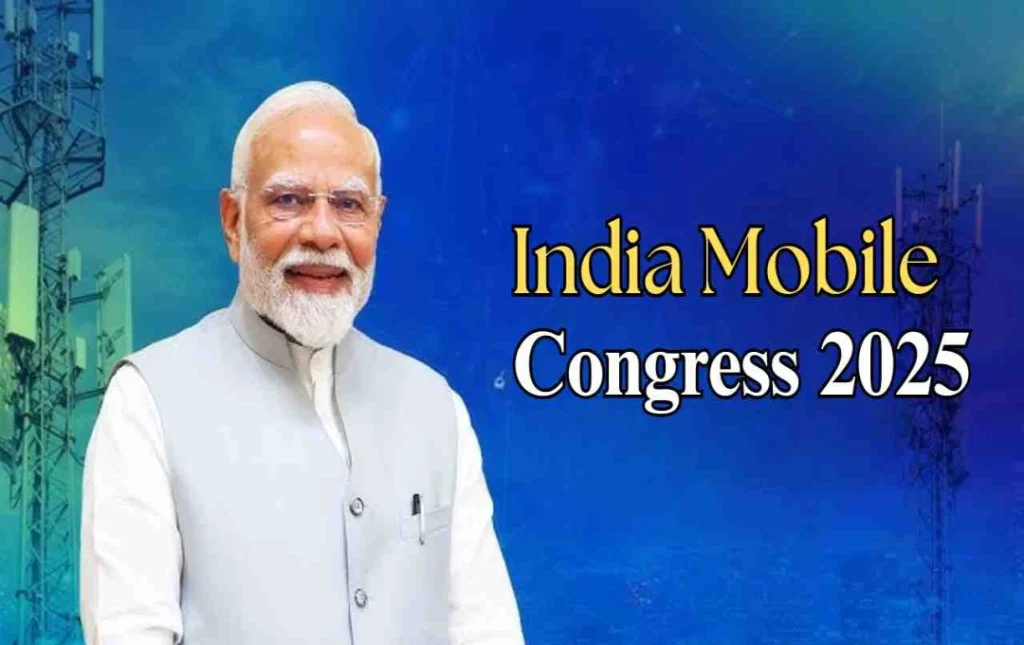
India Mobile Congress 2025: PM Modi Inaugurates Asia’s Largest Digital Technology Event (India Mobile Congress)
At the Yashobhoomi Convention Center in Delhi, the India Mobile Congress (India Mobile Congress) 2025 commenced with grandeur, innovation, and a renewed vision for India’s digital future. Inaugurated by Prime Minister Narendra Modi, this year’s event revolves around the powerful theme — “Innovate to Transform” — emphasizing how emerging technologies like 6G, quantum communications, and semiconductors can reshape India’s global tech leadership.
The India Mobile Congress, co-hosted by the Department of Telecommunications (DoT) and the Cellular Operators Association of India (COAI), has grown into one of Asia’s largest digital technology and telecom summits, attracting global leaders, tech innovators, and startups alike.
A Grand Inauguration: PM Modi’s Visionary Address
Prime Minister Narendra Modi, during his inaugural speech, called upon India’s youth, entrepreneurs, and innovators to take the lead in developing indigenous technologies that will not only transform India but also set benchmarks for the world.
He stated, “The world is looking at India as a digital powerhouse. The success of our 4G and 5G rollout within record time has proven India’s potential. Now, as we move toward 6G and quantum communication, we must innovate to transform.”
PM Modi highlighted India’s achievements in digital infrastructure, startup ecosystem, and semiconductor manufacturing, reaffirming the government’s goal to make India a global hub for electronics design and innovation.
Theme of 2025: ‘Innovate to Transform’
The 2025 edition’s theme, “Innovate to Transform,” encapsulates India’s ongoing technological evolution. It urges industries, startups, and policymakers to harness the transformative power of innovation to create scalable, secure, and sustainable digital ecosystems.
The focus areas this year include:
- 6G Technology Development
- Quantum Communications and Computing
- Semiconductor Manufacturing and Chip Design
- AI and IoT Integration
- Cybersecurity and Data Sovereignty
- Green Telecom and Sustainable Tech
Each of these sectors plays a crucial role in shaping India’s Digital Decade Vision 2030, where technology is not just a tool but a driver of economic empowerment.
India’s 6G Mission: Beyond Connectivity
At the India Mobile Congress 2025, one of the most discussed topics is 6G technology — the next leap in global telecommunications.
India had already launched its 6G Mission in 2023, under which research institutions, academia, and industry leaders were encouraged to develop indigenous technologies for ultra-fast and energy-efficient connectivity.
This year’s conference saw the unveiling of several 6G prototypes and testbeds, with the Telecommunications Standards Development Society of India (TSDSI) showcasing its progress toward setting global standards for 6G.
Experts explained that 6G will not only enhance data speed but will also support holographic communications, tactile internet, autonomous mobility systems, and immersive digital experiences.
PM Modi remarked, “India does not want to be a follower in the 6G race; we want to be among the world’s leaders. Our goal is to make India the hub of next-generation telecom technologies.”

Quantum Communications: Redefining Security
Another highlight of the 2025 India Mobile Congress is the focus on quantum communications, an emerging technology that promises unhackable communication systems.
India’s Quantum Mission, announced in 2023, is gaining momentum, and this year’s India Mobile Congress demonstrated real-world applications — from quantum key distribution (QKD) networks to secure satellite communication channels.
The Department of Telecommunications, in collaboration with leading research bodies like IIT Madras and DRDO, presented live demonstrations of quantum-encrypted calls between government offices.
This breakthrough signifies India’s readiness to secure its critical digital infrastructure from cyber threats and espionage, paving the way for quantum-secured governance and defense systems.
Semiconductor Revolution: India’s Silicon Dream
The semiconductor sector was another cornerstone of India Mobile Congress 2025.
PM Modi’s “Make in India” initiative has already led to major investments in semiconductor fabrication plants (fabs) and chip assembly units. This year’s India Mobile Congress showcased partnerships between global chip giants and Indian startups, symbolizing India’s emergence as a semiconductor powerhouse.
With the Semicon India Program driving $10 billion in incentives, multiple projects have been announced in Gujarat, Tamil Nadu, and Karnataka. These fabs are expected to create thousands of jobs and reduce India’s dependence on imported chips.
Industry leaders emphasized that semiconductors are the backbone of every modern technology — from smartphones and EVs to AI and defense equipment.
India aims to integrate semiconductor design education into engineering curricula, ensuring the nation’s youth is skilled for the chip revolution ahead.
Showcase of Startups: India’s Innovation Engine
India Mobile Congress 2025 featured a dedicated Startup Pavilion, where over 400 startups presented their innovations in AI, robotics, IoT, green energy, and communication technologies.
From drone-based logistics to indigenous 6G modems, young innovators showcased the potential of Indian talent to address global digital challenges.
The Atal Innovation Mission (AIM) and Startup India jointly hosted pitch sessions, where startups interacted with global investors and telecom operators, strengthening India’s image as a global startup hub.
PM Modi encouraged the youth to “convert ideas into impact,” stating, “Innovation must not remain confined to labs; it should reach villages, farmers, and common citizens.”
Sustainability and Green Telecom
This year’s India Mobile Congress also focused on sustainability and green technologies.
With telecom infrastructure expanding rapidly, energy efficiency has become a key priority.
Panels discussed:
- Use of solar-powered mobile towers,
- Recycling of e-waste,
- Energy-efficient 6G networks, and
- Carbon-neutral data centers.
The government announced incentives for companies adopting green energy technologies, aiming to make the Indian telecom industry one of the most eco-friendly in the world.
Global Participation: A Hub of Ideas and Collaboration
India Mobile Congress 2025 has attracted delegates from over 50 countries, including ministers, CEOs, and thought leaders.
Tech giants like Qualcomm, Ericsson, Nokia, Samsung, and TCS unveiled their latest solutions in 6G research, edge computing, and AI-driven connectivity.
Global collaboration sessions discussed how India’s telecom policies could set new global benchmarks for inclusivity, affordability, and innovation.
Representatives from the United States, Japan, South Korea, and Europe praised India’s approach to open-source technologies and digital public infrastructure (DPI), including Aadhaar, UPI, and ONDC — which are being globally recognized as models for inclusive innovation.
Digital Bharat Pavilion: The Future of Indian Connectivity
The Digital Bharat Pavilion, one of the biggest attractions at India Mobile Congress 2025, demonstrated how India’s digital infrastructure is transforming everyday life.
Interactive zones allowed visitors to experience:
- 6G-based holographic classrooms,
- AI-enabled rural healthcare kiosks,
- Smart city control centers, and
- Quantum-secure financial transactions.
The pavilion symbolized India’s journey from being a digital consumer to a global digital creator.
Women in Tech: Empowering Inclusion
India Mobile Congress 2025 also celebrated women innovators and leaders in the tech ecosystem.
Panels titled “Women Leading the Digital Future” featured CEOs, engineers, and policymakers sharing their journeys of breaking barriers and inspiring change.
Programs were announced to encourage STEM education for girls, offering scholarships and mentorships to ensure women play a central role in India’s tech revolution.
PM Modi’s Closing Message: From Digital India to Tech India
In his closing remarks, PM Modi reiterated his vision for a “Tech-Driven Bharat”, where innovation leads every sector — from agriculture and healthcare to defense and education.
He said, “India’s future lies in the courage of its innovators. When we innovate, we do not just transform industries; we transform lives.”
He urged all stakeholders to contribute to India’s goal of becoming a global technology superpower by 2030, emphasizing self-reliance (Atmanirbhar Bharat) and global leadership in digital innovation.
Conclusion: A Glimpse into India’s Technological Future
The India Mobile Congress 2025 marks a defining chapter in India’s digital evolution. From the launch of 6G initiatives to quantum communication breakthroughs and semiconductor investments, the event reflects India’s unstoppable momentum in technology and innovation.
The theme “Innovate to Transform” perfectly captures the spirit of a nation on the rise — a nation determined to use innovation as its most powerful tool for growth, inclusion, and transformation.
With PM Modi’s vision guiding this journey, India stands at the forefront of a global digital renaissance, ready to lead the world into the next era of technology.
Read More latest news

