
Panic in Jaipur: Truck Carrying Cylinders Explodes Near Eateries — Chaos, Fire, and Fear Grip the Area
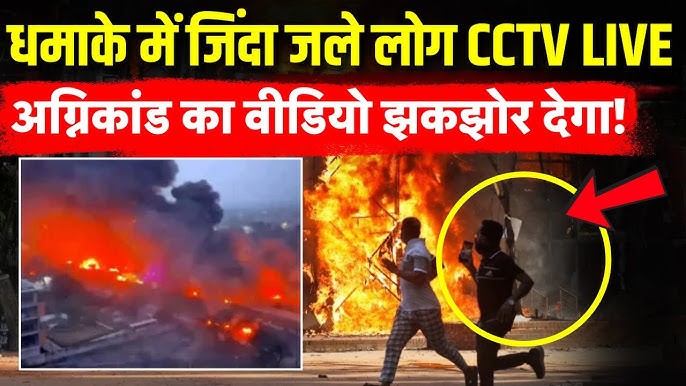
truck carrying cylinders Jaipur, the Pink City of India, was shaken on Tuesday night when a truck loaded with LPG cylinders caught fire and exploded near a crowded food street. The explosion, captured on several mobile phones, has gone viral on social media — showing a terrifying scene of people running for their lives, thick smoke engulfing the area, and a series of loud blasts echoing across the night sky.
The incident, which took place near one of Jaipur’s popular eatery zones, sent shockwaves through the city. Eyewitnesses describe it as a scene of absolute chaos — with restaurant owners, customers, and passersby abandoning their belongings and fleeing for safety. Fire tenders, police, and emergency response teams rushed to the spot and battled the flames for over two hours before bringing the situation under control.
This blog dives deep into every aspect of the tragedy — the sequence of events, eyewitness accounts, police investigation, safety lapses, and the broader question it raises about fire safety preparedness in Indian cities.
1. The Incident: How It All Unfolded
The incident reportedly occurred around 8:30 PM in Jaipur’s Vidhyadhar Nagar area, a locality known for its bustling food joints and street vendors. The truck, carrying multiple LPG cylinders, was parked near a row of small eateries. According to preliminary reports, the driver had halted the vehicle temporarily to deliver cylinders to nearby restaurants.
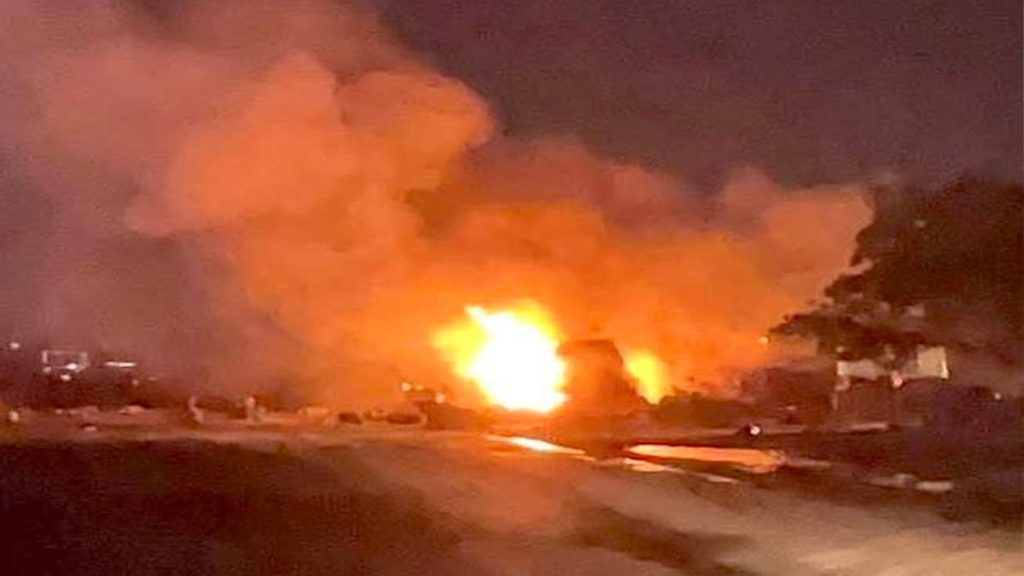
Eyewitnesses claim they first saw smoke emerging from underneath the truck’s cabin, followed by small bursts of flame. Within moments, a massive explosion occurred — causing the vehicle to erupt into a fireball. The intensity of the blast was so severe that several nearby shops and food stalls caught fire. Glass windows shattered, and flames leapt several feet into the air.
Videos recorded by locals show a terrifying sight — the truck completely engulfed in fire, with the sound of secondary explosions as more cylinders began to burst one by one.
2. Eyewitness Accounts: “It Felt Like a Bomb Blast”
Locals who were dining or working nearby shared bone-chilling testimonies.
Ravi Sharma, who runs a tea stall close to the accident site, said,
“At first, we thought it was just smoke from the exhaust. But then suddenly, the entire truck burst into flames. People screamed and ran in all directions. The heat was unbearable, and within seconds, the nearby stalls started burning.”
Another witness, Meena Gupta, a college student who was eating at a food stall nearby, said,
“I saw people running with plates in their hands. There was chaos everywhere. The fire was spreading fast. I thought I wouldn’t make it out.”
Many residents reported that the series of explosions could be heard from a distance of up to two kilometers.
3. Emergency Response and Firefighting Efforts
As soon as information about the explosion reached authorities, fire tenders from multiple stations were rushed to the scene. The Jaipur Fire Department, assisted by the local police and disaster management teams, cordoned off the area to prevent further casualties.
It took firefighters over two hours to control the blaze. Officials later confirmed that around 25 to 30 LPG cylinders were loaded on the truck, and at least 12 cylinders exploded in the fire. Fortunately, due to swift evacuation by locals and prompt response from the fire brigade, no major casualties were reported. However, four people sustained minor injuries, including the truck driver and two shopkeepers.
Firefighters faced immense difficulty due to the intensity of the flames and the constant risk of further explosions. One firefighter, speaking anonymously, said,
“We had to maintain distance because cylinders were flying off due to pressure. It was one of the most dangerous rescue operations we’ve handled in recent months.”
4. Police Investigation Begins
The Jaipur Police have launched an investigation into the cause of the fire. Initial findings suggest that a leak in one of the gas cylinders may have triggered the fire, which then spread to other cylinders in the truck.
Commissioner of Police, Biju George Joseph, visited the spot late at night and assured that the guilty would not be spared if negligence was found.
“We are examining whether the truck had proper safety clearances for transporting such a large number of LPG cylinders. The Forensic Science Laboratory (FSL) team has been called to collect samples,” he said.
The truck has been completely gutted, and nearby CCTV footage is being reviewed to understand the sequence of events leading to the explosion.
5. How the Video Went Viral
Within minutes of the explosion, locals began sharing videos on social media platforms. One video in particular — showing the moment of the blast and people running in panic — went viral on X (formerly Twitter) and Instagram, gathering millions of views within hours.
The horrifying visuals prompted widespread outrage, with netizens questioning how a truck carrying multiple LPG cylinders was allowed to park near a crowded area filled with food stalls and restaurants. Hashtags like #JaipurBlast, #CylinderExplosion, and #JaipurFire trended online throughout the night.
Local authorities have since urged people not to share unverified footage or spread rumors.
6. Safety Violations Under Scrutiny
Preliminary reports suggest that the truck driver may not have followed basic safety protocols. Eyewitnesses claim that the vehicle was parked dangerously close to open flames from food stalls — a major violation of fire safety norms.
Experts point out that according to the Petroleum and Explosives Safety Organisation (PESO) guidelines, vehicles carrying LPG cylinders must maintain a minimum distance from populated areas, and the driver must ensure proper sealing of valves before parking.
This incident highlights how such norms are often ignored in practice, leading to potentially catastrophic results.
7. Statements from Authorities
Soon after the explosion, Jaipur District Collector and Divisional Commissioner visited the site to assess the situation. The Rajasthan government has ordered a high-level inquiry into the matter.
Rajasthan’s Home Minister issued a statement late at night, saying,
“This was a serious lapse in safety and transport regulation. We have directed the police and district administration to submit a detailed report within 48 hours. Strict action will be taken against the transporter and officials responsible.”
Chief Minister Bhajan Lal Sharma also expressed concern and instructed officials to ensure better fire safety monitoring in high-density commercial zones.

8. The Impact on Local Businesses
The area where the explosion occurred is home to dozens of eateries and small vendors — many of whom have suffered severe losses. Several shops were gutted, and property worth lakhs was destroyed in the fire.
Local business owner, Pawan Kumar, who ran a snacks shop nearby, said,
“My entire shop burned down. We had no time to save anything. I’ve lost everything — stock, utensils, even cash.”
The municipal corporation has assured that affected shopkeepers will receive assistance for rehabilitation and compensation after damage assessment.
9. Public Panic and Traffic Chaos
As news of the explosion spread, people began gathering near the site, causing traffic congestion on the adjoining roads. The police had to block entry into the area to prevent onlookers from interfering with rescue operations.
Social media reports suggest that several nearby residential colonies also faced power outages as authorities cut off electricity to prevent further fire hazards. Panic spread throughout nearby neighborhoods as the loud explosions continued for several minutes.
10. The Question of Fire Safety in Urban India
This tragic incident raises an important question — how prepared are our cities for fire-related emergencies? Jaipur, like many other major cities, has seen several fire accidents in the past few years — from market blazes to factory fires.
Despite repeated incidents, many establishments continue to operate without valid fire safety certificates. Vehicles carrying inflammable substances are often parked in densely populated areas without adequate precautions.
Experts argue that local administrations need to enforce stricter monitoring, ensure better coordination between fire and transport departments, and conduct regular awareness drives for traders and residents.
11. Social Media Reactions and Public Outrage
The explosion sparked intense debate online. While many praised the bravery of firefighters and police, others criticized the lack of preventive measures.
Comments like “Every time we see such incidents, the government promises safety audits, but nothing changes” flooded social platforms. Activists and civic groups called for stricter implementation of safety guidelines and immediate suspension of officials found negligent.
Prominent journalists and celebrities from Rajasthan also shared the viral videos, urging people to follow safety norms while handling LPG.
12. Similar Incidents in the Past
This is not the first time Jaipur has witnessed a gas-related explosion. In 2019, a similar tragedy occurred when a restaurant in the city caught fire due to a gas leak, resulting in multiple casualties.
According to the National Crime Records Bureau (NCRB), India records over 10,000 fire-related deaths every year, many linked to LPG or fuel mishandling. Experts have repeatedly warned that poor maintenance, untrained handlers, and lack of emergency preparedness are major causes of such accidents.
13. Lessons Learned: What Must Change
The Jaipur cylinder explosion serves as a grim reminder that safety can never be compromised for convenience. The tragedy highlights key areas needing urgent attention:
- Strict enforcement of transport safety norms for hazardous materials.
- Mandatory fire audits in commercial areas, eateries, and marketplaces.
- Training programs for LPG delivery staff and restaurant workers.
- Quick-response systems with improved coordination between local police, fire, and health departments.
- Public awareness campaigns on fire safety and first aid.
Only through consistent enforcement and accountability can such disasters be prevented.
14. The Aftermath: Clean-Up and Recovery
By early morning, the fire had been fully extinguished. Municipal workers and police cleared the debris while forensic experts examined the truck remains.
Authorities also inspected nearby eateries for safety compliance. Many shop owners were seen cleaning soot and broken glass from their premises, trying to resume business. However, the psychological trauma of the incident remains fresh.
The district administration has announced plans to relocate gas delivery unloading zones away from crowded areas to prevent future risks.
15. The Human Side: Fear and Relief
For the hundreds who were present during the explosion, the experience was nothing short of terrifying. Yet amidst the fear and chaos, stories of bravery also emerged — restaurant workers helping customers escape, strangers assisting the injured, and firefighters risking their lives to contain the flames.
These moments of humanity and courage provided a silver lining to an otherwise horrifying night.
16. Political Reactions
Political parties across Rajasthan reacted sharply to the incident. Opposition leaders demanded accountability from the state government, questioning the lack of enforcement of safety rules.
Congress leader Govind Singh Dotasra tweeted,
“The Jaipur explosion exposes the administration’s negligence. Transporting LPG cylinders through crowded areas is a recipe for disaster.”
Meanwhile, BJP leaders assured that strict actions were being taken and that safety audits would be conducted across all districts within the next 15 days.
17. Expert Views
Fire safety experts and environmentalists have highlighted the urgent need to redesign urban fire policies.
Dr. Mahesh Kumar, a safety consultant, said,
“LPG cylinders are safe when handled correctly. The danger arises from human error, overloading, or leaks. Cities must identify safe routes for transporting such materials and train drivers in emergency response.”
He added that such incidents can also cause air pollution due to burning gas and chemicals, posing long-term health risks to residents.
18. Media Coverage and Public Awareness
The explosion dominated headlines across Rajasthan. National and regional news channels broadcast live visuals of the flames and rescue efforts. The coverage helped mobilize quick government response but also triggered panic among locals.
Experts believe that while media plays a vital role in spreading awareness, it should also focus on educating people about safety protocols rather than only sensational visuals.
19. Emotional Toll on Families and Workers
Many of the small eatery owners in the area belong to lower-income backgrounds. Their livelihoods depend on daily business. For them, this incident is not just a temporary setback — it’s a financial and emotional catastrophe.
Community organizations and NGOs have stepped forward to provide temporary relief, offering food, medical assistance, and monetary support to affected families.
20. Conclusion: A Wake-Up Call for Urban India
The Jaipur cylinder explosion stands as a stark reminder that one small spark can lead to massive destruction if safety is neglected. It reveals how fragile public spaces can be when regulatory oversight fails.
While the prompt action by firefighters and police prevented a larger tragedy, it’s evident that prevention is always better than reaction. Cities like Jaipur must now rethink urban safety frameworks — focusing on stricter enforcement, public education, and technological monitoring of hazardous transports.
As the city wakes up from a night of terror, one message echoes clearly — safety cannot be an afterthought. The tragedy has left behind not just burnt metal and shattered glass but a burning question — will we finally learn, or will we wait for the next explosion to remind us again?
Read more latest news

