

PM Modi Breaks Protocol as Vladimir Putin Arrives in Delhi: A Historic Evening of Diplomacy, Trust & Strategic Signalling
This evening, New Delhi witnessed a rare and powerful moment in global diplomacy as Russian President Vladimir Putin touched down at the national capital. What followed was unprecedented: Prime Minister Narendra Modi personally arrived at the airport, breaking long-standing protocol to welcome the visiting President. The gesture was more than ceremonial — it was a message, a signal, and a strategic stance at a time when the world is rapidly realigning its geopolitical equations.
The arrival of Vladimir Putin in Delhi comes at a time when the international community is carefully observing India’s foreign policy moves. Amid global tensions, shifting alliances, and growing strategic competition, the visual of the two leaders sharing the same car, driving together from the airport to the Prime Minister’s residence, carried remarkable diplomatic weight.
A private dinner had already been arranged at the PM’s residence — a symbolic and intimate setting that highlights the closeness of India-Russia relations. This evening became more than a routine state visit; it became an event charged with history, trust, and the promise of a renewed strategic partnership.
A Protocol Break Filled with Meaning
When PM Modi walked onto the tarmac to welcome Vladimir Putin, it was a carefully crafted diplomatic message. For decades, Indian Prime Ministers have rarely broken protocol to personally receive foreign leaders. The exceptions have always been reserved for visits of extraordinary significance.
India’s gesture for Vladimir Putin demonstrates an unmistakable emphasis: the relationship with Russia continues to remain central to India’s long-term strategic vision, despite growing global pressure and geopolitical complexities.
Over the past years, India has weathered international scrutiny for continuing energy, defense, and trade relations with Moscow. Yet New Delhi has remained committed to a balanced foreign policy rooted in national interest. The warm reception to Vladimir Putin reinforces this stance.
Two Leaders in One Car: A Picture Worth a Thousand Words
Perhaps the most symbolic moment came when PM Modi and Vladimir Putin sat together in the same car — a rare gesture in diplomatic protocol. Usually, a foreign head of state travels in their own designated vehicle, accompanied by a motorcade. But today’s deviation sent a strong message: India and Russia are not just allies; they share a personal rapport and deep-rooted trust.
World media outlets immediately picked up the visuals. Commentators noted that PM Modi’s decision to accompany Vladimir Putin from the airport to his residence was a powerful demonstration of how India wishes to position its relationship with Russia in the current global context.
This moment is likely to be analyzed for months to come.
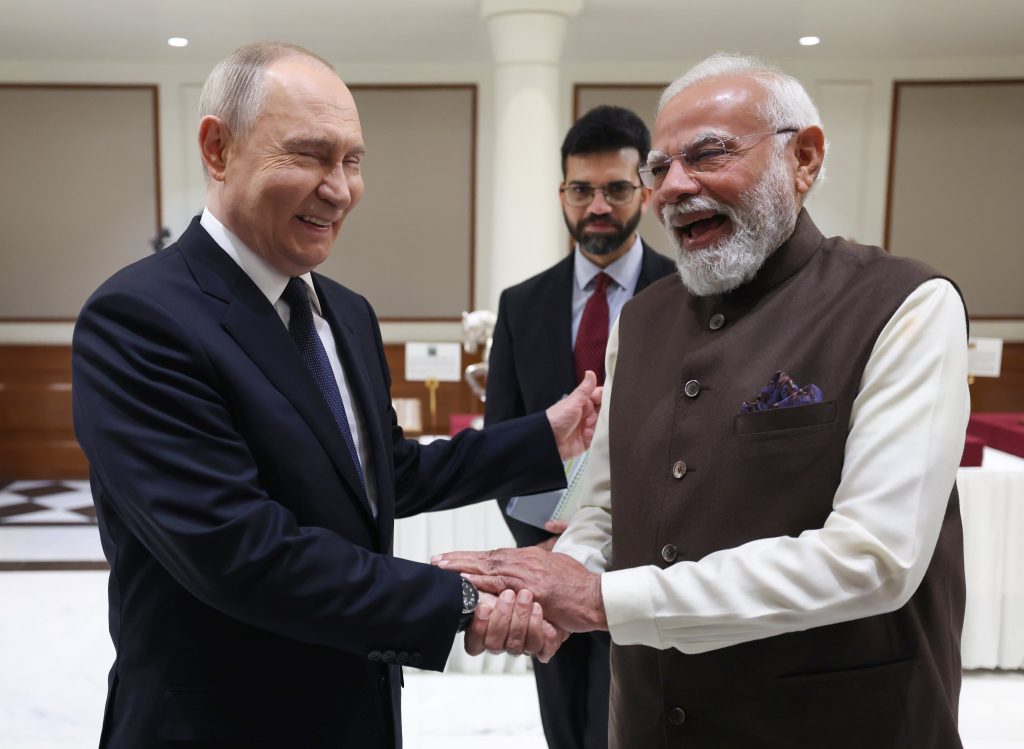
A Private Dinner, Not a Grand Banquet: Why It Matters
Instead of a public state banquet, PM Modi chose a private dinner setting for his meeting with Vladimir Putin. This choice reflects intimacy, confidentiality, and candid dialogue — the kind of conversation that shapes the future of major bilateral relationships.
The agenda was not made public, but sources suggest it included topics such as:
- India-Russia defense cooperation
- Energy security and long-term oil agreements
- The situation in Eurasia and Indo-Pacific region
- Trade expansion, especially in rupee-ruble mechanisms
- Technology, space cooperation, and nuclear energy
The optics of a private dinner with Vladimir Putin also suggest that both leaders wanted to speak openly without diplomatic filters. Such settings often pave the way for major announcements.
The Timing: Why Putin’s Visit Is Crucial Right Now
The visit of Vladimir Putin comes at a time of significant geopolitical shifts:
- Global power blocs are realigning, and countries like India are being courted by all major powers.
- The Russia-Ukraine conflict continues, with Western nations imposing sanctions and pushing diplomatic pressure.
- India’s energy needs are rising, and Russia remains a key supplier of discounted crude oil.
- Defence cooperation remains essential — nearly 60–70% of India’s military equipment has Russian origins.
- The Indo-Pacific is becoming tense, with China’s assertiveness rising.
India’s strategic autonomy rests on maintaining balanced relations with all major global players — the United States, the European Union, and Russia. The visit of Vladimir Putin underscores that New Delhi will continue charting its own independent diplomatic course.
India–Russia Relations: An Old Friendship in a New Era
India and Russia share a relationship rooted in decades of trust. From the Cold War era to the present multipolar world, Moscow has been one of India’s most steady partners.
The presence of Vladimir Putin in Delhi reaffirms Russia’s commitment to this historic relationship. Over the past 20 years, India and Russia have signed multiple agreements involving:
- Defence technology transfer
- Joint military development
- Space exploration
- Nuclear energy cooperation
- Oil and gas supply chains
- Education, culture, and multilateral cooperation
The personal chemistry between PM Modi and Vladimir Putin forms an important pillar of this relationship. Both leaders have met numerous times at bilateral summits, BRICS meetings, and G20 forums.
Modi–Putin Chemistry: Trust Built Over Years
The warmth displayed today is not new. PM Modi and Vladimir Putin have known each other for over a decade, building a relationship that extends beyond formal diplomacy.
Past meetings show clear evidence of:
- Strategic mutual respect
- Personal comfort
- Shared geopolitical vision
- Desire to maintain strong India–Russia ties despite global pressures
Today’s reception further solidifies this bond.
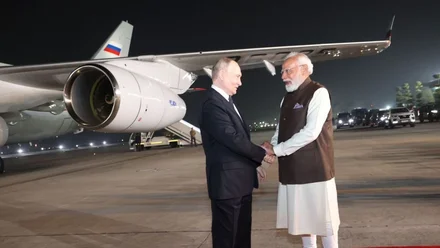
Private Dinner Diplomacy: What It Signals to the World
The private dinner held at the PM’s residence sends multiple global signals:
1. India is not abandoning Russia
Despite global dynamics and Western pressure, India continues to value its time-tested partnership.
2. Strategic autonomy comes first
India will never allow any bloc to dictate its foreign policy.
3. India–Russia ties remain relevant
The presence of Vladimir Putin, despite global tensions, shows Russia’s commitment to India and vice versa.
4. Personal diplomacy matters
The optics of the airport welcome and shared car journey highlight the importance of personal rapport in global decision-making.
Global Reaction to the Visit
As soon as Vladimir Putin landed in Delhi, global reactions began pouring in:
- Western think tanks immediately analyzed the implications for India-US relations.
- European analysts questioned India’s stance on energy and defence ties with Russia.
- Asian geopolitical experts praised India’s balanced foreign policy.
- Russian media highlighted the extraordinary welcome by PM Modi.
The visit is expected to reshape discussions in global strategic circles for weeks.
Expectations from the Summit
While tonight’s dinner is informal, key outcomes are expected tomorrow. The presence of Vladimir Putin suggests that several major announcements may be on the table, including:
- New defence procurement agreements
- Expansion of energy cooperation
- Joint infrastructure projects
- Upgraded space collaboration
- New trade mechanisms to bypass sanctions
- Strengthening BRICS and SCO initiatives
This visit, despite its warmth, is deeply strategic.
Why India’s Gesture Matters: Breaking Down the Symbolism
Breaking protocol to welcome Vladimir Putin was not a spontaneous gesture. It was strategic symbolism crafted through:
- Soft power
- Personal diplomacy
- Historical continuity
- Future orientation
Every image captured tonight will be used in international diplomacy to decode India’s position in the emerging global order.
A New Chapter Begins Tonight
As Vladimir Putin spends the evening at PM Modi’s residence, the stage is set for a deeper, more significant India-Russia partnership. The quiet environment of the private dinner allows both leaders to discuss matters candidly — from Eurasian stability to the Indo-Pacific strategy.
The bilateral relationship is not merely transactional; it is built on a shared vision of a multipolar world.
Final Thoughts
Today’s events — the arrival of Vladimir Putin, the protocol-breaking welcome by PM Modi, the shared car ride, and the private dinner — will be remembered as one of the most symbolic diplomatic moments of the year.
The world watched closely as India demonstrated its independent foreign policy, strategic maturity, and deep respect for long-standing partners. As the night continues at the Prime Minister’s residence, one thing is clear:
India and Russia are entering a new era of partnership — one shaped by trust, mutual respect, and the personal rapport between PM Modi and Vladimir Putin.
Read More latest news

